
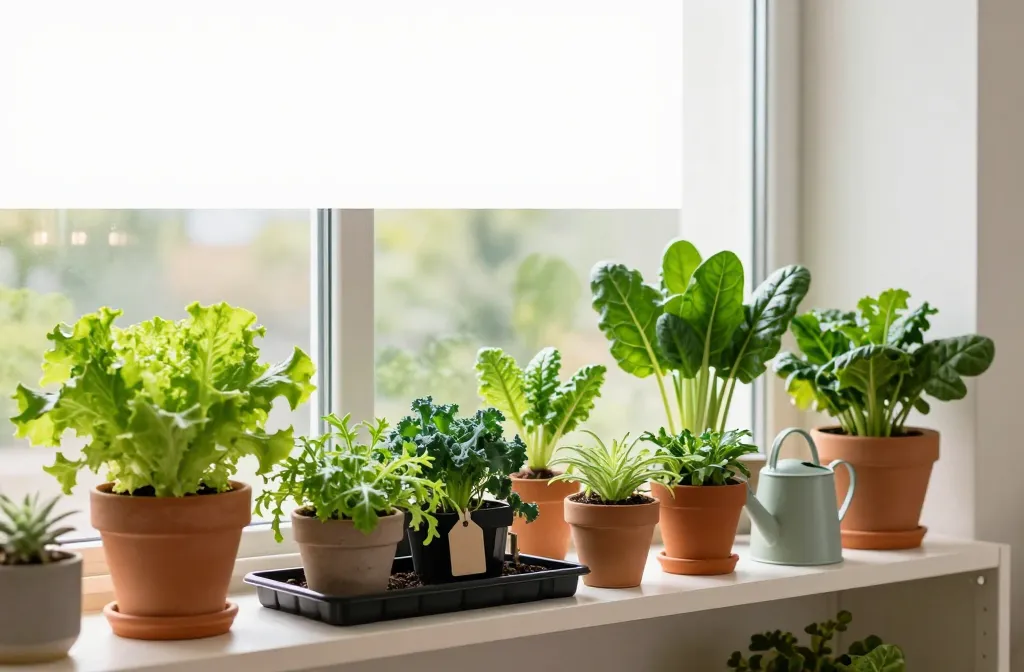
Ready to turn your windowsill into a tiny jungle that feeds you all year? Let’s skip the guesswork and grow delicious stuff indoors, no matter where you live. These container-friendly plants thrive under lights or by a sunny window, and they don’t demand a greenhouse or a green thumb. Grab a pot and a watering can—your future self (and your taste buds) will thank you.
1. Leafy Legends: Spinach, Lettuce, Kale, And Friends
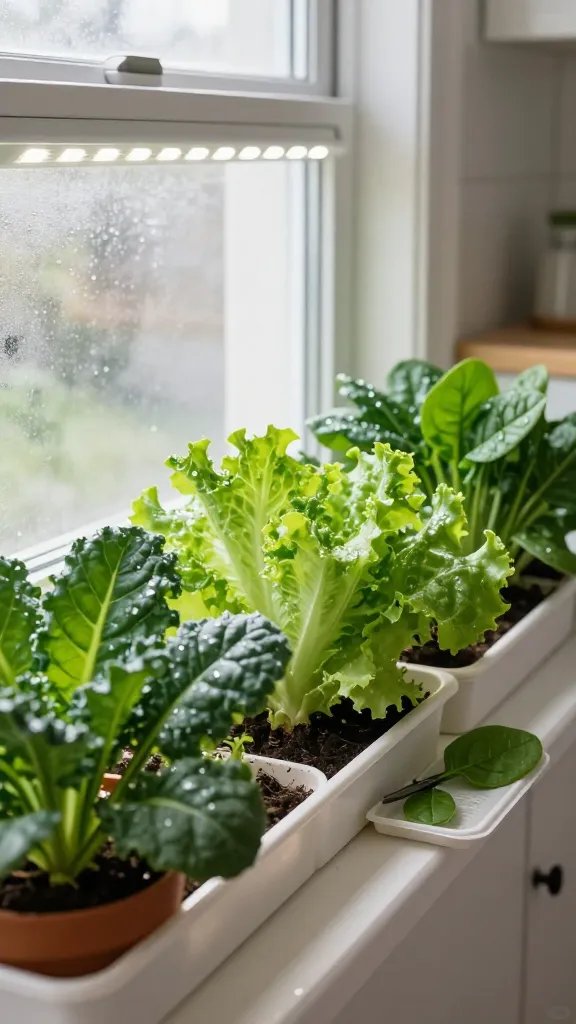
Leafy greens basically invented indoor gardening. They grow fast, don’t need deep pots, and bounce back after harvest like champs. Bonus: you can harvest little and often for constant salads, wraps, and smoothie fuel.
Why They’re Awesome
- Low light tolerance: Many greens do fine with bright indirect light or modest grow lights.
- Quick harvests: Baby leaves in 3–4 weeks, fuller harvests in 5–7.
- Cut-and-come-again: Snip outer leaves and leave the core to keep producing.
Best Picks (18-24 inch window box works great)
- Looseleaf lettuce: ‘Green Star’, ‘Red Salad Bowl’—soft, sweet, and regrows fast.
- Spinach: ‘Bloomsdale’ for flavor, ‘Space’ for bolt resistance.
- Kale: ‘Dwarf Blue Curled’ or ‘Red Russian’ in 8–10 inch pots.
- Arugula: Peppery and lightning-fast. Great for quick harvests.
- Swiss chard: Flashy stems, generous yields, does well slightly warmer.
Tips
- Use a well-draining potting mix and containers with real drainage holes.
- Keep temps 60–70°F for best flavor and less bitterness.
- Water when the top inch feels dry. Overwatering = sad, limp greens.
- Supplement light with a full-spectrum LED 12–14 hours/day if windows are weak.
Use this crew when you want reliable, forgiving harvests that make you look like you totally know what you’re doing. Because, IMO, you do.
2. Herb Heroes: Basil, Mint, Chives, Parsley, Cilantro, And Thyme
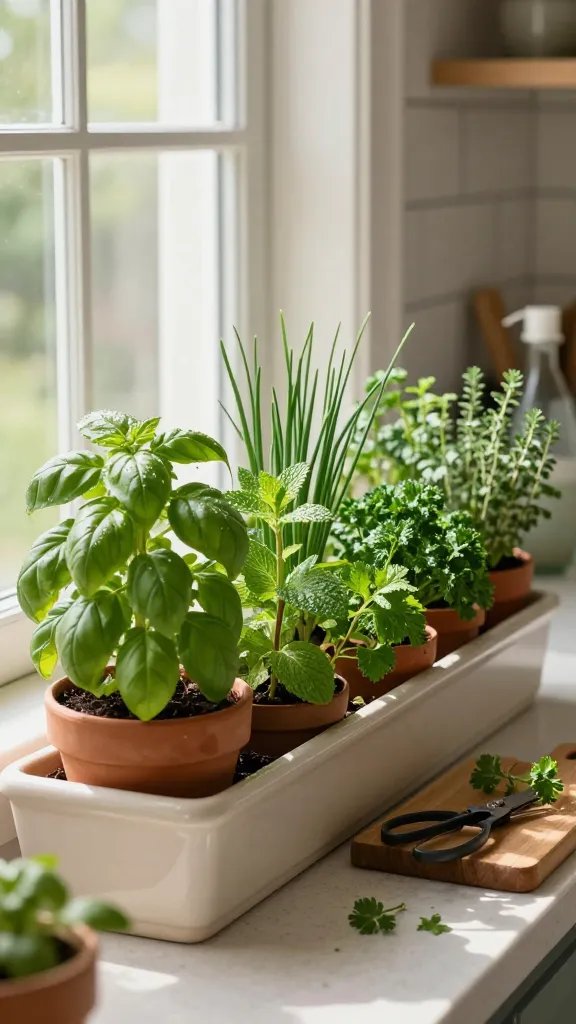
Herbs deliver maximum flavor with minimal space. They make everyday cooking taste like a secret family recipe, and they look cute on a kitchen sill. Plus, you can grow several in one trough and pretend it’s an indoor culinary garden (it is).
Why They’re Awesome
- Compact plants: Perfect for windowsills and countertops.
- Frequent harvests: Snip and watch them bush out.
- Aromatic payoff: Your kitchen will smell like a fancy bistro.
Best Picks And How To Treat Them
- Basil: Loves warmth and light. Pinch tops often to prevent flowering.
- Mint: Super forgiving. Grow it alone—it takes over roommates.
- Chives: Cut 1 inch above soil; they’ll regrow endlessly.
- Flat-leaf parsley: Slow to start, long to finish—great all year.
- Cilantro: Cooler temps, steady water, and frequent sowing every 3–4 weeks.
- Thyme: Drought-tolerant, perfect for forgetful waterers. FYI, that might be you.
Pro Moves
- Use 6–8 inch pots per herb or a long trough with separators.
- Choose a light, airy potting mix, not garden soil.
- Rotate pots weekly for even growth, especially by windows.
- Fertilize lightly with a diluted organic liquid feed every 3–4 weeks.
When you need quick flavor and bragging rights, herbs bring the win. Seriously, homemade pesto changes lives.
3. Fruitful Vibes: Cherry Tomatoes, Peppers, Dwarf Citrus, And Strawberries
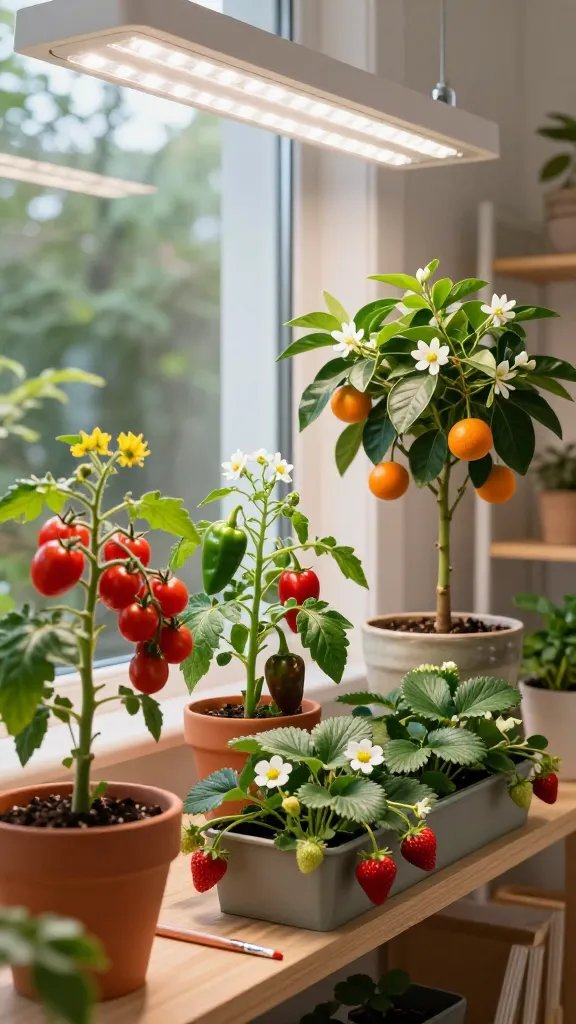
Yes, you can fruit indoors. It takes more light and a touch of patience, but the payoff tastes like summer in a bowl. Think balcony vibes without the balcony.
The Light Truth
- Tomatoes and peppers need strong light—use full-spectrum LEDs 14–16 hours/day.
- Hand-pollination: Gently shake flowers or use a soft brush to move pollen.
- Keep temps around 70–80°F daytime, slightly cooler at night.
Top Container Cultivars
- Cherry tomatoes: ‘Tiny Tim’, ‘Micro Tom’, ‘Red Robin’—compact and productive in 1–3 gallon pots.
- Peppers: ‘Hungarian Wax’, ‘Jalapeño’, ‘Biquinho’, ‘Numex Twilight’—happy in 2–3 gallon containers.
- Dwarf citrus: ‘Calamondin’ or ‘Meyer lemon’ in 5–7 gallon pots with a citrus mix.
- Strawberries: Day-neutral varieties like ‘Seascape’ or ‘Albion’ in hanging baskets or long planters.
Care Cheats
- Use tomato/pepper-specific fertilizer with calcium to prevent blossom end rot.
- Water deeply but let the top inch dry between sessions. No soggy roots.
- Stake tomatoes early to avoid floppy chaos.
- For citrus, mist leaves and provide occasional humidity (tray with pebbles + water).
Use fruiting plants when you want big flavor moments and Instagram flexes. The first bite of a sun-warmed cherry tomato you grew indoors? Unreal.
4. Root-To-Table: Radishes, Baby Carrots, Green Onions, And Micro-Potatoes
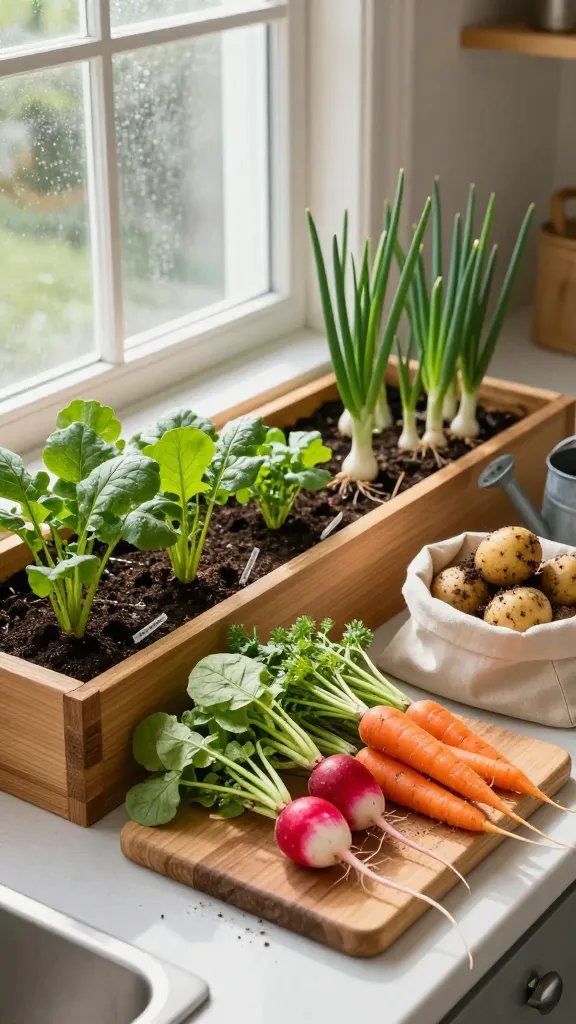
Roots indoors? Totally doable with the right containers and expectations. You won’t grow a 10-pound carrot, but you’ll harvest crisp, sweet baby roots that taste like you bribed the produce gods.
Why They’re Awesome
- Fast cycles: Some radishes are ready in 25 days.
- Compact depth: Shallow planters work for many “mini” varieties.
- Low fuss: Sow, water, thin, and wait. Easy.
Best Picks And Containers
- Radishes: ‘French Breakfast’, ‘Cherry Belle’ in 6–8 inch deep boxes.
- Baby carrots: ‘Parisian Market’, ‘Atlas’, or ‘Thumbelina’ in 8–10 inch deep pots.
- Green onions/scallions: Sow thickly in window boxes for endless snips.
- Micro-potatoes: Use small seed potatoes in 5–7 gallon fabric grow bags; harvest “new” potatoes early.
Growing Tips
- Use a fine, fluffy mix with perlite so roots grow straight and happy.
- Thin seedlings early—crowding gives weird shapes and smaller yields.
- Keep soil evenly moist, especially for carrots to avoid splitting.
- For potatoes, hill with mix as stems grow to cover tubers and boost yields.
Choose roots when you want a crunchy, satisfying harvest that doesn’t hog space. Plus, pulling a baby carrot never stops feeling magical. Trust me.
5. Flavor Bombs: Microgreens, Sprouts, Baby Greens, And Quick-Cut Staples
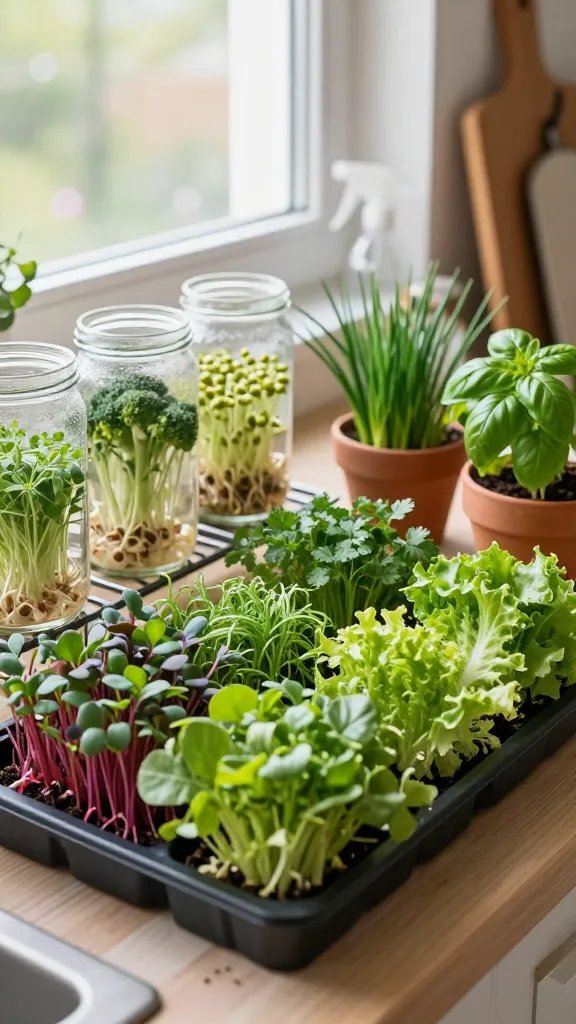
If patience isn’t your thing, this section is your soulmate. These crops go from seed to plate in days or a couple of weeks, and they’re packed with nutrients and flavor. Perfect for tight spaces, gloomy winters, and instant gratification.
Why They’re Awesome
- Ridiculous speed: Sprouts in 3–5 days, microgreens in 7–14.
- Tiny footprint: Trays or jars fit anywhere.
- No soil (sometimes): Sprouts just need jars and water.
Best Fast-Growers
- Sprouts: Broccoli, alfalfa, mung bean—use a dedicated sprouting jar and rinse twice daily.
- Microgreens: Sunflower, radish, pea shoots, mustard—grow in shallow trays under a basic LED.
- Baby Asian greens: Mizuna, tatsoi, komatsuna—cut at 3–4 inches for tender stir-fry gold.
- Cut-and-come-again mixes: Grow dense salad trays for constant snips.
Setup And Care
- For microgreens, use a shallow tray with drainage and a thin layer of soilless mix or a grow mat.
- Broadcast seeds, press in, mist, and keep covered 2–3 days until germination, then add light.
- Harvest with clean scissors; rinse and spin dry.
- For sprouts, sanitize seeds, keep jars at room temp, and avoid direct sun.
Use these when you need fresh greens fast with minimal drama. They’re the ultimate backup plan for any climate or schedule.
Ready to build your indoor Eden? Start with one section, then mix and match as you get confident. With the right containers, light, and a little routine, you’ll harvest something fresh every week—no backyard required.