
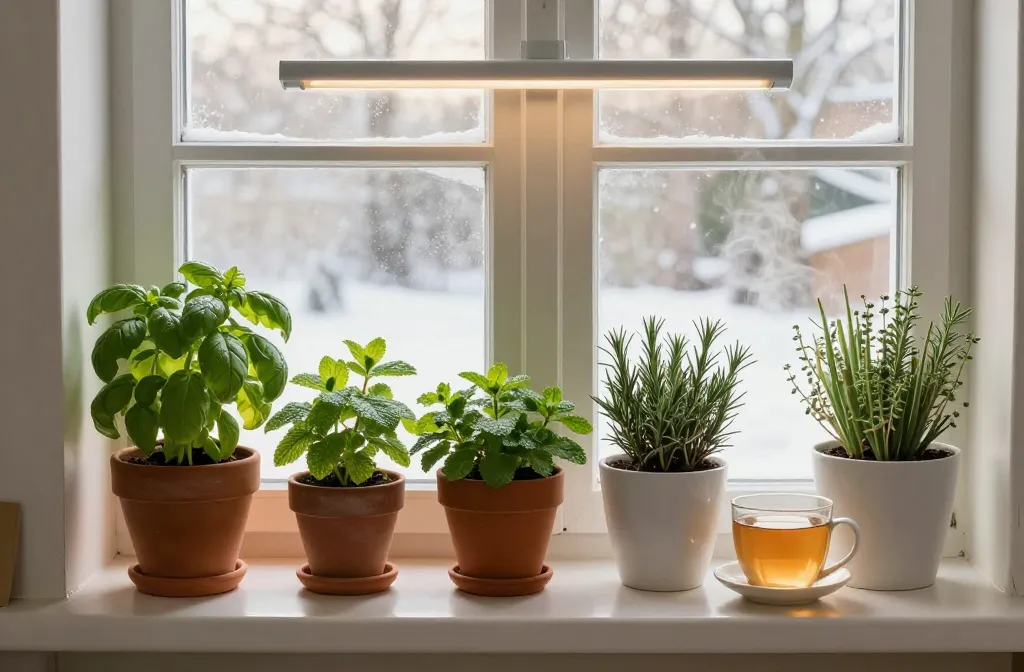
Your kitchen window can be a tiny jungle, even when the sidewalk’s an ice rink. December is prime time to start an indoor herb lineup that grows fast, smells amazing, and makes every meal taste like you meant to do that. We’re talking hardy, low-drama herbs that don’t mind short days and still deliver big flavor. Ready to turn that chilly light into fresh pesto and mint tea?
1. Basil That Beats The Frost
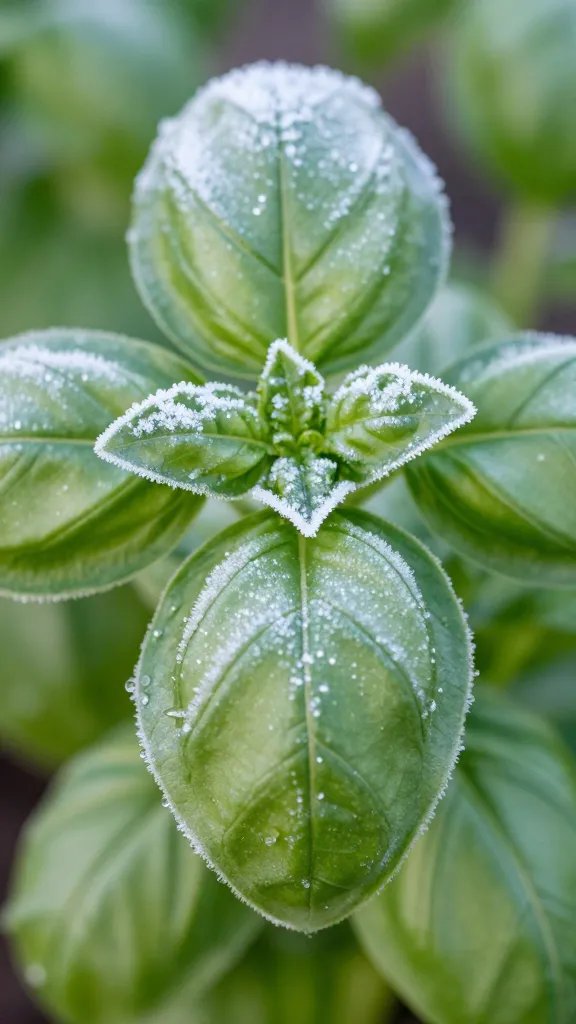
Basil screams summer, but a sunny winter windowsill can absolutely keep it happy. You’ll get tender leaves for pasta, pizza, and pesto when the store stuff tastes like sadness. Choose compact varieties and treat them to bright light and gentle warmth.
Quick Wins
- Light: South-facing window, 6–8 hours. Supplement with a small LED grow light if days run gloomy.
- Varieties: Greek basil, Genovese dwarf, or Spicy Globe handle containers beautifully.
- Soil & Pot: Fast-draining potting mix in a 6–8 inch pot with drainage.
Pinch the tips to keep basil bushy and prevent flowering. Water when the top inch dries out; cold, soggy soil equals drama. Bonus: basil freshens the whole kitchen, and IMO it turns basic eggs into “wow, who cooked this?”
Best Use
Toss into soups at the end, blitz into winter pesto, or snip for grilled cheese. You’ll get that sweet, peppery lift in seconds.
2. Mint That Never Quits (Seriously)
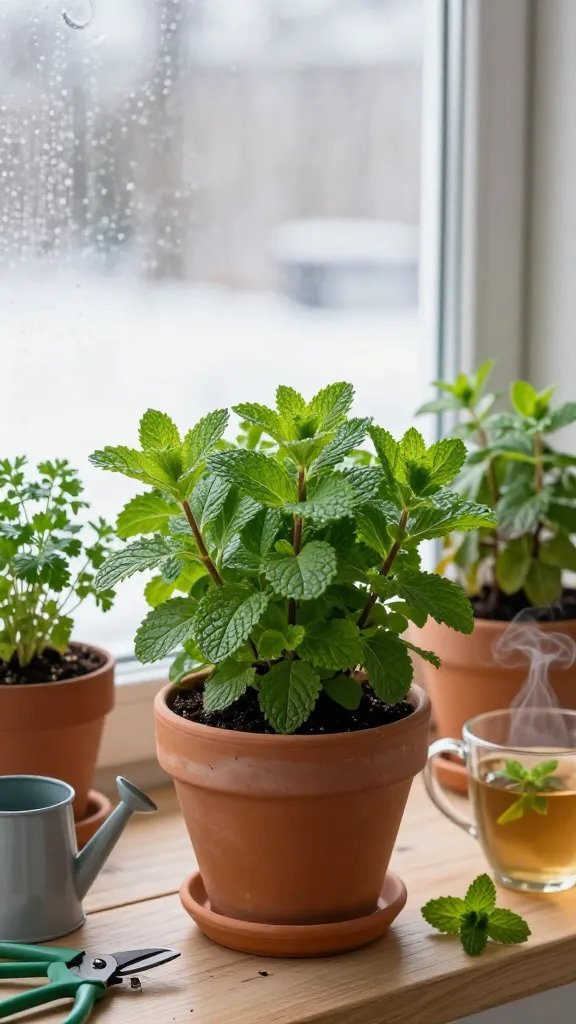
Mint is the friend who always shows up. It tolerates cooler temps, bounces back after a tough week, and rewards you with instant tea and mojito vibes. It also grows like it has a point to prove, so give it its own pot.
Tips For Mint Mastery
- Light: Bright indirect light is fine; east- or west-facing windows work.
- Moisture: Keep evenly moist but never swampy. Mint likes a steady routine.
- Varieties: Peppermint for tea, spearmint for cooking, chocolate mint if you want dessert vibes.
Trim stems often to prevent legginess and stimulate new leaves. Mint appreciates humidity, so set the pot on a pebble tray or group it with other plants. FYI, the smell alone makes winter mornings feel less bleak.
Best Use
Hot mint tea, yogurt sauces, salads, and mocktails. It even makes cocoa feel gourmet.
3. Rosemary, The Evergreen Overachiever
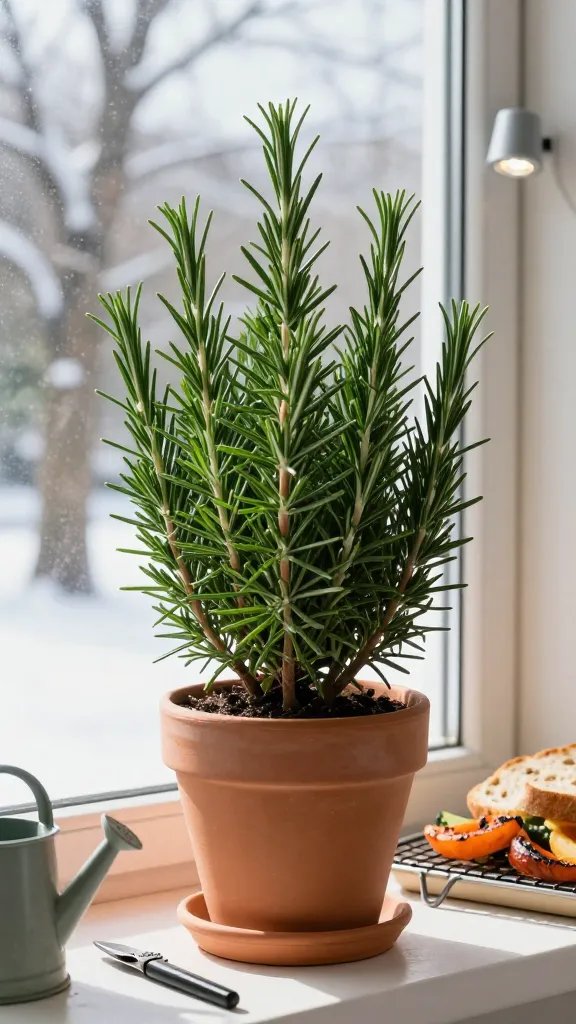
Rosemary is a hardy little tree disguised as an herb. It loves cool rooms, crisp air, and lots of light, which makes it a December MVP. The piney aroma feels downright festive, and the flavor turns roast veggies and breads into something bakery-level.
Care Essentials
- Light: Minimum 6 hours direct sun. South window or a grow light helps big time.
- Water: Let the top 2 inches dry out. Rosemary hates wet feet.
- Air: Good air circulation prevents mildew. Don’t tuck it in a crowded corner.
Pick a compact variety like ‘Tuscan Blue’ or ‘Blue Boy’ for containers. Snip sprigs, not individual needles, and the plant will stay dense. The scent alone makes your space smell like a holiday market.
Best Use
Roast potatoes, focaccia, lemon chicken, and infused oils. It also makes a chic garnish for winter cocktails.
4. Chives For Instant Onion Magic
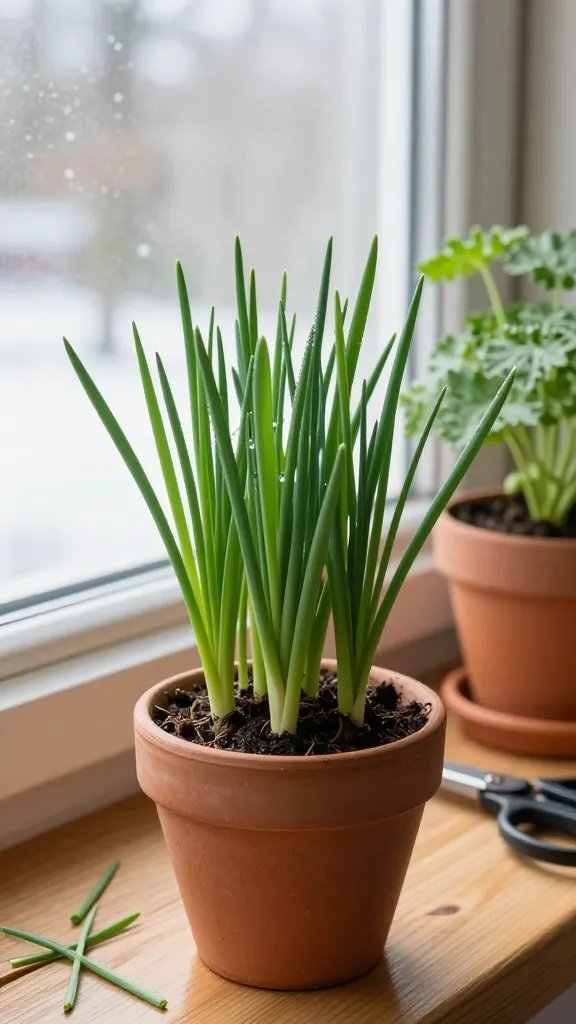
Chives grow fast, forgive neglect, and deliver that mellow onion kick you want on everything. They don’t demand tropical sun and they shrug off chilly windows. Translation: you’ll never need sad store-bought bunches again.
How To Keep Them Happy
- Light: 4–6 hours of sun; supplemental light keeps them stout.
- Water: Keep soil lightly moist. They dry out faster in warm kitchens.
- Harvest: Cut blades from the base with scissors, leaving at least 2 inches to regrow.
Divide clumps if they get crowded, and rotate the pot every week for even growth. Chives play nice with other herbs, so they’re great in a mixed planter. Plus, the purple blooms (if they appear) are edible and adorable.
Best Use
Top omelets, soups, potatoes, and buttered noodles. Stir into cream cheese and pretend you’re running a bagel shop.
5. Thyme, The Tiny Flavor Bomb
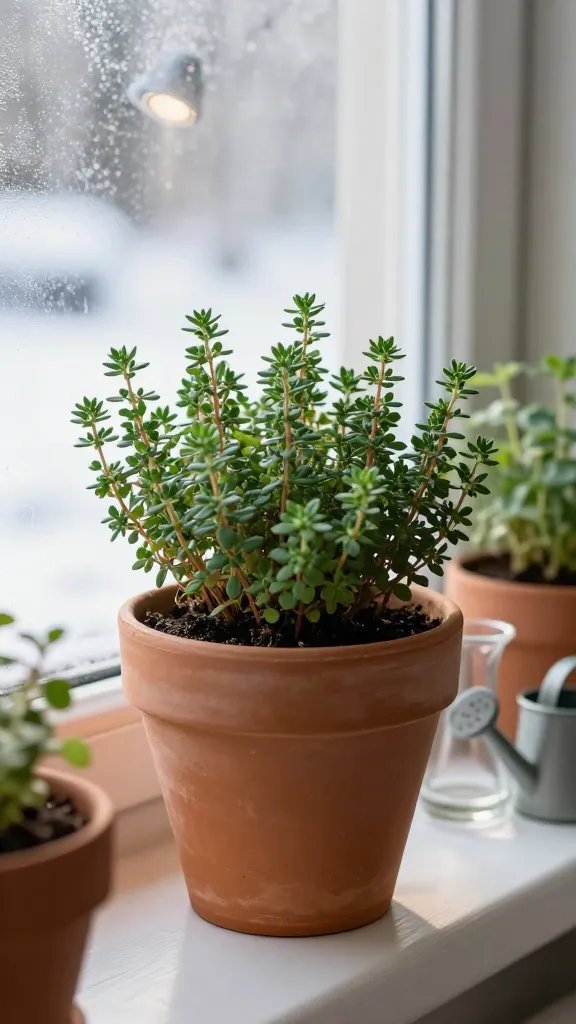
Thyme thrives in winter because it actually likes cool, bright conditions. It tastes woody, lemony, and savory all at once, which is why every stew tastes better with it. The little leaves pack a disproportionate punch, and the plant looks cute in small pots.
Thyme Tactics
- Light: 6 hours of direct sun or a small grow light.
- Water: Let it dry a bit between waterings. Think Mediterranean, not marsh.
- Varieties: Common thyme for stews, lemon thyme for fish and veggies, creeping thyme for looks.
Strip leaves by pinching the stem and pulling downward—way faster than picking. Thyme handles a bit of benign neglect, which is perfect for busy weeks. Trust me, a pinch transforms roasted mushrooms or pan sauces like magic.
Best Use
Herb butters, stews, pan sauces, and roasted root veggies. Feather a few sprigs over baked brie and act surprised when people swoon.
Bonus Know-How: Your Winter Windowsill Playbook
Want your winter herb squad to thrive, not just survive? Dial in the basics, and everything else gets easy.
- Light Matters Most: Short days = fewer photons. A clip-on LED grow light (full spectrum, 10–12 inches above plants, 12–14 hours daily) makes a huge difference.
- Right-Sized Pots: Start with 4–8 inch containers with drainage. Smaller pots dry faster and reduce root rot risk.
- Soil, Not Garden Dirt: Use high-quality potting mix. Add perlite for drainage if it feels heavy.
- Water With Intention: Check soil with a finger. Water thoroughly, empty saucers, and never let roots sit in a puddle.
- Humidity Help: Central heating dries everything. Group plants, use a pebble tray, or run a tiny humidifier nearby.
- Pinch And Prune: Regular harvest = bushier plants. Avoid taking more than one-third of a plant at once.
- Cool Nights Are Fine: Most herbs enjoy 60–65°F at night. Just keep leaves off cold glass panes.
- Feed Lightly: A gentle liquid fertilizer at half strength once a month keeps growth steady without making flavor watery.
When you get these basics right, your five core herbs—basil, mint, rosemary, chives, and thyme—become ridiculously reliable. You’ll cook better without even trying.
Flavor Pairing Cheat Sheet
- Basil: Tomatoes, mozzarella, eggs, noodles, balsamic.
- Mint: Peas, lamb, chocolate, citrus, tea.
- Rosemary: Potatoes, poultry, focaccia, gin cocktails.
- Chives: Eggs, sour cream, salmon, buttered veggies.
- Thyme: Mushrooms, beef, beans, roasted roots, cheese.
Mix and match for easy wins. Basil + mint? Hello, herby salad dressing. Rosemary + thyme? Roast everything.
Common Winter Herb Problems (And Fast Fixes)
- Leggy Stems: Not enough light. Move closer to the window or add a grow light.
- Yellow Leaves: Overwatering or poor drainage. Let soil dry slightly and check the pot’s holes.
- Brown Tips: Dry air. Increase humidity and avoid blasts from heaters.
- Slow Growth: Normal in winter, but light feeding helps. Don’t go fertilizer-crazy.
- Tiny Gnats: Fungus gnats love wet soil. Let it dry, use sticky traps, and consider a top layer of coarse sand.
Small tweaks solve 90% of issues. The other 10%? Usually just time and steady care.
Harvesting Like A Pro
- Morning Snips: Flavor peaks before midday heat (even indoors).
- Clean Cuts: Use sharp scissors. Ragged cuts stress plants.
- Rotate Harvest: Don’t strip one side. Even snipping keeps plants balanced and bushy.
Your herbs will bounce back faster, and your meals will taste brighter. Win-win.
Cute Container Ideas
- Wide, Shallow Planters: Great for thyme and chives.
- Individual Terracotta Pots: Ideal for rosemary and basil.
- Self-Watering Pots: Handy for busy weeks, especially with mint.
Label them with washi tape and a marker. Instant herb bar, zero confusion.
Simple Recipes To Use Right Now
- Thyme Butter: Soften butter, add chopped thyme and lemon zest, smear on toast or steak.
- Mint Tea: Steep a handful of leaves in hot water for 5 minutes. Add honey. Done.
- Basil Oil: Blend basil with olive oil and a pinch of salt; drizzle on everything.
- Rosemary Potatoes: Toss wedges with oil, salt, chopped rosemary. Roast until golden.
- Chive Cream: Stir chives into sour cream with lemon and pepper for a fast dip.
These use what you snip, not what you need a culinary degree for. That’s the whole point.
Ready to get those windows working for you? A sunny sill, five tough herbs, and a little routine turns winter into flavor season. Start small, snip often, and brag shamelessly when your pasta tastes like a cozy trattoria, because you earned it.