
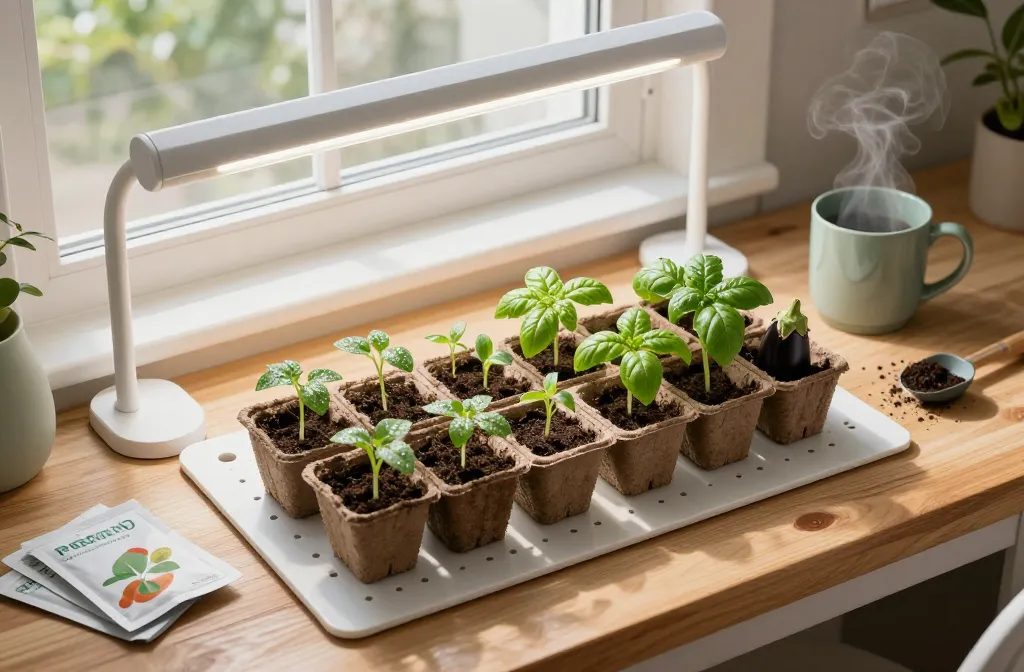
Ready to outsmart the weather and win the first ripe tomato on the block? These early-start moves bridge the awkward “still-chilly, almost-spring” gap so your warm-season crops hit the ground running. We’re talking faster harvests, stronger plants, and fewer oops moments. Grab your seed packets and a mug of something warm—this is the fun part.
1. Start Seeds Indoors With Heat (So They Don’t Sulk)
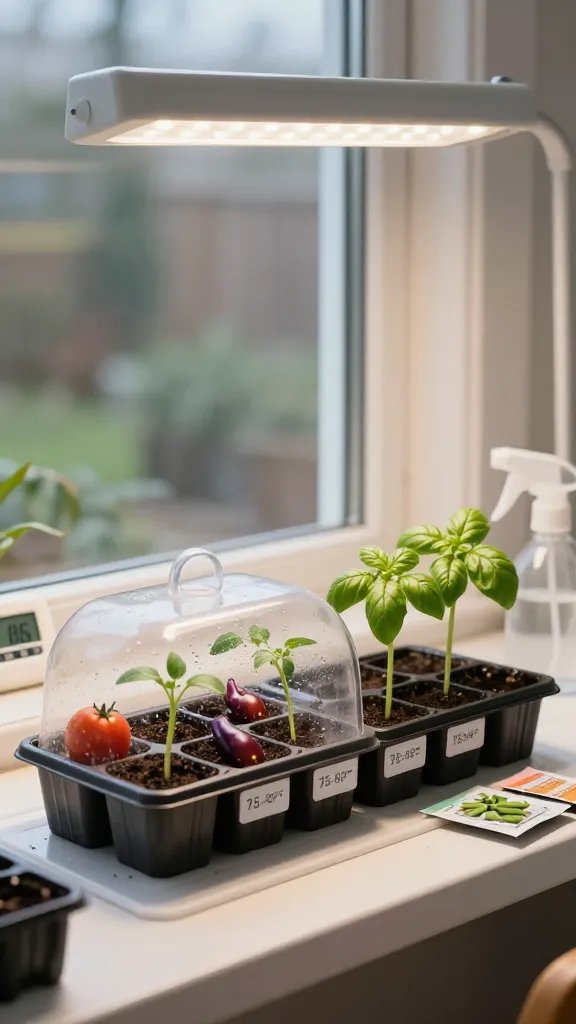
Warm-season crops hate cold soil, but they love a cozy start. Give them gentle bottom heat and bright light now, and they’ll repay you with chunky stems and earlier fruit. Think of it like preschool for peppers, tomatoes, eggplant, and basil—short lessons, lots of growth.
Best Candidates To Start Now
- Peppers and Eggplant: Slow growers that need a head start.
- Tomatoes: Fast to germinate, easy to manage indoors.
- Basil: Quick sprout, but still cold-sensitive outside.
- Okra: Optional early start in cooler zones for earlier pods.
Use a germination heat mat to keep soil 75–85°F for peppers and tomatoes. Pair with a simple LED grow light 2–4 inches above seedlings for 14–16 hours daily. Keep the seed-starting mix barely moist—damp sponge, not swamp.
Pro Tips
- Sow in cells or soil blocks to minimize transplant shock.
- Label everything, because all baby seedlings look suspiciously similar, seriously.
- Start 6–8 weeks before your last frost date for peppers/eggplant; 4–6 weeks for tomatoes.
Benefit: You’ll transplant sturdy plants right when soil warms, which means earlier flowers and fruit without gambling on freak cold snaps.
2. Harden Off Like You Mean It (No Wimps Allowed)
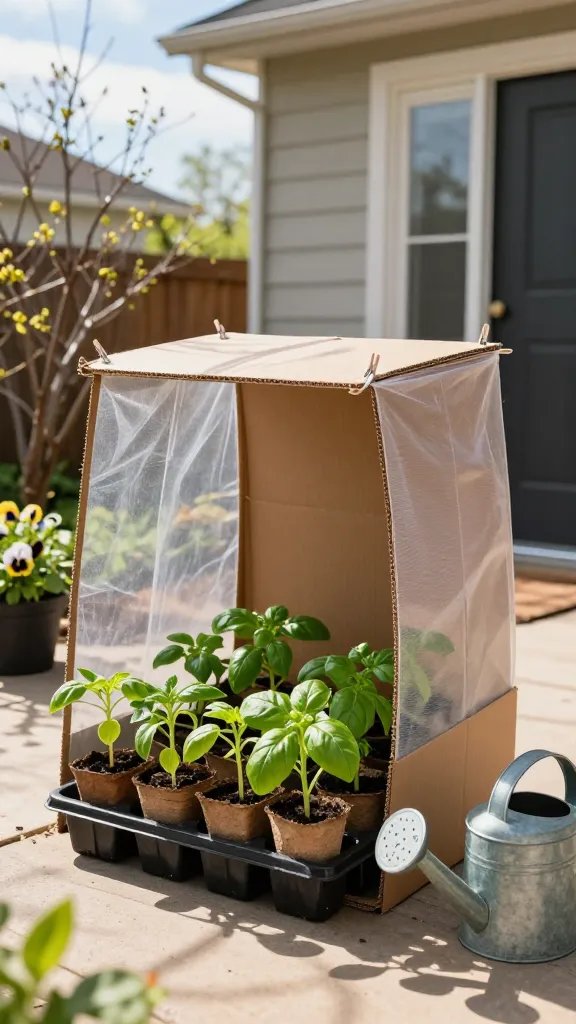
You grew adorable seedlings indoors. Now don’t destroy them with one windy afternoon. Harden off to train leaves and stems to handle real-world weather—UV, breeze, and temperature swings.
How To Harden Off In 7–10 Days
- Days 1–2: 1–2 hours outdoors in bright shade; bring back inside.
- Days 3–4: 3–4 hours with gentle morning sun; avoid harsh midday.
- Days 5–6: 5–6 hours; introduce more direct sun and a light breeze.
- Days 7–10: Full day outside; one mild overnight if temps stay above 50°F.
Use a box fan indoors on low for 15–20 minutes daily to strengthen stems before you start. Skip windy or cold days, and don’t harden off during a late-season storm unless chaos gardening is your hobby.
What To Watch
- Leaf scorch: White patches mean too much sun too fast.
- Wilting: Increase watering slightly; reduce exposure time.
- Color changes: Purple leaves = cold stress; give it more time.
Benefit: Properly hardened plants transplant like champs, resist shock, and resume growth faster. IMO, hardening off beats babying them after a rough transplant any day.
3. Pre-Warm Your Soil And Use Season Extenders (Cheat The Calendar)
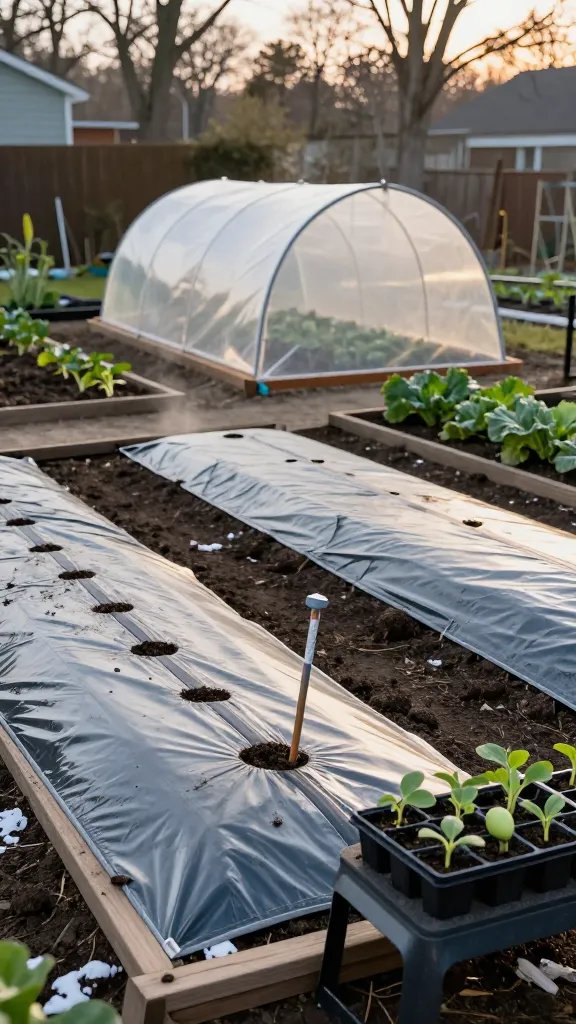
Warm soil equals happy roots, especially for heat-lovers like melons and cucumbers. Pre-warming your beds can speed germination by a week or more. It’s legal garden cheating, FYI.
Quick Soil-Warming Moves
- Black plastic or landscape fabric: Lay it 2–3 weeks before planting to trap heat and suppress weeds.
- Clear plastic: Warms soil faster but watch for weeds; remove or replace before planting.
- Low tunnels: Add hoops and frost cloth or greenhouse plastic for heat and wind protection.
Soil temp matters more than air temp for warm-season crops. Aim for 60°F for tomatoes, 65°F for beans, and 70°F+ for melons, cucumbers, and okra. Use a soil thermometer and ignore your neighbor’s bravado.
Mini Greenhouses That Work
- Cloche domes or cut milk jugs: Pop over single plants to hold warmth.
- Wall-o’-water cones: Water-filled sleeves that radiate heat at night—great for early tomatoes.
- Row cover (0.5–0.9 oz): Frost protection down to ~28–30°F with good airflow.
Benefit: Earlier planting windows and faster root development, which translates to stronger plants and earlier harvests without playing chicken with a late frost.
4. Graft, Pinch, And Pot Up For Powerhouse Plants
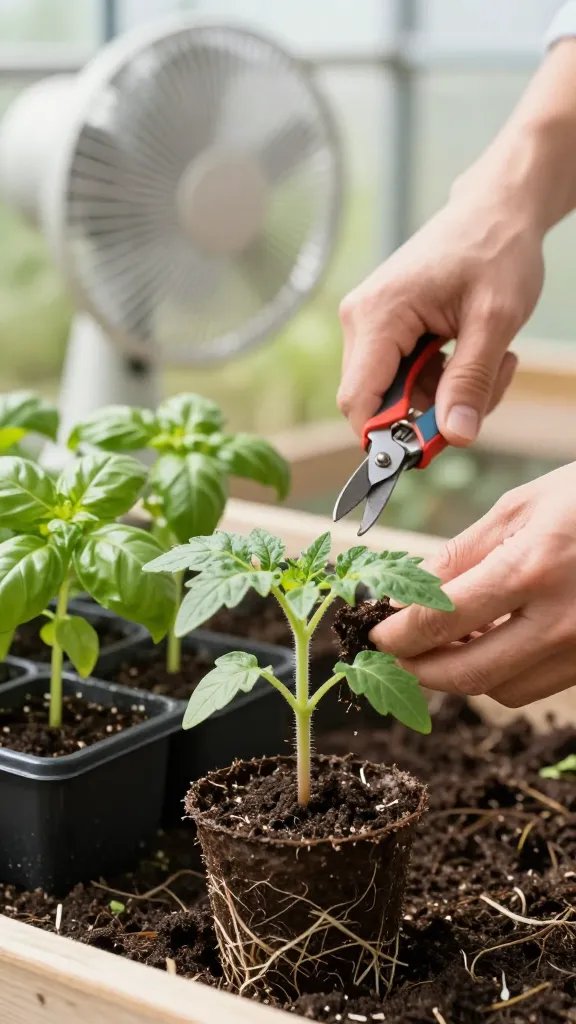
If you want bigger yields and sturdier vines, small early interventions make a huge difference. Grafting disease-prone tomatoes, pinching basil, and potting up on time turn decent seedlings into overachievers. Tiny tweaks, major payoff.
Tomato Power-Ups
- Pot up once roots circle: Move to a 3–4 inch pot, bury stems to first leaves to form extra roots.
- Lightly brush seedlings daily: Mimics wind and builds sturdier stems.
- Clip the first flower cluster: Encourage root and foliage growth before fruiting.
Basil And Pepper Moves
- Pinch basil at 4–6 true leaves: Promotes bushy growth and more harvests.
- Top peppers once established indoors: Optional, but can create branching and more sites for flowers.
Grafting, If You’re Fancy
- Tomatoes: Graft favorite scions onto vigorous rootstocks for disease resistance and vigor.
- Keep healing chamber at high humidity (85–95%) and low light for 5–7 days, then gradually reintroduce light.
Benefit: Plants focus on roots first, then explode with healthy growth outdoors. You’ll see earlier blooms and better yields, especially in soil with disease pressure.
5. Plan Succession And Companion Layouts (Because Future You Deserves It)
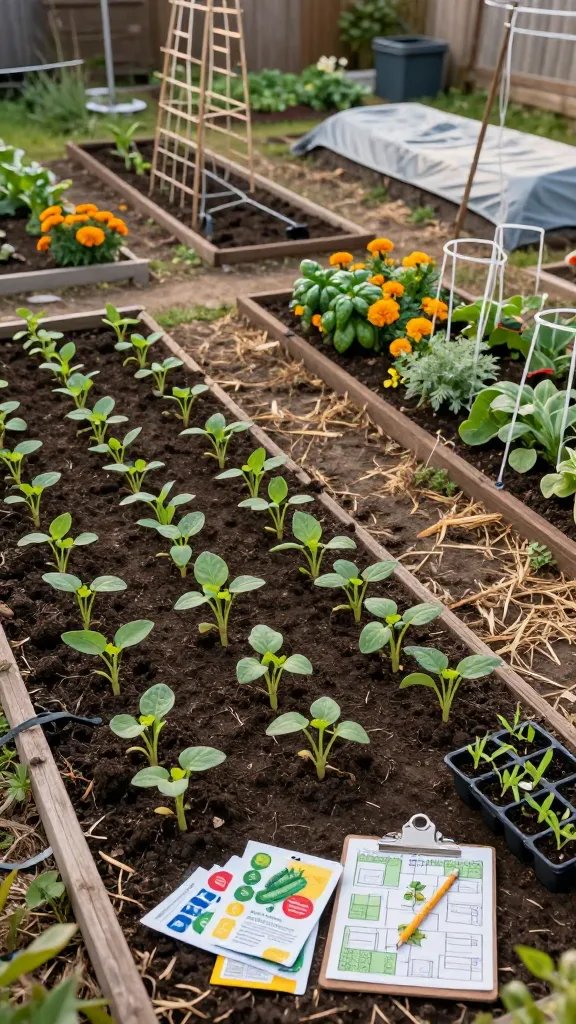
A little planning now means steady harvests later, not a single week of zucchini chaos followed by crickets. Map out successions and companions so your warm-season crops play nice and don’t compete for the same real estate at the same time.
Smart Succession Examples
- Beans: Sow every 2–3 weeks for 2–3 rounds to keep pods coming.
- Cucumbers: Start indoors for the first round, then direct-sow a second round 3–4 weeks later to dodge late-season disease.
- Sweet Corn: Plant blocks every 10–14 days; choose different maturity dates.
- Basil: Start a second tray 3–4 weeks after your first for continuous pesto energy.
Companion Combos That Actually Help
- Tomatoes + Basil + Marigolds: Basil boosts flavor/aroma, marigolds deter some pests, and the bed smells like a pizza garden.
- Corn + Pole Beans + Squash: The classic “Three Sisters”—beans climb corn, squash shades soil.
- Cucumbers + Dill + Nasturtium: Attracts beneficials and distracts aphids and cucumber beetles.
Spacing And Timing Notes
- Don’t cram. Airflow beats disease—especially for tomatoes, squash, and cukes.
- Rotate families yearly if possible: nightshades, cucurbits, legumes, etc.
- Stagger maturity dates so you’re harvesting on repeat, not in one exhausting weekend.
Benefit: You get a steady supply, fewer pest explosions, and a garden that looks intentional rather than “whoops.” Trust me, future you will send a thank-you text.
That’s your winter-to-spring launch plan. Start warm crops early, toughen them up, and use heat tricks and smart layouts to stay ahead. You’ll harvest sooner, waste less, and enjoy the smug satisfaction of the first ripe tomato. Go get it—your garden’s about to glow up.