
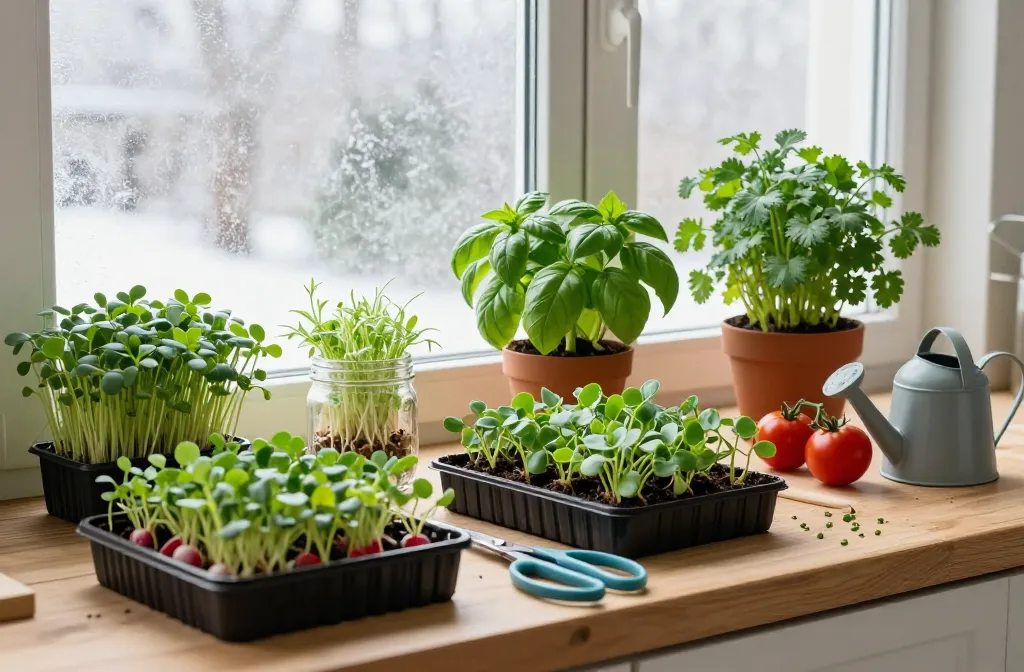
Snow outside, salad inside. That’s the winter flex we all deserve. You don’t need a backyard or a grower’s degree—just a window, a few containers, and the courage to snip your own herbs like a boss. We’re talking fast, flavorful, and super forgiving edible plants you can grow right now, minus the frostbite.
Below, you’ll find five power-packed categories that cover 20 tasty crops. From microgreens that sprout in a week to dwarf tomatoes that fruit on a bookshelf—this lineup keeps your kitchen vibrant while your radiator sings the song of its people.
1. Microgreens & Sprouts: Tiny Plants, Huge Flavor
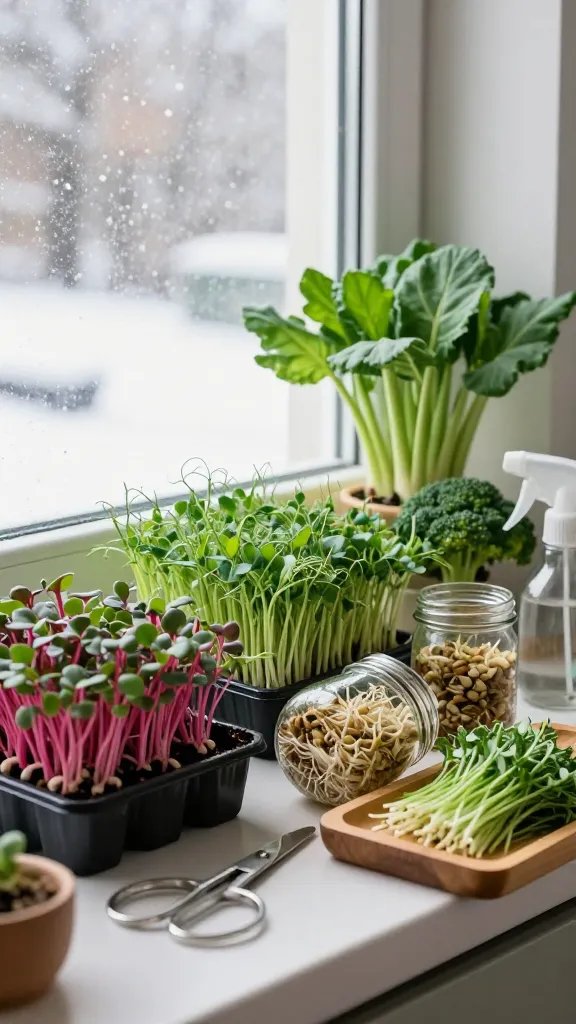
If you want fast wins, start here. Microgreens and sprouts deliver massive nutrition and bright flavor in days, not months. They thrive under simple light and minimal space—think windowsill trays and mason jars.
What To Grow (8 Picks):
- Radish microgreens – Spicy, crunchy, super quick (7–10 days).
- Pea shoots – Sweet tendrils that taste like spring (10–14 days).
- Sunflower shoots – Nutty, juicy stems with serious bite (10–12 days).
- Broccoli microgreens – Mild and packed with sulforaphane (10–12 days).
- Arugula microgreens – Peppery leaves that wake up any sandwich.
- Cilantro microgreens – Big flavor in tiny form, perfect for tacos.
- Alfalfa sprouts – Classic, mild, great in wraps (grown in jars).
- Mung bean sprouts – Crisp and juicy for stir-fries (also jar-friendly).
Setup Tips:
- Microgreens: Use shallow trays, a seedling mix or coconut coir, and a spray bottle. Sow densely.
- Sprouts: Use a wide-mouth jar with a mesh lid. Rinse 2–3 times daily until plump.
- Light: A bright window works; a basic LED grow light speeds things up and keeps stems stout.
Harvest by snipping just above the soil or tipping sprouts into a colander. You’ll get quick, crunchy toppings that make winter meals feel alive. FYI: this is the fastest way to feel like an indoor gardening wizard.
2. Kitchen Herbs That Actually Thrive Indoors
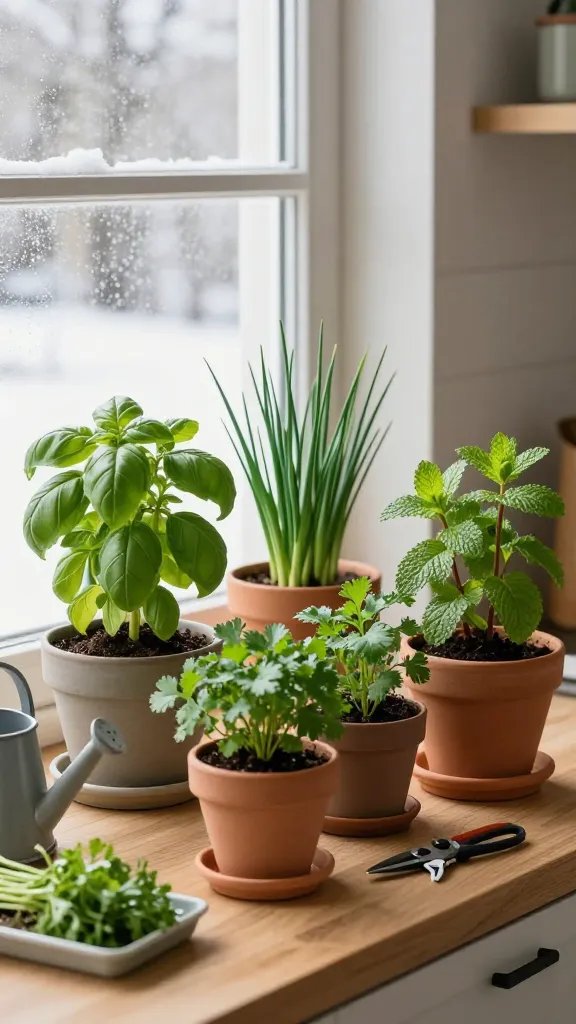
Herbs make every winter dish taste fresher and brighter. Most stay compact, smell amazing, and don’t demand much—give them light, warmth, and a pot with drainage.
What To Grow (6 Picks):
- Basil – Loves heat and light; go for Genovese or compact varieties.
- Parsley – Curly or flat-leaf; slow to start, then steady and generous.
- Chives – Cut-and-come-again oniony goodness; super tough and dependable.
- Mint – Mojito magic; keep it in its own pot because it’s enthusiastic.
- Cilantro – Cool-loving; sow in rounds every 2–3 weeks to keep it coming.
- Thyme – Woody, fragrant, and unfussy; great for soups and roasts.
Light & Water Basics:
- Give herbs 6–12 inches under an LED grow light for 12–14 hours daily if windows are weak.
- Water when the top inch of soil dries out; basil likes more moisture, thyme likes less.
- Use a well-draining potting mix and containers with drainage holes. No exceptions.
Harvest by snipping the tips to encourage bushy growth. You’ll season everything like a TV chef and maybe even talk to your plants—IMO, they love the attention.
3. Leafy Greens & Cut‑And‑Come‑Again Salads
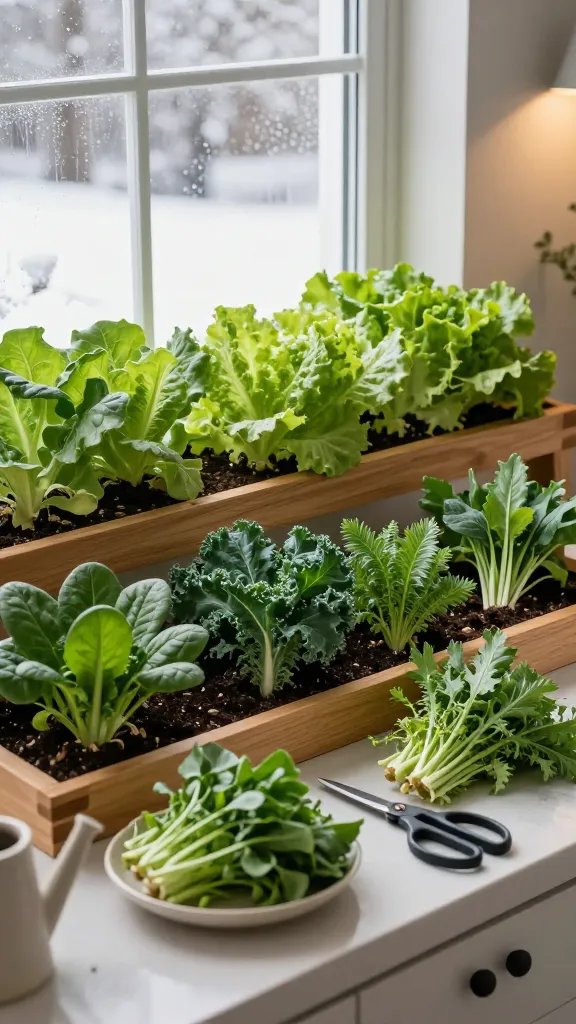
You can grow salad bowls all winter with zero garden beds. Many lettuces and leafy greens thrive in cooler indoor temps and don’t need deep containers.
What To Grow (4 Picks):
- Baby lettuce mixes – Grow as a dense “salad mat” and harvest with scissors.
- Spinach – Cool-loving; choose baby leaf types for faster harvests.
- Kale (dwarf or baby leaf) – Tender when young, sneaky nutrient bomb.
- Mizuna or mustard greens – Peppery bite for sandwiches and bowls.
How To Plant:
- Use wide, shallow planters (4–6 inches deep). Sow seeds generously for cut-and-come-again harvests.
- Keep temps around 60–70°F. Cooler rooms help spinach and cilantro stay happy.
- Provide 12–14 hours of light. Without it, greens stretch and flop—still edible, just goofy.
Feeding & Harvesting:
- Feed every 2 weeks with a half-strength liquid fertilizer.
- Harvest outer leaves first, or shear 1–2 inches above the soil and let regrow.
Result? Fresh salads in slippers. Seriously, nothing beats snipping a bowl five minutes before dinner. Your crisper drawer can rest for once.
4. Compact Fruiting Stars (Yes, Indoors!)
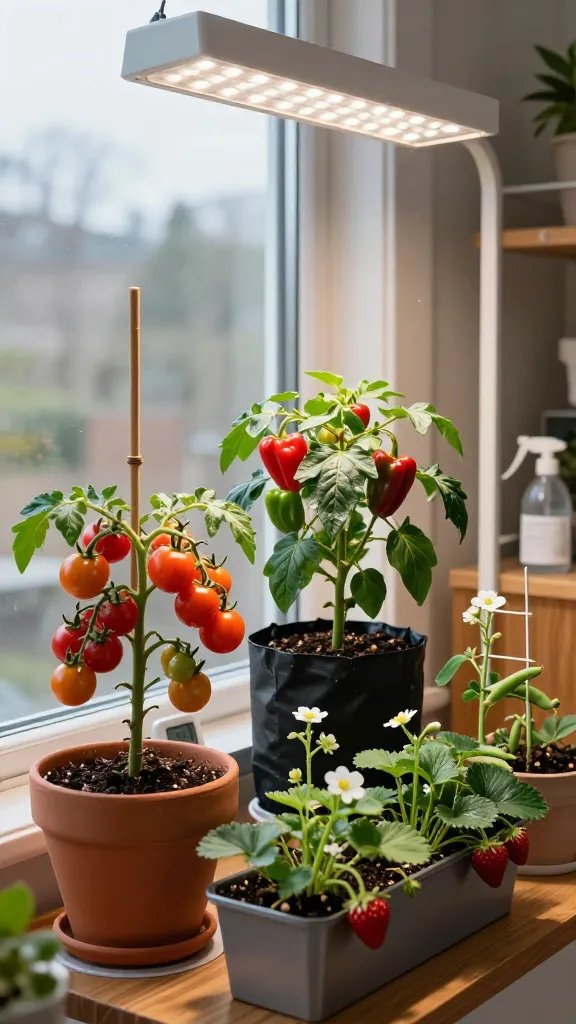
You don’t need a sunny patio to enjoy homegrown fruit. Dwarf and micro varieties of classic summer veggies can crank out produce in a bright corner with a little extra TLC.
What To Grow (4 Picks):
- Dwarf cherry tomatoes – Try varieties like Micro Tom, Tiny Tim, or Red Robin.
- Compact peppers – Mini bells or hot peppers like Apache do great in pots.
- Bush beans (dwarf) – Snap beans in a container? Totally doable with support.
- Strawberries (everbearing) – Alpine and day-neutral types fruit indoors under lights.
Must‑Know Setup:
- Use 1–3 gallon pots with quality potting mix; tomatoes like the larger end.
- Give strong light: 14–16 hours under an LED grow light. Fruiting plants are divas about light.
- Hand-pollinate: Gently shake plants or use a soft brush to move pollen between flowers.
- Fertilize: Use a balanced liquid feed weekly, then switch to a bloom formula when flowers appear.
Expect small but mighty harvests. You’ll pop sweet tomatoes, spice up meals with homegrown peppers, and flex that you grew berries next to your coffee maker. Trust me, it’s a vibe.
5. Root & Bulb Favorites You Can Grow In Tubs
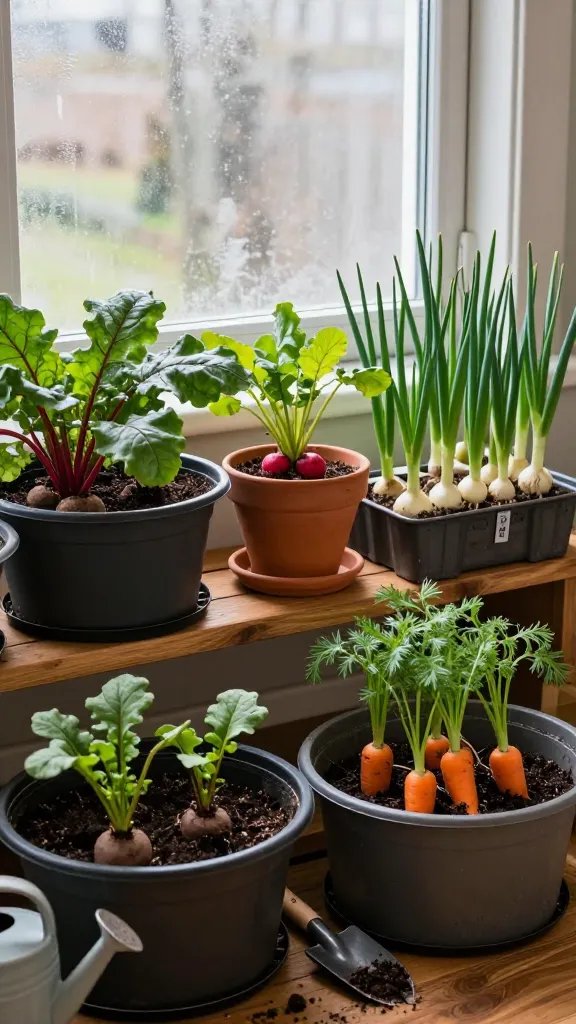
Roots indoors? Absolutely. Choose fast or compact varieties and give them a deep enough container. They won’t win county fairs, but they’ll taste incredible and feel ridiculously wholesome to harvest.
What To Grow (4 Picks):
- Radishes – Speed demons; round types mature in 25–35 days.
- Baby carrots – Parisian or Thumbelina are short and sweet for containers.
- Green onions (scallions) – Regrow from store-bought roots or sow seeds thickly.
- Baby beets – Harvest tender greens first, then small roots later.
Container & Soil Tips:
- Depth matters: 6–8 inches for radishes and scallions; 8–10 inches for baby carrots and beets.
- Use a fluffy, stone-free mix to prevent forked roots. Add perlite for extra airiness.
- Keep moisture even—never waterlogged. Inconsistent watering leads to woody or split roots.
Growth Hacks:
- Thin seedlings early so roots have space to size up.
- Give 12–14 hours of light. Cooler rooms help radishes stay crisp and mild.
- Harvest small and often; baby roots taste best and finish faster.
Pulling your own radishes from a windowsill tub feels like a magic trick. You’ll add crunch to tacos, brightness to bowls, and a little smug joy to your day.
Ready to build your winter indoor garden? Mix a tray of microgreens, a pot of herbs, a salad box, a fruity diva or two, and a root tub—and you’ve got a mini market at home. Keep it simple, keep it bright, and keep snipping. Your future self (and your grocery bill) will thank you.