
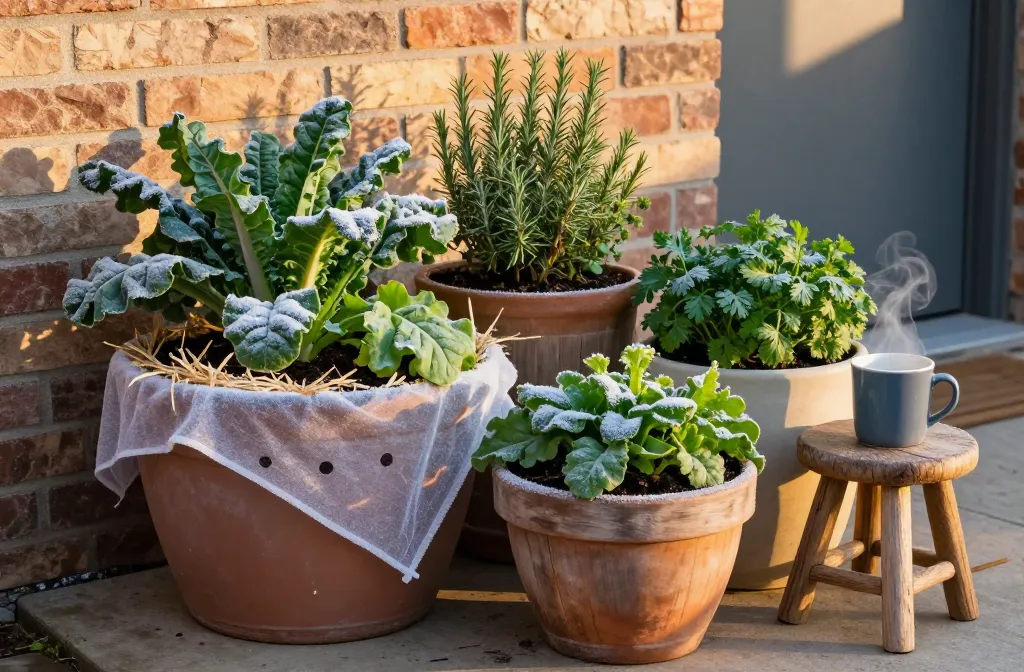
Cold snaps don’t need to end your harvest. With the right plants and simple container tricks, you can pick greens and herbs while your neighbors hibernate. These frost-hardy champs shrug off chilly nights and keep flavors bold. Grab a mug, bundle up, and let’s build a winter container garden that actually produces.
1. Build The Frost-Defying Container Setup
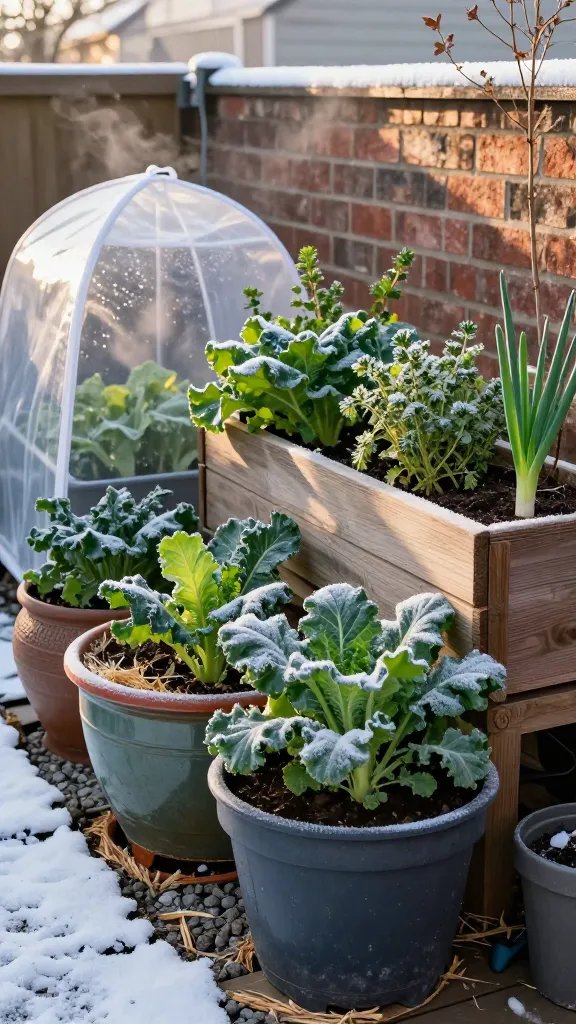
Your plants can handle the cold, but your containers need to play defense. Think insulation, drainage, and positioning. Nail this setup and you extend your season by weeks—sometimes months.
Smart Container Choices
- Material: Thick ceramic, wood, or heavy-duty plastic insulates better than thin metal.
- Size: Go big (at least 12–16 inches wide). More soil means more thermal mass and less freezing.
- Drainage: Drill extra holes if needed. Cold + soggy = root rot disaster.
Soil & Mulch
- Mix: 60% high-quality potting mix, 30% compost, 10% perlite for airflow.
- Mulch: Top with 1–2 inches of shredded leaves, straw, or pine needles to buffer temperature swings.
- Fertilizer: Slow-release organic pellets at planting; supplement with fish/seaweed emulsion monthly.
Microclimate Hacks
- Cluster pots together and tuck them near a south-facing wall for radiant warmth.
- Use frost cloth or row cover on cold nights; secure with clips so wind doesn’t turn it into a kite.
- Slide pots onto plant caddies so you can chase sunlight or roll them into a garage during arctic blasts.
Dial in this setup and every cold-hardy plant you choose gets a head start. Less stress for you, less shock for them.
2. Leafy Greens That Laugh At Frost
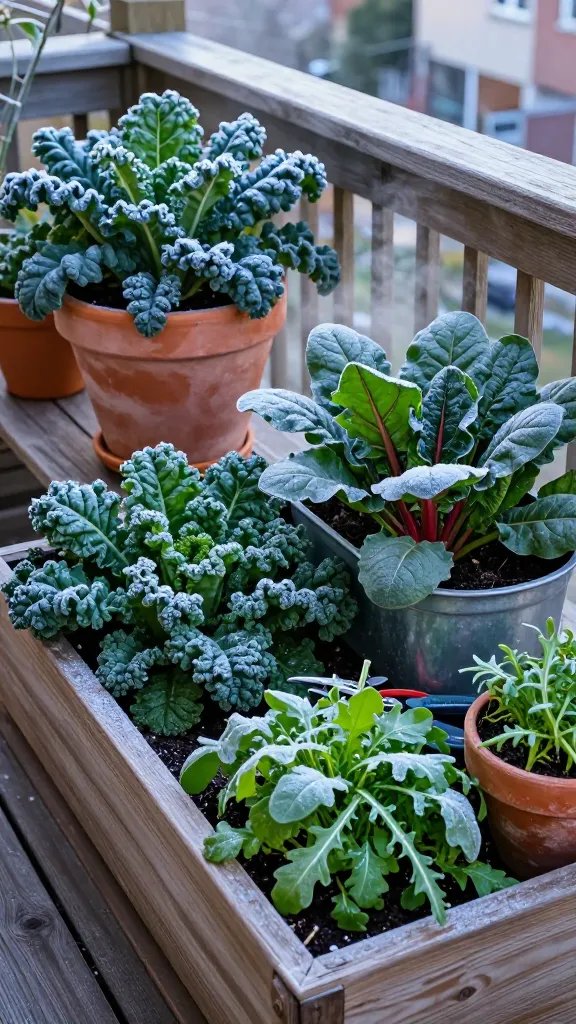
Greens love cool temps, and many taste sweeter after a nip of frost. If you want quick wins and frequent harvests, this is your gold mine. Cut-and-come-again means salads on repeat—seriously, it’s addictive.
Top 12 Frost-Tolerant Greens (For Containers)
- Kale (Lacinato, Winterbor, Red Russian): Survives deep frosts; sweeter after cold. Space 1 plant per 12-inch pot or 2 in a larger trough.
- Spinach (Giant Winter, Bloomsdale): Thrives in chill; harvest baby leaves weekly.
- Arugula: Fast-growing, peppery, and reliable. Sow thick, harvest often.
- Mizuna: Mild mustard with frilly leaves; handles repeated cuts.
- Tatsoi: Forms pretty rosettes; stays crisp in the cold.
- Mustard Greens (Green Wave, Red Giant): Bold flavor; cold sweetens the bite.
- Swiss Chard: Handles light frost; gorgeous stems brighten gray days.
- Claytonia (Miner’s Lettuce): Winter salad hero; tender and cute, IMO.
- Mache (Corn Salad): Tiny rosettes, buttery texture, thrives in cold shade.
- Endive/Escarole: Slightly bitter crunch that loves brisk air.
- Pak Choi/Bok Choy (Baby types): Compact and fast; great for stir-fries.
- Winter Lettuce (Oakleaf, Marvel of Four Seasons): Choose cold-hardy varieties and keep them covered on severe nights.
Planting & Harvest Tips
- Spacing: Dense sow for baby-leaf mixes; thin for full heads later.
- Watering: Morning only. Damp foliage overnight invites trouble.
- Harvest: Snip outer leaves, leave centers to regrow. You’ll get weeks of production.
When you need fuss-free nutrition that just keeps coming, greens deliver. They’re the MVPs for winter salads and quick sautés.
3. Root Veggies That Keep Their Cool
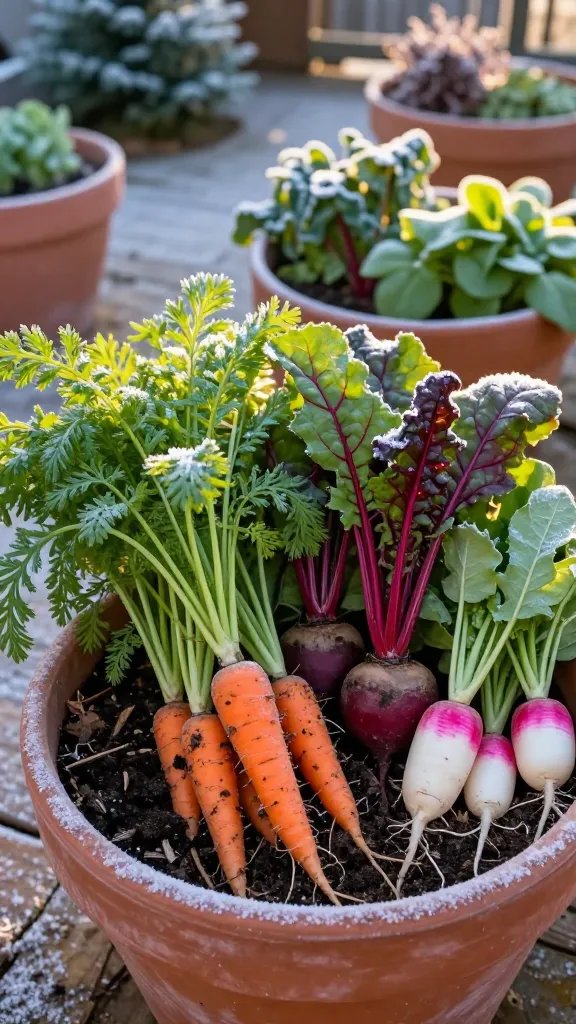
Roots store energy below the soil line, so they stay snug when temperatures dip. Many become sweeter after frost because starches convert to sugars. If you like low-maintenance and high reward, plant these and chill.
Top 7 Frost-Tolerant Roots
- Carrots (Napoli, Mokum, Nantes types): Sweet after frost; grow in deep containers (12+ inches).
- Beets (Detroit Dark Red, Cylindra, Chioggia): Leaves and roots both edible; compact and colorful.
- Radishes (Cherry Belle, French Breakfast, Daikon “Miyasige”): Lightning fast. Sow every two weeks for steady snacks.
- Turnips (Hakurei, Purple Top): Crisp roots, tasty greens. Win-win.
- Kohlrabi: Swollen stem is the prize; crunchy and sweet when cold.
- Rutabaga: Needs bigger containers and a bit more time; flavor improves in chill.
- Green Onions/Scallions: Cold-tough and space-efficient; perfect pot fillers.
Container Strategy
- Depth Matters: At least 12 inches for carrots, beets, rutabaga; 8–10 inches for radishes and turnips.
- Soil Texture: Loose and grit-free to avoid forked carrots. Sift if needed.
- Mulch: A thin layer keeps shoulders from greening and buffers frost.
Harvest Like A Pro
- Water lightly the day before pulling roots to ease them out.
- Stagger sowing every 2–3 weeks for a steady pipeline.
- Leave mature carrots and beets in the pot under mulch as “living storage.”
Use roots when you want reliable harvests without daily fuss. Roasts, slaws, soups—boom, cozy meals on demand.
4. Aromatic Herbs That Don’t Flinch At Frost
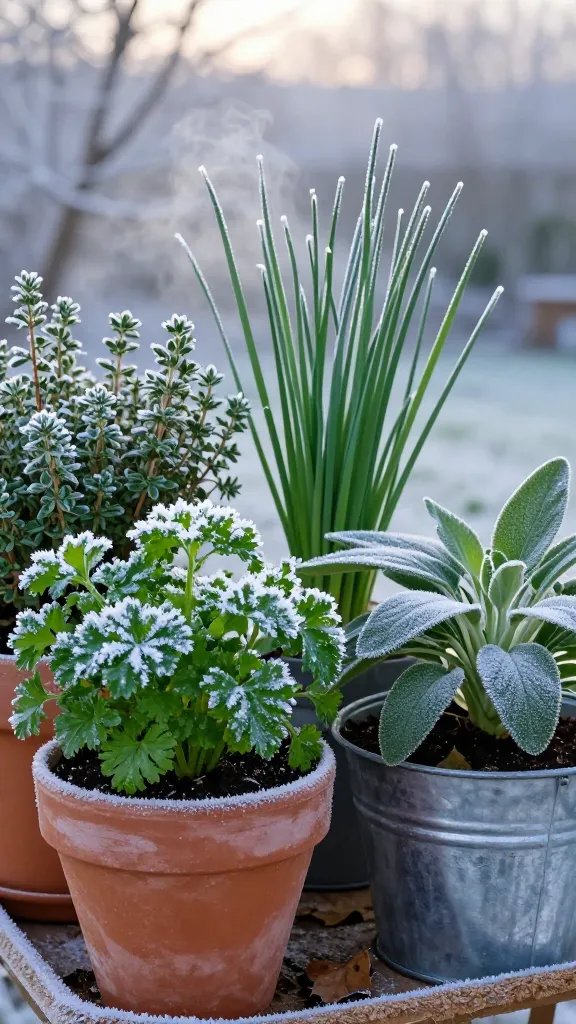
Herbs transform cold-weather cooking, and several keep producing in chilly containers. Some even taste stronger in cool air. If you crave fresh flavor while the world looks gray, these are your spice rack’s best friends.
Top 6 Frost-Tolerant Herbs
- Parsley (Flat-Leaf, Curly): Handles frost like a champ; biannual but acts perennial in mild winters.
- Chives: Tough as nails; cut and they bounce back. Oniony goodness for everything.
- Thyme: Woody and winter-hardy; goes with roast veg and soups.
- Sage: Fuzzy leaves resist cold; fantastic with roots and poultry.
- Oregano: Survives frost in containers if well-drained; robust flavor.
- Winter Savory: Underrated but hardy; peppery, great with beans and meats.
Potting Notes
- Drainage first: Herbs hate wet feet in winter. Use extra perlite and a pot with big holes.
- Terracotta caution: Can crack in freezes. If you love the look, line with a plastic nursery pot.
- Light: Aim for 5–6 hours of sun; supplement with a clip-on grow light if days run short.
Harvest & Care
- Snip lightly during extreme cold; leave enough foliage to keep plants energized.
- Bundle with a light frost cloth during hard freezes to avoid windburn.
- Divide chives and repot in spring to keep clumps vigorous.
Grow herbs for fresh, punchy flavors when everything else tastes like January. FYI, a pot of parsley by the door feels like a tiny victory every time you step outside.
5. Planting Plans, Timing, And Easy Protection
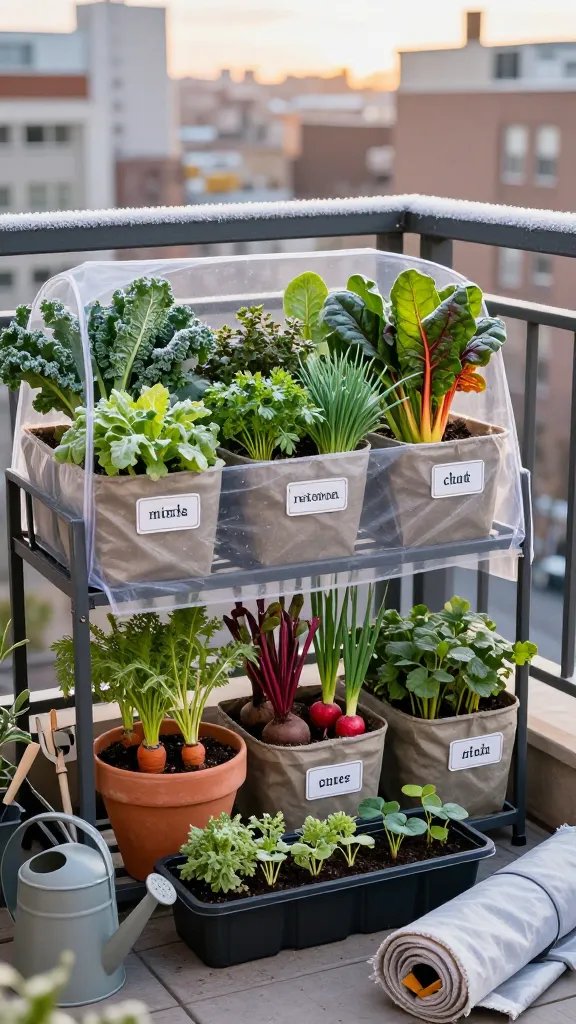
You’ve got the all-star list—now arrange it so your containers crank out harvests for months. A little planning beats replanting every other week. And yes, we’ll keep the protection simple because you have better things to do than baby-sit plants all night.
Quick Timing Guide (Cool & Cold Seasons)
- Early Fall Planting: Kale, spinach, arugula, mizuna, tatsoi, chard, carrots, beets, radishes, green onions, parsley, thyme, sage, oregano, chives.
- Late Fall/Early Winter: Sow mache, claytonia, and more spinach; transplant baby bok choy under cover.
- Late Winter: Start another round of radishes, scallions, mustard greens, and pak choi for a jump on spring.
Two Foolproof Container Combos
- Salad Bowl Trough (24–30 inches): Center: kale or Swiss chard (2 plants). Sides: spinach, arugula, mizuna, and mache sown thick. Edges: chives for year-round snipping.
- Root & Herb Barrel (Half Barrel): Middle: beets and carrots in alternating rows. Front edge: parsley and thyme. Back edge: green onions for quick harvests.
Protection Made Easy
- Frost Cloth: Keep a pre-cut piece with binder clips next to each pot. Throw it on when temps dip below freezing.
- Mini Hoop: Bend 1/4-inch PVC or wire over long containers and cover with row fabric. Instant greenhouse vibes.
- Thermal Boost: Water in the morning on freeze days; moist soil holds heat better than dry. Don’t drown them—light watering only.
- Windbreaks: Park containers behind a bench or against a fence. Wind chills plants faster than air temps alone.
Feeding & Troubleshooting
- Feed lightly: Overfeeding in low light makes leggy, weak growth. Monthly liquid feed is plenty.
- Pests: Aphids show up on warm spells. Blast with water, then spray neem or insecticidal soap if needed.
- Sun Management: Rotate pots weekly for even growth. Low winter sun = sneaky leaners.
Use these plans when you want steady harvests without micromanagement. You’ll spend minutes, not hours, and still eat like you planned ahead—because you did.
Winter doesn’t have to mean boring produce or sad store-bought greens. With hardy veggies, resilient herbs, and a little container savvy, you’ll harvest through frosts like a pro. Bundle up, plant a few pots, and enjoy that smug feeling when you’re snipping kale in January—trust me, it’s addictive.