
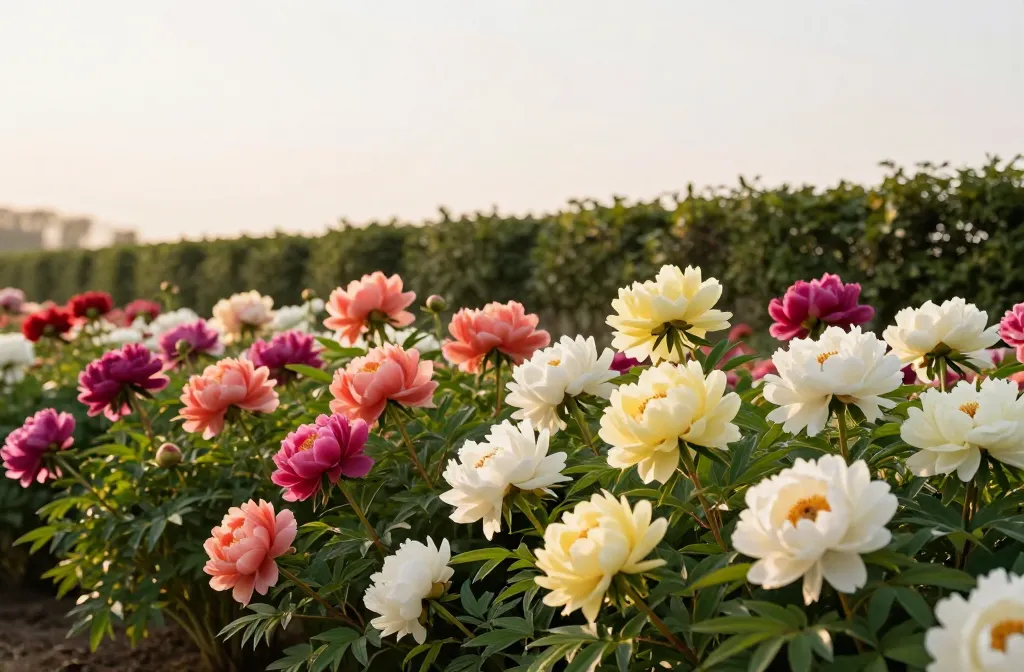
Peonies look like fluffy fireworks that forgot gravity, and we love them for it. But one gusty afternoon can turn those ruffles into confetti—unless you plan smart. These ten peony “explosions” don’t just bloom big; they hold their own when late spring breezes start gossiping. Ready to grow blooms that stand tall and strut?
1. Choose Wind-Wise Varieties, Not Drama Queens
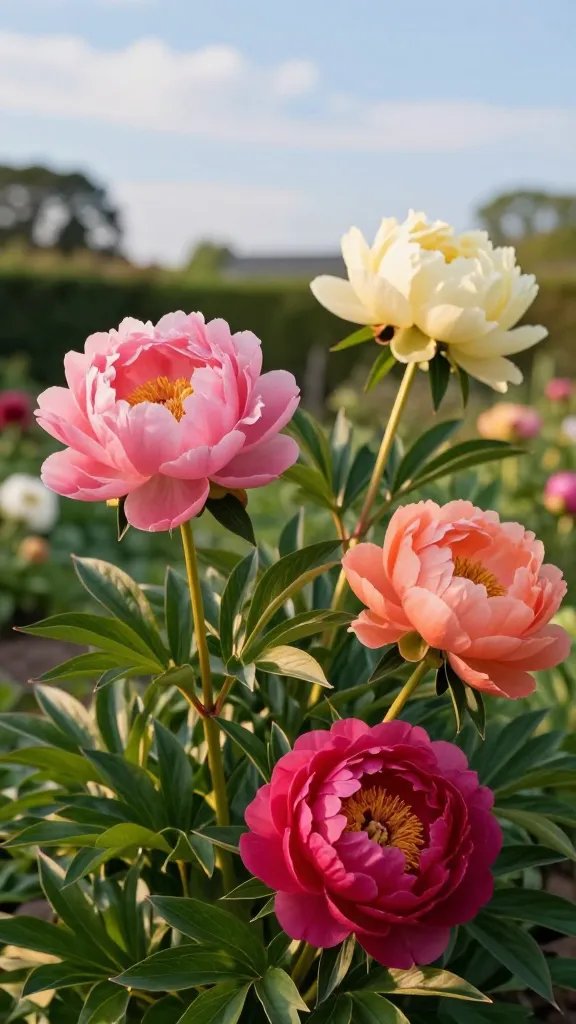
Some peonies handle wind like champs. Others flop like a fainting couch in a soap opera. Pick the sturdy types and you’ll save yourself a lot of staking and sighing.
Top Sturdy Picks
- ‘Kansas’ (Herbaceous): Deep magenta, tight double blooms, thick stems.
- ‘Do Tell’ (Japanese form): Lighter, airy center that catches less wind.
- ‘Coral Charm’ (Semi-Double): Bowl-shaped, less petal sail area, fabulous fade.
- ‘Bartzella’ (Intersectional/Itoh): Big blooms, strong woody stems, butter-yellow glow.
- ‘Krinkled White’ (Single): Crisp, single petals that don’t weigh plants down.
Lean into single, semi-double, and Itoh types for less flopping and more flexing. Great for breezy yards and anyone who hates plant triage.
2. Plant Where Wind Breaks, Not Where Wind Breaks Them
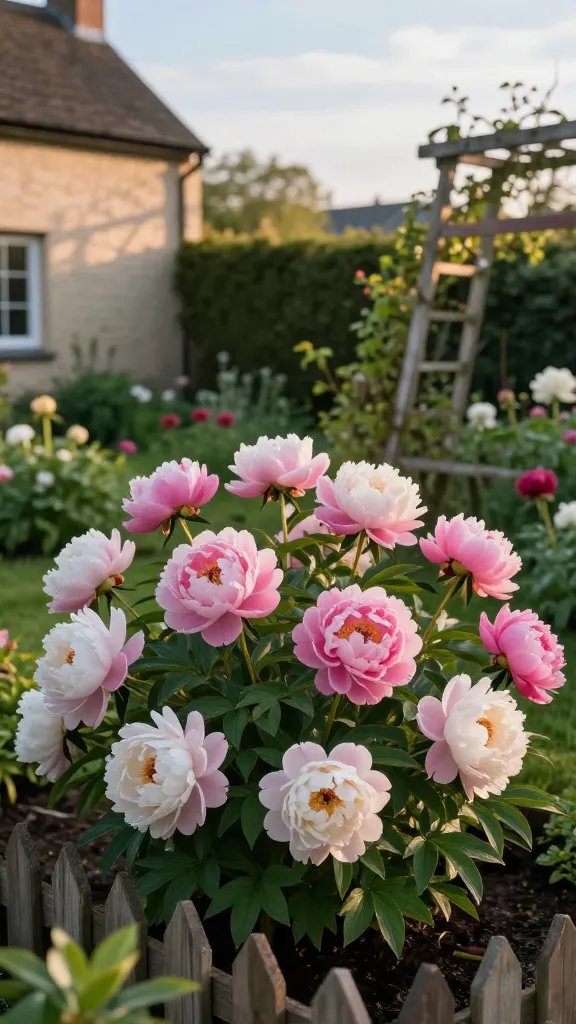
Location decides whether your peonies pose or faceplant. Since they bloom during breezy shoulder season, give them a calm stage to perform.
Smart Placement Tips
- Face east so morning sun dries dew fast (less weight on petals).
- Use windbreaks like picket fences, hedges, or even an open trellis.
- Leave airflow—don’t tuck them into a dead air pocket that breeds disease.
Place them where buildings or shrubs slow the wind without blocking the sun. Perfect for border fronts or along soft hedges.
3. Stake Like You Mean It—Before Buds Balloon
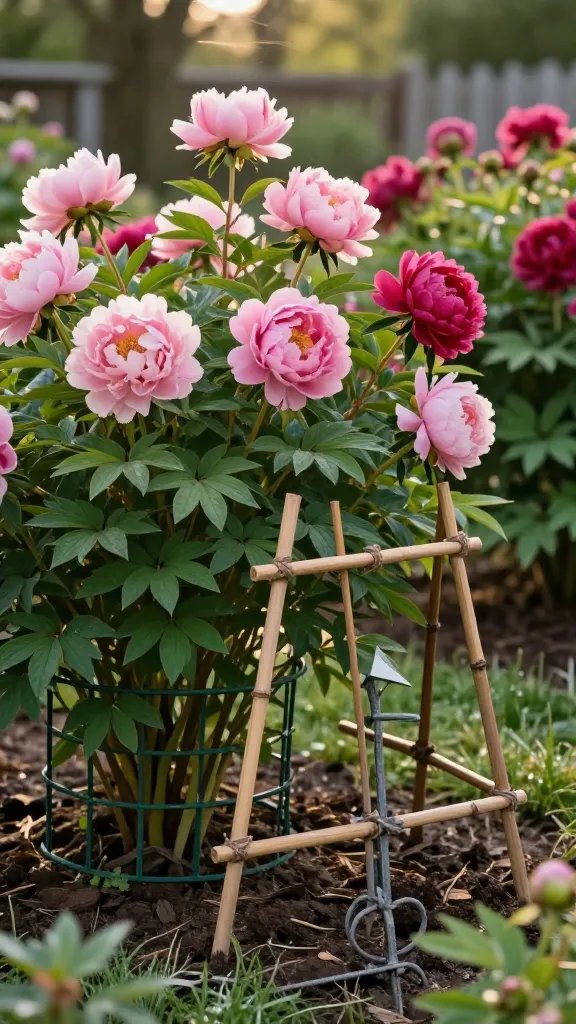
Support beats emergency rescue every time. Stake early, while growth still looks innocent, because tomorrow those buds will weigh as much as cupcakes.
Best Support Styles
- Peony rings: Round grids that disappear under foliage—install when stems hit 8–10 inches.
- Three-stake corral: Bamboo stakes + soft tie in a triangle for big clumps.
- Obelisks: Pretty, sturdy, and great for showy front yards.
Use soft, stretchy ties (old tights work, FYI) and secure midway up stems. You’ll keep that explosion shape without the messy “tied-up” look. Ideal for heavy doubles and bouquet-cutters.
4. Mulch And Water For Muscles, Not Flop
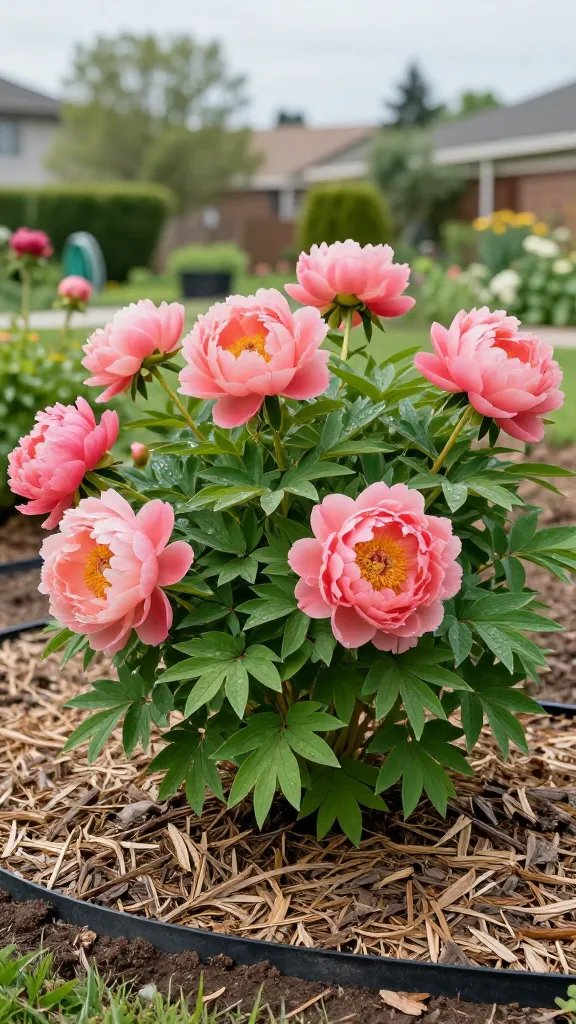
Hydrated plants hold their posture better in gusts. But soggy soil equals weak stems. Balance matters if you want upright, magazine-worthy flowers.
Care Cheats
- Mulch 2–3 inches with shredded leaves or bark to regulate moisture.
- Water deeply once a week in dry spells—don’t mist daily.
- Avoid high-nitrogen fertilizers that pump leaves, not strength. Use a balanced, slow-release or compost in spring.
Well-fed, evenly watered peonies develop thicker stems that sway instead of snap. Great for climates with spring wind + surprise heat.
5. Prune And Divide For Stronger Architecture
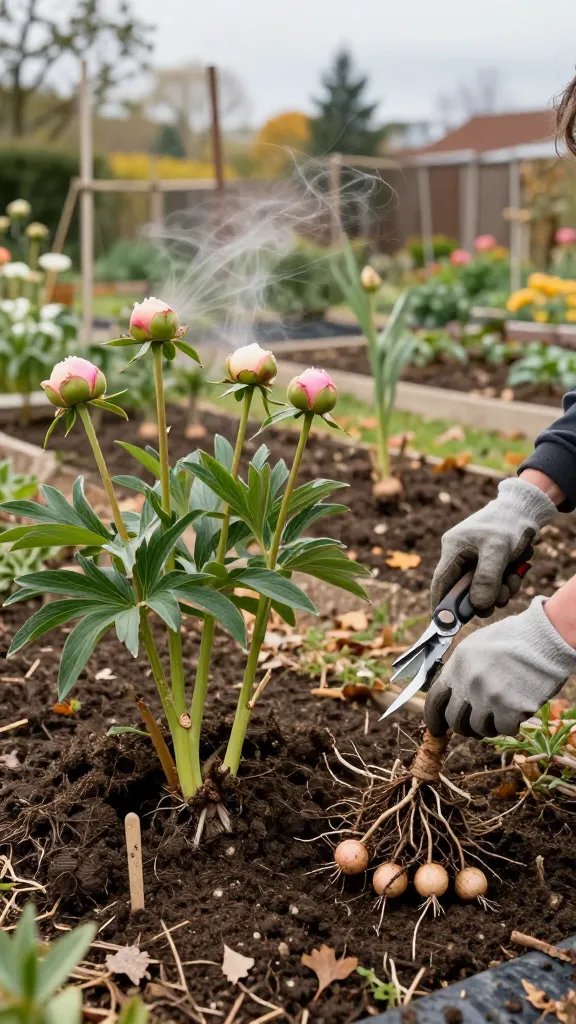
Overcrowded peonies act like tangled earbuds in a pocket—messy and unreliable. Thin and divide to refresh energy and structure.
How To Do It
- Fall cleanup: Cut herbaceous peonies to the ground after frost to reduce disease load.
- Divide every 8–10 years: Lift the crown in fall; replant divisions with 3–5 eyes each.
- Plant depth: Set eyes 1–2 inches below soil (colder zones 2 inches; warmer zones closer to 1 inch).
Fresh spacing boosts bloom strength and airflow. Perfect when plants start blooming less or leaning like gossiping neighbors.
6. Choose Bloom Forms That Laugh At Gusts
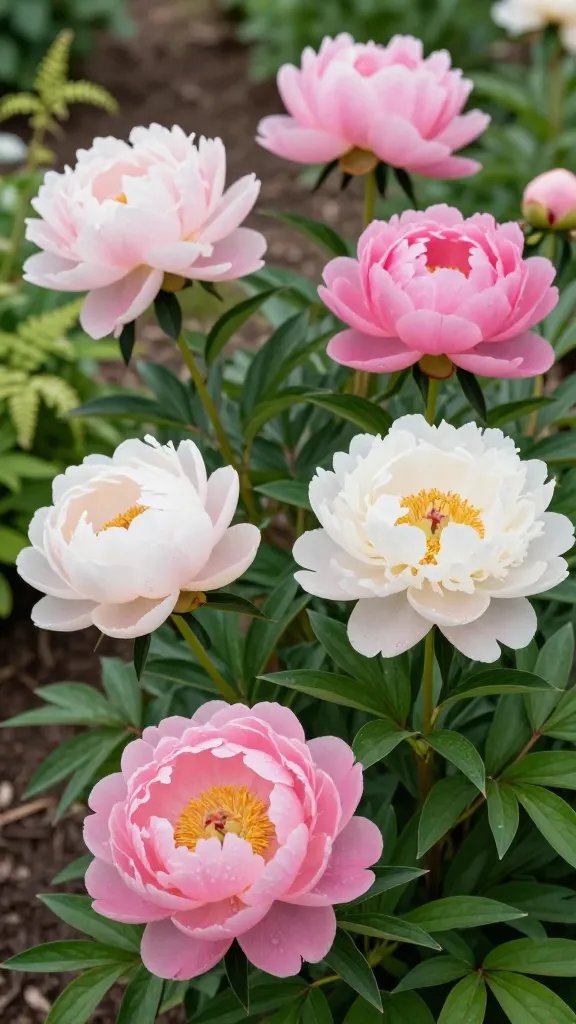
Not all peonies bloom the same way. Some forms carry petal weight closer to the stem, which means less “sail” in the wind.
Breeze-Resistant Forms
- Single: Fewer petals, fast dry time, clean lines.
- Semi-Double: Petals layered but not overloaded—classic and sturdy.
- Japanese/Anemone: Tufted centers that look fancy without extra ounces.
- Itoh/Intersectional: Woody bases with big flowers that still hold upright.
Skip super-heavy bomb doubles in windy spots unless you love staking. These forms shine in open gardens and exposed beds.
7. Snip Strategically: Deadhead And Disbud For Balance
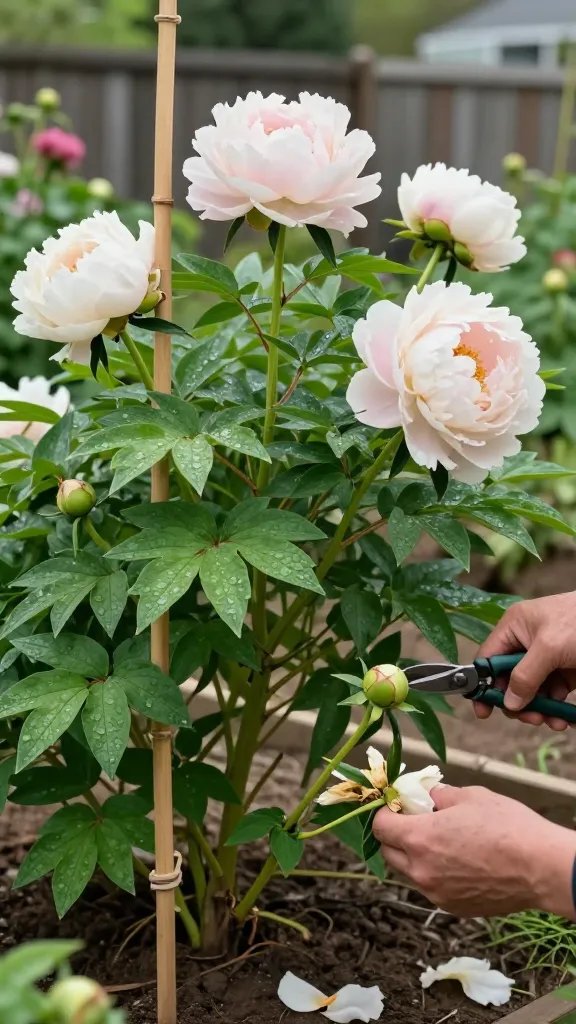
You can train peonies like mini weightlifters. A little snipping keeps energy balanced so stems don’t buckle under too many blooms.
Simple Snip Rules
- Disbud side buds on weak stems to focus size and strength on the main flower.
- Deadhead as petals drop to reduce moisture holding and flopping weight.
- Cut for vases when buds feel marshmallow-soft—less strain on stems outside.
This tweak keeps plants looking neat and upright. Great if you love huge focal blooms and tidy borders.
8. Pair With Plant Besties That Block The Breeze
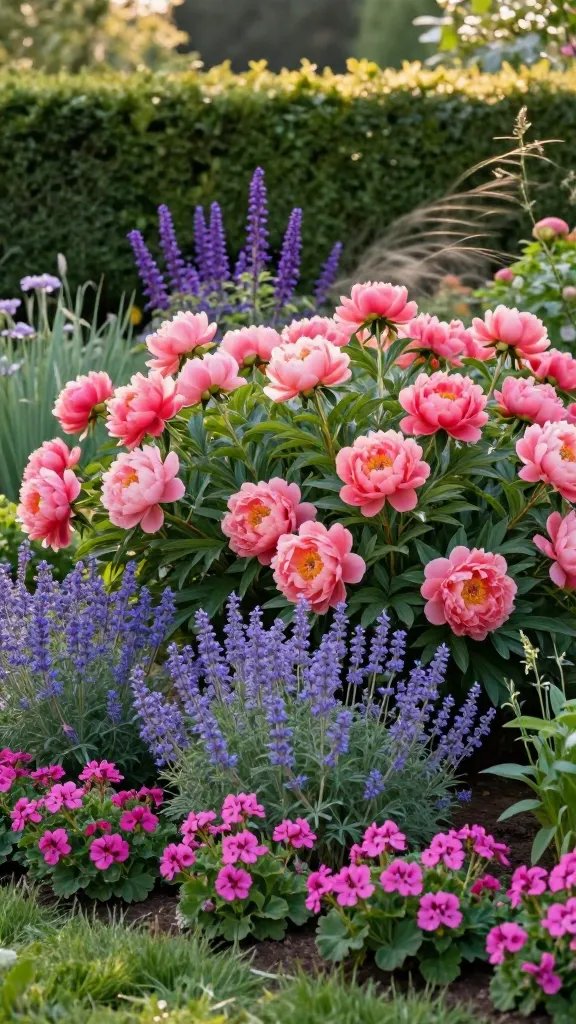
Companion plants can act like fashionable bodyguards. They slow wind, hide supports, and make your peonies look even more extra.
Great Companions
- Nepeta (Catmint): Billowy, low, and bee-happy; softens edges.
- Salvia: Vertical spikes that break wind and add contrast.
- Boxwood or low yew: Evergreen structure that steadies air currents.
- Hardy geraniums: Ground-hugging mats that stabilize the front row.
Mix textures—mounds, spikes, and evergreens—to create a peony-friendly microclimate. Perfect for front-yard showpieces and cottage borders.
9. Upgrade Your Soil So Stems Don’t Skip Leg Day
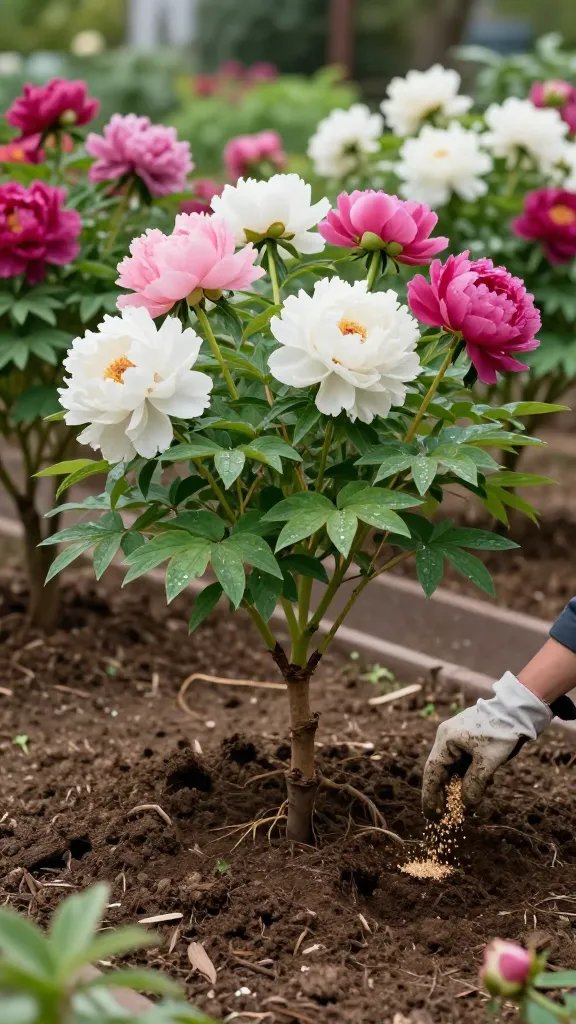
Great blooms start in great soil. Peonies want a firm, fertile base that anchors roots and feeds sturdy growth.
Soil Game Plan
- Loamy, well-drained soil with pH around 6.5–7.0.
- Amend with compost yearly in early spring; mix in a handful of bone meal when planting.
- Avoid waterlogging—raise the bed if your soil sits wet after rain.
Healthy soil builds thicker canes and tougher bloom stalks. Ideal if wind meets clay or sand and you need stability fast.
10. Harvest And Display Like A Pro (So Storms Don’t Win)
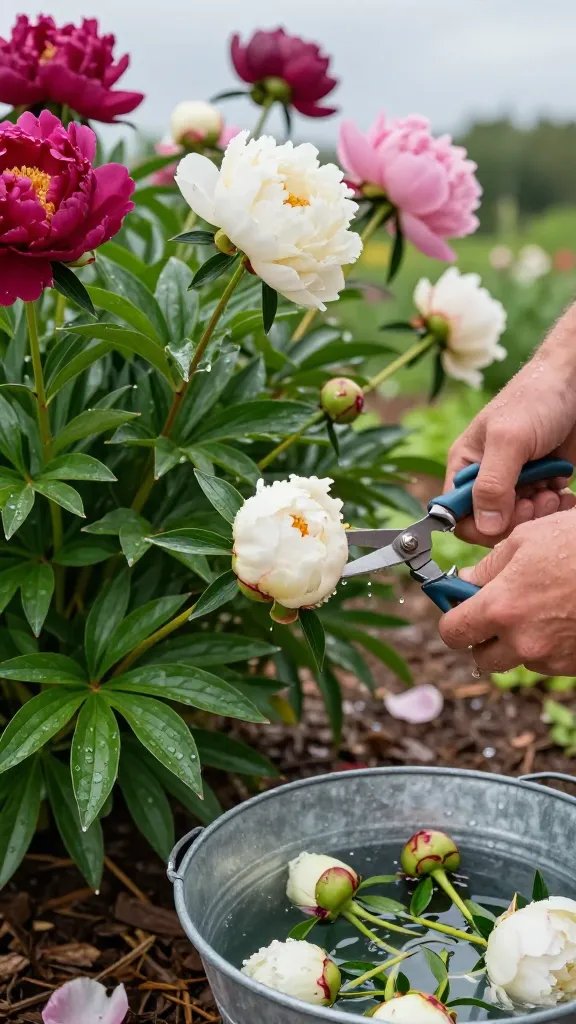
Cutting peonies at the right time makes them last longer indoors and saves your outdoor display from surprise gusts. You’ll get the best of both worlds—garden glory and vase drama.
Cutting And Conditioning
- Stage: Harvest at the “marshmallow bud” stage—soft but not open.
- Cut length: Leave at least two sets of leaves on the plant to feed next year’s show.
- Condition: Hydrate in cool water for a few hours before arranging.
- Emergency storm tip: Strip petals off blooms already blowing apart and float them in bowls. Chic, IMO.
Timing your snips protects plants and gives you long-lasting bouquets. Perfect for party weeks, photo ops, and—seriously—saving blooms from windy weekends.
Peonies can be dramatic without being delicate. With the right varieties, supports, and savvy placement, your late spring borders will keep popping even when breezes try to pick a fight. Plant smart, stake early, and get ready for an outrageous bloom show that won’t back down.