
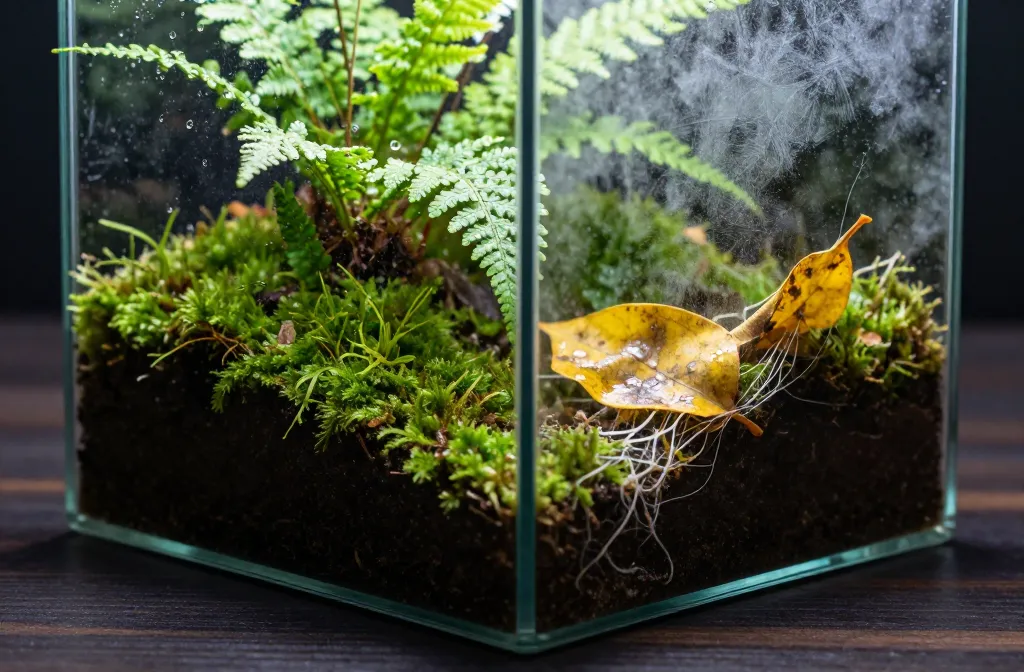
I’ve built terrariums that looked magazine-ready for exactly three weeks — then collapsed into soup and fungus. When I learned why, my next builds ran for years with almost no input. In this guide I’ll show you the predictable failure points that cause the three-week crash and the exact fixes you can do with household tools. You’ll leave knowing how to set moisture, light, soil, and plant choice so your little ecosystem stabilizes instead of self-destructing.
The “New Tank Glow” Problem: False Stability Before the Crash
Week one looks perfect because fresh plants still run on stored energy and the substrate hasn’t saturated yet. By week three, roots hit wet pockets, oxygen runs low, and microbes explode — that’s when the melt starts.
I treat every new terrarium like a newborn aquarium: I expect a settling period and manage it. I vent more in the first two weeks, trim any yellowing leaf immediately, and keep light gentle until roots establish.
Action today: Open the lid for 30–60 minutes every other day during the first two weeks to let excess humidity escape and oxygen refresh the system.
Overwatering at Setup: The Single Biggest Killer
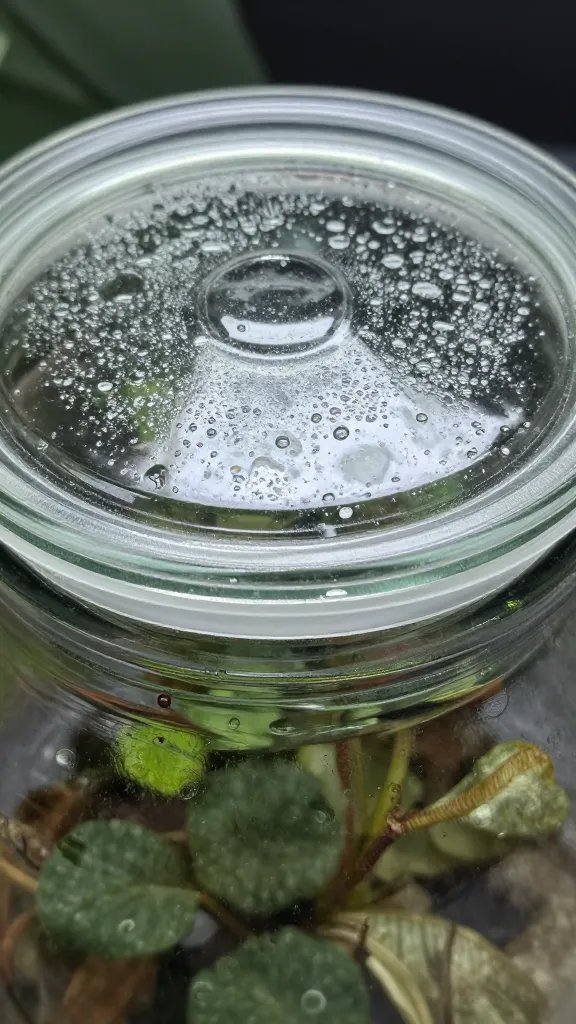
Most failures start with a swampy substrate. In a closed or semi-closed terrarium, water doesn’t evaporate to your room — it stays inside, so a “well-watered” start becomes waterlogged fast.
Use the squeeze test. Mix your substrate, then grab a handful and squeeze firmly. It should clump but not drip; a glossy sheen on your palm is fine, actual drops mean too wet. Add dry mix until it passes.
Step-by-Step Fix for a Too-Wet Build
- Remove plants and set them on a clean towel.
- Spread the substrate on newspaper for 1–2 hours to off-gas humidity.
- Remix with extra dry potting mix and a handful of fine orchid bark for air space.
- Replant, firm gently, and mist the glass once only for humidity.
Action today: Press a wooden chopstick 2–3 inches into the substrate; if it comes out glossy and smeared, air out the terrarium for 2–3 hours and wick moisture with a folded paper towel at the edge.
No Drainage Layer or a Useless One
A proper false bottom buys you forgiveness. A thin sprinkle of gravel under soggy soil does nothing; it just raises the water table into the roots.
I use 1–2 inches of rinsed aquarium gravel or LECA, then a layer of mesh or window screen to keep soil from sifting down. This creates a clear water reservoir below and breathable soil above.
Warning Signs
- Persistent condensation from base to lid all day, not just mornings.
- A sulfur or “egg” smell when you open the lid — that’s anaerobic rot.
Action today: If you skipped a false bottom, tilt the jar and wick out pooled water with a paper towel wrapped around chopsticks, then plan a rebuild with a proper 1–2 inch drainage layer.
Too Much Light: Cooking the Jar
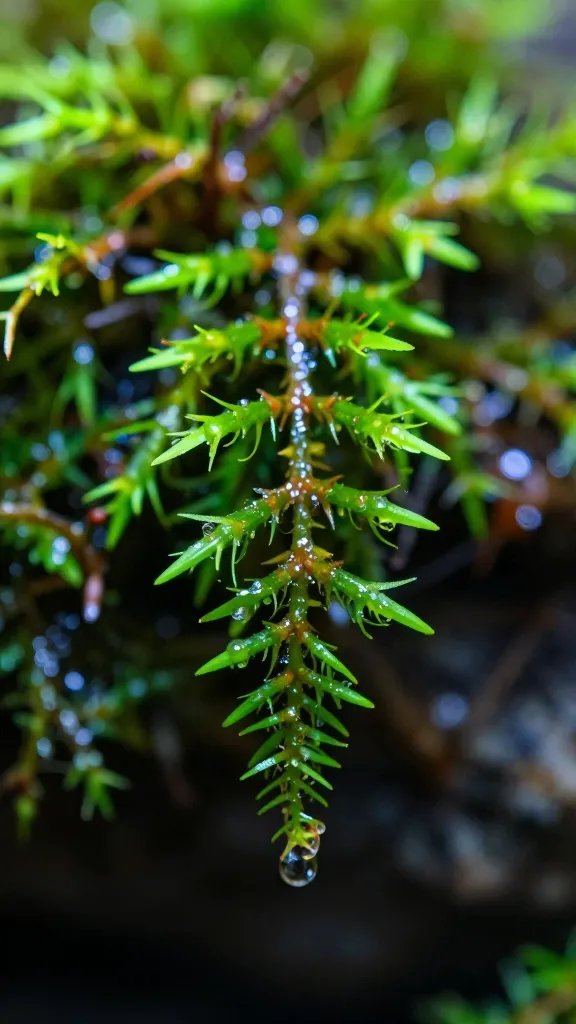
Glass magnifies heat. A terrarium that sits in direct sun can hit 35–45°C (95–113°F) in minutes, which bakes roots and fuels algae and mold.
Place it in bright indirect light: near a window where you can read comfortably without turning on a lamp, but where direct sun doesn’t hit the glass. For north or east windows, a sheer curtain helps; for south or west, pull it back 2–6 feet.
Warning Signs
- Condensation that dries out by late morning, then returns heavy at night.
- Bleached or crispy leaf edges on mosses and ferns.
Action today: Move the terrarium one full step farther from the window and place a sheet of white printer paper between it and the light source as a quick diffuser.
Wrong Plants for a Closed or Semi-Closed World
Terrariums succeed when plants share the same humidity and growth speed. Mixing a fast, vining tropical with a slow moss guarantees a takeover and rot from constant trimming.
Choose compact, humidity-loving species and skip drought lovers. I group by “cloud forest” behavior — short, shade-tolerant, and happy at 70–90% humidity.
Reliable Plant List
- Mosses: Cushion moss, mood moss (from reputable, pesticide-free sources)
- Ferns: Lemon button fern, heart fern
- Tropicals: Pilea depressa, Peperomia caperata, Fittonia (nerve plant, dwarf forms)
- Miniatures: Selaginella kraussiana, baby tears (Soleirolia) if you accept regular trims
Action today: If you have succulents or cacti inside any lidded vessel, rehome them to an open pot on a sunny sill and replace them with humidity lovers.
Stagnant Air Fuels Mold and Melt
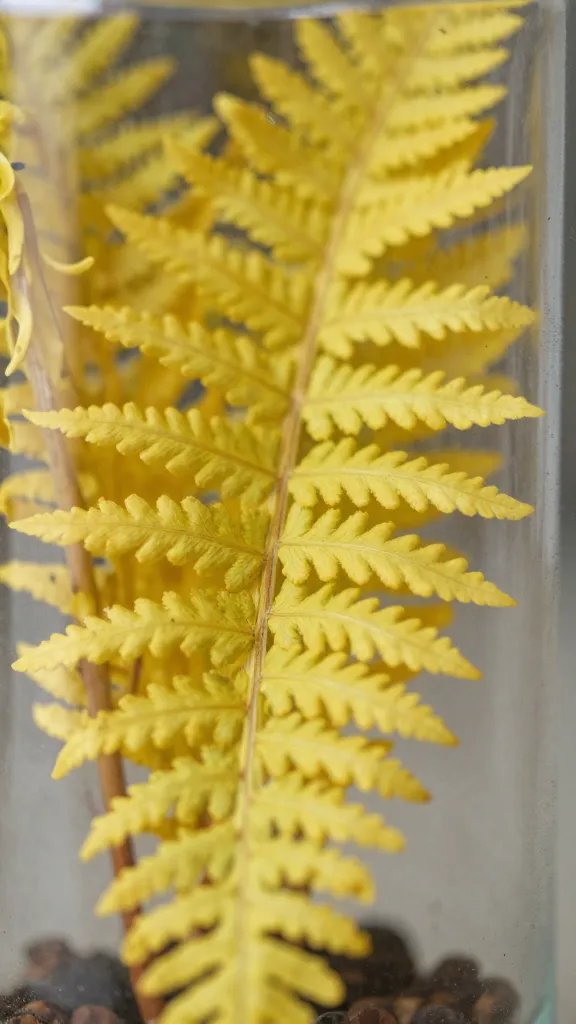
New terrariums run “wet” as plants adjust. Without fresh air, Botrytis and other fungi colonize tender leaves, usually right at week three.
I use a simple routine: lid on overnight to retain humidity, lid cracked with a pencil for 1–2 hours most afternoons for the first month. After growth stabilizes, I reduce venting to once a week or less.
Step-by-Step Mold Reset
- Remove visibly moldy leaves with clean scissors.
- Blot the glass dry with paper towel to reduce spore spread.
- Increase airflow: lid off for 1–2 hours daily for a week.
- Optional: dust a fingertip of ground cinnamon on the affected soil area as a mild antifungal.
Action today: Crack the lid with a bottle cap for one hour and wipe any heavy condensation from the glass.
Poor Substrate: Dense Potting Soil That Suffocates Roots
Standard indoor potting mix holds too much water for a closed jar. Roots need air pockets to avoid rot.
Build a light, springy substrate using items from a garden centre: 2 parts high-quality potting mix, 1 part fine orchid bark, 1 part perlite. For moss-only builds, use 2 parts coco coir and 1 part fine bark for structure.
Material Recommendations
- Potting mix: Any peat- or coir-based, without moisture crystals
- Fine orchid bark: Adds chunky structure
- Perlite: Keeps air space and prevents compaction
- Activated charcoal (thin sprinkle): Helps with odor and clarity but does not fix overwatering
Action today: If the soil compacts like cake when pressed, top-dress with a thin layer of perlite and gently rake the top 1 cm with a fork to open it up.
Skipping Maintenance: Tiny Pruning and Cleaning Prevent Big Failures
A terrarium wants balance. Dead leaves feed mold, and fast growers shade slower neighbors until they rot.
I do a 5-minute check weekly for the first two months: remove any fallen leaves, pinch back runners, and wipe the glass so you can actually see changes. After that, I check every two to four weeks.
Weekly Micro-Maintenance Checklist
- Pinch off any leaf touching the glass.
- Trim stems before they press against the lid.
- Spot-remove algae on glass with a cotton swab.
- Top up 1–2 tablespoons of water only if no midday condensation appears for 2–3 days.
Action today: Set a 5-minute calendar reminder this week to trim any leaf touching glass and remove debris.
Frequently Asked Questions
How wet should the glass look each day?
A healthy closed terrarium shows a light mist on the glass in the morning and clears by midday, with a few tiny droplets left. Constant heavy drips all day mean too much moisture; completely dry glass for several days means it needs a tablespoon or two of water. Check at lunchtime for the best read.
Can I use tap water in my terrarium?
Yes, if your tap water tastes clean and not noticeably salty. Hard water leaves mineral spots on glass and can stress mosses. If you notice white crust or leaf burn, switch to filtered, rain, or bottled spring water and add very small amounts at a time.
What’s the right size container for beginners?
A medium jar or vase 6–10 inches wide gives more stable humidity and temperature than tiny or huge builds. Wider bases allow a proper drainage layer and easier planting. Avoid narrow-neck bottles until you’re comfortable working with long tweezers.
Why do my plants rot where they touch the glass?
Leaves against glass stay wetter and hotter, and they get less air flow. That spot becomes a rot point that spreads. Keep foliage 0.5–1 inch away from the walls and wipe the interior glass when you see heavy condensation.
How often should I open a closed terrarium?
During the first month, open it 1–2 hours a few times a week to balance moisture and let the system settle. After that, only vent if you see persistent heavy condensation, a musty smell, or mold. Many stable builds stay closed for weeks without any issue.
Conclusion
Your terrarium isn’t failing at random — it’s telling you about water, air, light, and plant fit. Fix those at setup, then run a simple vent-and-trim routine for the first month and you’ll skip the infamous three-week crash. If you’re rebuilding, start with a proper drainage layer, a breathable substrate, and shade-loving minis — then set a weekly 5-minute check. Ready to go deeper? Next, learn how to choose containers with the right width, lid style, and access so maintenance stays easy and your mini-ecosystem thrives for years.