
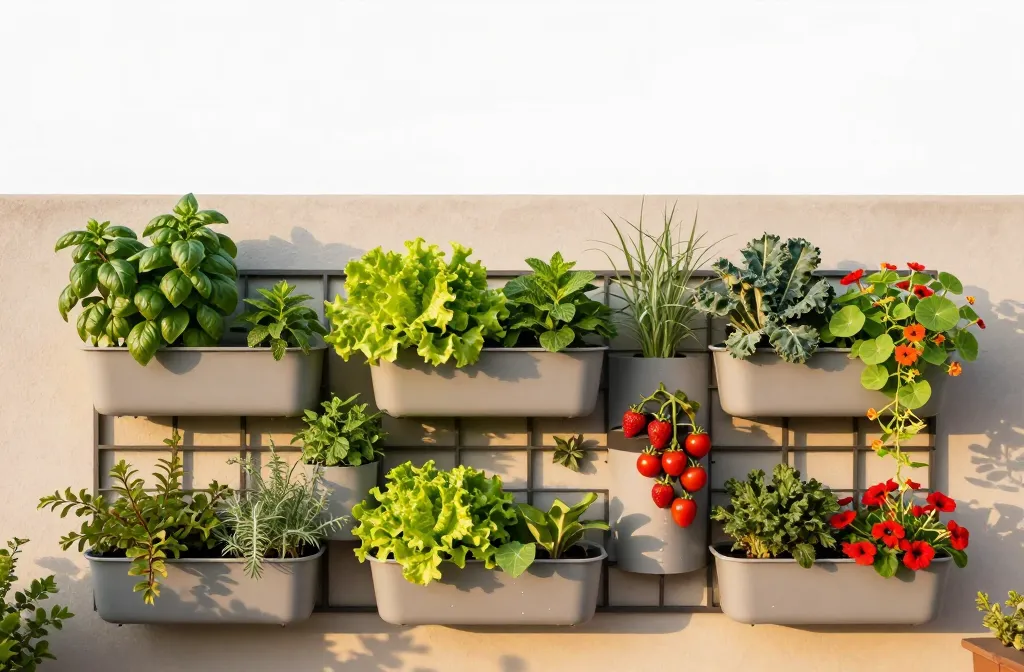
Your wall can grow dinner, fragrance, and bragging rights—no backyard required. In warm climates, a vertical garden turns blank fences into lush, edible art. This month-by-month guide keeps your panels, pockets, and trellises loaded with flavor and color. Ready to grow up (literally) and harvest nonstop?
1. Set Up For Success: Light, Structure, And Water (January–February)
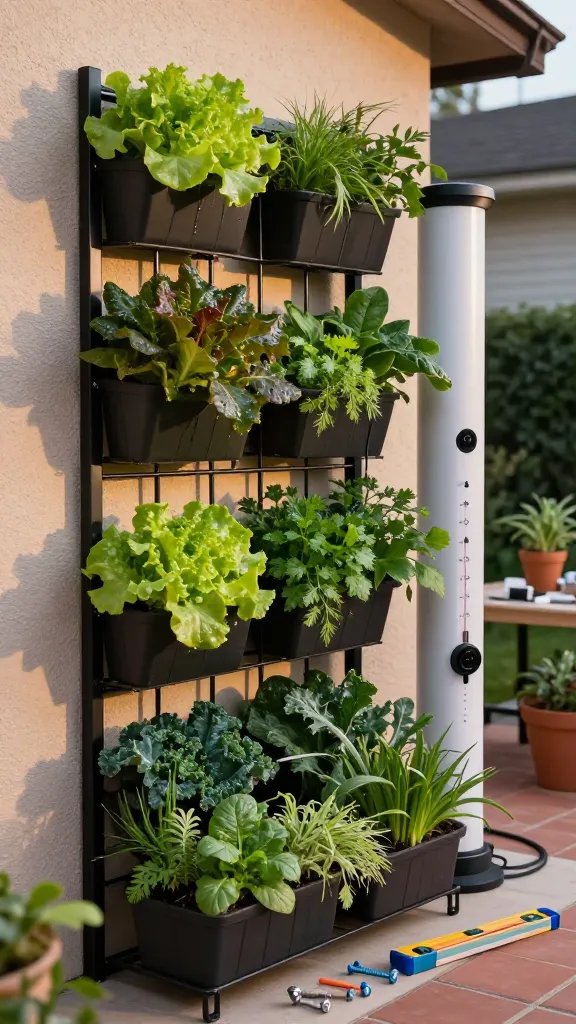
Before you plant the fun stuff, dial in your vertical system. Strong anchors, smart watering, and the right medium make everything easier—and keep your wall from becoming a crispy memorial to good intentions.
Check your microclimate. Warm climates still have cool nights in winter, which helps greens and herbs. Use this window to install, test, and plant cool-season layers.
Key Moves
- Choose the frame: Modular pocket planters, stacked pots, hydro towers, or trellis grids. Aim for sturdy, UV-stable materials.
- Soilless mix: Lightweight blend—coco coir, perlite, and compost for nutrition without compaction. Vertical roots need airflow.
- Irrigation: Drip line with emitters at each pocket. Add a timer. Hand-watering verticals gets old fast, trust me.
- Fertilizer: Slow-release organic granules + monthly liquid feed. Vertical setups leach nutrients faster.
- Sun mapping: South or west walls roast. Put heat-lovers high and shade-tolerant greens low or on east walls.
What To Plant (Cool-Season Start)
- Leafy greens: Lettuce mixes, spinach, Swiss chard, arugula. Plant densely for cut-and-come-again harvests.
- Herbs: Parsley, cilantro, dill, chives, thyme. Tuck thyme on edges to cascade.
- Edible flowers: Nasturtiums, calendula, violas. Color + pollinator magnet.
- Strawberries: Bare-root or plugs near eye level for easy picking.
Get your system right now, and everything you plant later grows happier and faster. FYI, this also prevents the dreaded mid-summer meltdown.
2. Spring Lift-Off: Climbing, Layering, And Companion Planting (March–April)
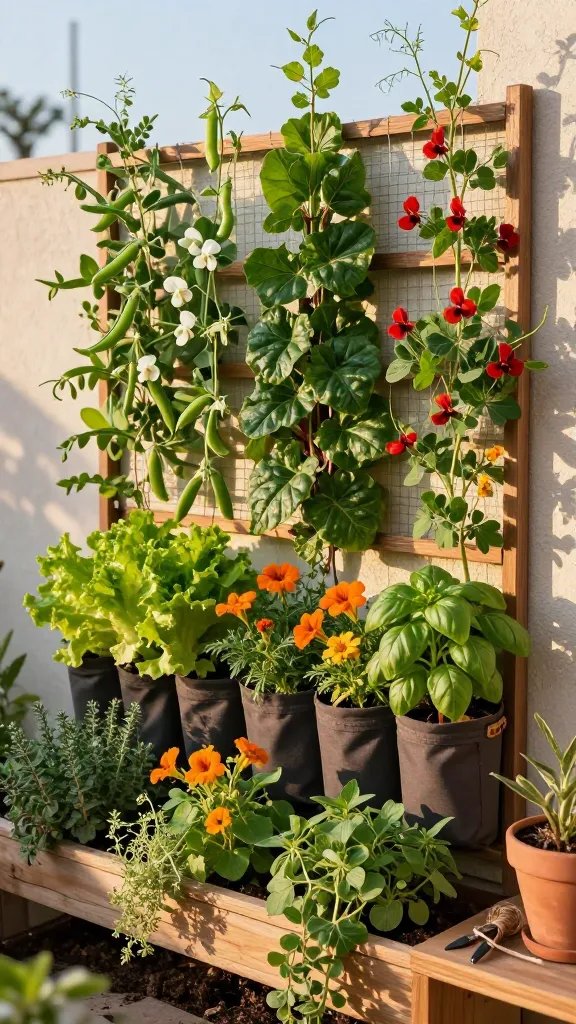
Now the fun really starts. Warmer days mean you can mix cool-season holdovers with early warm-season stars and start training vines. Vertical gardens shine when you stack plants by habit: trailers, fillers, and climbers.
Think of your wall like a theater. Low, drapey performers in the front, bulky mid-range crowd-pleasers in the middle, and viney headliners climbing the trellis in back.
What To Plant Now
- Climbers: Sugar snap peas (early), Malabar spinach, scarlet runner beans. Peas love early spring; swap to beans as heat rises.
- Fruit and veg: Cherry tomatoes (compact types), cucumbers (pickling or mini), tomatillos, peppers (shishito, jalapeño).
- Aromatics: Basil (Genovese and Thai), mint (container-only), oregano, sage. Basil thrives in warmth—keep it pruned.
- Pollinator bait: Marigolds, alyssum, borage. Tuck them between crops to attract beneficials.
Tips For Vertical Success
- Stagger plantings: Set a reminder to replant lettuce and arugula every 2–3 weeks for continuous salads.
- Train early: Use soft ties to guide tomato and cucumber stems up. Don’t wait for a jungle to form.
- Mix textures: Pair upright peppers with cascading strawberries and trailing thyme to cover gaps fast.
By late April, you’ll have a living tapestry—and the first snap peas and salad greens on repeat. This is the moment your neighbors start asking questions.
3. Summer Heat Mode: Shade, Succession, And Heat-Proof Crops (May–August)
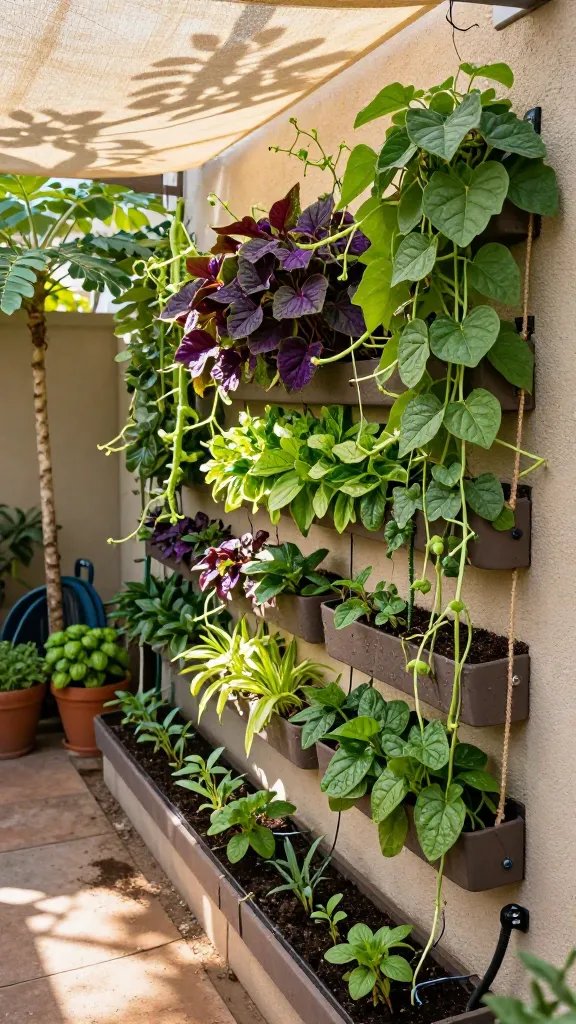
Warm climate summers bring hot walls and thirsty roots. You can still harvest like crazy if you lean into heat-tolerant varieties and add strategic shade. Think cool roots, hydrated media, and plants that actually like a sauna.
Also, keep succession going. The wall should evolve every few weeks, not stall out like a flavorless screensaver.
Heat-Tough All-Stars
- Greens That Don’t Bolt (Too Fast): Malabar spinach, New Zealand spinach, Okinawa spinach. They love vertical life and heat.
- Summer Vines: Cucumbers (Armenian, Beit Alpha), yardlong beans, bitter melon (if you’re adventurous).
- Tomato Types: Cherry/grape tomatoes handle heat better than beefsteaks. Choose disease-resistant, compact varieties.
- Peppers And Eggplant: Mini bells, shishito, Thai chiles, and slim Asian eggplants thrive on warm walls.
- Herbs That Don’t Quit: Basil (keep pinching), lemongrass in big pockets, rosemary (upright forms), Mexican tarragon.
Cooling And Watering Hacks
- Shade cloth: 30–40% shade during afternoon scorch. Clip it to the top and angle down.
- Mulch the pockets: A thin coco chip or straw layer reduces water loss and keeps roots cooler.
- Deep, infrequent water: Two longer sessions per day in extreme heat beats constant spritzing. Add a moisture-retaining polymer if you’re forgetful.
- Mid-season refresh: Yank any bitter, bolted greens and replant with basil, dwarf okra, or marigolds.
Harvest Strategy
- Pick small and often: Cucumbers and beans taste better and cue more production.
- Top tomatoes and peppers: Light pruning keeps airflow and prevents vertical chaos.
- Herb haircut schedule: Weekly trims for basil, mint, and oregano keep them lush and non-woody.
Run this play and your wall stays lush through peak heat instead of burning out. Your future salsa thanks you.
4. Fall Flavor Flip: Reboot With Cool-Season Winners (September–October)
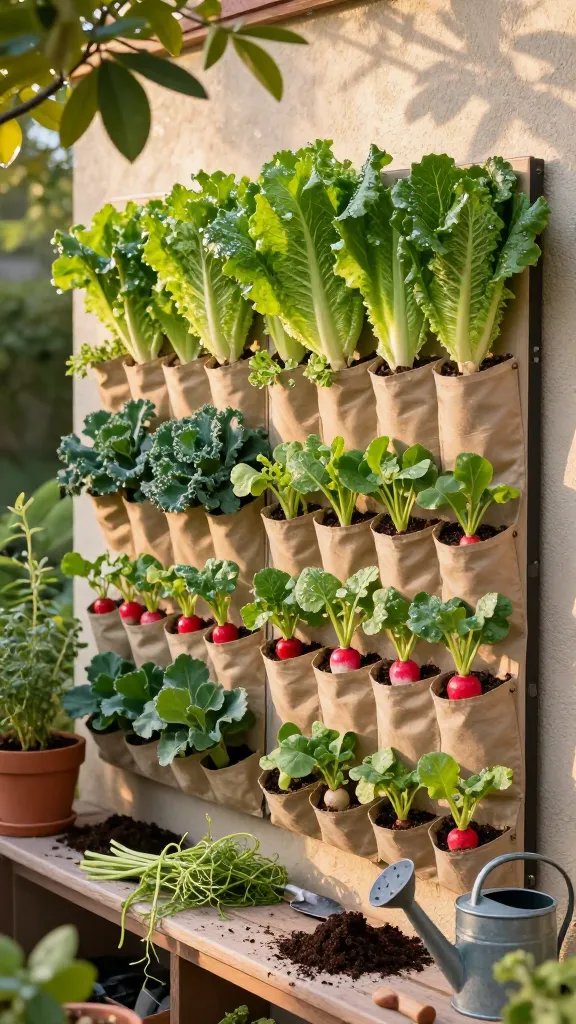
As the edge comes off the heat, pivot back to tender greens and crunchy roots. You basically get a second spring. Take advantage of milder days and plant heavy for a lush, fast turnaround.
Clean up any tired summer vines, refresh the top inch of mix with compost, and hit the reset button. New seedlings will settle in quickly.
What To Plant For Fall
- Leafy Staples: Romaine, butterhead, mizuna, tatsoi, kale (dwarf varieties for pockets).
- Roots In Pouches: Radishes (French Breakfast, Cherry Belle), baby carrots (Thumbelina), baby beets—choose small or round types.
- Herbs: Cilantro (finally), dill, chervil, parsley, garlic chives.
- Flowers: Pansies, nasturtiums, and violas for cheerful edges and edible garnish.
Smart Replanting Tactics
- Layering: Pop lettuce under taller peppers still producing. Harvest lettuce when peppers slow down.
- Spacing: Tight is right for greens—4–6 inches apart. You’ll harvest outer leaves constantly.
- Pest watch: Cooler weather brings caterpillars. Use mesh or hand-pick. Neem at dusk if needed.
Fall gardens look ridiculously lush on walls—crisp textures, soft colors, and easy harvests. IMO, it’s the prettiest season for verticals.
5. Winter Bright And Edible: Mild-Season Staples And Microgreens (November–December)
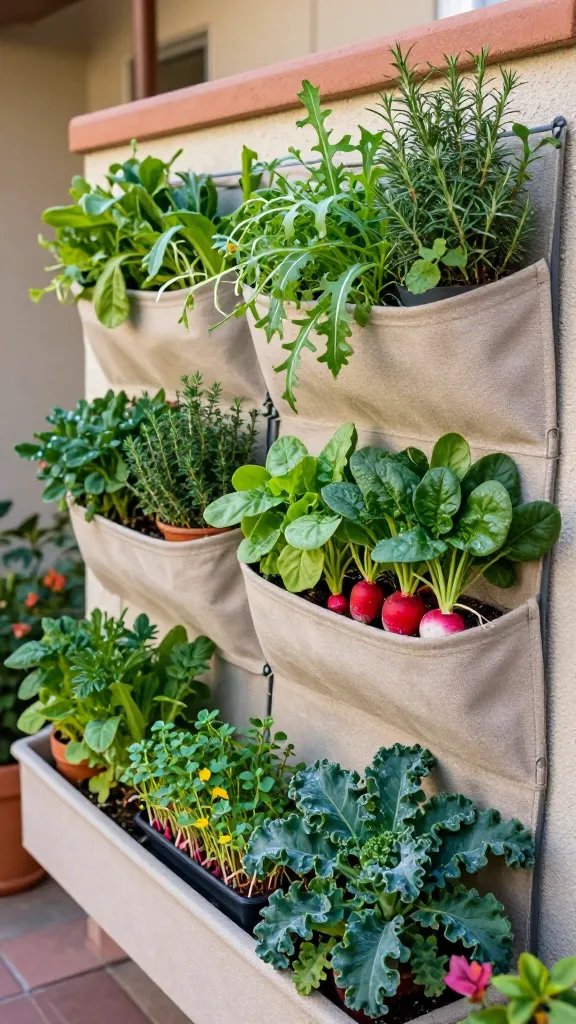
Even in warm climates, daylight drops and growth slows. No problem—lean into compact edibles that thrive in cooler temps and add fast-turn microgreens to keep the harvests coming.
Your goal now: lower water, easy maintenance, and quick wins that keep your garden feeling alive and useful.
Plant These Now
- Greens: Arugula, spinach, mustard greens, mache, baby kale. Harvest young for tenderness.
- Roots (mini): Radishes on repeat. They love cooler soil and finish fast.
- Perennial Herbs: Thyme, rosemary, sage, oregano. They anchor the wall and provide winter fragrance.
- Strawberries: Keep them trimmed; you’ll get flowers and the occasional winter fruit in mild zones.
- Microgreens: Set shallow trays in lower pockets: sunflower, peas, broccoli, radish. Seven to 14 days to harvest—so satisfying.
Care And Upkeep
- Water dial-down: Shorter days = less thirst. Reduce schedule to avoid soggy roots.
- Fertilizer light: Monthly gentle feed. Overdoing it makes tender growth that pests adore.
- Frost nudge: If a surprise cold snap hits, clip on frost cloth overnight. Warm climates aren’t immune to drama.
Winter walls feel cozy and productive, and microgreens scratch the instant-gratification itch. Seriously, fresh arugula in December tastes like victory.
Quick Month-By-Month Cheat Sheet
- January–February: Install, test irrigation, plant cool-season greens, herbs, strawberries, violas.
- March–April: Add tomatoes, cucumbers, peas/beans, basil, marigolds. Train vines.
- May–June: Swap peas for beans, plant heat-lovers (peppers, eggplant), shade cloth up.
- July–August: Malabar spinach, yardlong beans, continuous basil. Deep watering, prune hard.
- September–October: Reboot with lettuces, kale, radish, cilantro, dill. Compost refresh.
- November–December: Spinach, arugula, microgreens, hardy herbs, tidy strawberries.
Ready to build a wall of delicious chaos? Start small, plant densely, and keep swapping crops with the seasons. Your vertical garden will look like living art and taste even better. Go make your fence famous.