
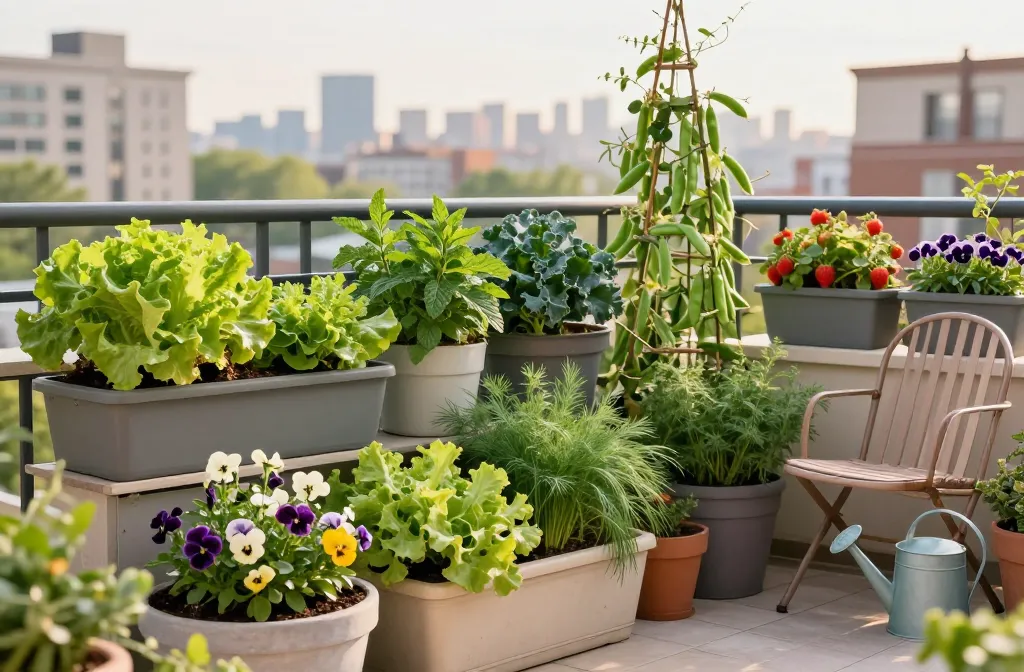
Ready to turn your balcony into a mini jungle that feeds you and looks gorgeous? The Mid-Atlantic gives you four distinct seasons—aka four chances to win at balcony gardening. We’ll map out exactly what to plant and when, plus how to keep everything alive through heat waves, nor’easters, and squirrel shenanigans. Grab your coffee; your balcony glow-up starts now.
1. Spring Wake-Up: Cool-Season Stars That Thrive in Chill
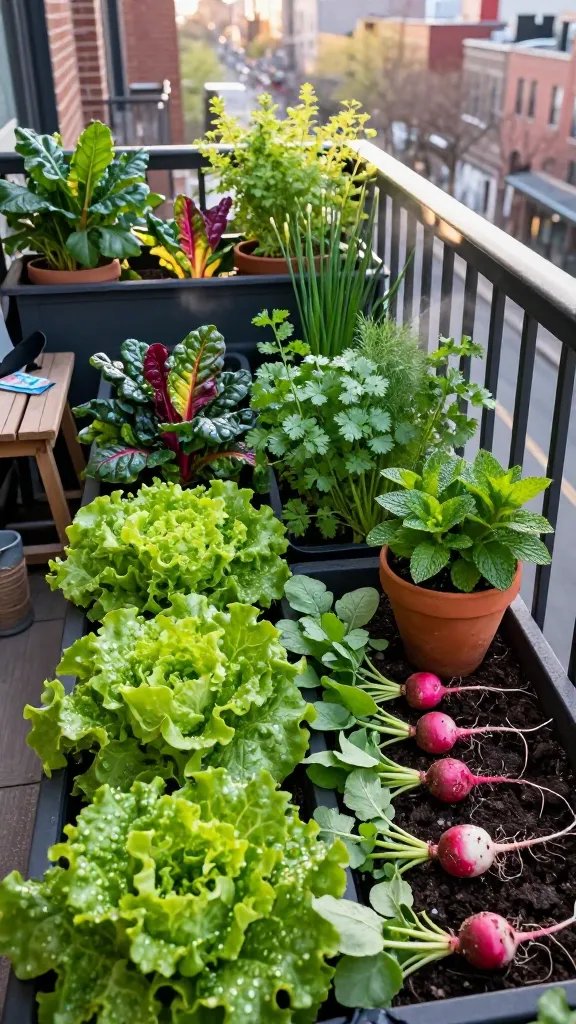
Spring in the Mid-Atlantic swings from crisp mornings to mild afternoons, and cool-season plants love that rollercoaster. You’ll get fast harvests, beautiful textures, and a head start before heat-loving plants take over. Translation: instant gratification with minimal drama.
What To Plant (March–May)
- Leafy greens: lettuce mixes, arugula, spinach, chard, kale (baby or dwarf varieties)
- Herbs: cilantro, parsley, chives, dill, mint (container-only—mint is a diva)
- Roots: radishes (super fast), baby carrots (short varieties), spring onions
- Flowers: pansies, violas, snapdragons, sweet alyssum for pollinators and color
- Early containers to prep: peas (sugar snaps on a small trellis), strawberry pots
Container + Soil Setup
- Pot sizes: 10–12 inch pots for greens; window boxes for cut-and-come-again salads
- Soil: high-quality soilless potting mix with perlite; skip garden soil
- Drainage: ensure at least one big hole; add pot feet to avoid soggy roots
- Fertilizer: slow-release organic at planting, plus a light liquid feed every 2–3 weeks
Why this works: cool-season crops pack flavor in chilly weather, and they don’t need deep containers. You’ll harvest within weeks, which keeps motivation high.
Care Tips
- Sun: 4–6 hours is fine for spring greens; morning sun + afternoon shade prevents wilting
- Water: keep evenly moist; radishes bolt fast if you let them dry
- Overnights: use a light row cover or old sheet if temps threaten to dip into the 30s
Best for new gardeners who want quick wins and edible color within a month. FYI, nothing beats your first homegrown radish on toast with butter and salt.
2. Summer Sizzle: Heat-Loving Powerhouses (And How To Beat Heat Waves)
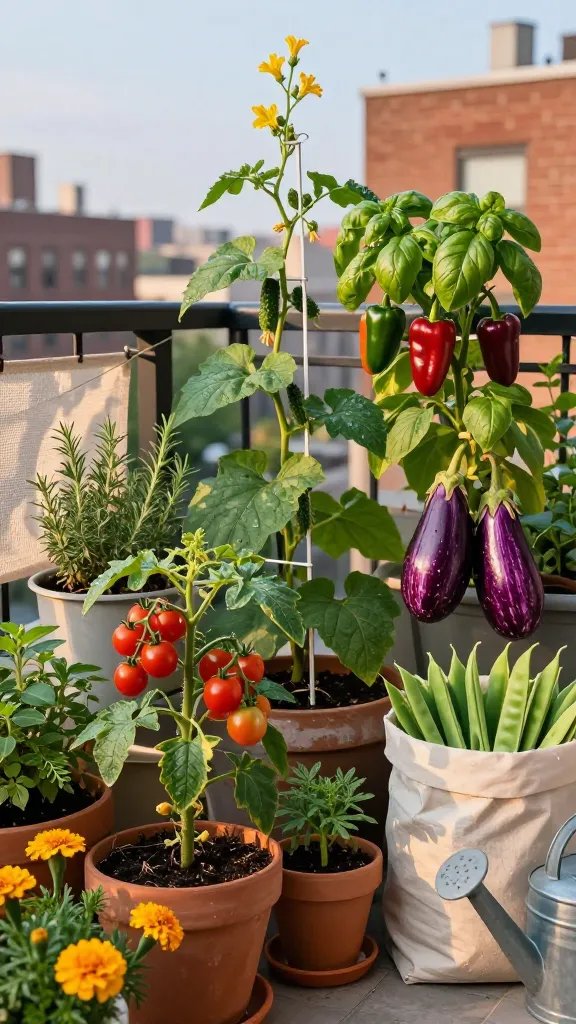
Mid-Atlantic summers bring humidity that makes tomatoes smug and gardeners sweaty. You’ll switch to sun worshippers that pump out fruit and fragrance. The trick? Manage heat stress and keep pots from turning into plant-saunas.
What To Plant (Late May–July)
- Fruits & veg: cherry tomatoes, dwarf slicers, cucumbers (bush or patio), peppers (jalapeño, shishito, lunchbox), eggplant (fairy tale), bush beans
- Herbs: basil (lots), thyme, oregano, rosemary (great in a sunny, hot spot)
- Flowers: marigolds, zinnias, verbena, lantana—heat-tolerant and pollinator magnets
- Trellis picks: cucumbers, pole beans, compact vining tomatoes
Container + Support Setup
- Pot sizes: 5 gallons for peppers/eggplant; 7–10 gallons for tomatoes/cukes
- Structure: add a small trellis or cage at planting—don’t wait until it flops
- Mulch: 1–2 inches of shredded bark or straw to keep roots cool and moist
- Water saver: self-watering containers or saucers + drip spikes = less daily watering
Heat-Smart Care
- Water: deep soak early morning; on 90°F+ days, check again at dusk
- Shade: hang a 30–40% shade cloth during heat waves to prevent blossom drop
- Feeding: weekly liquid fertilizer once fruiting starts; tomatoes and cukes are hungry
- Airflow: don’t crowd containers; invite breezes to reduce disease
Bonus move: plant basil around tomatoes; they share sunlight needs and taste amazing together. You’ll harvest salads on repeat and feel like a balcony farmer, which you are, IMO.
Quick Pick Varieties That Crush It
- Tomatoes: Sungold, Patio Choice Yellow, Tiny Tim
- Cucumbers: Patio Snacker, Bush Champion
- Peppers: Shishito, Lunchbox Orange/Red
- Beans: Mascotte (bush, container-friendly)
Use this section if you crave big summer flavors with manageable care. You’ll get continuous harvests and stunning color all season.
3. Fall Encore: Cool Crops Round Two + Balcony Color Boost
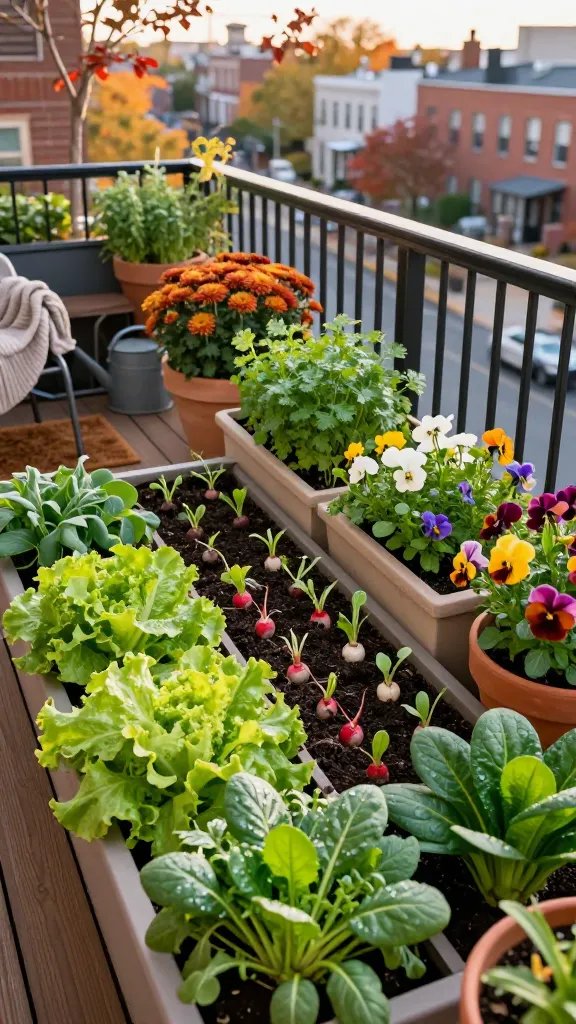
Don’t pack it all up in September. Fall in the Mid-Atlantic gives you a second cool-season, and it’s arguably better—fewer pests, sweeter flavors. You’ll replant greens, toss in some roots, and keep the flowers coming.
What To Plant (August–October)
- Greens: lettuce, spinach, arugula, Asian greens (tatsoi, mizuna, pak choi)
- Roots: radishes (again), baby beets, turnips (hakurei are candy-sweet)
- Herbs: cilantro thrives in fall; parsley rebounds
- Flowers: violas, pansies, mums for color and resilience
Timing Tips
- Late summer sowing: start greens in the shade behind taller summer plants
- Staggered planting: sow every 2 weeks for steady salads
- Sun shift: track fall sun angles; you might get more light than spring—win!
Extend The Season
- Frost protection: pop on a cloche, plastic tote, or row cover during early frosts
- Harvest strategy: cut outer leaves and let centers regrow
- Soil refresh: top off containers with 2 inches of fresh mix and compost
Fall crops taste richer and grow tidier on small balconies. You’ll get vibrant planters and salad bowls when everyone else calls it quits—flex a little.
4. Winter Cozy Mode: Evergreens, Indoor Swaps, And Microgreens
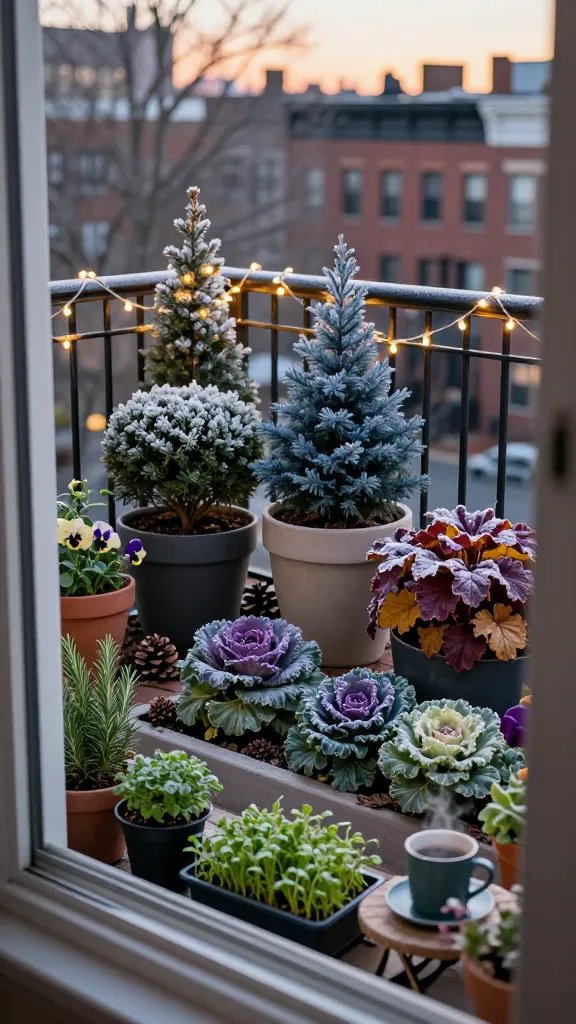
Yes, you can keep the vibe going in winter without babying needy plants. Think structural evergreens outside, herbs on your sunny sill, and microgreens for fresh crunch. Low effort, high morale.
Balcony-Friendly Winter Planting
- Evergreens in pots: dwarf boxwood, compact juniper, heuchera for foliage color
- Cold-hardy accents: ornamental cabbage/kale, winter pansies
- Decor hacks: pinecones, string lights, weatherproof planters—instant cheer
Bring These Indoors (November–March)
- Herbs: rosemary (bright light), thyme, oregano, chives near a south window
- Microgreens: radish, broccoli, sunflower—harvest in 10–14 days
- Citrus: dwarf Meyer lemon or calamondin if you have bright light and patience
Cold Survival Tips
- Protect pots: wrap containers with burlap or bubble wrap to prevent freeze-thaw cracks
- Watering: water sparingly; cold + soggy soil = root rot
- Wind: cluster pots near walls for protection from brutal gusts
Winter setups keep your balcony alive and give you fresh snips for cooking. You’ll greet spring with pots already in place and a gardener’s grin.
Microgreens Starter Kit (Minimal Drama)
- Shallow tray + coconut coir or paper towel
- Sprinkle seeds thickly, mist daily, harvest with scissors
- Sun or a basic LED strip works fine
Perfect if you want fresh greens while it’s 35°F and gloomy. Also, microgreens on eggs? Chef’s kiss.
5. Year-Round Game Plan: Layouts, Schedules, And Smart Maintenance
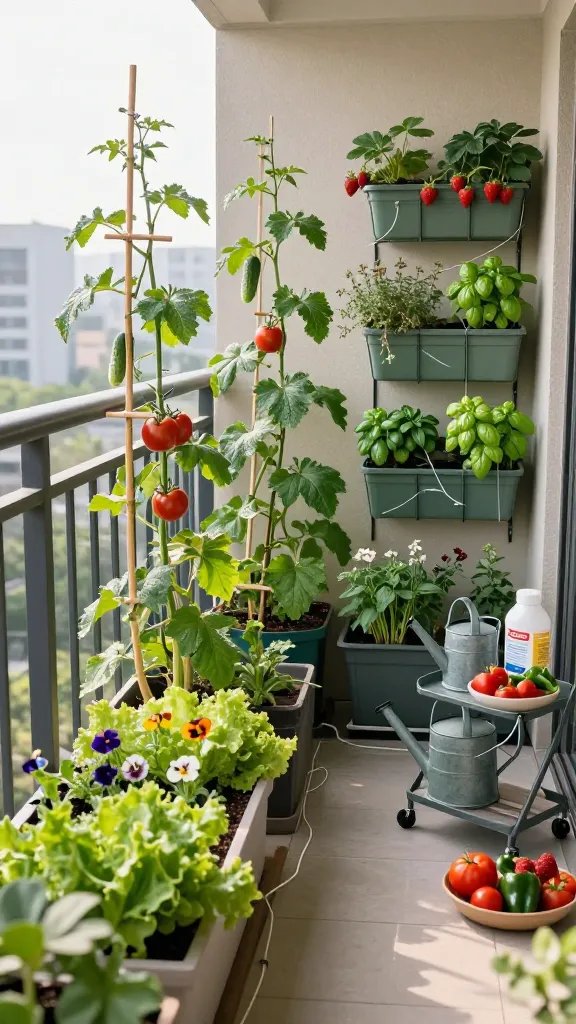
You’ve got the seasonal stars—now lock in a system that makes balcony gardening feel effortless. A good layout, a simple schedule, and a few tools will save your sanity. Set it up once, then coast and enjoy the harvests.
Balcony Layout That Works
- Sun map: morning sun = tender greens; all-day sun = tomatoes and peppers
- Tall-in-back rule: trellised cukes, tomatoes against the railing/wall; herbs and flowers up front
- Vertical wins: wall planters for strawberries, pockets for herbs, railing boxes for salads
- Traffic flow: leave a clear path to your door (you’ll thank yourself on watering day)
Simple Seasonal Schedule
- Late winter (Feb–Mar): clean pots, order seeds, refresh potting mix
- Spring (Mar–May): plant greens/peas; start basil indoors late April; fertilize lightly
- Summer (May–Aug): plant tomatoes/peppers/cukes; mulch; weekly feeding; prune as needed
- Late summer (Aug): sow fall greens; remove tired plants; top-dress soil
- Fall (Sep–Nov): succession sow; add pansies/violas; set up frost cloth
- Winter (Dec–Feb): protect pots; bring herbs inside; run microgreens
Watering & Feeding—No Guesswork
- Finger test: if top inch feels dry, water deeply until it drains
- Fertilizer rhythm: slow-release at planting + liquid feed every 1–2 weeks in peak growth
- pH basics: most edibles like 6.0–6.8; fresh potting mix usually lands you here
Pest + Problem Patrol
- Aphids/whiteflies: blast with water, then neem or insecticidal soap if needed
- Powdery mildew (cucumbers): 3% milk spray or potassium bicarbonate; increase airflow
- Squirrels/birds: mesh cloches, reflective tape, or chew-safe repellents
- Blossom drop (tomatoes): heat stress; add shade cloth and keep watering consistent
Tools That Actually Help
- Self-watering containers or watering bulbs for hot weeks
- A compact watering can with a narrow spout
- Soft plant ties, bamboo stakes, or a collapsible trellis
- Row cover fabric and clips for frost or pests
Dial in these systems and you’ll spend more time harvesting and less time troubleshooting. Seriously, nothing beats a balcony that basically runs itself.
Ready to plant your first pot or upgrade your whole setup? Choose one crop per season and build momentum—small wins add up fast. You’ve got the plan, the vibe, and the balcony; now go grow the best view in the neighborhood.