
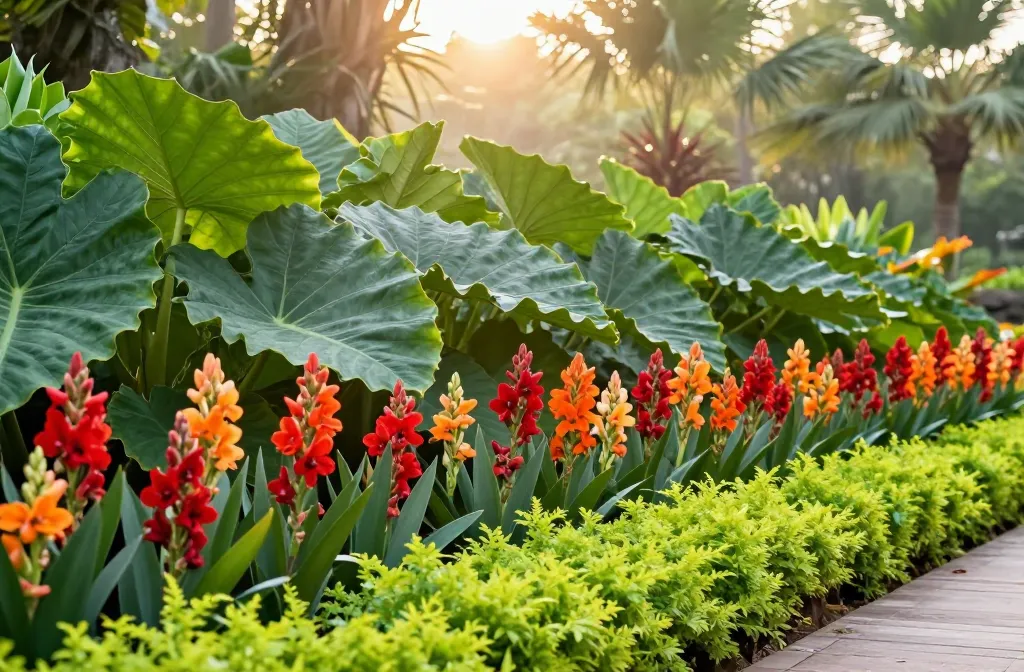
Ready to turn your backyard into a lush, over-the-top jungle that feels like nature turned the volume to 11? These plant pairings layer textures, colors, and scents so your garden never looks flat or tired. We’re talking bold foliage, nonstop blooms, and smart combos that make maintenance easier. Grab your trowel—these duos bring drama and good vibes, no gatekeeping.
1. Tropical Drama: Elephant Ears + Cannas
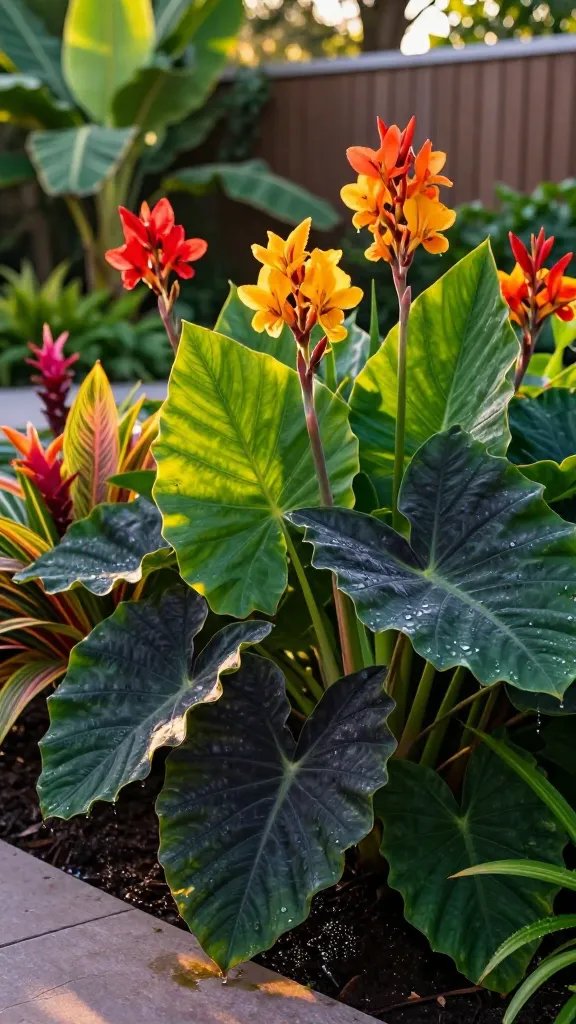
Want instant jungle energy? Pair the colossal leaves of elephant ears with the hot, upright blooms of cannas. This combo screams vacation-in-your-yard and gives your borders that lush, resort look without trying too hard.
Why It Works
- Contrast in shape: Broad heart-shaped leaves vs. spiky vertical flowers.
- Color play: Cannas come in fiery reds, oranges, and yellows; elephant ears add glossy green or almost-black foliage.
- Moisture buddies: Both love rich soil and consistent water.
Plant elephant ears at the back to anchor the space, then punch in cannas for height and bloom spikes. Edge with low, lime-green groundcovers for a three-tier look, IMO the secret sauce of maximalist beds.
Tips
- Choose Colocasia for dramatic droop or Alocasia for upright, architectural leaves.
- Feed monthly in summer for unstoppable growth.
- Overwinter corms or rhizomes if your winters bite.
Use this combo where you want a focal point—poolside, near a patio, or flanking garden steps. You’ll get big impact fast.
2. Jewel-Tone Shade: Hostas + Japanese Forest Grass
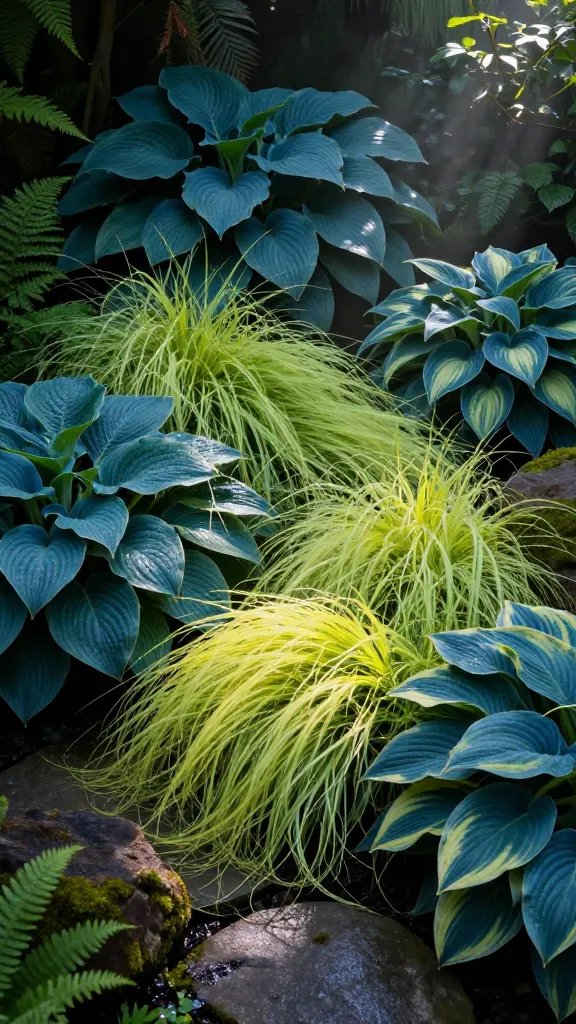
Shade shouldn’t mean boring. The lush, ribbed leaves of hostas paired with the flowing, chartreuse blades of Japanese forest grass will make your dim corners glow like a mossy cathedral.
Why It Works
- Texture layering: Hosta’s broad leaves contrast with Hakonechloa’s fine, cascading blades.
- Color contrast: Deep blue-greens or variegated hostas pop against the neon chartreuse grass.
- Calm drama: Movement from the grass softens hosta clumps for that elegant-botanical vibe.
Place larger hostas at mid-height, then sweep Japanese forest grass along the edges like a living trim. The result feels intentional and artful, not crowded.
Tips
- Pick Hosta ‘Empress Wu’ for giant presence, or variegated types for extra light.
- Grow in consistently moist, humus-rich soil with morning sun or dappled shade.
- Slug pressure? Use crushed eggshells, copper tape, or trap-and-remove methods—seriously, they’re relentless.
Perfect for north sides of houses, under trees, or shady pathways where you want lush texture without bright blooms stealing the show.
3. Sunset Heat: Crocosmia + Dahlias
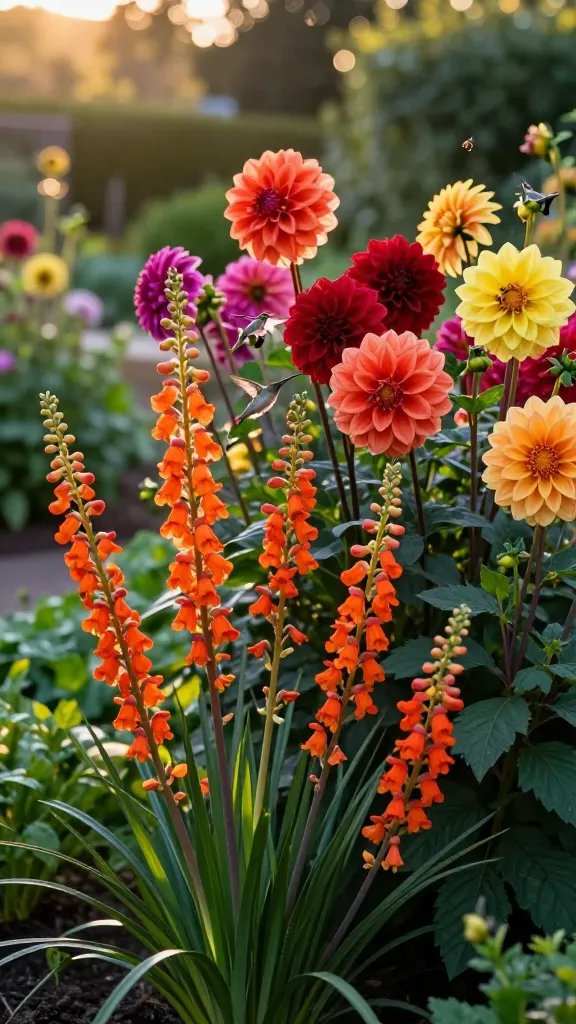
If you crave color that smacks you—in a good way—go with Crocosmia and dahlias. Think fiery arching Crocosmia sprays backed by full, sculptural dahlia blooms. It’s like a fireworks finale that lasts for months.
Why It Works
- Extended season: Crocosmia kicks off mid-summer; dahlias carry the torch until frost.
- Form contrast: Airy, wand-like Crocosmia balances the round, plush dahlia flowers.
- Hummingbirds and pollinators: They’ll treat your garden like VIP seating.
Plant Crocosmia in drifts for movement and rhythm, then interplant dahlias in complementary shades—coral with tangerine, ruby with gold. Keep the palette hot or pick a cooler scheme if that’s your thing.
Tips
- Stake dahlias early and pinch to encourage branching.
- Good drainage is everything; add grit or plant on a slight mound.
- Deadhead relentlessly for more blooms—rewarding and oddly therapeutic.
Use this pairing in sunny borders or cutting gardens. You’ll get armloads of bouquets and a show that stops passersby in their tracks.
4. Foliage-First Feast: Coleus + Caladiums
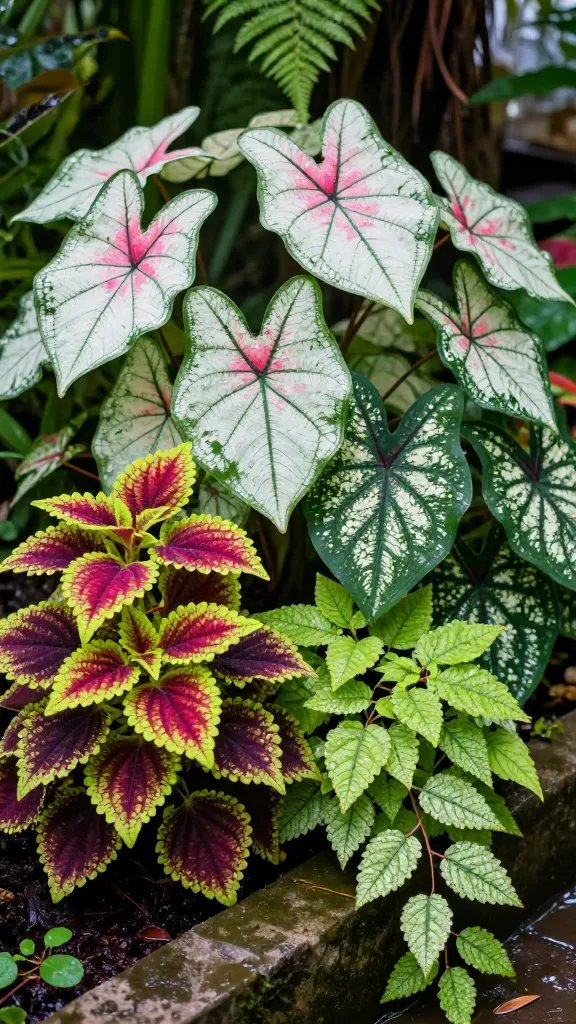
Who says flowers get all the attention? Coleus and caladiums deliver a kaleidoscope of leaf colors—raspberry, lime, cherry, obsidian—so your garden keeps vibing even when blooms take a break. This is maximalism at its tastiest.
Why It Works
- Nonstop color: Foliage doesn’t fizzle when the heat hits.
- Pattern play: Speckles, veins, and edges create visual depth from any distance.
- Shade champions: Many varieties thrive where the sun ducks out.
Mix upright coleus with mounding or trailing forms, then slot in caladiums for that heart-shaped, painterly leaf drama. Group in threes and fives for the most impact, and don’t be shy—more is more here.
Tips
- Pinch coleus tips to keep plants bushy and dense.
- Choose sun-tolerant varieties if your shade shifts during the day.
- Caladiums love warmth; plant tubers after soil heats up, not a minute before.
Ideal for containers, shady patios, and entryways. You’ll get that curated, botanical-boutique look without juggling bloom schedules.
5. Scented Canopy: Passionflower + Star Jasmine On A Pergola
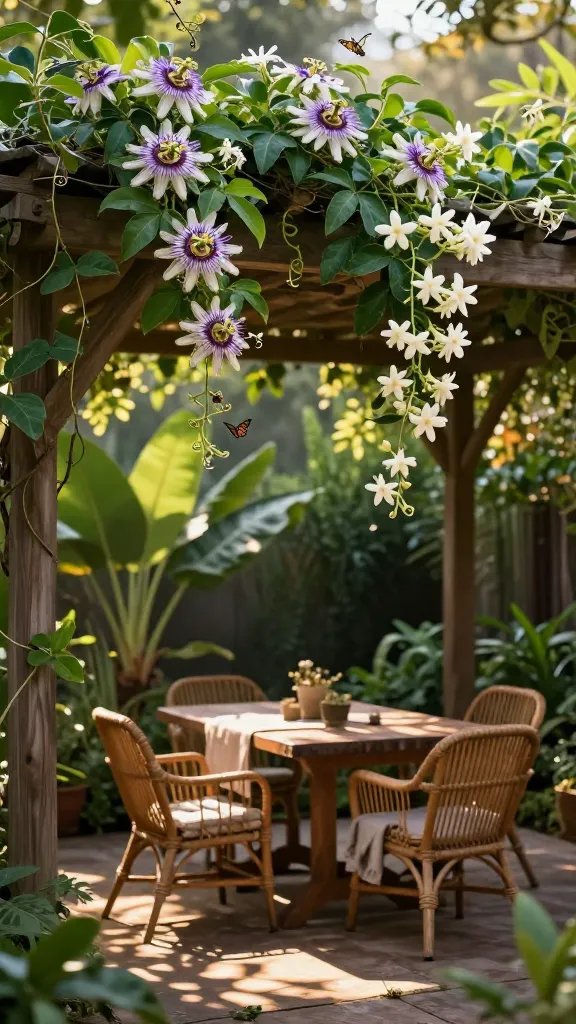
Climbing vines turn any structure into a living, fragrant ceiling. Pair passionflower’s exotic blooms with the glossy foliage and heady scent of star jasmine, and your evenings will smell like a tropical story you can’t stop telling.
Why It Works
- Vertical layering: Vines give you a second garden above your head.
- Bloom + perfume: Passionflower’s intricate flowers and jasmine’s fragrance make a killer combo.
- Wildlife magnet: Butterflies adore passionflower; bees cruise the jasmine.
Train both up a pergola or arch using soft ties and regular guiding. Let passionflower weave through first for quick coverage, then add star jasmine for evergreen structure in many climates.
Tips
- Pick Passiflora caerulea for vigor and cold tolerance where needed.
- Give full sun to bright partial shade and well-drained soil.
- Prune lightly after flowering to keep paths walkable and the structure tidy—trust me, they can go feral.
Use this duo to frame outdoor dining or a lounge zone. The combo turns ordinary evenings into vacation-mode nights.
There you go—five plant pairings that bring maximalist jungle energy without a botanical PhD. Start with one section of your yard and build out from there. Play with color, texture, and height, and your garden will feel lush, layered, and alive in no time.