
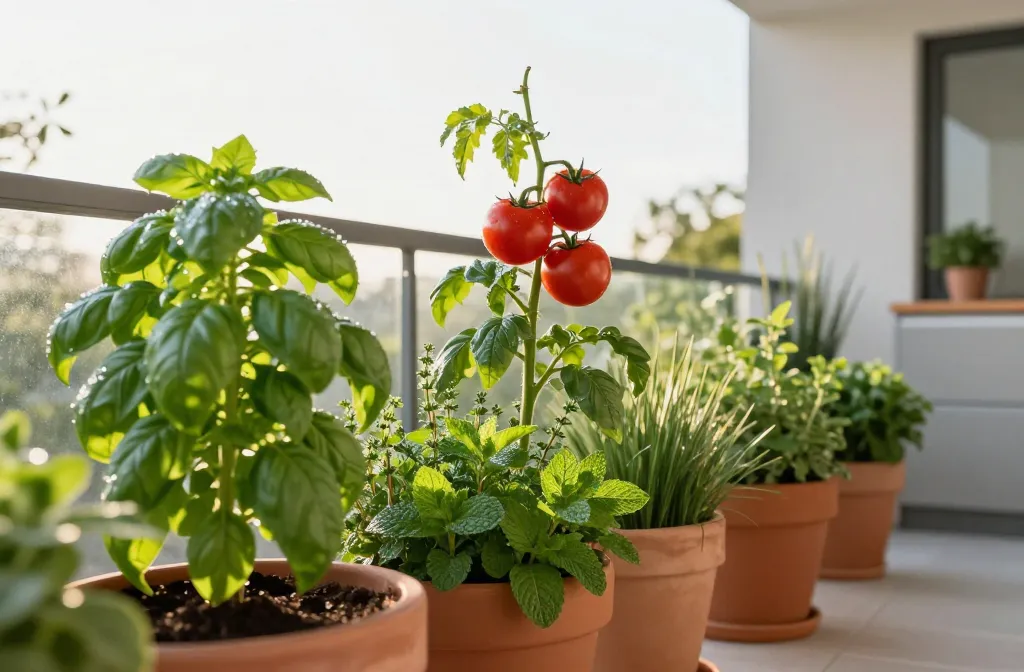
Want a kitchen garden that practically grows itself and tastes better, too? Plant the right herbs side by side and your wall planters turn into tiny flavor powerhouses. These pairings boost growth, deter pests, and make your cooking life stupidly easy. Grab a cup of tea (mint? basil?) and let’s stack your herb wall with winning combos.
1. Basil + Tomatoes: The Saucy Dream Team
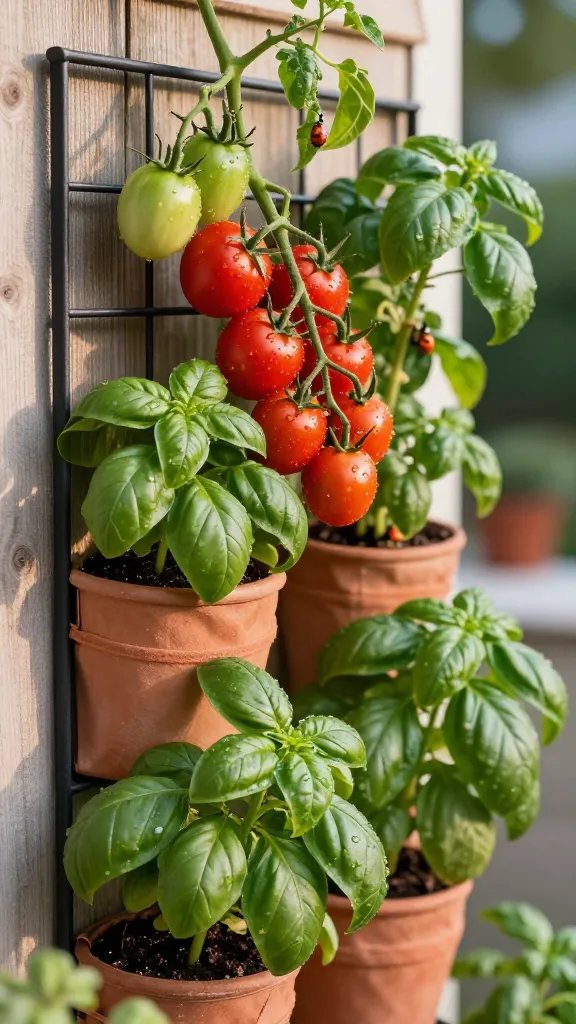
Tomato vines and basil leaves belong together like weekends and naps. Basil ramps up tomato flavor and helps repel pests like whiteflies and hornworms. Plus, the scent of fresh basil on a sunny wall? Instant mood boost.
Why It Works
- Mutual benefit: Basil’s aromatic oils confuse pests; tomatoes give basil light and warmth.
- Flavor synergy: The classic caprese combo starts right on your wall.
- Space efficiency: Train tomatoes up a trellis; tuck basil underneath in pocket planters.
Plant tomatoes in larger containers or a vertical trough at the base, with basil in mid-level wall pockets to avoid shade overload. Pinch basil often to keep it bushy and prevent flowering.
Quick Tips
- Choose determinate or dwarf tomatoes for tighter spaces.
- Water deeply for tomatoes, evenly for basil—use drip lines if you can.
- Rotate basil every few weeks from cuttings for a constant supply.
Use this pairing when you want big summer harvests with minimal pest drama. Your marinara will thank you, seriously.
2. Rosemary + Sage + Thyme: The Mediterranean Sun Squad
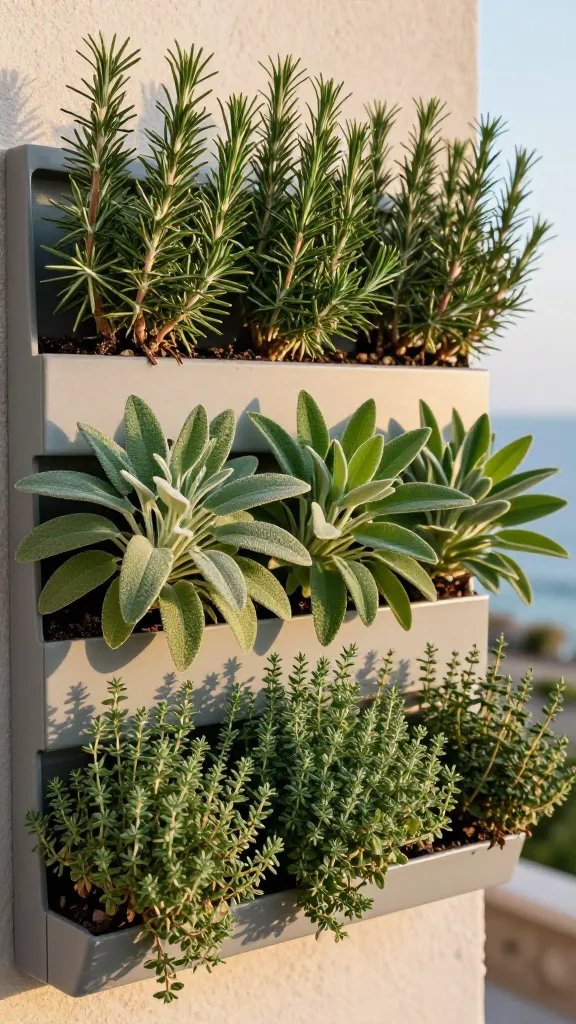
These sun-lovers thrive together and make your herb wall smell like a seaside cliff. They prefer lean soil, fewer waterings, and loads of light. Grouping them avoids overwatering mishaps that ruin woody herbs.
Planting Plan
- Top tier: Rosemary (upright or trailing varieties) for airflow and sun exposure.
- Middle tier: Sage to spread and fill gaps with velvety leaves.
- Lower pockets:
- Thyme to cascade and suppress weeds or algae on soil.
They share similar needs, so you can water less and stress less. Rosemary’s strong oils deter some pests, while thyme acts like a living mulch that keeps roots cool.
Care Cheats
- Mix in gritty soil (perlite or sand) for drainage.
- Prune rosemary lightly to maintain shape; cut sage after flowering to encourage fresh growth.
- Harvest thyme often; it rebounds fast.
Use this trio if your wall gets full sun and you love roast chicken, focaccia, or grilled anything. It’s the low-maintenance powerhouse you’ll brag about, FYI.
3. Mint + Chives + Cilantro: The Cool-Weather Flavor Bar
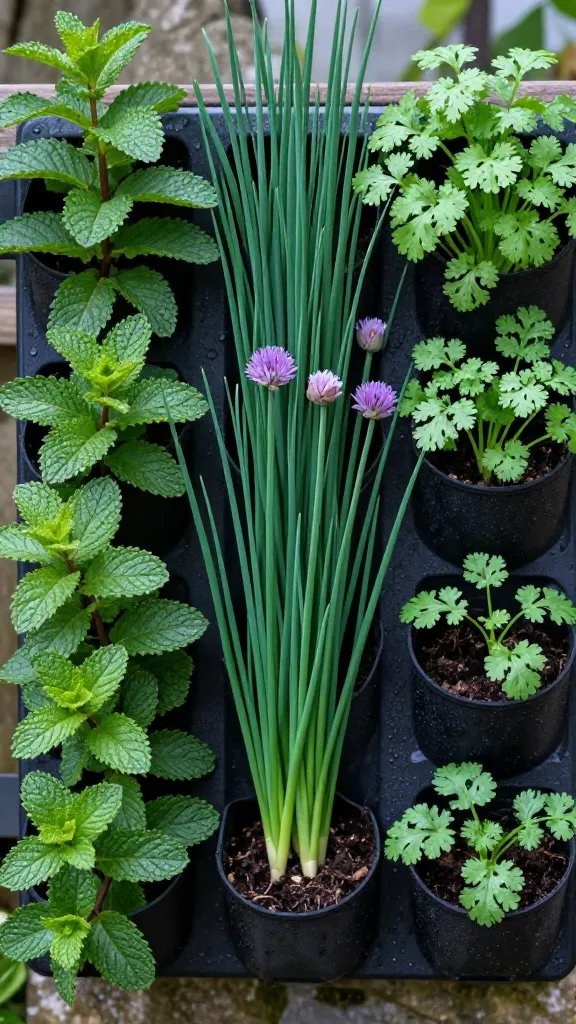
When the heat fries tender herbs, this combo keeps the party going in partial shade. Mint brings punch, chives add oniony snap, and cilantro gives bright, citrusy notes. They all enjoy slightly richer, moister soil than woody herbs.
Contain The Chaos
- Mint spreads like a gossip blog. Keep it in its own wall pocket or planter insert.
- Chives play nice and regrow quickly after cutting.
- Cilantro bolts in heat; stagger plantings every 2–3 weeks.
Position mint on the edges to trail and release scent when brushed. Tuck chives near easy-to-reach spots for frequent snips. Keep cilantro where it gets morning sun and afternoon shade to delay bolting.
Harvest & Kitchen Use
- Mint: mojitos, tabbouleh, spring rolls.
- Chives: eggs, soups, potato salads.
- Cilantro: salsa, pho, curries (and yes, some folks taste soap—plan accordingly).
Perfect for cooler seasons or shaded balconies. Go for this trio if you cook a lot of fresh, zippy dishes and like fast, frequent harvests.
4. Parsley + Oregano + Marjoram: The Everyday Flavor Builders
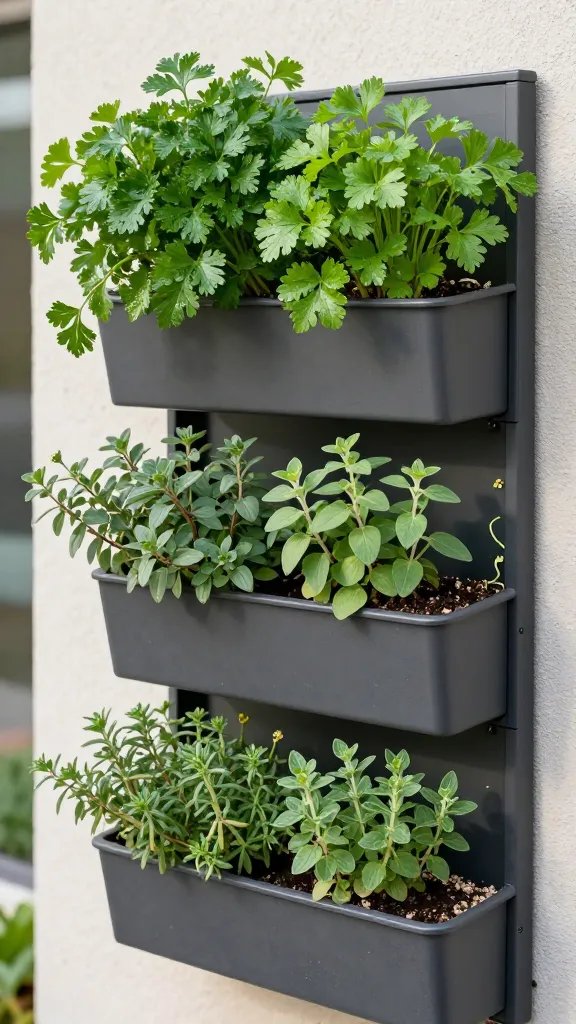
These are your “use it in everything” herbs that quietly make meals better. Parsley gives freshness, oregano adds savory depth, and marjoram brings gentle sweetness. Together, they create a steady, forgiving harvest that suits most kitchens.
Growing Rhythm
- Parsley likes consistent moisture and partial sun; it’s a biennial, so replant yearly for best flavor.
- Oregano tolerates drier soil and full sun; it spreads and softens wall edges.
- Marjoram prefers warmth and drains well; treat it like oregano’s friendlier cousin.
Place parsley in mid-to-lower pockets where it gets less scorch. Set oregano and marjoram higher for more light and airflow. They won’t compete aggressively, so they coexist beautifully in a compact layout.
Pro Moves
- Trim parsley from the outer stems to keep it producing.
- Harvest oregano and marjoram before flowering for peak oils and flavor.
- Dehydrate extra oregano quickly for pantry jars.
Use this set if you want reliable, steady herbs for pasta, stews, salads, and marinades. It’s the combo that quietly does the heavy lifting.
5. Dill + Fennel + Nasturtium: The Pollinator Party (With Pest Control)
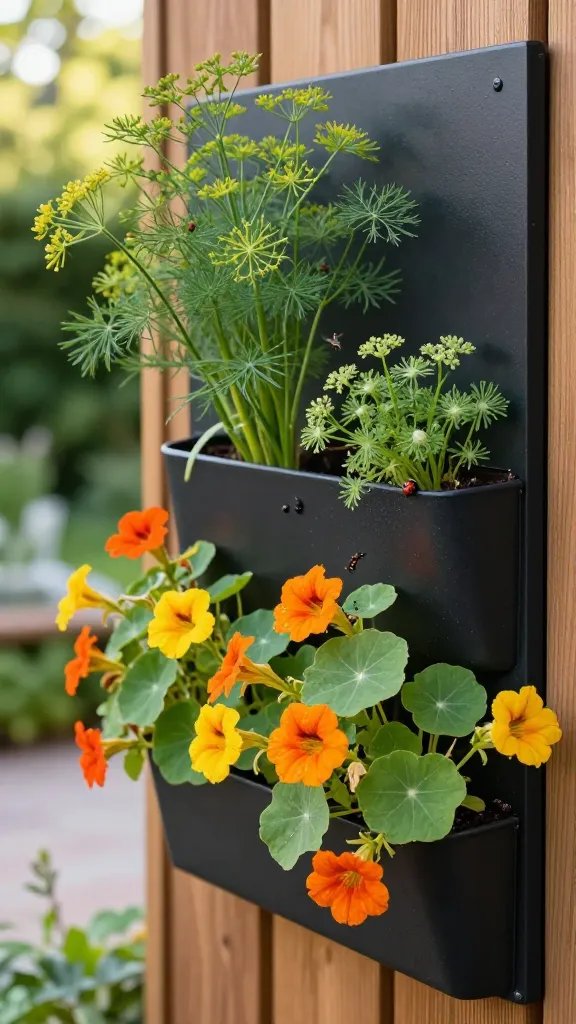
Want your herb wall to buzz with life and fend off pests without chemicals? This trio brings beneficial insects and keeps aphids in check. Dill and fennel attract ladybugs and parasitic wasps, while nasturtium acts as a vibrant trap crop.
Smart Placement
- Dill grows tall and airy—top or back tiers to avoid shading friends.
- Fennel can inhibit some plants, so give it its own pocket or a buffer zone.
- Nasturtium cascades beautifully—front edges or lower pockets for trailing blooms.
Fennel and dill share the anise-y vibe and loved-by-pollinators flowers. Nasturtium lures aphids away and tells you when pests show up—just remove the infested leaves and you win.
Kitchen Perks
- Dill: pickles, salmon, potato salad.
- Fennel fronds: salads, pesto, roasted veg garnish.
- Nasturtium: peppery leaves and edible flowers for salads and butter boards (fancy, I know).
Use this trio to boost biodiversity and cut pest headaches. It’s gorgeous, useful, and makes your wall garden look curated on purpose—IMO, that’s a win.
Bonus Guidance For All Pairings
- Match water needs: Group thirsty herbs together and drought lovers together.
- Sun mapping: Put sun-hungry herbs higher; shade-sensitive ones lower or east-facing.
- Soil strategy: Use a well-draining mix with compost for soft herbs, add grit for woody ones.
- Airflow matters: Don’t crowd pockets. Damp leaves invite mildew and regret.
- Stagger harvests: Frequent small cuts beat occasional huge hacks. Plants stay bushy.
- Succession planting: Start new seedlings every few weeks for cilantro, dill, and basil.
- Companion cautions: Keep mint contained; give fennel space; don’t overwater rosemary or sage.
Layout Example For A 3×5 Wall Grid
- Top Row: Rosemary, Dill, Oregano, Thyme, Sage
- Middle Row: Marjoram, Basil, Tomatoes (trellised nearby), Chives, Nasturtium
- Bottom Row: Parsley, Mint (in inserts), Cilantro, Thyme, Nasturtium
Adjust based on your sun pattern. Morning sun beats afternoon scorch for tender herbs.
Simple Watering Routine
- Woody herbs: Deep soak 2–3x weekly in heat; let soil dry between.
- Tender herbs: Even moisture; no soggy pockets. Mulch with fine bark or coco coir.
- Drip or micro-sprayers: Best for consistency and clean foliage.
Quick Troubleshooting
- Leggy basil or cilantro: Not enough light—move higher or trim harder.
- Yellowing leaves: Overwatering or poor drainage—add perlite, cut back watering.
- Powdery mildew on sage: Increase airflow; water in the morning; prune.
- Aphids on nasturtium: Blast with water, remove affected leaves, or release ladybugs.
Ready to build your herb wall dream team? Mix these pairings, trust the sun map, and snip often. Your kitchen will taste brighter, your garden will look smarter, and your neighbors will absolutely ask for cuttings—share generously or enjoy the bragging rights, your call.