
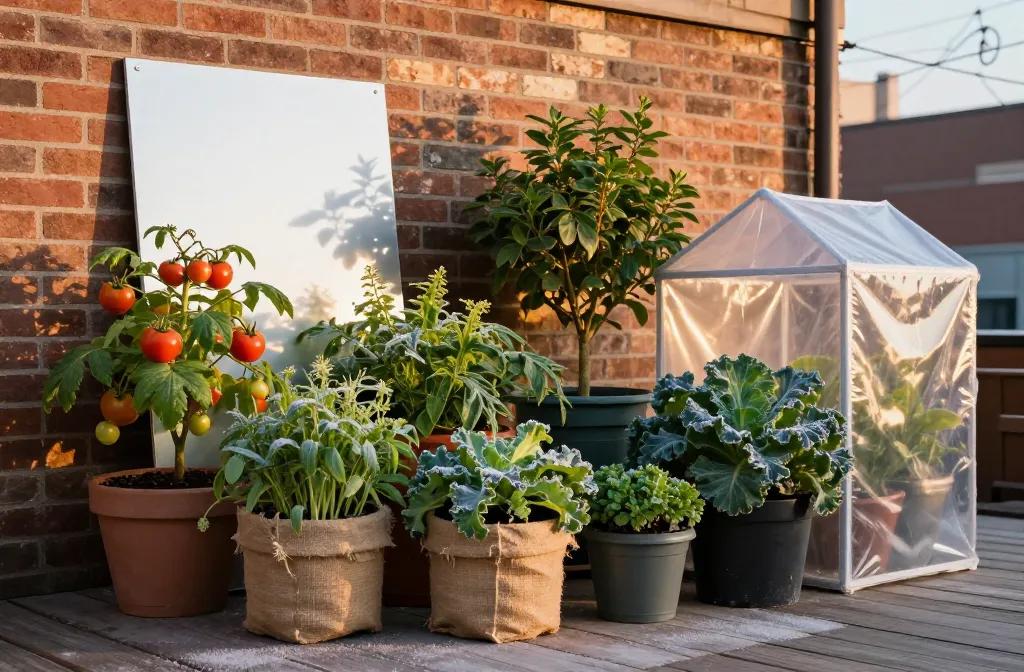
Cold snaps don’t have to end your harvest party. With a few smart moves, you can squeeze weeks—sometimes months—out of your container garden. We’re talking juicy tomatoes in October and herbs that don’t ghost you after the first frost. Ready to outsmart the weather and flex on winter? Let’s go.
1. Build A Cozy Microclimate (And Boss Around The Wind)
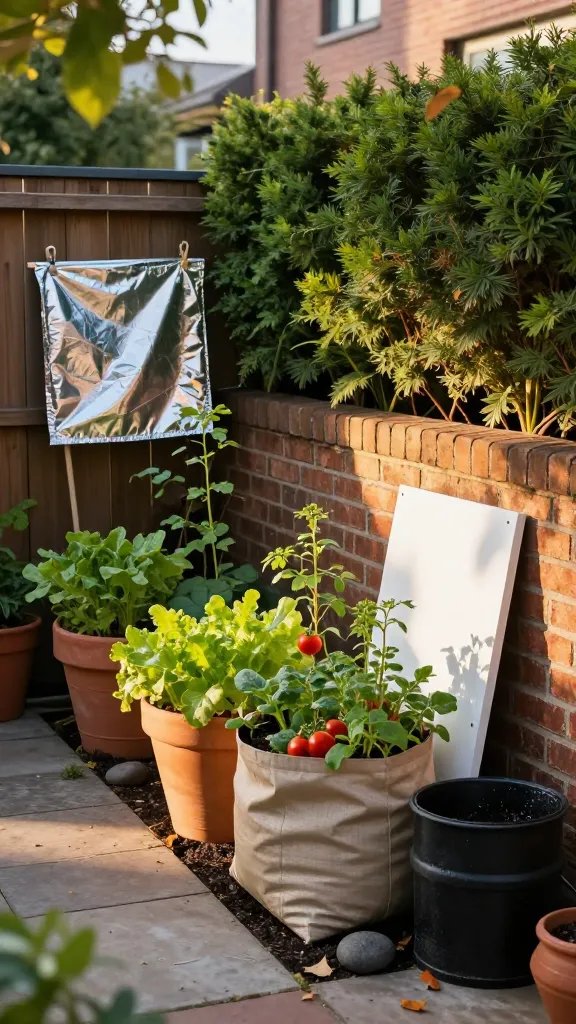
Containers lose heat fast, but you can cheat the forecast by creating warmer pockets of air. Think of it as tucking your plants into a heated blanket—without the electricity bill. Manage wind and reflect sunlight and you’ll watch temps tick a few degrees higher where it matters.
Smart Placements:
- South-Facing Walls: Park containers against brick or stone. Those surfaces soak up heat by day and radiate it at night.
- Corner Nooks: Use fences or hedges to break wind. Less wind = less moisture loss and higher temps.
- Reflective Boost: Place a white board or foil-backed insulation behind plants to bounce light and warmth.
Stacking a few thermal tricks creates a surprisingly comfy plant zone. It’s low effort and pays off all season.
2. Dress Your Pots For Winter (Insulation That Actually Works)
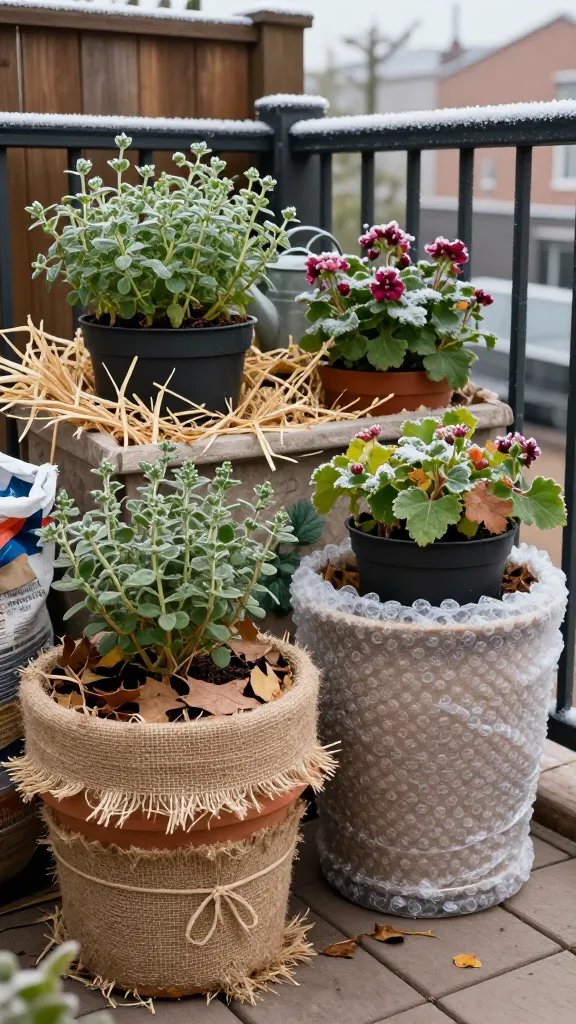
Roots hate freezing more than leaves do. Insulate the container and you protect the most vulnerable part of the plant. The bonus? You’ll water less because insulated pots hold moisture steadier.
Materials That Don’t Look Ugly (Much):
- Burlap Wrap + Leaves: Wrap pots with burlap and stuff dry leaves or straw between layers.
- Bubble Wrap: Wrap the pot (not the foliage) to trap air. Cover with burlap if you want it to look cute.
- Pot-in-Pot: Nest a smaller pot inside a larger one and fill the gap with mulch or perlite.
- Foam Boards: Ring the pot with cut pieces of rigid foam and secure with twine.
Insulation keeps roots in their happy zone, which means stronger growth and fewer “why is my rosemary dead?” moments.
3. Cover Smart: Cloches, Row Covers, And Pop-Up Greenhouses
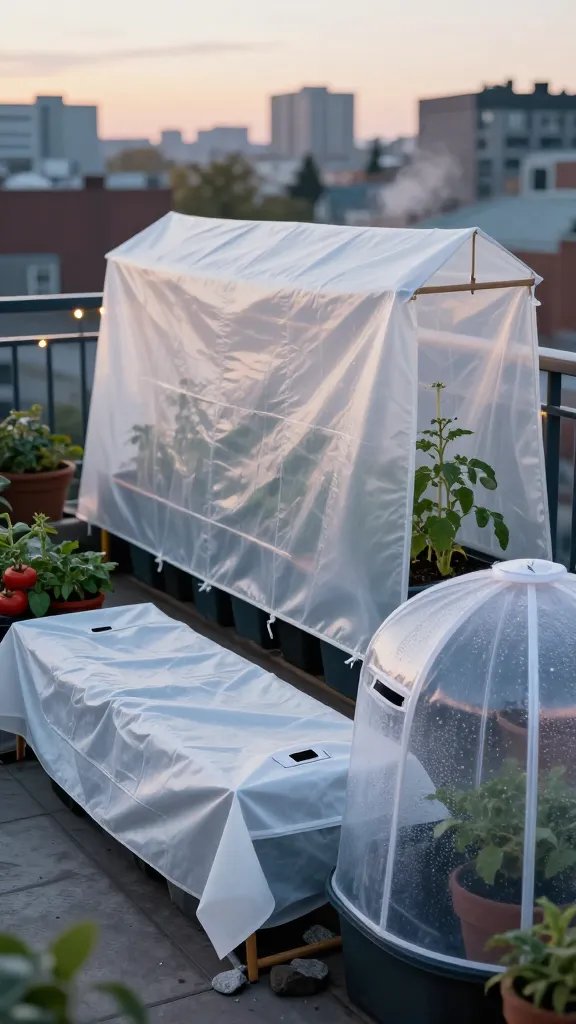
Nighttime temps dip? Throw on a “plant jacket.” Lightweight covers protect from frost while still letting air and light through. You’ll save blossoms, extend harvests, and feel like a garden wizard.
Options By Temperature Drop:
- 0–3°F Drop: Use floating row cover (0.5–1.0 oz). Drape over hoops or stakes. Secure with clips or rocks.
- 4–8°F Drop: Add a second layer or switch to frost cloth (1.5–2.0 oz). Leave vents for airflow by day.
- Big Swing Night: Use clear plastic as a pop-up greenhouse. Open in the morning to prevent cooking your plants—seriously.
- Single-Plant Cloches: Cut the bottoms off milk jugs or use glass bell cloches for tender babies.
Pro Tips:
- Avoid leaf contact: Use hoops or stakes so fabric doesn’t touch foliage during frost.
- Sunrise check: Uncover or vent as temps rise to prevent fungal issues.
- Label the layers: Keep covers folded and ready by plant group so you can move fast before dusk.
This is your first line of defense on sketchy nights. Quick to deploy, quick to remove, and a total season-saver.
4. Warm The Roots: Thermal Mass, Soil Hacks, And Heat Tricks
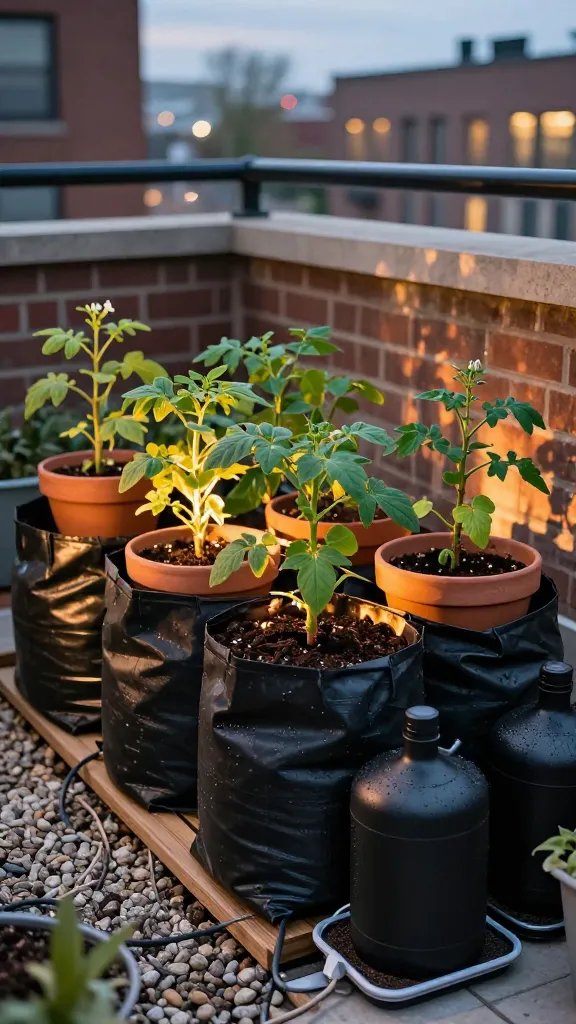
Warm roots equal happy plants—especially in containers where soil cools fast. Add heat sinks and tweak your soil and you’ll keep growth chugging along.
Thermal Moves:
- Black Fabric Or Mulch: Use black landscape fabric or dark compost mulch to absorb heat.
- Water Jugs As Radiators: Place painted-black water jugs near pots. They soak up daytime heat and release it overnight.
- Gravel Trays: Elevate pots on gravel-filled trays. They drain well and hold a bit of warmth.
- Heat Mats (Weatherproof Only): For porch or greenhouse setups, use outdoor-rated seedling heat mats on a thermostat under trays.
Soil Setup That Holds Heat:
- Right Pot Size: Bigger pots buffer temperature swings. Aim for at least 5–7 gallons for fruiting crops.
- Gritty Mix: Blend compost with high-quality potting mix and 10–20% perlite or pumice for drainage. Cold + wet = plant drama.
- Top Mulch: Straw in fall, shredded leaves or fine bark in early spring. Mulch stabilizes temps and moisture.
Use these together for a steady root zone. Your plants won’t even notice the weather being dramatic.
5. Mobile Gardening: Wheels, Shelves, And Timing Like A Genius
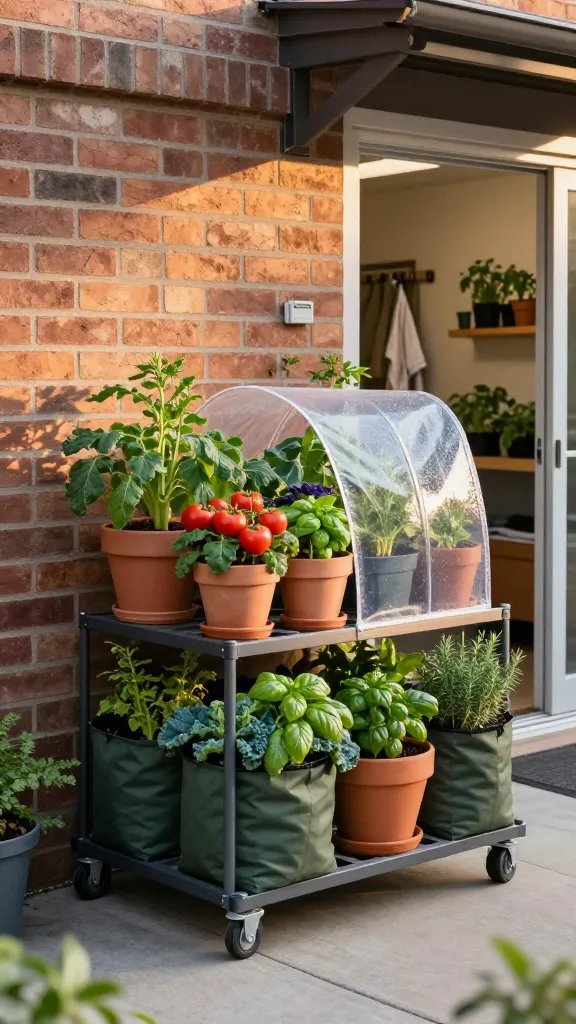
The best part of container gardening? You can move stuff. Lean into the mobility and you’ll dodge cold snaps, chase sun, and nail shoulder seasons.
Setup Ideas:
- Dolly Or Plant Caddies: Pop casters under heavy pots. Roll them into the garage or against a warm wall at night.
- Multi-Tier Shelves: Shelves with removable clear covers turn into mini-greenhouses. Vent mid-day, cover at dusk.
- Doorway Shuffle: Herbs and peppers can sleep indoors near a bright window when frost threatens, then go out after breakfast.
Timing And Crop Choices:
- Stagger Plantings: Start a second round of lettuces or radishes 2–3 weeks after the first for a longer harvest window.
- Choose Shoulder-Season Stars: Grow kale, chard, mache, tatsoi, parsley, thyme late; start peas, spinach, bok choy early.
- Use DTH Math: Count back “days to harvest” from your average first frost date, add 10–14 days for cool temps, and plant accordingly.
Mobility plus smart timing gives you chef-level control over your harvest calendar. FYI, your neighbors will notice.
Ready to stretch your season and keep the harvest rolling? Mix a few of these strategies and you’ll beat the forecast more often than not. Bundle up those pots, cover when it counts, and enjoy fresh herbs and veggies while everyone else is packing up. Seriously—this is the easiest garden glow-up you’ll try all year.