
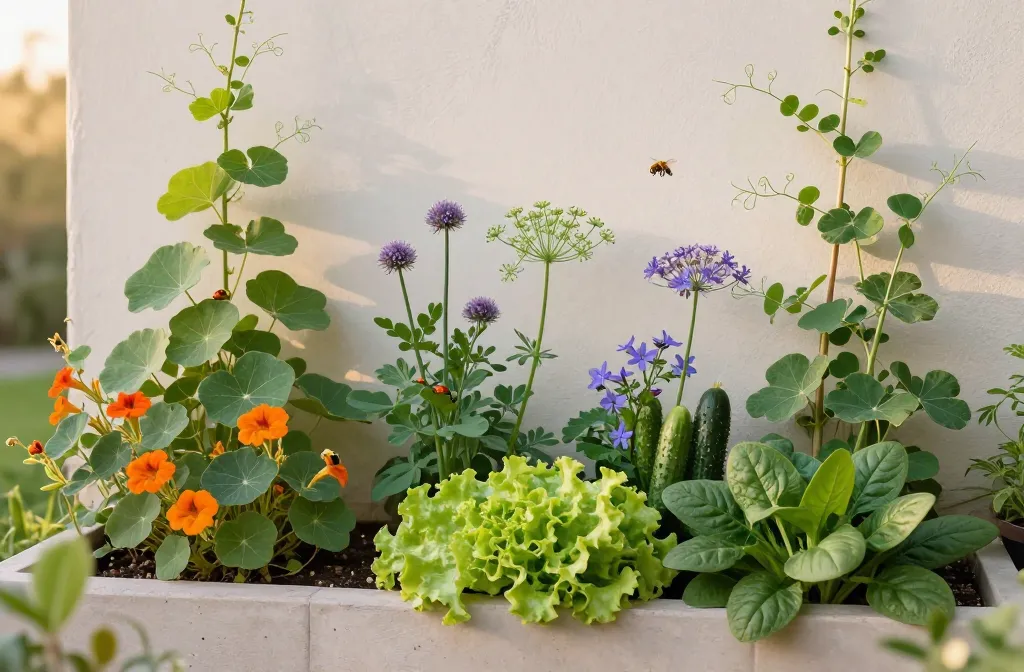
Want more harvest from tight spaces with fewer pests and prettier walls? Companion planting in vertical systems does all that while keeping your garden productive every month. We’ll stack vines, herbs, flowers, and greens in clever combos that work with the seasons, not against them. Ready to climb the productivity ladder, literally?
Below you’ll find five power-packed strategies, each loaded with seasonal pairings so you can rotate through all 20 without guesswork. Grab your trellis, a coffee, and let’s build a living produce tower.
1. Spring Kickoff: Quick Climbers + Bug-Blocking Herbs
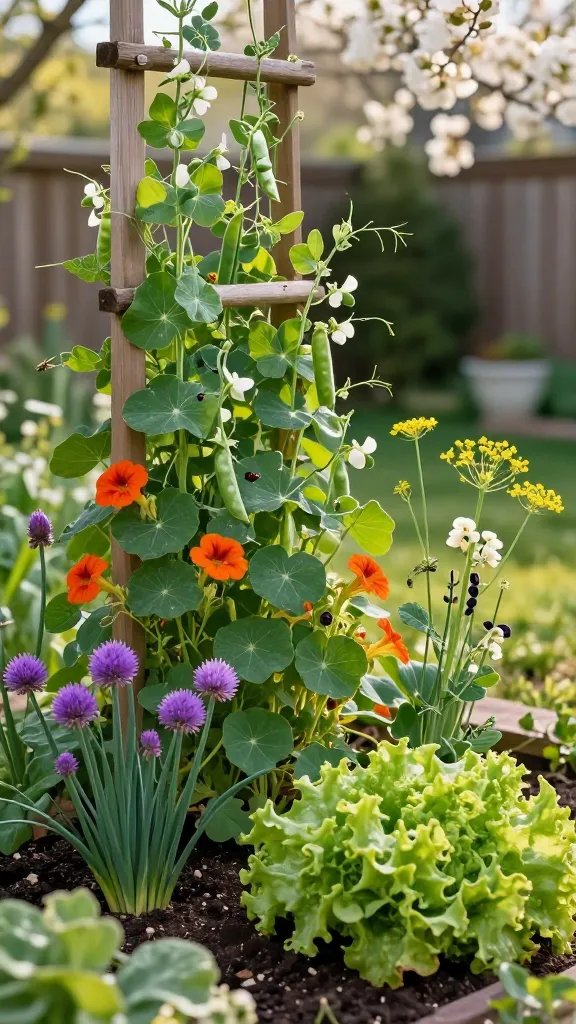
Spring sets the tone. You want fast growth, gentle soil wakes, and built-in pest protection as temperatures swing. These pairings climb early, invite pollinators, and keep aphids and flea beetles in check.
Go-To Spring Combos (March–May):
- Peas + Nasturtium + Chives — Peas climb the trellis, nasturtium trails and traps aphids, chives deter thrips and boost flavor.
- Sugar Snap Peas + Lettuce + Dill — Peas shade tender lettuce as temps warm; dill lures beneficial hoverflies and parasitic wasps.
- Fava Beans + Calendula + Baby Spinach — Favas fix nitrogen, calendula draws pollinators, spinach gobbles that early shade.
- Early Cucumbers (bush or mini) + Borage — Borage supports bees and improves cucumber set; use dwarf cukes for tight towers.
Tips:
- Install netting or a string trellis before planting. You’ll thank yourself when vines take off.
- Seed peas thickly; thin later and eat the shoots. FYI: pea shoots taste like spring itself.
- Place herbs at the edges of pockets or the base so scents waft around your vertical frame.
Use this when you want maximum early momentum. You’ll get greens, herbs, and the start of your climbers without overwhelming the system.
2. Summer Stack: Heat-Loving Vines + Pollinator Magnets + Shade Crops
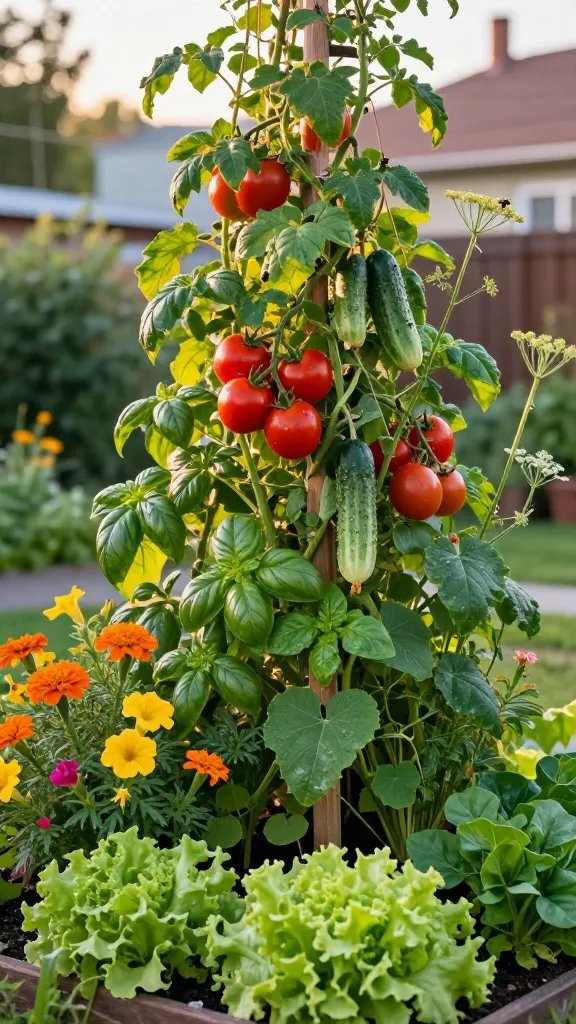
Summer is your vertical garden’s moment to flex. The trick? Layer tall fruiting vines with insect-attracting flowers and cool-loving understory plants that appreciate shade from those leafy walls.
High-Heat Dream Teams (June–August):
- Tomatoes (indeterminate) + Basil + Marigold — Classic for a reason. Basil boosts flavor and repels pests; marigold helps with nematodes and whiteflies.
- Cucumbers + Dill + Nasturtium — Dill invites lacewings and predatory wasps; nasturtium protects and looks gorgeous draping down.
- Pole Beans + Summer Savory — Savory deters bean beetles and tastes amazing with beans. Keep the trellis sturdy; beans get ambitious.
- Malabar Spinach + Thai Basil + Mint (in a contained pocket) — Malabar loves heat and vertical life; basil draws pollinators; mint cools and deters pests (contain it, seriously).
Understory Shade-Winners:
- Arugula under cucumbers for zippy greens through heat.
- Swiss Chard under tomatoes where midday sun would otherwise scorch.
- Mizuna under beans for a mild, cut-and-come-again salad base.
Water & Feeding Notes:
- Drip lines or a soaker hose zig-zagged up the frame keep roots even. Tomatoes hate inconsistent moisture.
- Side-dress with compost or worm castings mid-season. Heavy feeders need a snack.
- Prune tomatoes to one or two leaders for airflow and to keep the wall tidy.
Use this when you want maximum fruiting and steady greens all summer. It’s a pollinator party, and your harvest bowls will notice.
3. Fall Flip: Afterglow Crops + Soil Healers + Space Savers
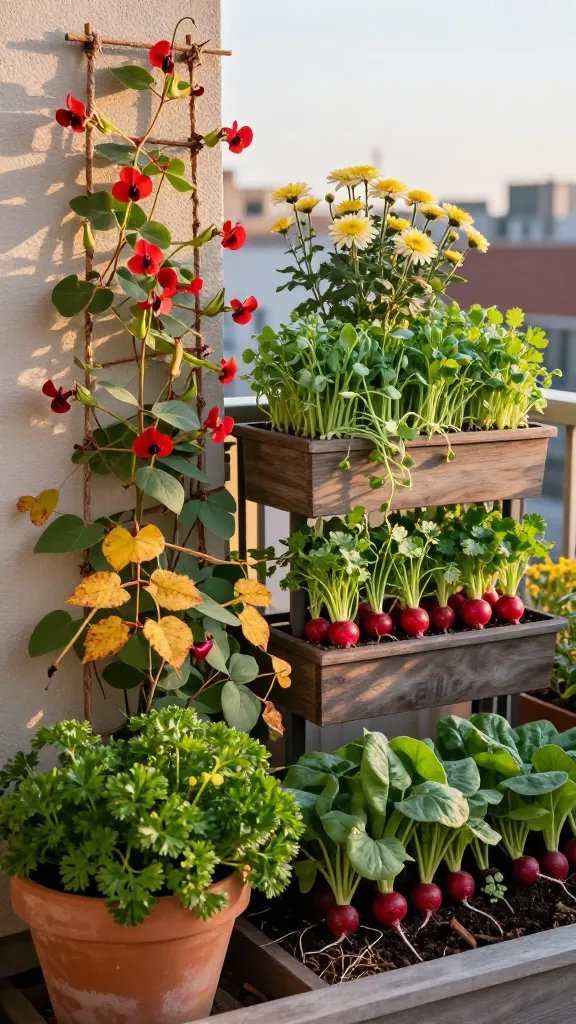
As summer giants wind down, you pivot to fast growers and nitrogen fixers. Fall reward crops thrive in cooler nights and shorter days, and your vertical setup squeezes in more than you think.
Autumn All-Stars (September–November):
- Runner Beans (late flush) + Chrysanthemum Coronarium (Shungiku) + Parsley — Beans keep climbing; edible shungiku flowers; parsley settles in for winter.
- Pea Shoots + Radish + Cilantro — Quick turnover; radishes pop in 25–35 days; cilantro loves chill and bolts slower now.
- Mini Squash (late set) + Tansy Or Alyssum — If frost is late, minis finish on the vine; alyssum brings predatory insects and a sweet honey scent.
- Kale (Lacinato or Siberian) + Thyme + Garlic Chives — Kale anchors vertical pockets; thyme fills gaps, chives add mild onion vibes and pest deterrence.
Clean-Up Without Losing Momentum:
- Cut summer vines at the base instead of yanking roots. Roots decompose and feed soil structure.
- Sow fast greens in freed pockets immediately. Empty space is a missed salad.
- Top-dress with compost and a sprinkle of kelp meal to reset micronutrients.
Use this to transition gracefully. You’ll harvest steadily while restoring soil and prepping for winter resilience.
4. Winter Wall: Cold-Hardy Greens + Aromatic Shields
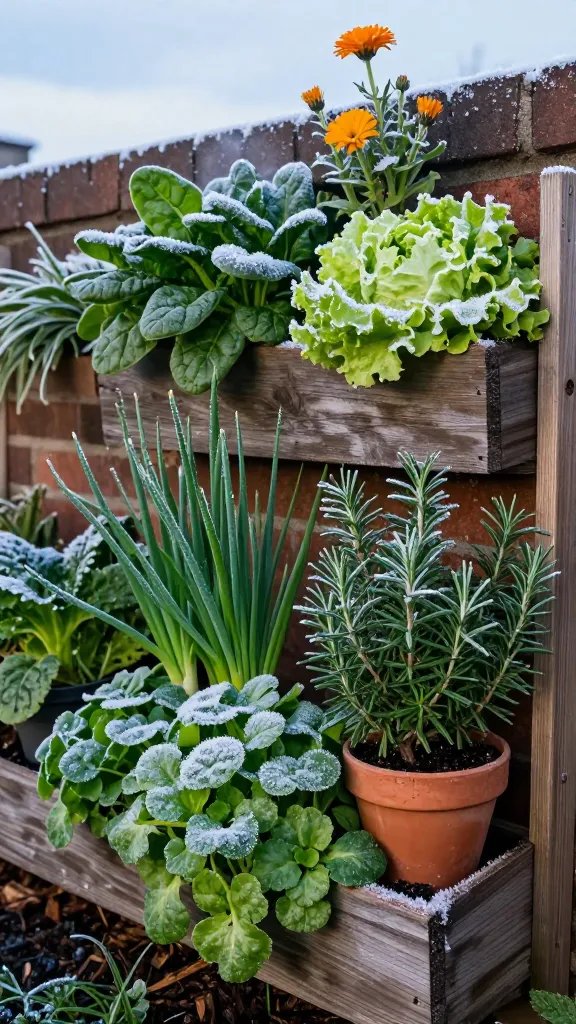
Yes, you can grow vertically in winter. Pick hardy greens, shelter them from wind, and slide in aromatics that deter overwintering pests while you enjoy fresh leaves when everyone else buys bagged salad.
Chill-Proof Combos (December–February):
- Mache (Corn Salad) + Green Onions + Rosemary (container-based) — Mache thrives in cold; onions add bite; rosemary perfumes the air and shrugs off chilly breezes.
- Spinach + Winter Lettuce (e.g., ‘Arctic King’) + Calendula — Spinach sweetens after frost; winter lettuce stays crisp; calendula keeps flowers coming on mild days.
- Claytonia (Miner’s Lettuce) + Tatsoi + Chives — Tender, pretty, and crazy cold-tolerant; chives wake up early for that first omelet.
- Perennial Kale (Tree Kale/Daubenton) + Oregano (protected) + Savory — A living wall you can harvest all year where winters are mild.
Protection Hacks:
- Clip-on frost cloth creates a mini greenhouse along the trellis. Remove on sunny days to prevent mildew.
- Mulch pockets with shredded leaves to buffer roots. Neatness is optional; warmth is not.
- Water sparingly but consistently; cold roots hate drought swings.
Use this for fresh, resilient greens and to keep your soil biology alive through the off-season. Plus, harvesting from a frosty wall feels wildly satisfying.
5. Year-Round Rhythm: 20 Seasonal Pairings Mapped For Vertical Success
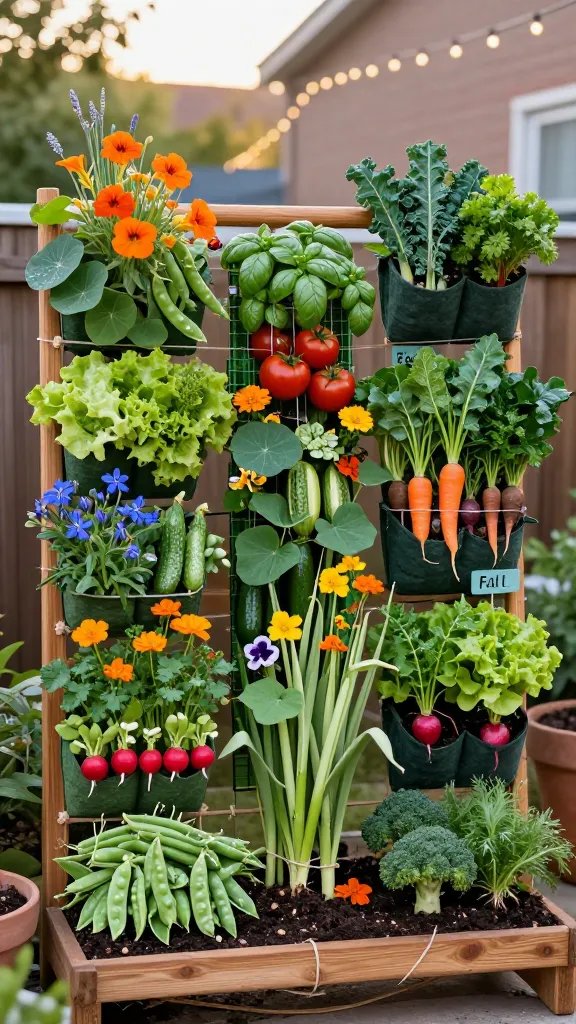
Ready for the master plan? Here’s a clean rotation that gives you 20 specific pairings to plug-and-play through the year. Mix based on your climate, but keep the flow: peas and greens early, fruiting vines mid-year, then quick fall crops and hardy winter greens.
Spring (1–5):
- 1) Peas + Nasturtium + Chives
- 2) Sugar Snap Peas + Lettuce + Dill
- 3) Fava Beans + Calendula + Baby Spinach
- 4) Early Cucumbers (dwarf) + Borage
- 5) Snow Peas + Radish + Cilantro
Summer (6–10):
- 6) Tomatoes (indeterminate) + Basil + Marigold
- 7) Cucumbers + Dill + Nasturtium
- 8) Pole Beans + Summer Savory
- 9) Malabar Spinach + Thai Basil + Mint (contained)
- 10) Yardlong Beans + Lemon Balm (contained) + Alyssum
Fall (11–15):
- 11) Runner Beans (late) + Shungiku + Parsley
- 12) Pea Shoots + Radish + Cilantro
- 13) Mini Squash (late) + Alyssum
- 14) Kale + Thyme + Garlic Chives
- 15) Mustard Greens + Dill (succession) + Calendula
Winter (16–20):
- 16) Mache + Green Onions + Rosemary
- 17) Spinach + Winter Lettuce + Calendula
- 18) Claytonia + Tatsoi + Chives
- 19) Perennial Kale + Oregano (protected) + Savory
- 20) Mizuna + Parsley + Viola (edible flowers)
Placement & Spacing (The Vertical Advantage):
- Top Zone: Sun-hungry vines (tomatoes, pole beans, cucumbers). Tie loosely with soft ties; prune to maintain airflow.
- Mid Zone: Medium herbs and flowers (basil, dill, marigold, alyssum). They attract beneficials right where flowers form.
- Lower Zone: Shade-tolerant greens (lettuce, spinach, mizuna, chard). They love the dappled light and cooler temps.
Soil, Water, and Fertility Rhythm:
- Use a light, compost-rich mix with added perlite or rice hulls for drainage. Heavy mixes slump in vertical pockets.
- Feed with worm castings at season flips and a diluted fish/seaweed tonic every 2–3 weeks in summer.
- Set a drip line on a simple timer. Consistency beats hero watering.
Pest-Smart Moves (Without Drama):
- Scout while you harvest. See aphids? Blast with water and let dill/nasturtium allies finish the job.
- Handpick hornworms at dusk. Free chicken treats, IMO.
- Rotate families up and down the wall each season to break cycles.
Use this year-round map when you want a no-guesswork plan. It keeps your vertical garden lush, tasty, and photogenic every month.
That’s your playbook. Start with one panel, then scale once you feel the rhythm—trust me, it gets addictive fast. Plant the first combo this weekend, and by next month you’ll be harvesting from your living wall like a pro.