
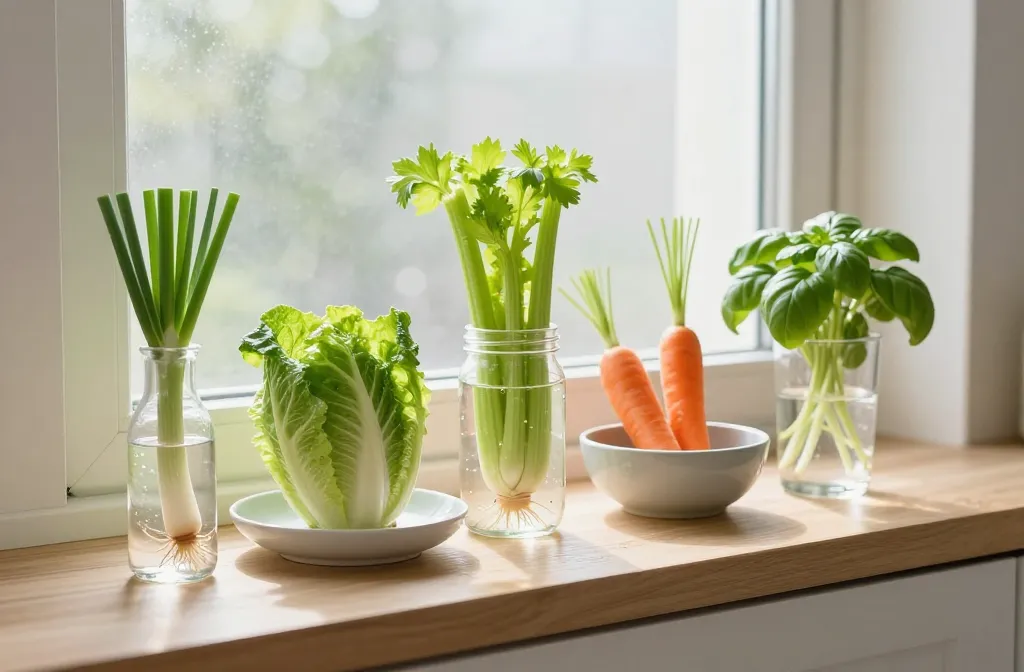
Want fresh produce without another grocery run? Your cutting board leftovers can transform into mini indoor gardens. These five veggies regrow fast, look cute on a windowsill, and cut down on food waste. Bonus: you’ll feel like a plant wizard every time you snip a fresh leaf.
1. Scallions That Just Won’t Quit
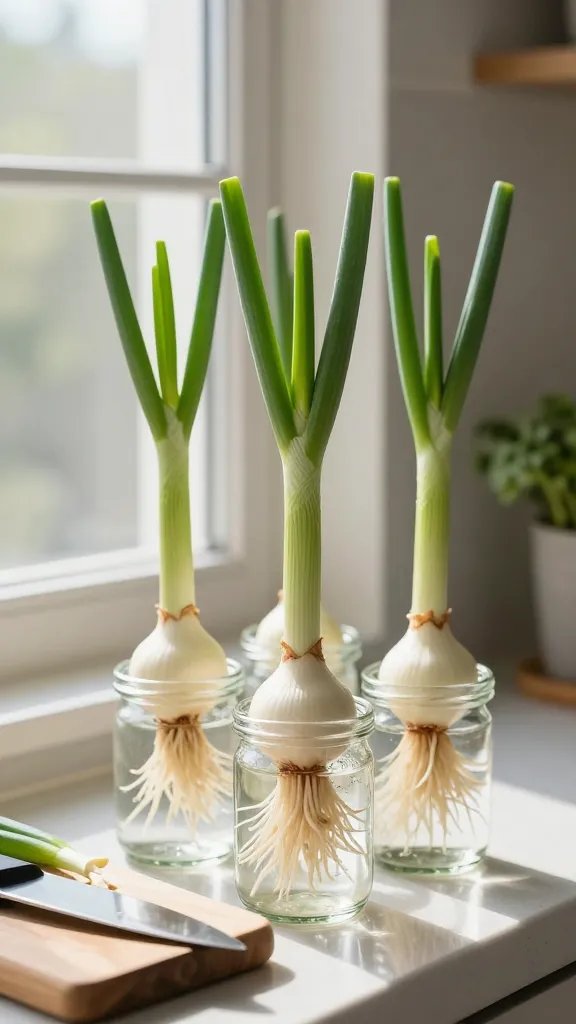
Scallions (green onions) basically come with a reset button. You chop the green tops, stick the white roots in water, and boom—new growth in days. It’s the easiest win for instant kitchen-garden confidence.
How To Regrow
- Trim off the green tops, leaving 1–2 inches of white base with roots.
- Place in a small glass with enough water to cover the roots, not the whole bulb.
- Set on a sunny windowsill. Change water every 1–2 days.
- Harvest when greens reach 6–8 inches. Snip and watch them grow again.
Ready to level up? Move the rooted bunches into a pot with well-draining soil. They’ll get sturdier and taste slightly sweeter.
Tips
- Use a narrow glass to keep stems upright and reduce slime risk.
- If water smells funky, you waited too long to change it—freshen it up ASAP.
- For stronger flavor, give them 4–6 hours of light daily.
Use these for eggs, soups, tacos—basically everything. They regrow multiple times, so you’ll feel like you hacked the produce aisle.
2. Romaine Hearts That Come Back For More
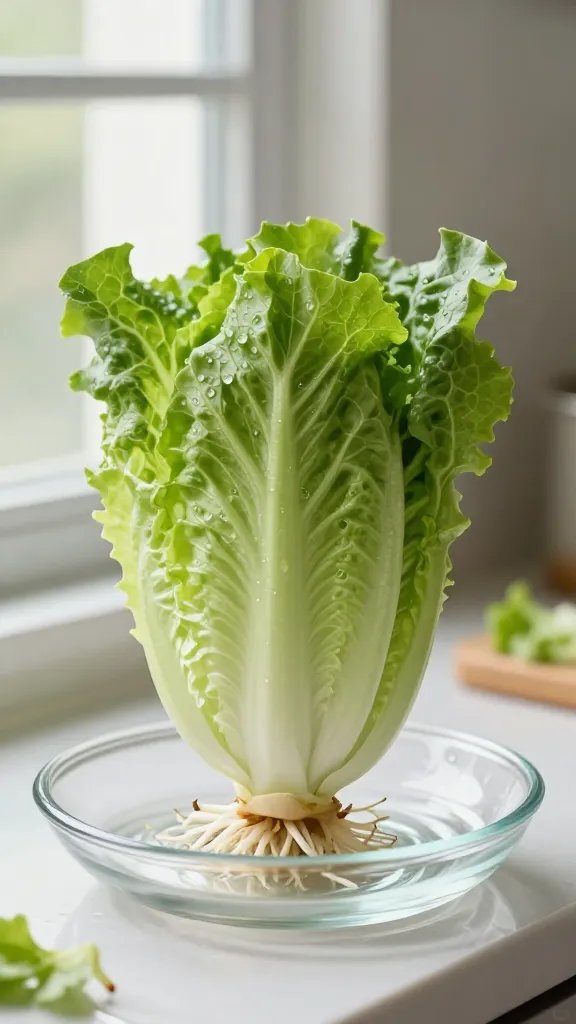
Don’t toss that romaine stump. It’s a crunchy superstar that rebounds quickly and looks gorgeous while it does it. You’ll see new leaves in days, which feels like magic every single time.
How To Regrow
- Cut the romaine, leaving a 2–3 inch heart at the base.
- Place the stump cut-side up in a shallow dish with 1/2 inch of water.
- Give it bright, indirect light. Change the water daily.
- After 5–7 days, look for new growth in the center. Move to soil once roots appear and leaves reach 2–3 inches.
FYI: You’ll usually get smaller, tender leaves rather than a full-sized head. But those baby greens? Perfect for wraps and sandwiches.
Tips
- Switch to a pot with good drainage when growth slows in water.
- Keep the base slightly above the soil line to avoid rot.
- Mist leaves to keep them crisp if your air is dry.
Ideal when you want quick salad toppers and a cute centerpiece that earns its keep.
3. Celery Stumps That Refuse To Be Trash
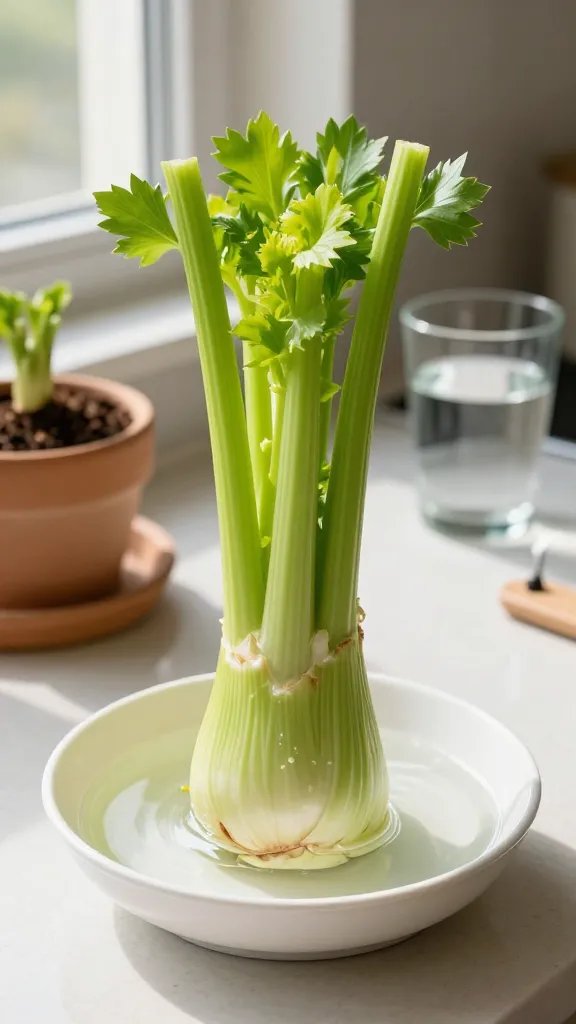
Celery gets a bad rap as the bland snack stick, but its regrowth game is strong. The heart sprouts new leaves fast, and the flavor punches up when grown in soil.
How To Regrow
- Slice off the base of the celery bunch, leaving 1–2 inches.
- Place it upright in a shallow dish with 1/2 inch of water.
- Change the water daily and keep in bright light.
- After 5–10 days, you’ll see green leaves in the center. Plant in soil with just the top exposed.
You can harvest tender inner stalks while it grows. They’re smaller but more flavorful—like celery’s glow-up moment.
Tips
- Add a sprinkle of all-purpose fertilizer once planted for thicker stalks.
- Keep soil evenly moist. Dry spells make it bitter—no thanks.
- Rotate the pot weekly so growth stays upright and even.
Use the leaves as an herb, FYI. They taste bright and slightly peppery—amazing in soups, salads, and homemade stocks.
4. Leek Ends That Stretch Your Recipes
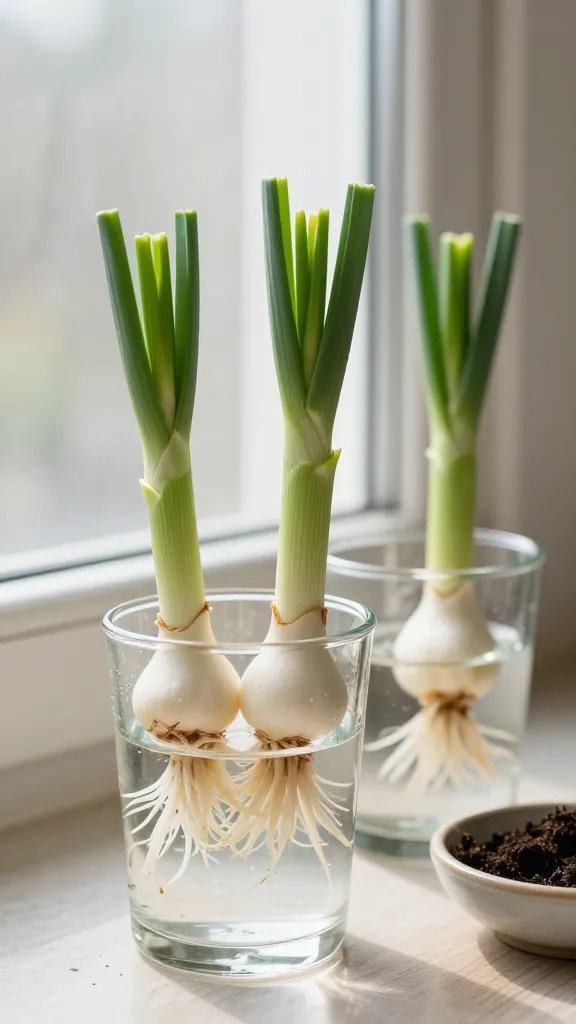
Leeks cost more than they should, IMO. The good news: the white base can regrow into fresh, oniony goodness that you can snip for weeks. It’s like getting interest on your produce investment.
How To Regrow
- Save the bottom 1–2 inches with roots intact.
- Stand in a glass with enough water to cover just the roots.
- Provide strong indirect light and refresh water every 1–2 days.
- Once you see new green growth, either keep in water for snipping or move to soil for longer-term harvests.
Leeks regrow slower than scallions but deliver a deeper, buttery flavor. Use the greens for sautés, omelets, and broths.
Tips
- Trim off any mushy outer layers before placing in water.
- Plant in a tall pot and hill soil around the base to blanch the lower stems—sweeter flavor, paler color.
- Don’t drown it. Waterlogged leeks turn sad and slimy—hard pass.
Perfect for anyone who cooks soups and risottos on repeat. You’ll notice the flavor upgrade immediately.
5. Garlic Greens For Fast Flavor
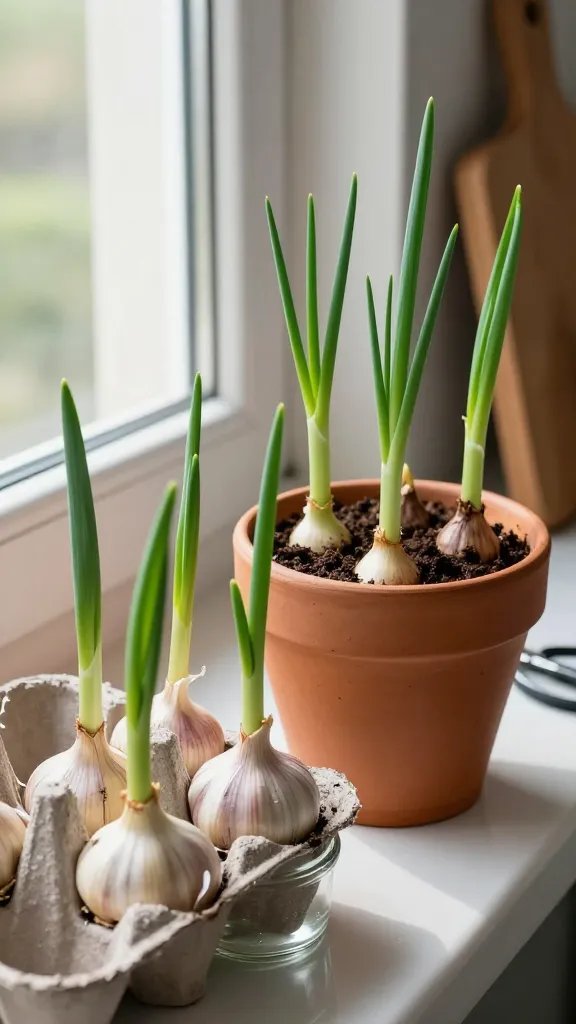
That garlic clove that started sprouting in your pantry? It’s basically begging to become a mini herb garden. While cloves take time to form bulbs, the greens grow fast and taste like garlicky chives.
Two Easy Methods
- Water Method: Place a sprouted clove in an egg carton or small jar with a splash of water touching the base. Keep the tip dry. Snip greens as they reach 4–6 inches.
- Soil Method: Plant cloves pointy side up, 1 inch deep, 3–4 inches apart in a pot. Give 6+ hours of light. Harvest greens regularly.
The greens bring subtle garlic flavor without overpowering a dish. Toss them on pizza, ramen, or avocado toast when you want chef energy with zero effort.
Tips
- Use older sprouted cloves for greens; save the firm, unsprouted cloves for cooking.
- If growing for bulbs, be patient—it takes months. For quick flavor, stick to greens.
- Don’t overwater. Soggy cloves = rot city, and nobody invited that.
Great for small spaces and impatient cooks. You’ll get satisfying results in a week or two—seriously.
Ready to turn scraps into snacks? Start with one veggie and watch your windowsill become the most productive square foot in your home. It’s low effort, budget-friendly, and weirdly satisfying. Your future self (and your compost bin) will thank you.