
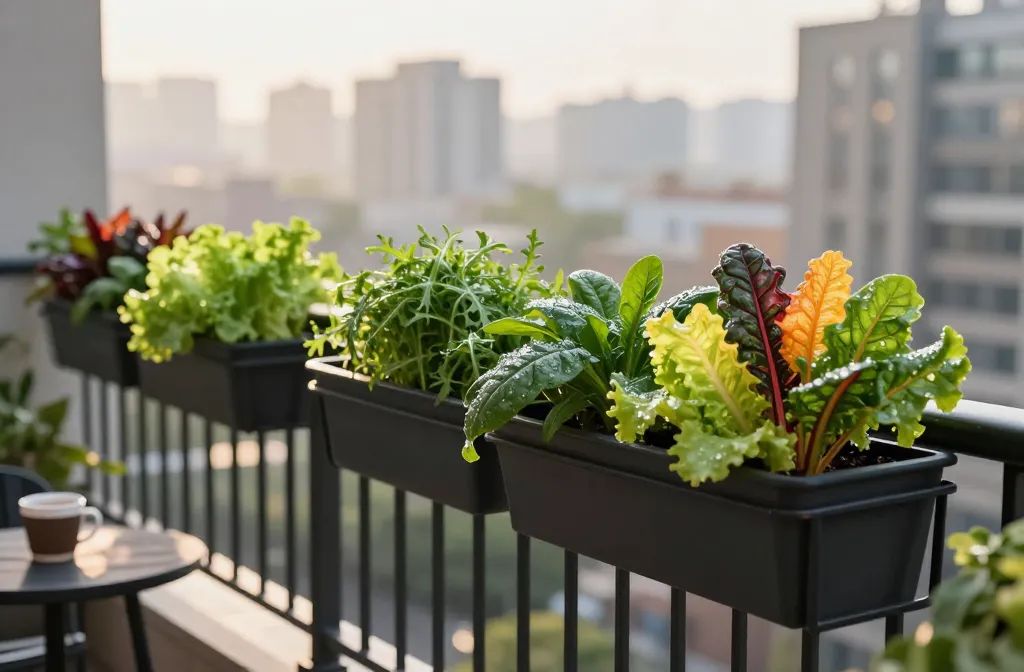
Your balcony can be a powerhouse veggie patch, even if you only have a railing and a dream. Railing planters turn dead space into fresh salads and bragging rights. These five setups show you exactly how to grow 15 productive veggies without sacrificing your morning coffee perch. Ready to harvest more from less? Let’s go.
1. The Salad Bar Rail: Leafy Greens That Regrow Constantly
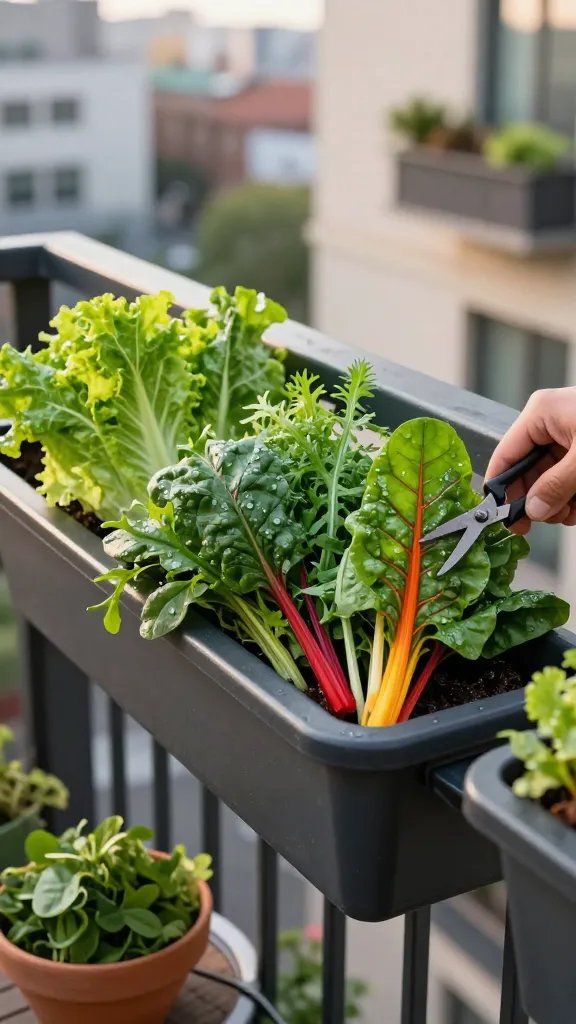
Leafy greens love the shallow, narrow footprint of railing planters. They grow fast, forgive neglect, and bounce back after every cut. Create a cut-and-come-again salad bar and you’ll never spend $5 on a limp store-bought bag again.
What To Grow (15-20 cm deep planters)
- Lettuce mixes (butterhead, romaine baby leaves, oakleaf)
- Spinach (choose bolt-resistant varieties)
- Arugula (peppery, grows fast)
- Swiss chard (colorful stems = instant balcony glam)
- Asian greens (tatsoi, mizuna, pak choi baby)
These greens stay compact and love consistent moisture. Most mature in 25–45 days, which feels like a magic trick in planter land.
Tips
- Use a premium potting mix with coco coir for moisture and perlite for drainage.
- Sow thickly and thin by eating your thinnings. Win-win.
- Fertilize lightly every 2 weeks with a balanced liquid feed.
- Give afternoon shade in hot climates to prevent bolting.
Perfect if you want reliable harvests with minimal commitment. Snip, toss in a bowl, devour. Seriously, it’s that easy.
2. The Snackable Vine Rail: Compact Tomatoes, Cucumbers, and Peas
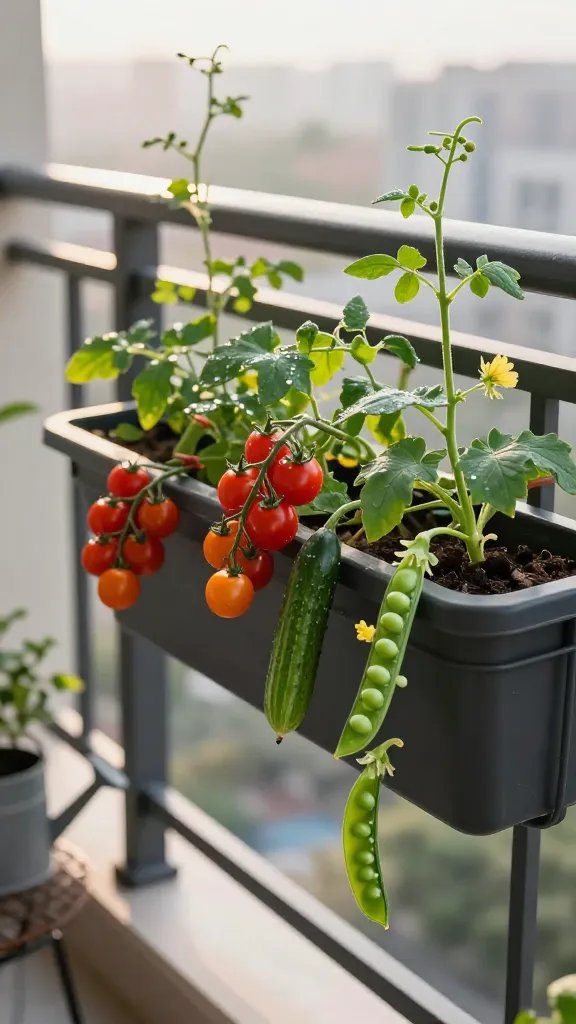
Vines love vertical space, and your railing is basically a ready-made trellis. Grow snack-sized crops that dangle over the edge and taste like summer on demand. Compact varieties keep things tidy and productive.
What To Grow (with support)
- Cherry tomatoes (patio or dwarf types like ‘Tiny Tim’, ‘Tumbling Tom’)
- Mini cucumbers (parthenocarpic/burpless container varieties)
- Snap peas (spring/fall stars; sugar snaps are the sweetest)
These vines need anchoring but pay you back with handfuls of crunchy, juicy snacks. Train them up, along, or over the rail for a living green curtain.
Setup & Care
- Install soft ties or a slim trellis attached to the railing.
- Choose at least 20–25 cm deep planters for tomatoes and cukes.
- Water daily in heat; fruits hate drought swings.
- Feed tomatoes and cucumbers with a tomato-specific fertilizer once flowering starts.
Use this when you crave patio snacking and drama. Bonus: natural shade from vines cools your balcony, IMO the chicest climate hack.
3. The Flavor Rail: Herbs That Make Everything Taste Better
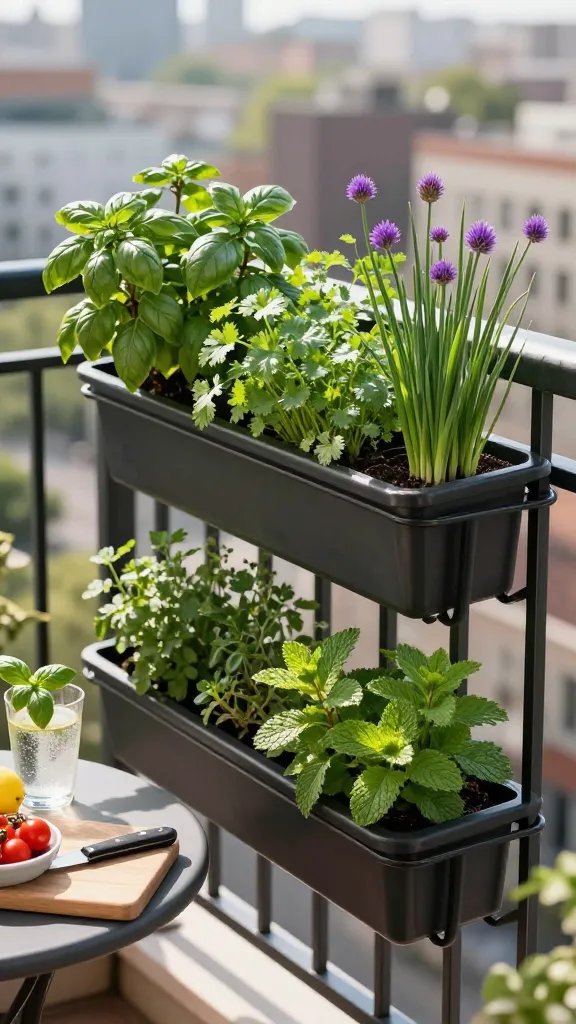
Herbs thrive in railing planters and save you a small fortune. They don’t demand a lot of space, and harvesting actually makes most of them bushier. Your pasta, eggs, and cocktails will notice.
Herbs That Shine
- Basil (Genovese, Thai, or dwarf; pinch flowers for lush growth)
- Parsley (flat-leaf for flavor, curly for garnish drama)
- Cilantro (succession sow every 2–3 weeks for steady supply)
- Chives (snip and they multiply; purple blooms are edible)
- Mint (keep in its own planter or it will colonize your life)
Most herbs prefer sun, but parsley and chives tolerate partial shade. Mix textures and fragrances for a mini sensory garden.
Tips
- Use a well-draining mix and avoid overwatering, especially with basil.
- Harvest from the top to encourage side branching.
- For cilantro, choose slow-bolt varieties and keep it cooler if possible.
- Fertilize herbs lightly or flavor gets watery.
When you want flavor on speed dial, this rail delivers. FYI, mint mojitos on the balcony hit different.
4. The Root-Lite Rail: Baby Carrots, Radishes, Beets, and Spring Onions
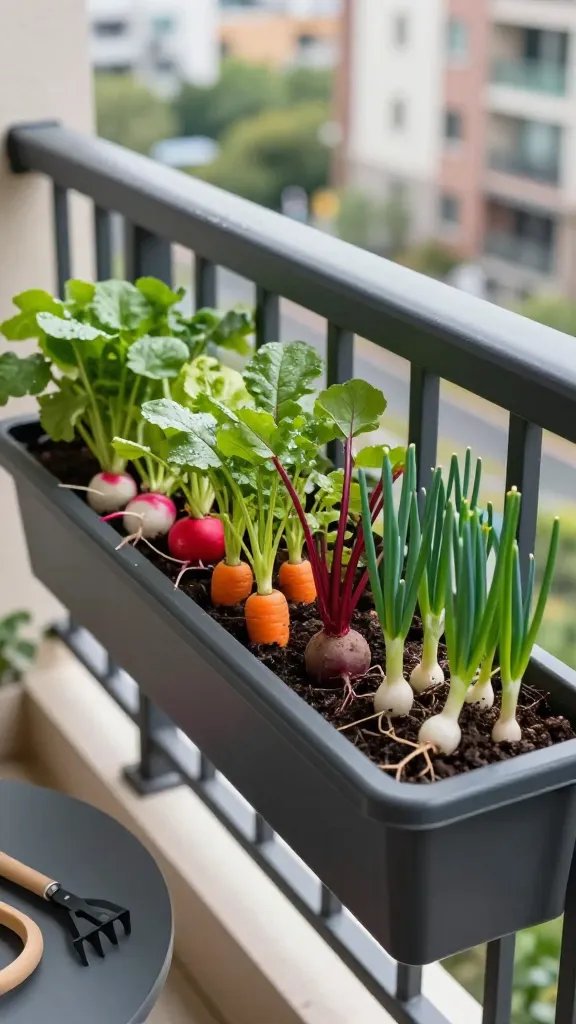
Think roots need deep beds? Not if you go baby-sized. Shallow, quick-growing root veggies fit beautifully into railing planters and reward you fast.
What Works In 15–20 cm Depth
- Baby carrots (short varieties like ‘Parisian’ or ‘Thumbelina’)
- Radishes (ready in 25–30 days; great for impatient gardeners)
- Beet greens + baby beets (thin seedlings and eat the tops)
- Spring onions/green onions (dense plantings for ongoing snips)
These crops don’t hog space and they love the consistent moisture railing planters can provide. Plus, their foliage looks fancy from the street. Free curb appeal!
How To Nail It
- Fine, stone-free mix so roots grow straight. Sift if needed.
- Direct sow and keep soil evenly moist until germination.
- Thin seedlings early; eat the extras.
- Rotate spots to reduce pest buildup, especially if you grow often.
Choose this setup if you love crisp, colorful harvests that don’t take months. It’s instant gratification gardening.
5. The Stir-Fry Rail: Compact Peppers, Bush Beans, and Baby Kale
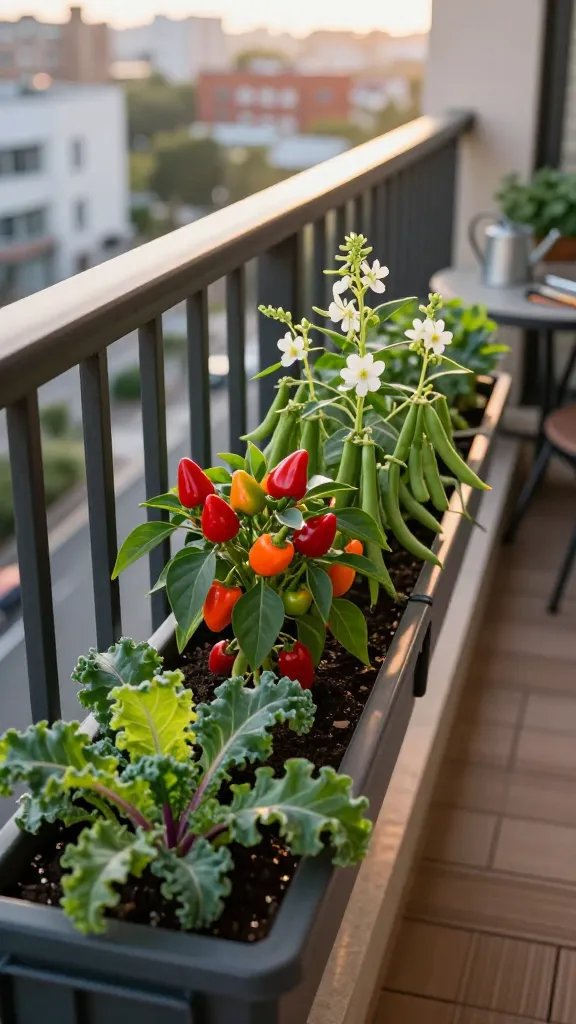
Craving bigger flavors from compact plants? Mix productive minis that pump out pods and peppers in tight quarters. You’ll have weeknight stir-fry supplies right outside your door.
Top Picks
- Compact peppers (chile or mini bell; look for patio/dwarf series)
- Bush beans (filet or dwarf French beans set pods without trellising)
- Baby kale (pick small for tender leaves; red Russian or dwarf curly)
Peppers love heat and reflected warmth from railings. Bush beans don’t need much vertical help and keep producing with regular picking.
Care Cheats
- Use a slightly deeper planter (25–30 cm) for peppers’ root room.
- Beans fix nitrogen, but still appreciate a balanced fertilizer when pods set.
- Pick kale leaves from the bottom up for nonstop growth.
- Mulch with shredded leaves or coco chips to stabilize moisture.
Pick this combo for steady, versatile harvests and a colorful, lush look. Trust me, nothing beats tossing just-picked peppers into a sizzling pan.
Railing Planter Essentials (Read This Before You Plant)
- Secure mounting: Use brackets rated for your planter’s weight when wet. Tight, level, and safe.
- Drainage holes: Non-negotiable. Add a saucer or drip tray if your downstairs neighbor glares at you.
- Quality potting mix: Not garden soil. Look for peat-free or peat-light mixes with perlite.
- Sun check: Track light for a few days. Most veggies want 6+ hours; greens tolerate 3–5.
- Water rhythm: Daily checks in summer. Water until it drains; never let pots stew in water.
- Fertilizer plan: Light, regular feeding beats heavy sporadic blasts. Think every 2 weeks.
- Wind buffer: Railings can be gusty. Add windbreak film or tuck planters close to walls.
- Pest patrol: Check undersides of leaves. Use neem or soap sprays if needed, preferably at dusk.
Smart Variety Swaps For Shade Or Heat
- Hot balcony? Choose heat-tolerant lettuce, Malabar spinach, and hot peppers.
- Shady balcony? Lean into herbs, chives, parsley, spinach, and baby kale.
- Short season? Go with fast crops: radishes, arugula, peas, and dwarf tomatoes.
Sample Planting Map For 15 Space-Saving Vegetables
- Planter 1 (Salad Bar): Lettuce mix, arugula, spinach
- Planter 2 (Flavor Rail): Basil, parsley, chives
- Planter 3 (Snackable Vine): Dwarf cherry tomato + snap peas shoulder season
- Planter 4 (Root-Lite): Radish, baby carrots, spring onions
- Planter 5 (Stir-Fry Rail): Mini bell pepper, bush beans, baby kale
That’s your 15: lettuce, arugula, spinach, basil, parsley, chives, cherry tomato, snap peas, radish, baby carrots, spring onions, mini bell pepper, bush beans, baby kale, plus Swiss chard or cilantro as a swap-in. Flexible, compact, delicious.
Quick Troubleshooting
- Leggy greens: Not enough light. Move to more sun or thin plants.
- Yellowing leaves: Overwatering or nutrient deficiency. Check drainage, then feed.
- Bitter greens/bolting: Heat stress. Shade cloth and frequent harvesting help.
- No tomato fruit: Too much nitrogen or heat. Switch to bloom fertilizer, shake blossoms gently.
- Cucumber bitterness: Irregular watering. Keep moisture consistent.
Ready to turn your railing into a harvest machine? Start with one planter, dial in your watering, then scale up once you’re feeling smug about your first bowl of balcony-grown salad. Small space, big flavor—your future self (and your dinner) will thank you.