
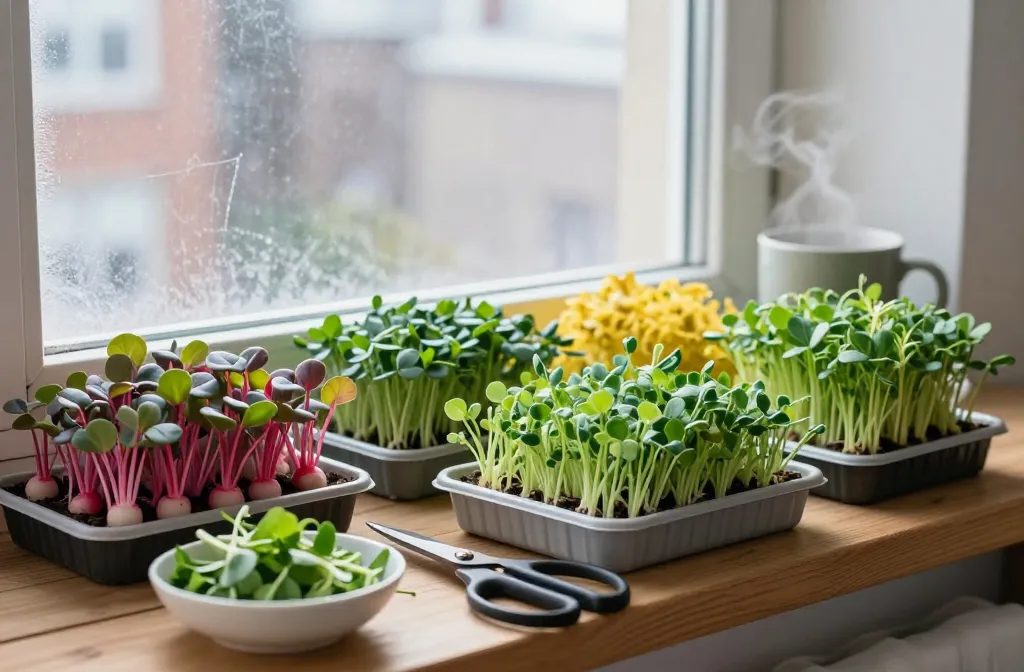
Cold outside, cozy inside, and your windowsill is about to become a tiny jungle. Microgreens grow fast, taste bold, and pack more nutrients than their grown-up versions. The best part? You can harvest most of these in 7–14 days, even if your sunlight situation screams “November blues.” Let’s turn that chilly daylight into crunchy, peppery, lemony goodness—one tray at a time.
Grab a shallow container, some seed, and a splash of confidence. These five picks will keep your salads, sandwiches, and soups feeling fresh all winter. Ready to snip, sprinkle, and snack?
1. Rocket-Fast Radish: Spice Up Every Bite
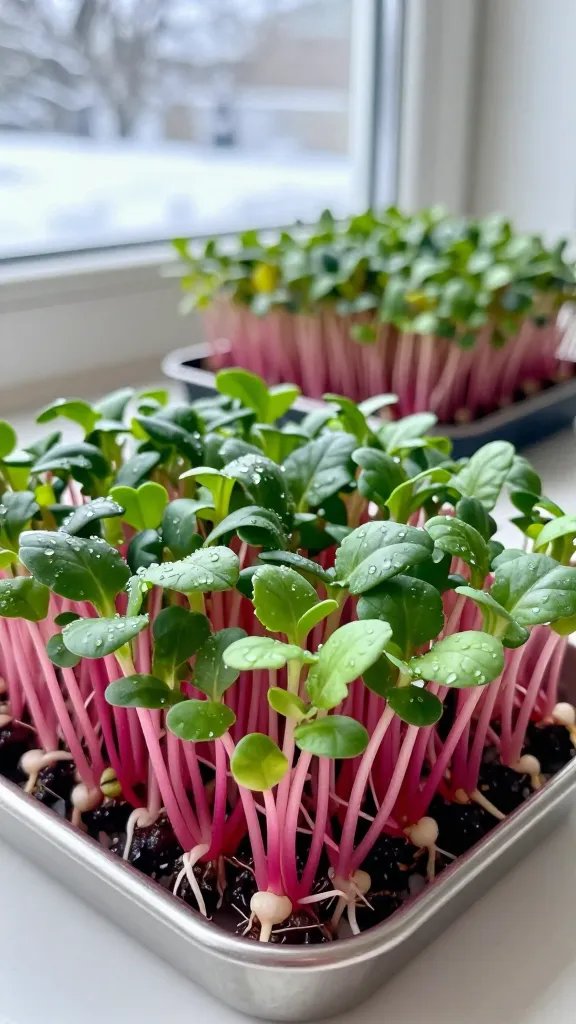
Radish microgreens grow like they drank three espressos. They sprout uniformly, look gorgeous with rosy stems, and bring a mild heat that wakes up bland winter meals. If you want a “win” this week, start with radish—seriously, it’s that forgiving.
Why It Rocks
- Speed: Harvest in 6–10 days.
- Flavor: Peppery kick without overwhelming heat.
- Visuals: Vibrant pink stems = instant plate drama.
Quick Start Tips
- Soak: Not required—just rinse seeds.
- Density: About 1.5–2 tbsp seed per 10×10 tray for even coverage.
- Light: Bright window or a simple LED grow light; 12–14 hours daily.
- Water: Bottom-water once roots hit the holes; keep media moist, not soggy.
Harvest when the first true leaves peek in, or earlier if you love a hotter bite. Use on avocado toast, omelets, ramen, and grain bowls when you want flavor to pop.
2. Sunny-Flavor Peas: Sweet Crunch In A Week And A Half
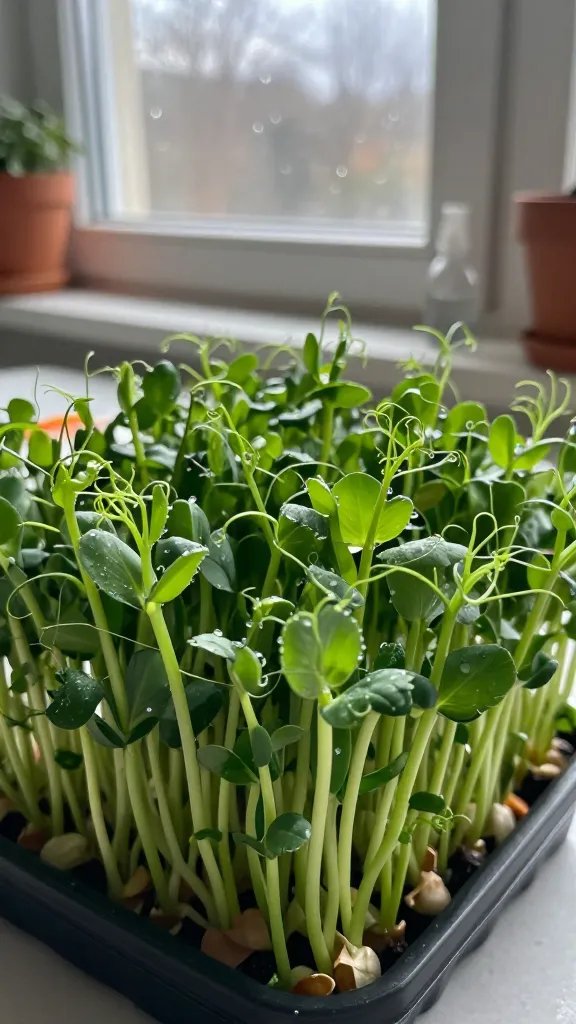
Pea shoots are the winter comfort food of microgreens—sweet, juicy, and crunchy. They climb fast and give you generous yields that feel almost garden-like in the dead of November.
Why It Rocks
- Yield: Heavy producers—expect big handfuls per tray.
- Flavor: Sweet like fresh peas with that spring-in-a-bite vibe.
- Ease: Very forgiving on windowsills with low-ish light.
How To Grow Them Right
- Soak: 6–8 hours for field peas or speckled peas; rinse before sowing.
- Density: 1 cup per 10×20 tray or ~1/2 cup for 10×10.
- Light: Brightest window you’ve got; they tolerate less light than others.
- Support: Cover with a tray for 2–3 days to help root; then remove for light.
Harvest at 7–12 inches, typically 10–14 days in cool homes. Snip for stir-fries, sandwiches, or snack straight from the tray. They’re rich in vitamin C—hello, winter immunity boost.
3. Citrus-Bright Sunflower: Nutty, Meaty, Totally Addictive
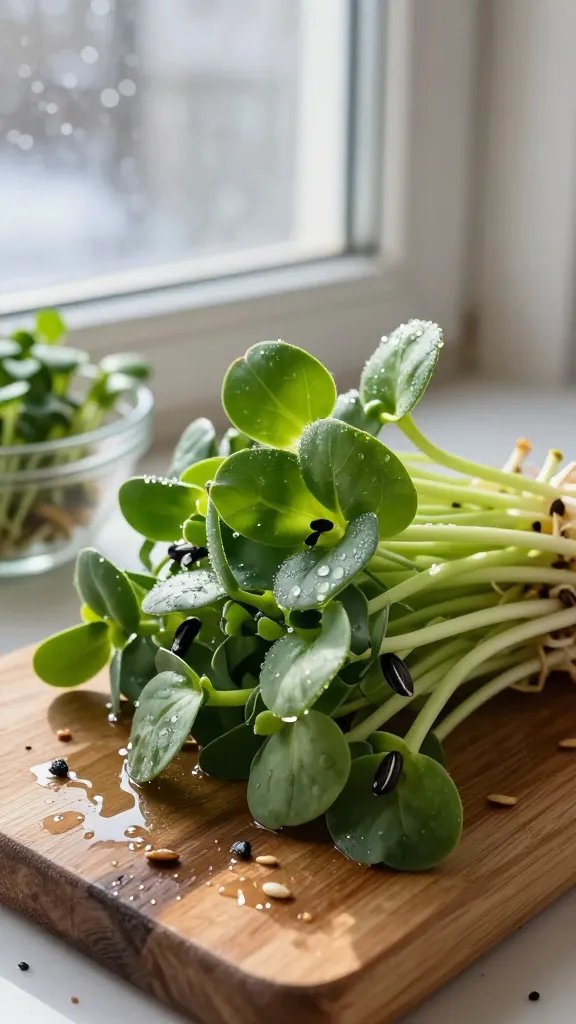
Sunflower shoots feel like cheating because they taste way too good for how easy they are. They’re thick, crunchy, and a little nutty—perfect for people who think microgreens can’t be filling. FYI: they’re also protein-packed and kid-approved.
Why It Rocks
- Texture: Substantial bite—like a micro-salad on its own.
- Flavor: Fresh, nutty, slightly lemony.
- Nutrition: Loaded with vitamin E, folate, and minerals.
Pro Tips For Sunflower Success
- Soak: 8–12 hours for black oil sunflower seeds; rinse well.
- Weighting: After sowing, cover and add a gentle “weight” (another tray or book) for 2–3 days to encourage strong stems.
- Hulls: Mist lightly to loosen hulls; brush off gently with fingers.
- Light: Give them strong light to avoid lanky stems.
Harvest at 7–10 days when leaves are fully open and most hulls have dropped. Toss into power bowls, blend into pesto, or use as a crunchy topping for soups. They make winter lunches feel less… beige.
4. Zesty Mustard Mix: Heat That Loves Cold Windows
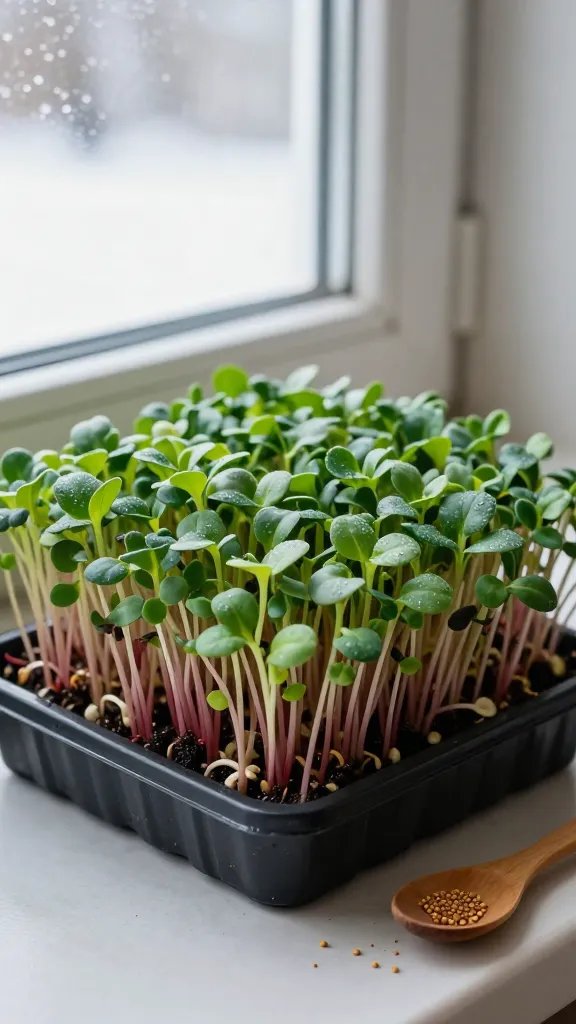
Mustard microgreens bring the heat with zero fuss. They tolerate chilly windowsills and brighten heavy winter dishes with wasabi-adjacent fire. If your meals feel flat, this is the glow-up.
Why It Rocks
- Speed: 7–12 days to harvest.
- Flavor: Bright heat; varieties range from mild to “whoa.”
- Cold-Friendly: Keeps growing in cool rooms where basil sulks.
Growing Notes
- Soak: Skip it—tiny brassica seeds don’t need soaking.
- Density: 1–1.5 tsp per 10×10 for evenly spaced greens.
- Light: Good light prevents flopping; rotate trays to keep stems straight.
- Moisture: Bottom-water; mustard hates soggy crowns.
Harvest when cotyledons are open and first true leaves start to show. Use in grilled cheese, sushi bowls, or with roast veggies for a spicy snap. IMO, mustard micros make the best lazy-person salad topper.
5. Mild, Mighty Brassica Blend: Kale, Broccoli, Kohlrabi Combo
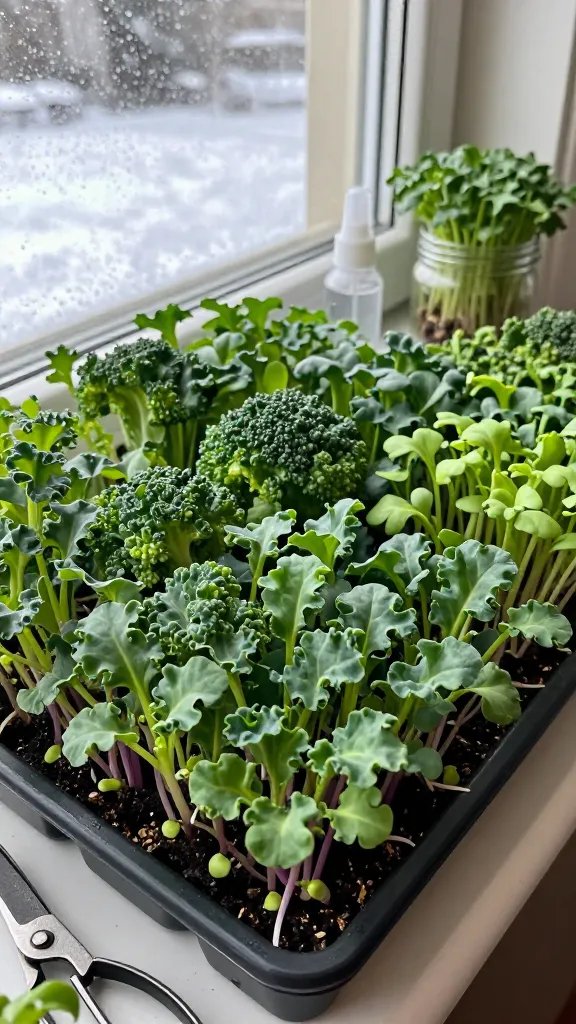
Want gentle flavor with major nutrition? Go for a brassica blend. This mix gives you a tender, mild crunch that plays well with everything—smoothies included (I know, shocking).
Why It Rocks
- Balanced Flavor: Savory, slightly sweet, never overpowering.
- Nutrients: High in sulforaphane precursors—hello, wellness points.
- Uniform Growth: Seeds germinate at similar rates for easy harvesting.
How To Nail The Blend
- Soak: Nope—just broadcast evenly.
- Density: 1–1.5 tsp per 10×10 tray.
- Light: Moderate to bright; grows happily under a budget LED bar.
- Timing: Harvest in 8–12 days, before leaves get tough.
These greens go everywhere: scrambled eggs, tacos, smoothie bowls, even on pizza after baking. They’re your “put it on everything” micro—trust me, you’ll re-sow them immediately.
Bonus: Your Quick-Start Microgreen Playbook
- Containers: Shallow trays (with drainage) or takeout clamshells with holes poked in.
- Growing Medium: Coconut coir or seed-starting mix; press flat for an even surface.
- Dark Period: 2–3 days covered to encourage strong, even sprouting.
- Light Routine: 12–14 hours daily on a windowsill or under a simple 6500K LED.
- Watering: Bottom-water to avoid damping-off; drain excess after 20 minutes.
- Airflow: Small fan nearby reduces mold and strengthens stems.
- Harvest: Snip just above the medium with clean scissors; rinse only if needed and dry well.
- Storage: Paper towel-lined container in the fridge; eat within 3–5 days for best texture.
Lighting In November: What Actually Works
- South/West Windows: Best for short days. Rotate trays daily.
- Grow Lights: A cheap 2–4 ft LED shop light (4000–6500K) 6–10 inches above the canopy does wonders.
- Timer: Set to 14 hours on/10 hours off. Effortless consistency.
Troubleshooting (Because Stuff Happens)
- Leggy, Pale Stems: Not enough light—move closer or upgrade brightness.
- Mold On Soil Surface: Improve airflow, reduce watering, and remove any slimy patches.
- Uneven Germination: Level your medium and press seeds gently; keep the blackout cover snug.
- Seed Hulls Stuck: Lightly mist and massage them off once leaves open.
Flavor Pairings You’ll Actually Use
- Radish: Creamy dips, lox bagels, ramen.
- Pea Shoots: Lemon pasta, stir-fries, spring rolls.
- Sunflower: Hummus bowls, tomato soup, grain salads.
- Mustard: Roast potatoes, grilled cheese, sushi bowls.
- Brassica Blend: Smoothies, tacos, scrambled eggs.
Sowing Rhythm For Continuous Greens
- Week 1: Radish + Brassica Blend
- Week 2: Mustard + Sunflower
- Week 3: Peas + Radish
- Repeat: Keep two trays cycling every week for endless harvests.
There you have it—five microgreens that thrive on winter windowsills and deliver flavor fast. Set up two trays today and you’ll be snipping toppings before your next grocery run. Small effort, big payoff, and your meals suddenly taste like you know what you’re doing (because you do). Now go make that windowsill earn its keep.