
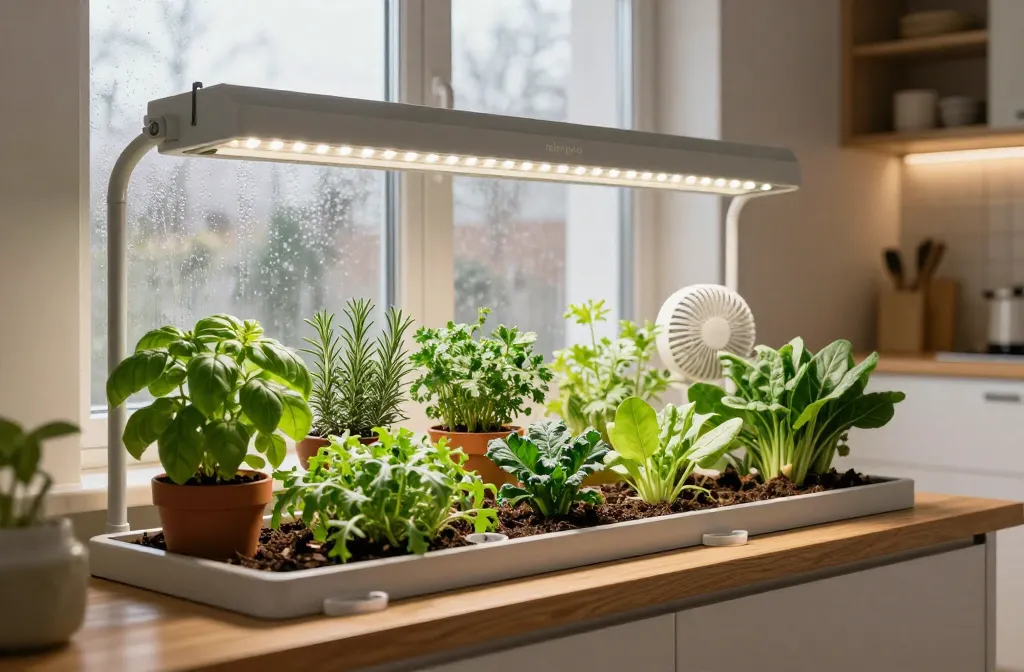
Cold outside, cozy inside? Perfect—because November is prime time to start an indoor winter garden that actually produces. We’re talking fresh herbs and cut-and-come-again greens that don’t need a sun-drenched greenhouse or a five-figure grow setup. You’ll save money, eat better, and flex a little plant-parent swagger. Ready to harvest salads in slippers?
1. Build Your Winter Grow Zone Like A Mini Pro
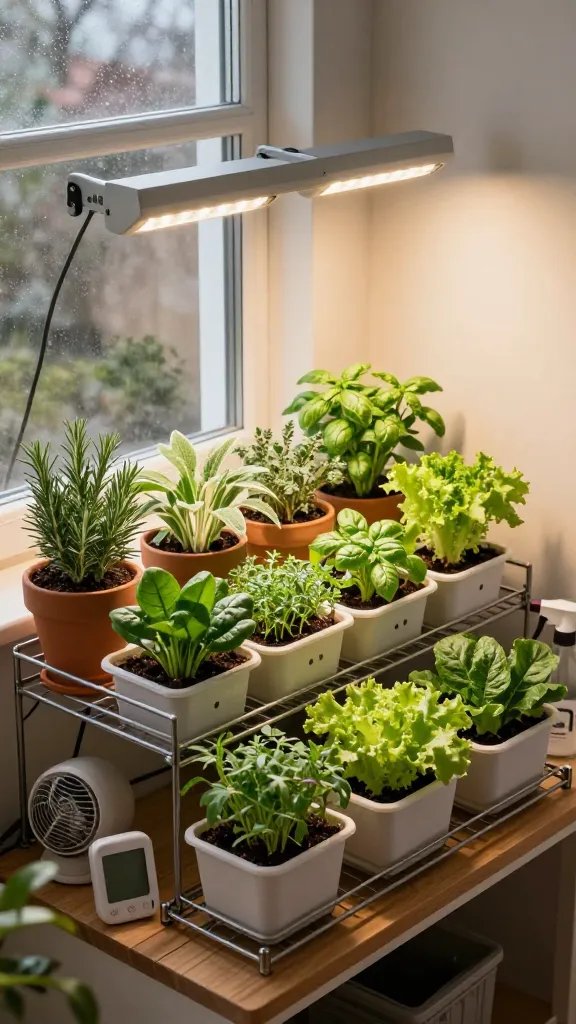
Before we talk plants, let’s set the stage. A good indoor setup turns “meh” windowsills into a legit garden that feeds you all winter. Nail the light, containers, and airflow now, and everything else gets easier.
Key Setup Essentials
- Light: South-facing window? Great. If not, clip-on full-spectrum LED grow lights (4000–6500K) for 12–14 hours/day.
- Containers: 6–8 inch pots for herbs, 4–6 inch shallow trays for greens. Ensure drainage holes + saucers.
- Soil: High-quality soilless mix (peat or coco + perlite). Skip heavy garden soil.
- Water: Bottom-water weekly; keep mix evenly moist, not soggy. Overwatering = sadness.
- Air: A tiny fan on low prevents mildew and strengthens stems.
- Temp & Humidity: 60–70°F sweet spot; herbs get cranky below 55°F. Humidity 40–55% works.
Dial this in once and you’ll reuse it every winter. FYI, consistency beats fancy gear—plants love a reliable routine.
2. Fast Herbs That Actually Taste Like Something
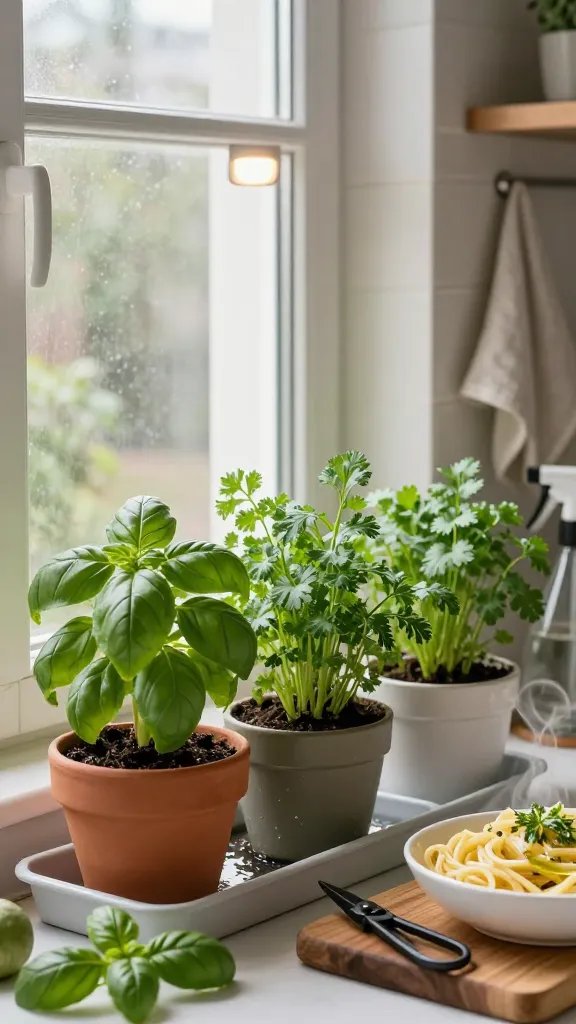
These are your flavor bombs. They grow fast, forgive a few mistakes, and make basic pasta taste like a restaurant dish on a Tuesday.
Top 6 Herbs For November Starts
- Basil (Genovese or Lettuce Leaf): Loves warmth and light. Sow dense, harvest tops often to keep it bushy. Bottom-water or you’ll get sad, spotty leaves.
- Parsley (Flat-Leaf): Slow to germinate but unstoppable after. Soak seeds overnight. Tolerates cooler rooms and low light better than basil.
- Cilantro: Cooler temps = less bolting indoors. Succession sow every 2–3 weeks. Harvest leaves and tender stems—stems pack flavor.
- Chives: Bulletproof. Divide a clump from outside or sow seed. Give them bright light and snip often.
- Mint (Spearmint or Peppermint): A little chaotic, but stellar for teas and desserts. Keep in its own pot—it’s a root rambler.
- Thyme: Slow and steady charmer. Loves bright light, drier soil, and good airflow. A little goes a long way in soups.
Growing Tips
- Harvest smart: Snip above a leaf node to trigger branching.
- Feed lightly: Half-strength liquid fertilizer every 3–4 weeks after 4–6 true leaves appear.
- Rotate: Give pots a quarter turn weekly for even growth under windows.
Use these herbs when you want max flavor with minimal space. Quick wins, big aromas, zero regrets.
3. Cut-And-Come-Again Greens For Daily Bowls
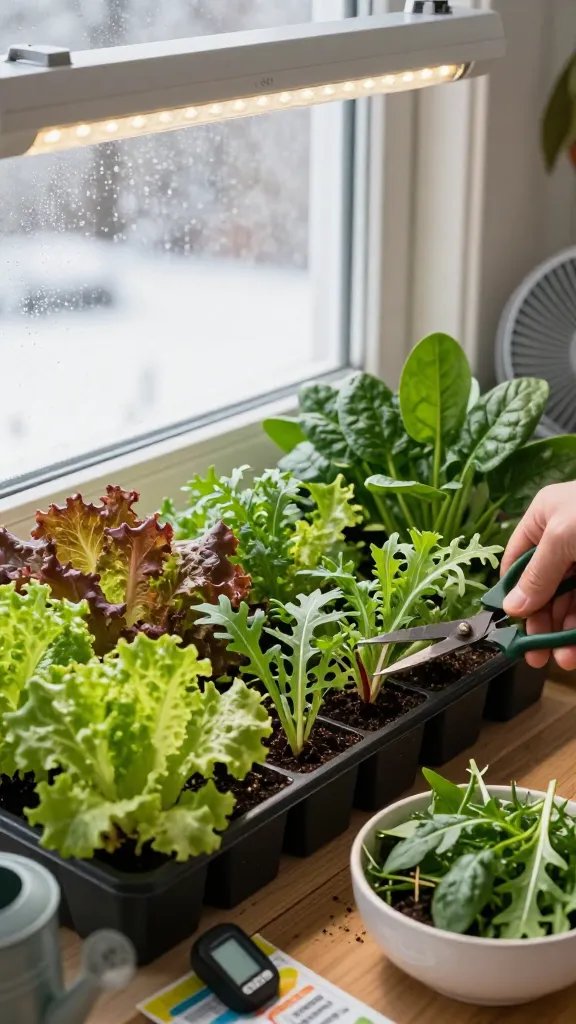
Salad people, assemble. These leafy MVPs love cool conditions, grow in shallow trays, and regrow after every haircut. Translation: endless bowls without grocery store sadness.
Top 6 Greens For Indoor November Planting
- Baby Lettuce Mix: Choose “cut-and-come-again” blends. Sow thick in trays and trim with scissors at 3–5 inches.
- Arugula: Peppery, fast, and cold-tolerant. Germinates in a week. Keep it cool and bright for best flavor.
- Spinach: Loves cool temps. Sow a little deeper (½ inch). Water consistently to avoid bitterness.
- Mustard Greens: Spicy, gorgeous, and resilient. Mizuna offers mild zip; Red Giant brings heat.
- Kale (Baby Leaves): Dwarf or baby-leaf types give steady harvests. Great in smoothies and sautés.
- Swiss Chard (Baby): Colorful, tender, and forgiving. Handles slightly lower light than lettuce.
Tray Method That Works
- Use a 2–3 inch deep tray with drainage.
- Broadcast seed densely, press in, and cover lightly.
- Mist to start, then bottom-water to avoid damping-off.
- Harvest with scissors, leaving 1 inch to regrow.
These greens carry you through winter: quick to germinate, easy to harvest, and crazy satisfying. Seriously, you’ll brag about your salads.
4. Microgreens & Sprouts For Ultra-Fast Wins
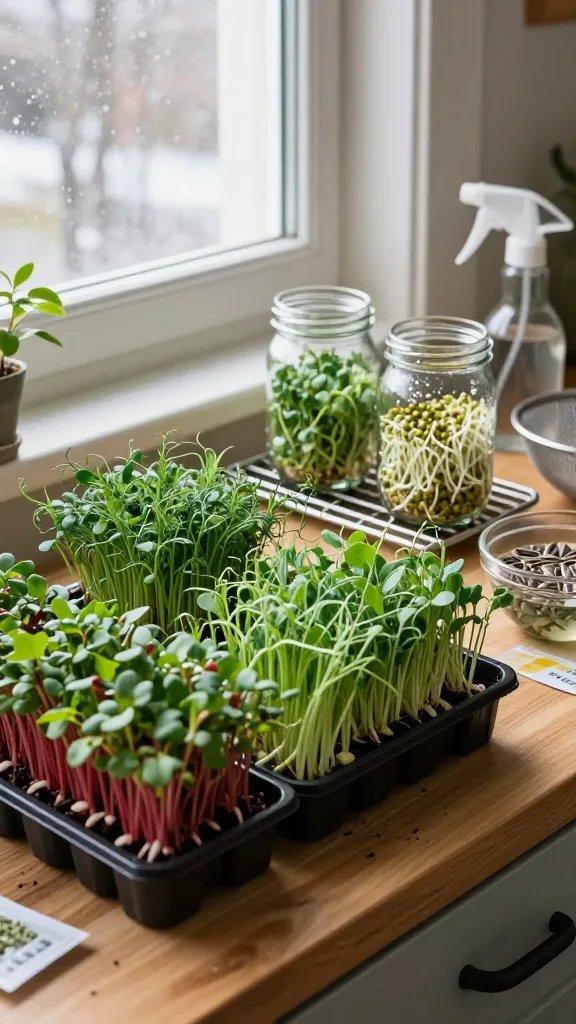
Need instant gratification? Microgreens and sprouts deliver nutrition and flavor in days, not weeks. No green thumb required—just seeds, trays, and a little rhythm.
Best Beginner Picks
- Radish Microgreens: Spicy and ready in 7–10 days.
- Broccoli Microgreens: Mild, nutty, and nutrient-dense.
- Pea Shoots: Sweet, crunchy tendrils in 10–14 days.
- Sunflower Shoots: Meaty texture and big crunch; soak seeds first.
- Sprouts (Jar Method): Alfalfa, mung bean, or lentil—ready in 3–5 days with twice-daily rinses.
Simple Microgreen Workflow
- Fill a shallow tray with 1 inch of moistened mix.
- Sow thick like you mean it. Press seeds in, cover lightly (or use a humidity dome).
- Keep dark 2–3 days, then move to bright light. Water from below.
- Harvest when first true leaves appear; snip and rinse.
Use these when you want quick nutrition boosts for sandwiches, grain bowls, and last-minute dinner flair. IMO, they’re the best “I forgot to meal plan” backup.
5. The Care Routine That Keeps Everything Alive (And Thriving)
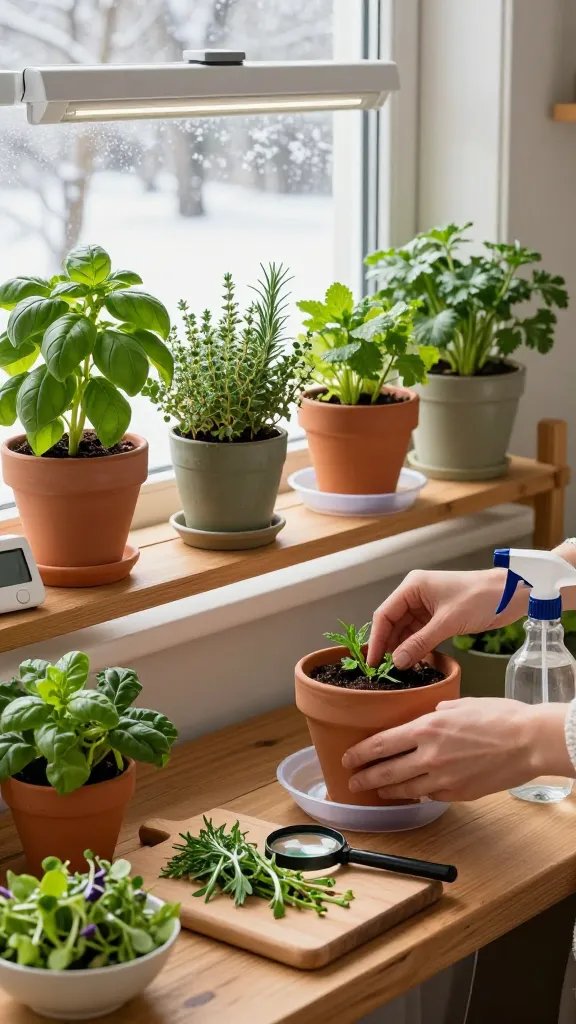
Plants don’t need coddling, but they do love consistency. A simple weekly rhythm beats panicked misting and random fertilizer binges. Set reminders and let the system do the heavy lifting.
Your Weekly Winter Garden Rhythm
- Monday: Check moisture with a finger test. Bottom-water what’s dry.
- Tuesday: Rotate pots for even light. Snip herbs for dinner—call it “pruning.”
- Wednesday: Quick pest check. Look under leaves for aphids or mites. Wipe with soapy water if needed.
- Thursday: Thin dense greens. Eat the thinnings—free micro-salads.
- Friday: Feed lightly every 2–3 weeks (half-strength). Herbs love a steady snack.
- Weekend: Tidy yellow leaves, clean saucers, and give thanks to the plant gods.
Light & Temperature Hacks
- Short days? Run LEDs 12–14 hours. Put them on a cheap timer so you don’t forget.
- Cold windows? Pull pots 3–6 inches away at night to avoid chill damage.
- Leggy seedlings? Move lights closer (6–10 inches) and add a fan breeze.
Watering Without Drama
- Use room-temp water to avoid shocking roots.
- Bottom-water for 20–30 minutes, then drain. No wet feet.
- Let the top ½ inch dry between waterings for herbs like thyme and basil.
Stick to this rhythm and your indoor garden becomes low-maintenance, high-reward. Trust me, future you will be very smug about it.
Ready to turn that gloomy window into a flavor factory? Start a couple herbs, seed a tray of greens, and toss some microgreens into the mix. Small steps, big harvests—your cozy winter just got a lot tastier.