
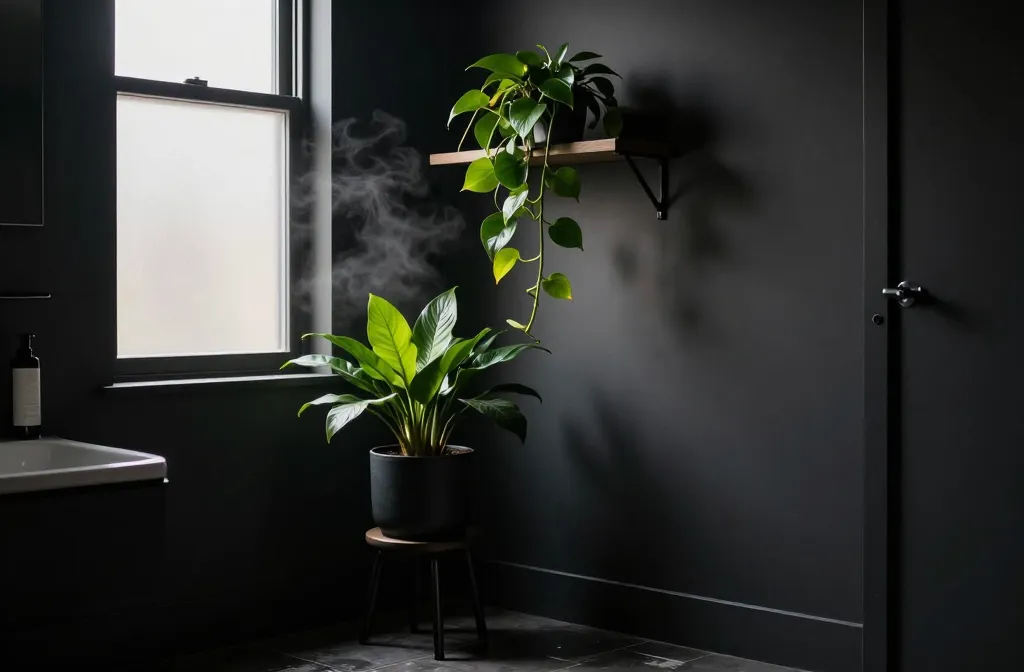
Your apartment feels like a cave? Perfect. Some plants love moody corners and make stellar roommates—especially when you pair them up. These combos don’t just survive low light; they help each other with humidity, pest resistance, and growth habits. Ready to ditch sad, leggy plants and build tiny green ecosystems that just work?
We’ll keep it simple, stylish, and sustainable. You’ll get five clever, low-light companion pairings that fit shelves, bathrooms, entryways, and that one gloomy nook you pretend is “ambient.” Let’s turn your low-light woes into lush wins.
1. The “Bathroom Spa”: ZZ Plant + Heartleaf Philodendron
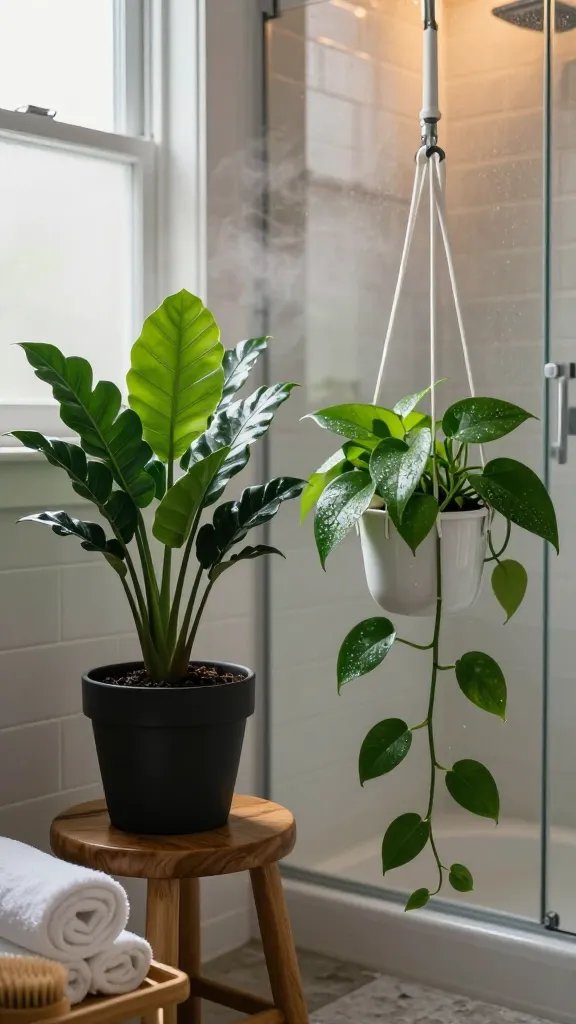
Meet the power couple for steamy, shadowy bathrooms. The ZZ plant handles neglect like a champ, while Heartleaf Philodendron brings cascading, romantic vibes. Together, they tolerate minimal light and love the humidity you create with every shower.
Why This Works
- Light tolerance: Both thrive in low to very low indirect light.
- Water rhythm: ZZ prefers drying out; Philodendron wants slightly moist soil—so separate pots, same zone.
- Humidity boost: Philodendron loves steam, which also keeps ZZ’s leaves glossy.
Place ZZ on the floor or a stool for height, then let the Philodendron trail from a shelf. Keep them a foot from the window if you have one; if not, they’ll still manage. FYI, ZZ grows slower in dark rooms, so no drama if it chills.
Tips
- Water ZZ every 3–4 weeks; water Philodendron when the top inch dries.
- Dust leaves monthly to maximize light intake.
- Fertilize lightly in spring/summer (half-strength).
Use this duo when you want low-maintenance, sculptural greenery that makes your bathroom feel like a boutique hotel.
2. The “Shelf Jungle”: Pothos + Snake Plant
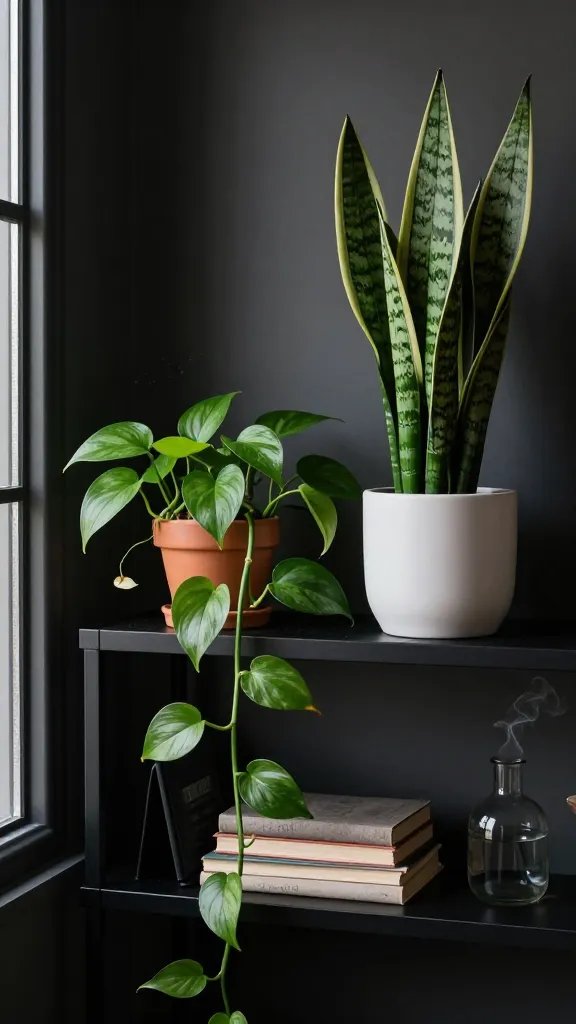
Think high contrast, zero stress. Pothos brings fast-growing vines for that casual, lush drape. Snake plant adds vertical structure and looks designer-level chic without even trying.
Why This Works
- Opposite shapes: Upright sword leaves + trailing vines = instant depth.
- Low light compatibility: Both tolerate dim corners, though variegated Pothos may green up—still cute.
- Air clarity: They’re both solid air-friendly plants for stale corners.
Put the Snake Plant as an anchor on one end of the shelf and let Pothos spill from the other side. If your shelf gets a whisper of indirect light, you’ve nailed it. You can also cluster them on a console or entry table for a “we live here and we have our lives together” moment.
Care Cheats
- Snake Plant: water monthly (seriously). Pothos: water when leaves barely droop.
- Rotate monthly to avoid lopsided growth.
- Snip and propagate Pothos in water—instant refills for other rooms.
Choose this combo when you want a stylish, low-effort statement that fills space fast without high light demands.
3. The “Cozy Corner Canopy”: Cast Iron Plant + Fern (Boston or Lemon Button)
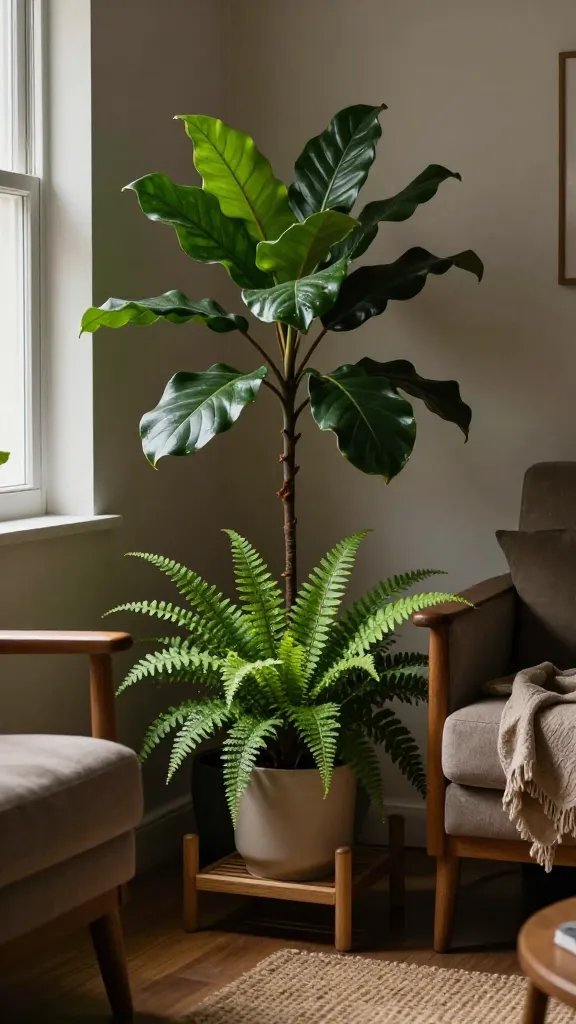
If your living room corner looks like a black hole, plant these two and call it a vibe. The Cast Iron Plant laughs at low light and dry air. Meanwhile, a compact fern adds soft, feathery texture and appreciates the microclimate the Aspidistra creates.
Why This Works
- Survivor energy: Cast Iron Plant tolerates neglect; ferns like consistency—together, the big leaves shield the fern’s moisture.
- Texture play: Broad, glossy leaves vs. airy fronds = visual interest without bright light.
- Pest resistance: Healthy humidity around the fern helps deter spider mites.
Place the fern slightly behind and to the side of the Cast Iron Plant to reduce airflow and water loss. Use a pebble tray under the fern for bonus humidity without overwatering. No window? Add an LED bulb nearby (2700–4000K) for a tiny boost.
Care Tips
- Cast Iron Plant: water every 2–4 weeks; don’t drown it.
- Fern: water when the top half-inch feels barely dry; never let it go crispy.
- Mist the fern lightly or use a humidifier if your space is Sahara-dry.
Pick this pairing when you want drama, texture, and a corner cluster that thrives where other plants give up.
4. The “Desk Buddy Duo”: Chinese Evergreen (Aglaonema) + Parlor Palm
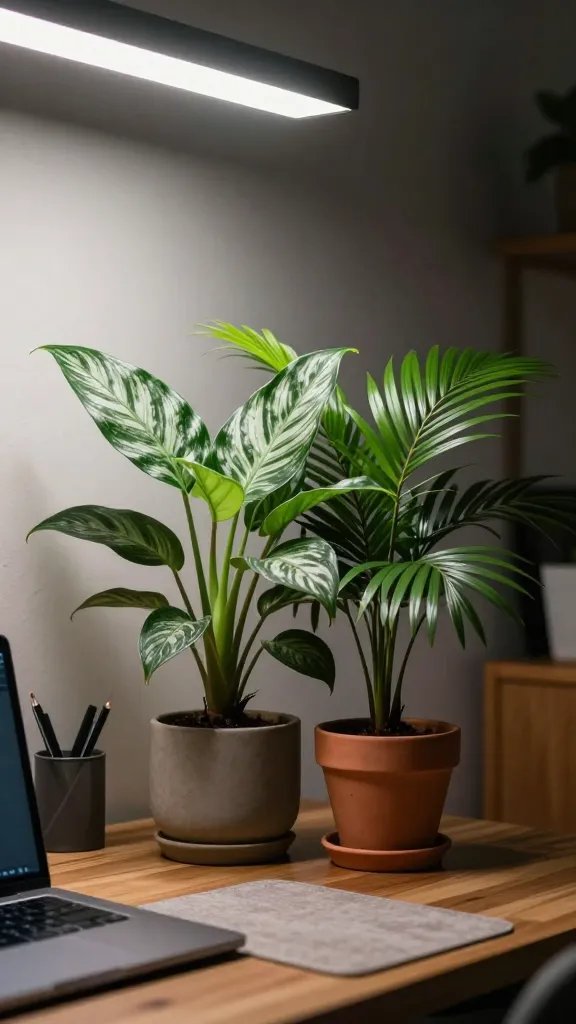
Your desk deserves something pretty that won’t throw a tantrum under fluorescent lights. Chinese Evergreen shines in low light with patterned foliage, while the Parlor Palm adds soft, arching fronds that feel calm and tropical.
Why This Works
- Office-proof: Both handle low light and stale air like professionals.
- Complementary shapes: Broad Aglaonema leaves contrast with the palm’s feathery texture.
- Steady growth: No sudden growth spurts, no fuss—ideal for a workspace.
Group them on a desk, side table, or bookshelf end. The Aglaonema’s patterned leaves add a pop of personality in dim spaces while the Parlor Palm keeps things airy. This combo reads “calm focus” instead of “jungle chaos.”
How To Keep Them Happy
- Water Aglaonema when top inch dries. Water Parlor Palm when top 1–2 inches dry.
- Avoid cold drafts—both dislike chills from AC vents.
- Use a balanced, diluted fertilizer once a month in spring/summer.
Use this duo when you want soothing greenery that plays nice with work-from-home vibes and low-light corners.
5. The “Trailing Glow-Up”: Spider Plant + Prayer Plant (Maranta or Calathea)
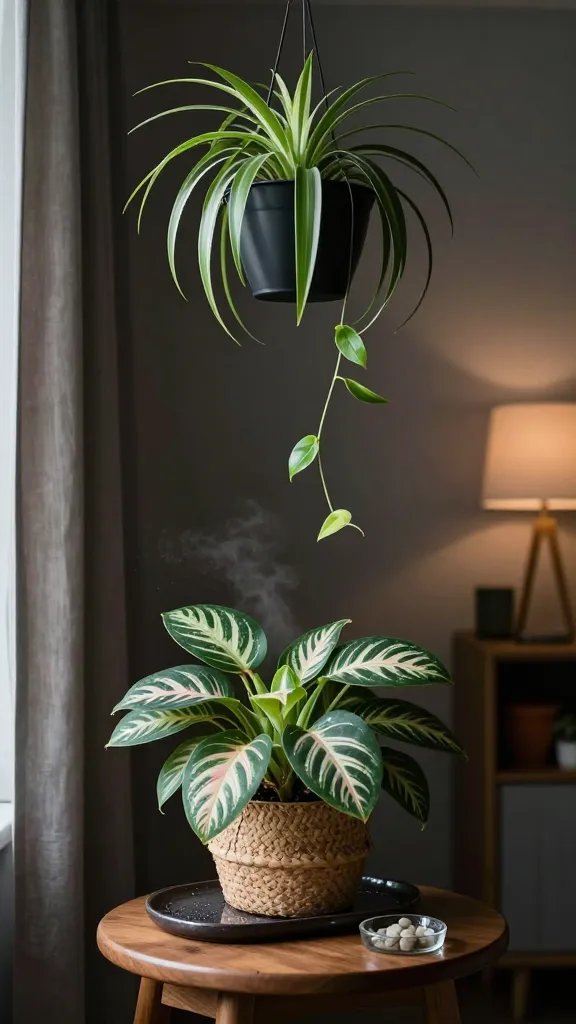
Want movement and color even in moody spaces? Spider Plants send out adorable baby offshoots, and Prayer Plants bring patterned leaves that fold up at night—yes, they literally pray. The combo looks lush without a bright window.
Why This Works
- Humidity synergy: Prayer Plants love humidity; Spider Plants help buffer the local microclimate.
- Low light tolerance: Both manage indirect, low light well; Prayer Plants keep color even in dim areas.
- Dynamic display: Hang the Spider Plant and tuck the Prayer Plant below for a layered look.
Place them near a north window or several feet from an east window. No window? A small grow bulb on a desk lamp will do wonders. Keep soil slightly moist for the Prayer Plant and go easier on the Spider Plant.
Practical Care
- Spider Plant: water when top inch dries; flush soil quarterly to prevent mineral tips.
- Prayer Plant: filtered water if possible; keep evenly moist but not soggy.
- Trim brown tips and wipe leaves to keep patterns crisp.
Reach for this pairing when you want playful, interactive plants that look lively in low light and bring personality, IMO.
Bonus Low-Light Companion Ideas (Quick Hits):
- Peace Lily + Devil’s Ivy (Pothos): Moisture-loving pair for bathrooms or kitchens.
- Philodendron Brasil + ZZ Raven: Color contrast with near-zero effort.
- Hoya Carnosa + Snake Plant: Slow and steady, sculptural and tidy.
- Nerve Plant (Fittonia) + Fern: Humidity bros for terrariums or glass cloches.
General Low-Light Companion Planting Rules
- Match moisture needs: Group plants with similar watering schedules to avoid chaos.
- Stagger heights: Upright anchor + trailing accent = instant depth.
- Create microclimates: Cluster 2–4 plants to boost humidity naturally.
- Use the right soil: Well-draining mix for aroids; add perlite for breathability.
- Light check: If you can comfortably read without turning on a lamp, it’s enough for low-light plants.
- Pest patrol: Inspect undersides of leaves weekly; isolate at first sign of trouble.
Simple Lighting Upgrades (If Your Place Is Extra Dim)
- Swap bulbs: Use full-spectrum or 4000–6500K LED bulbs in nearby lamps.
- Distance matters: Keep plants 12–24 inches from the bulb for best results.
- Set timers: 10–12 hours of supplemental light keeps growth steady—no guesswork.
Watering Without Guesswork
- Finger test beats apps: Check 1–2 inches down; if dry, water slowly.
- Drainage is non-negotiable: Pots need holes; cachepots are for looks only.
- Less in winter: Plants sip, not chug; adjust accordingly.
Low light doesn’t mean low style. With the right pairings, you’ll get fuller displays, steadier growth, and fewer headaches—trust me. Pick one combo, set it up this weekend, and watch your dark apartment start to feel alive.
Ready to build your mini jungle? Start small, learn what your space wants, and level up from there. Your moody corners are about to become your favorite places in the whole apartment—seriously.