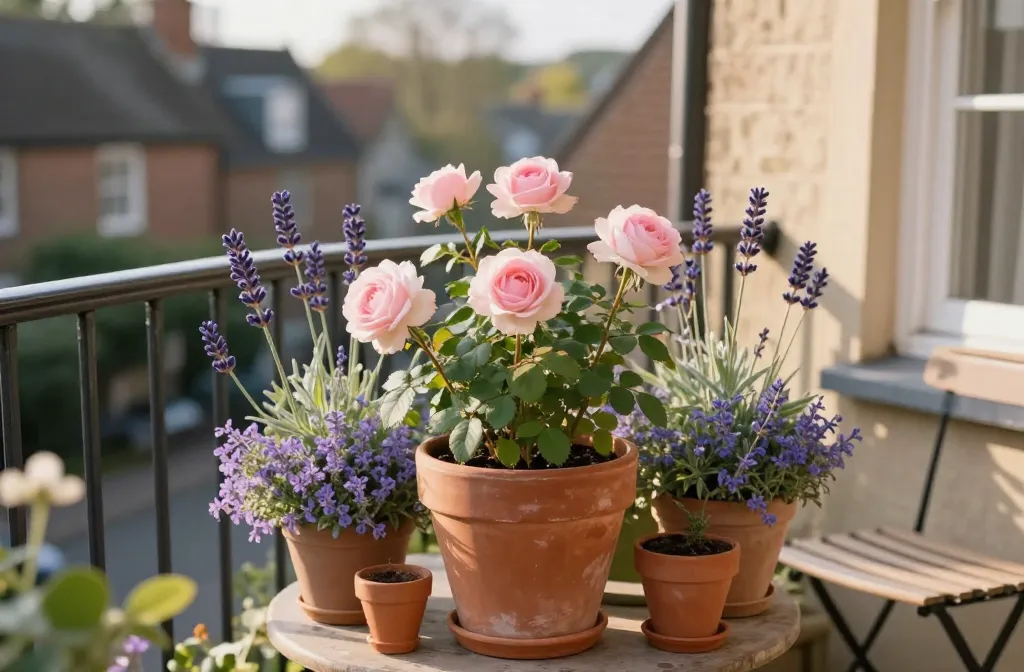
You don’t need a manor house to pull off that dreamy English garden vibe. You just need smart pairings and pots that play nice on a balcony or sunny window. These five sections give you twelve tried-and-true combos scaled for containers, so you get nonstop blooms, fragrance, and pollinator magic. Ready to turn your apartment into a mini Chelsea Flower Show?
1. Roses, Lavender, and Catmint: The Balcony Showstoppers
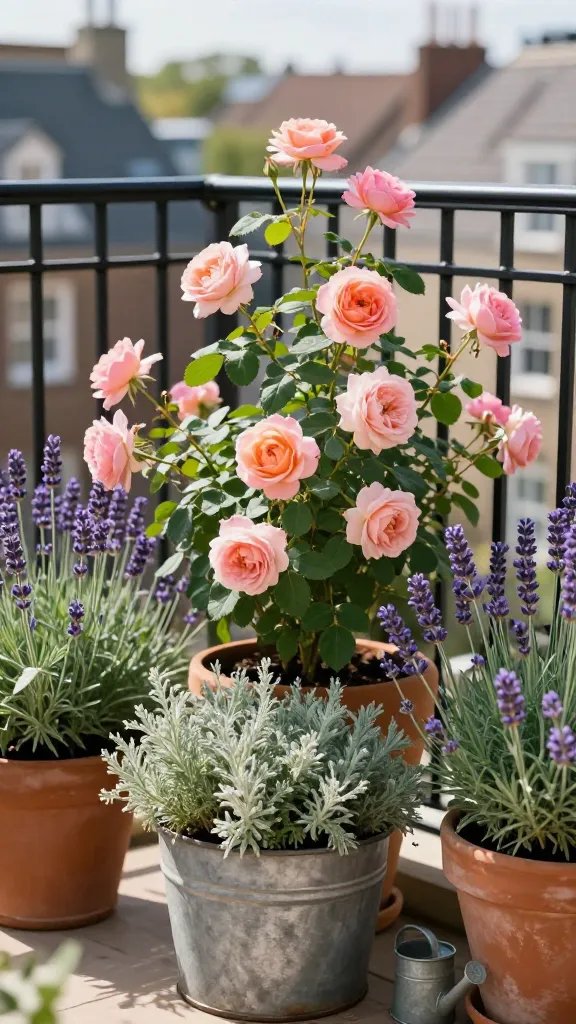
Want the quintessential English look? Pair compact roses with fragrant lavender and frothy catmint. They love sun, handle heat like champs, and bring nonstop color with a cottage-garden edge.
Go for patio roses bred for containers, like polyantha or small floribunda varieties. Tuck in lavender (Lavandula angustifolia) for scent and catmint (Nepeta) for a soft, spilling skirt that hides bare rose canes.
Why It Works
- Shared sun needs: All three want 6–8 hours of direct light.
- Airy foliage: Catmint and lavender boost airflow around rose leaves.
- Pollinator magnet: Bees and butterflies will visit daily, seriously.
Container Tips
- Choose a 16–20 inch pot with excellent drainage.
- Use a gritty, well-draining mix; add perlite or pumice for extra airflow.
- Place rose in the center, lavender on one side, catmint trailing the front.
Use this when: You want big romance, small footprint, and low fuss in full sun.
2. Sweet Peas, English Ivy, and Dwarf Boxwood: The Classic Courtyard Trio
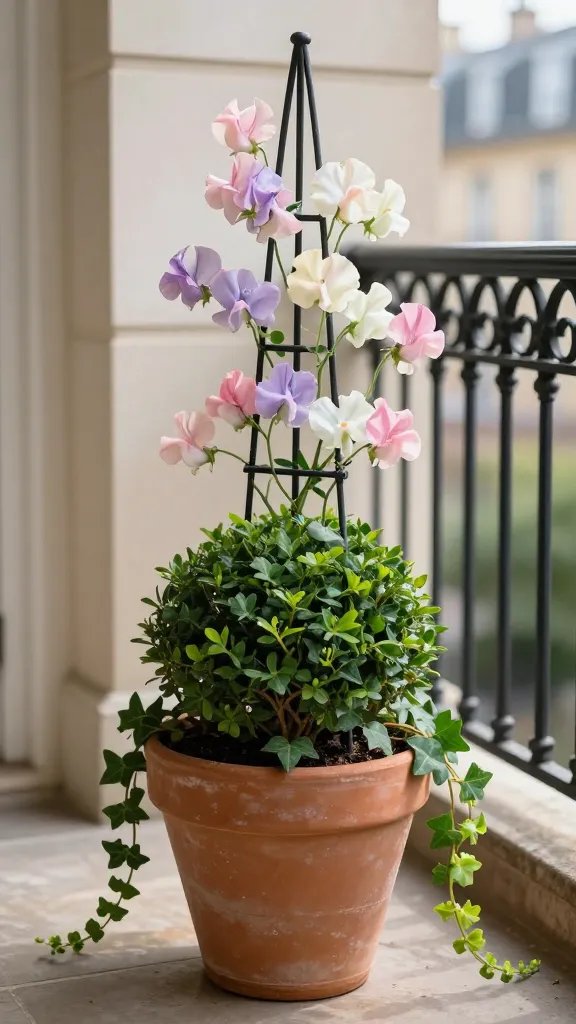
If you love timeless structure with seasonal flair, this combo nails it. You get tidy evergreen shape from dwarf boxwood, soft spill from English ivy, and the sweetest spring fragrance from sweet peas.
Use a compact obelisk or mini trellis in a 14–18 inch pot. Sweet peas climb, ivy drapes, and boxwood anchors everything like a little green topiary boss.
Why It Works
- Four-season interest: Boxwood and ivy keep the pot handsome when sweet peas finish.
- Contrast: Glossy boxwood leaves + lacy sweet pea vines = chef’s kiss.
- Fragrance factor: Old-fashioned sweet peas fill a balcony with scent on cool mornings.
Planting Notes
- Use a peat-free, moisture-retentive mix with compost.
- Start sweet peas from seed in late winter or buy starts in early spring.
- Protect sweet peas from sweltering heat; morning sun + afternoon shade works best.
Use this when: You want structure year-round and a seasonal bloom moment that feels posh, IMO.
3. Foxglove, Hardy Geranium, and Heuchera: The Shady Charmer
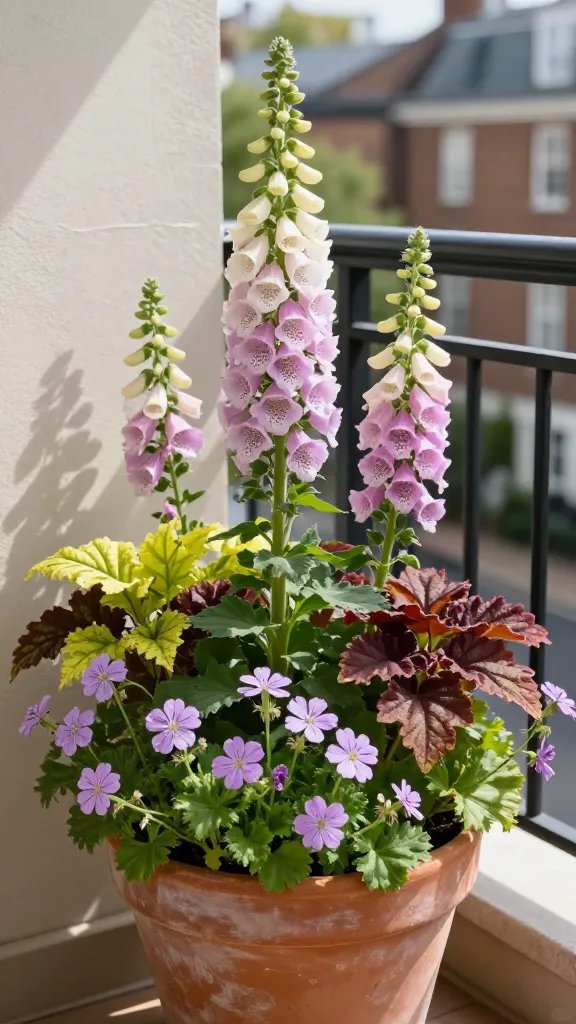
No blazing sun? No problem. This moody, woodland-y mix brings vertical drama, long bloom time, and foliage color that looks expensive without trying.
Foxglove (Digitalis) adds spires, hardy geranium (Geranium x cantabrigiense or pratense) fills with frilly flowers, and heuchera offers rich leaves in caramel, burgundy, or lime. These thrive in bright shade or morning sun with afternoon shade.
Why It Works
- Texture layering: Spikes, mounds, and ruffles make a small pot feel lush.
- Extended interest: Heuchera’s foliage stays striking even after the foxgloves finish.
- Apartment-friendly height: Foxglove gives stature without needing a garden bed.
Container Setup
- Use a 14–16 inch pot; plant foxglove toward the back, geranium in the center, heuchera toward the front edge.
- Keep soil evenly moist and feed lightly during active growth.
- Deadhead foxgloves to encourage side shoots; leave a few for seed if you want volunteers.
Use this when: Your space gets dappled light, and you crave a romantic, shady nook.
4. Lavender, Thyme, Sage, and Mini Roses: The Scented Kitchen Garden
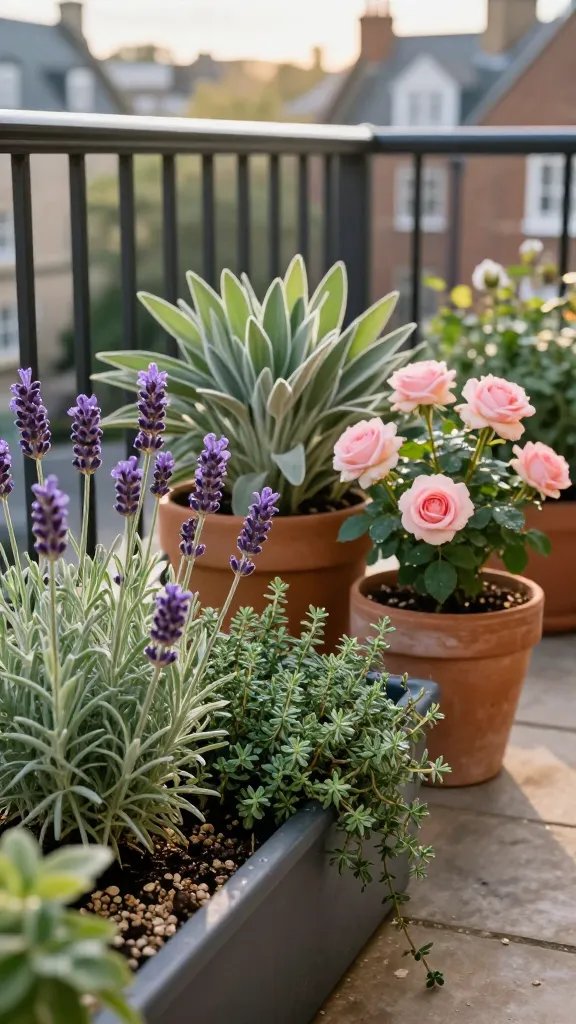
Herbs meet florals and everyone wins. This group looks like a postcard from the Cotswolds and plays nicely in a single wide trough or a row of matching pots.
Pair lavender with creeping thyme for groundcover, then tuck in culinary sage (Salvia officinalis) and a miniature rose for color. Everything loves sun and lean, fast-draining soil.
Why It Works
- Drought-tolerant squad: Perfect for forgetful waterers (we’ve all been there).
- Edible + ornamental: Snip thyme and sage while enjoying rose blooms.
- Low profile: Great for narrow balconies with railing planters.
How To Plant
- Use a long 24–30 inch trough with multiple drainage holes.
- Soil should be sandy and light; mix in horticultural grit for bonus drainage.
- Plant lavender at one end, sage at the other, thyme between, mini rose centered.
Care Hacks
- Water deeply, then let the top inch dry out. Overwatering kills faster than thirst.
- Prune lavender lightly after bloom to keep it compact.
- Deadhead the mini rose for constant color.
Use this when: You want fragrance, flavor, and flowers in the same sunny spot—FYI, this combo photographs beautifully.
5. Delphiniums, Daisies, and Sweet Alyssum: The Cottage Cascade
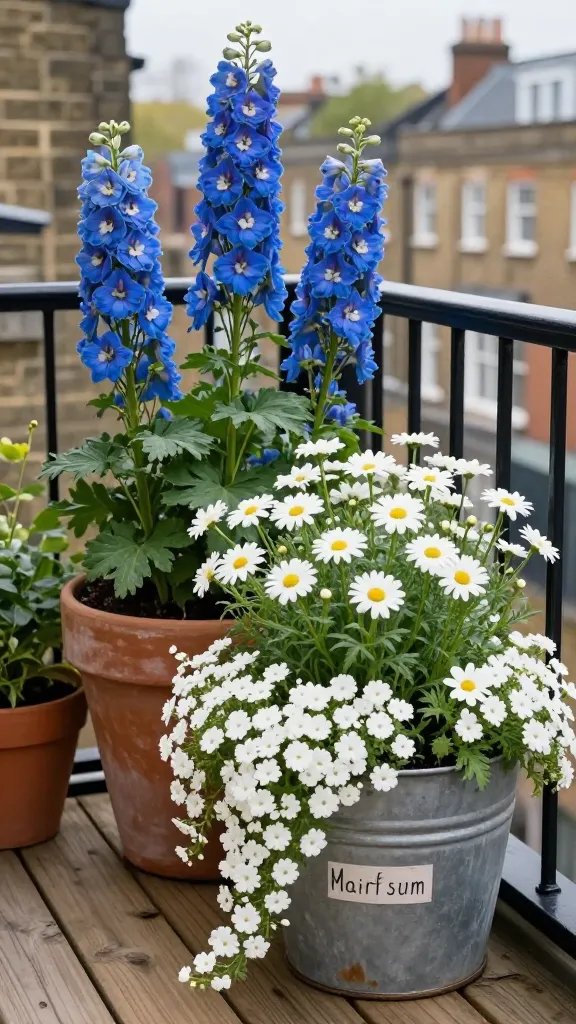
You want that painterly English cottage look? Stack heights and let something spill. This trio hits color, texture, and scent without hogging your balcony.
Delphiniums bring the tall drama, Shasta daisies or feverfew give cheerful mids, and sweet alyssum cascades over the edge with honeyed fragrance. Choose compact varieties labeled for containers.
Why It Works
- Layered bloom times: Alyssum starts early, daisies roll through, delphiniums spike in waves if you cut back.
- Color play: Blue delphiniums + white daisies + soft alyssum = peak cottage vibes.
- Pollinator buffet: Bees, hoverflies, and butterflies all stop by.
Potting Plan
- Use a 16–18 inch pot; delphiniums to the back with a stake, daisies centered, alyssum at the rim.
- Rich, well-drained potting mix with slow-release fertilizer.
- Full sun is best; give wind protection for the delphiniums.
Practical Notes
- Pinch daisies when young for bushier plants.
- Cut delphinium spikes after bloom to promote a second flush.
- Replace alyssum midseason if it gets tired—no shame in a refresh, trust me.
Use this when: You want season-long color that reads “storybook garden” from ten feet away.
You’ve got the blueprint. Mix structure with fragrance, add a spiller, and give everything a well-draining home in the sun or shade it prefers. Start with one combo, then build your balcony village—seriously, you’ll be shocked how fast it looks lush.
Snap progress pics, swap in fresh annuals when something fades, and keep experimenting. Your apartment can deliver big English garden energy without the estate—and without the headaches.