
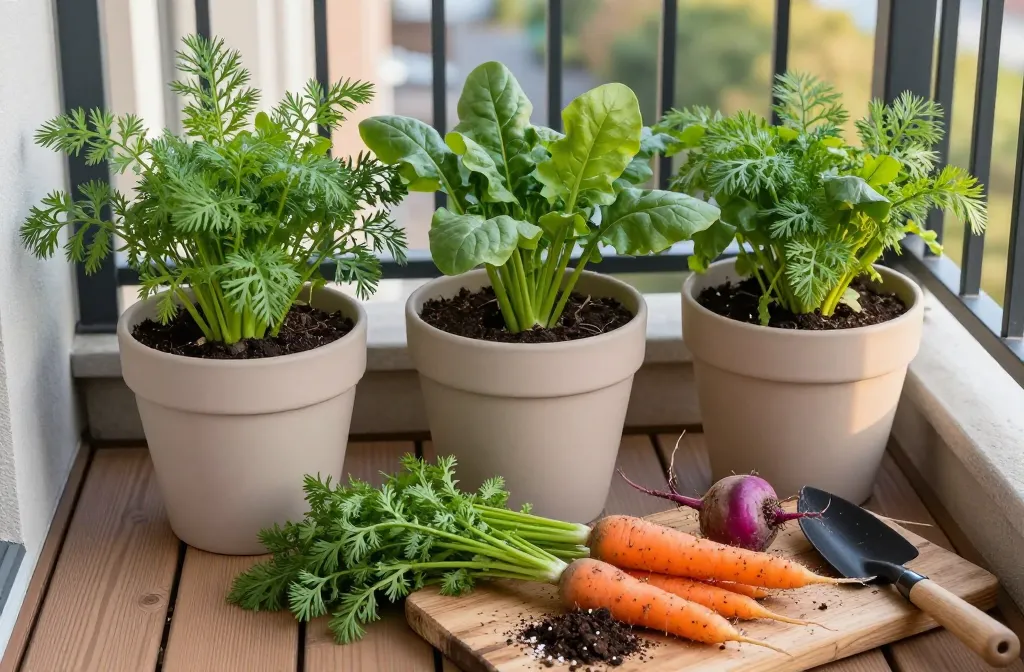
Got a balcony and big veggie dreams? Deep containers turn cramped corners into root-crop powerhouses. We’re talking carrots as long as your hand and beets that taste like candy. Grab a 12–18 inch pot, a bag of quality mix, and let’s grow vegetables that actually fill your plate.
Below are five root-crop lineups that thrive in deep containers, plus the exact how-to vibes you need. Pick a pot, pick a crop, and get growing—your stir-fries and salads will thank you.
1. Carrot Squad: Nantes, Danvers, and Chantenay
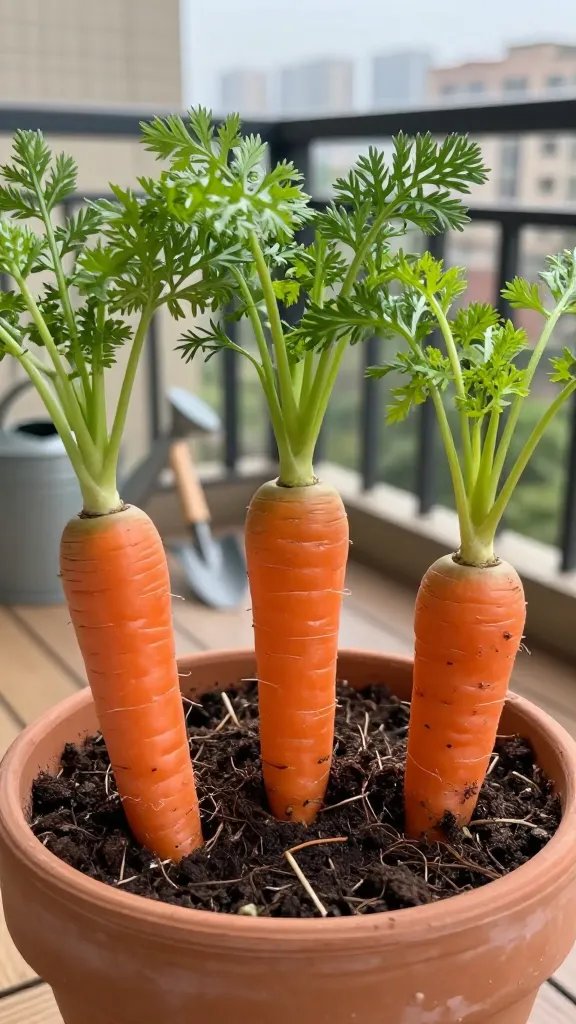
Carrots love depth more than drama, and they pay you back with sweet crunch. Choose varieties that match your pot depth and you’ll skip the stubby heartbreak.
Why These Rock
- Nantes (6–8 inches): Straight, sweet, and fast—great for 12–14 inch pots.
- Danvers (7–8 inches): Forgiving in mixed soils, classic flavor.
- Chantenay (5–6 inches but chunky): Thrives even if your soil isn’t perfect.
Container Setup
- Depth: Minimum 12 inches; 14–16 inches ideal for stress-free roots.
- Soil: Fluffy potting mix + 20–30% coarse sand or perlite for drainage.
- Fertilizer: Low nitrogen, higher phosphorus/potassium. Think 5-10-10 at planting.
Planting Tips
- Sow direct, 1/4 inch deep; keep evenly moist until germination (carrots are divas about drying out).
- Thin ruthlessly to 2 inches apart. Crowding equals forked roots, and no one wants that.
- Mulch lightly to keep shoulders from turning green and bitter.
Harvest when the crown reaches variety size and color. FYI: Cool nights sweeten carrots, so fall pots taste next-level. Perfect for snacking, roasting, and smugly telling people you grew them.
2. Beet Bonanza: Detroit Dark Red, Chioggia, and Cylindra
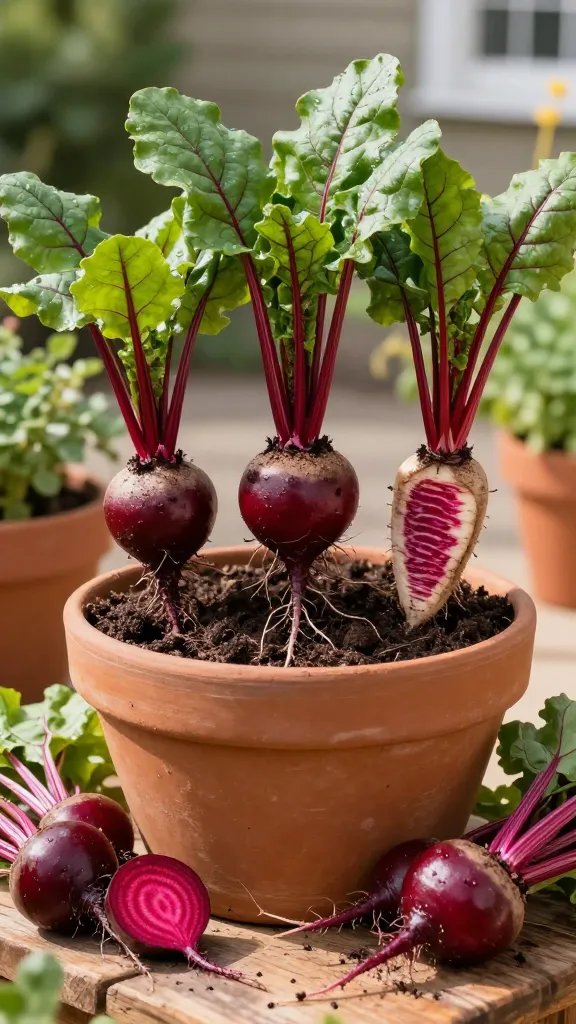
Beets pack flavor, color, and greens you can eat. They’re also surprisingly low-maintenance in deep pots—just give them room and even moisture.
Top Varieties
- Detroit Dark Red: Reliable, globe-shaped, classic beet flavor.
- Chioggia: Candy-striped rings, mild and pretty—yes, your salad will go viral.
- Cylindra: Long, cylindrical roots—awesome yield in tall containers.
Container Setup
- Depth: 12–16 inches. Wider pots mean more beets per harvest.
- Soil: Loose and rich, but avoid fresh manure (hello, hairy roots).
- Spacing: 3–4 inches between plants, 6 inches between rows in large planters.
Growing Tips
- Beet seeds are clusters—thin to one strong seedling after sprouting.
- Keep evenly moist for tender texture; sporadic watering makes them woody.
- Snip greens lightly for salads; don’t overdo it or roots will sulk.
Harvest golf-ball to tennis-ball size for best texture. You get roots and greens in one pot—double win for small-space cooks.
3. Tater Tower: Fingerlings, Yukon Gold, and Blues
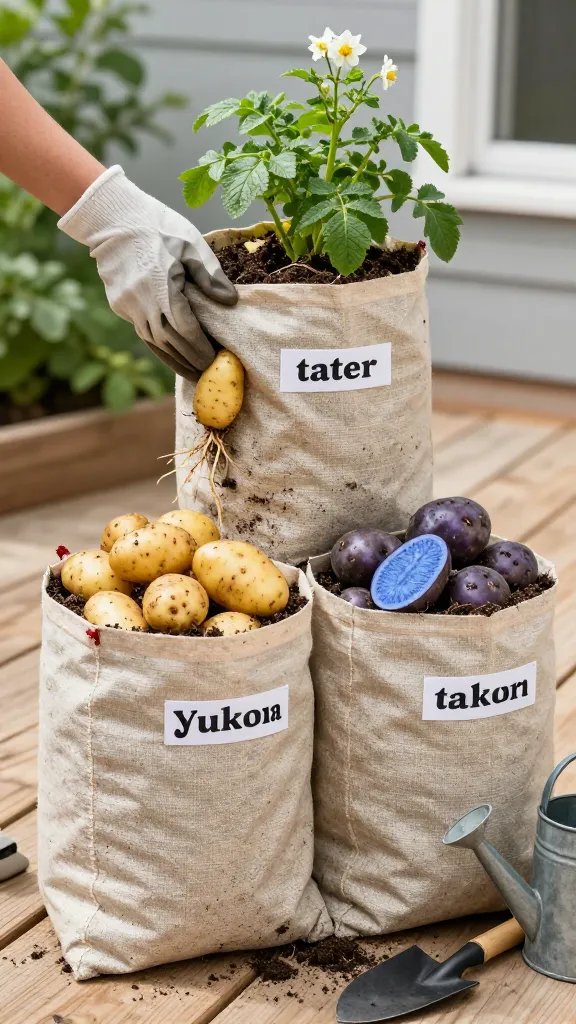
Potatoes in containers feel like gardening magic. You bury a few seed potatoes, then months later you dump the pot and boom—treasure.
Best Fits For Containers
- Fingerlings (like Russian Banana): High yield in tight quarters, buttery flavor.
- Yukon Gold: All-purpose, early to mid-season, creamy texture.
- Adirondack Blue: Vibrant color, fun for mash or fries.
Container Setup
- Depth: 16–20 inches minimum; tall grow bags work great.
- Soil: Light mix with compost; add extra perlite for drainage.
- Fertilizer: Balanced at planting, then side-dress with higher potassium mid-season.
How To Plant
- Start with 4–6 inches of soil, set seed potatoes eye-up, cover with 3 inches.
- As stems grow, hill up with more mix, leaving top leaves exposed. Repeat until near the rim.
- Keep evenly moist; container potatoes dry out fast in heat.
Harvest new potatoes when plants flower; wait for foliage to die back for full-size tubers. Great for patios, and IMO they’re the most satisfying dump-and-grin harvest.
4. Radish Relay: French Breakfast, Daikon, and Watermelon
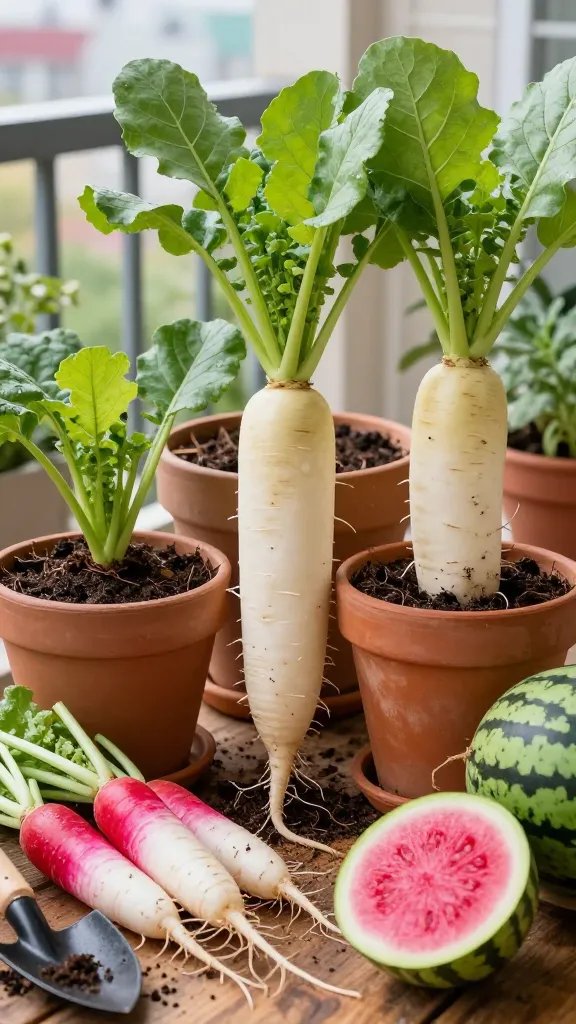
Radishes aren’t just quick fillers. In deep pots, you can grow big, bold types that grocery stores rarely nail for freshness.
Variety Picks
- French Breakfast: Fast, mild, perfect for impatient gardeners.
- Daikon (Minowase): Long white roots; needs depth and cool temps.
- Watermelon Radish: Pale green outside, hot-pink inside—Instagram devours this one.
Container Setup
- Depth: 12 inches for French Breakfast; 14–18 inches for daikon and watermelon types.
- Spacing: 2 inches for small radishes; 3–4 inches for larger types.
- Soil: Loose, stone-free, and slightly moist—no compaction, please.
Quick Wins
- Sow direct and thin early. Crowding = spicy pithy sadness.
- Grow in cool seasons; warm weather makes them bolt and bitey.
- Harvest on time. Overgrown radishes feel like chewing erasers—seriously.
Use them for crunch in bowls, pickles, and slaws. Watermelon and daikon shine in deep pots and make you look way more advanced than you are.
5. Parsnip, Turnip, And Friends: The Underrated Flavor Club
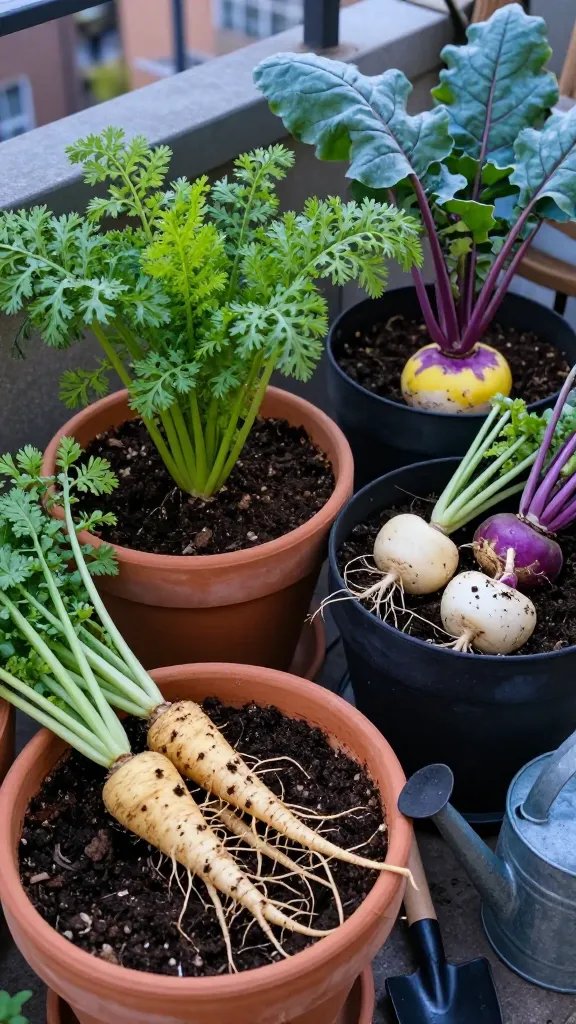
Ready to flex your root-game cred? Deep pots let you grow the slow-burn heroes: parsnips, turnips, and rutabagas. These store well, roast beautifully, and taste sweeter after a cold snap.
Who’s Invited
- Parsnip (Hollow Crown, Gladiator): Sweet, nutty, and best after frost.
- Turnip (Hakurei, Purple Top): Fast to mature; Hakurei is crisp and mild even raw.
- Rutabaga (Laurentian): Larger, buttery-sweet, needs a longer season.
Container Setup
- Depth: 14–18 inches for parsnip/rutabaga; 12–14 inches for turnips.
- Soil: Deeply loose, consistent moisture. Add extra perlite for airflow around roots.
- Feeding: Start with a phosphorus-forward organic fertilizer; avoid high nitrogen.
Planting And Care
- Sow direct—these don’t transplant well. Parsnip seeds need fresh stock; old seed germinates poorly.
- Thin to 3–4 inches for turnips, 4–6 inches for parsnips and rutabagas.
- Mulch to stabilize moisture and sweeten flavor over time.
Harvest turnips young for tender texture. Leave parsnips for late fall or even after a light freeze—nature’s flavor hack, trust me. Great for roasts, mashes, and soups that taste like cozy weekends.
Container Must-Knows Across All Root Crops
- Drainage Is Everything: Use pots with multiple holes. Add pot feet so water escapes.
- Sunlight: 6–8 hours minimum. Less sun = smaller roots and more leaf drama.
- Watering: Deep soak, then let the top inch dry. Constant sogginess invites rot.
- Soil Mix: High-quality, peat/coco-based potting mix with perlite or coarse sand. No heavy garden soil in containers.
- Succession Planting: Sow every 2–3 weeks for carrots, beets, and radishes to keep harvests rolling.
- Pest Watch: Cover with mesh if you see carrot rust fly or flea beetles. Container height helps, but not a force field.
- Label Everything: Future you won’t remember which pot was Chioggia. Ask me how I know.
Soil Recipe (Simple And Solid)
- 60% high-quality potting mix
- 20% compost (screened fine)
- 20% perlite or coarse sand
- Optional: a handful of rock phosphate and greensand for slow-release minerals
Mix thoroughly, pre-moisten until it clumps lightly in your hand, and you’re golden.
Quick Harvest Timeline Cheat Sheet
- Radishes: 25–60 days (variety dependent)
- Turnips: 35–60 days (Hakurei on the fast side)
- Beets: 50–70 days
- Carrots: 60–80 days
- Potatoes: New potatoes at flowering; full size 80–110 days
- Parsnips: 100–130 days (worth the wait)
Common Oops And Easy Fixes
- Forked Carrots/Parsnips: Soil too lumpy or rich in fresh manure. Use a fine, loose mix.
- Woody Beets/Turnips: Inconsistent water or left too long. Harvest on time and water evenly.
- Spicy, Hollow Radishes: Too hot or stressed. Grow in cool weather and don’t skip watering.
- Potatoes Going Green: Sunlight hit tubers. Hill higher and mulch the surface.
Smart Container Pairings
- Carrots + Scallions on the edges—minimal root conflict.
- Beets + Dill—dill attracts beneficial insects and looks cute, too.
- Potatoes Solo—they’re greedy; give them their own space.
- Radishes As Markers around slower crops—harvest before they compete.
Deep pots turn root crops from “maybe someday” into “why didn’t I do this sooner?” You’ll get better flavor, fewer pests, and harvests that actually impress guests. Grab a big container, sow a few seeds, and let your balcony flex those farm vibes, seriously.