
Want an apartment garden that thrives without stressing about your curious dog or cat? Companion planting can boost growth, fight pests naturally, and make your windowsill look like a tiny jungle. The twist: we’re focusing on pet-safe plants only, so sniffing and nibbling won’t end in panic Googling. Ready to grow smarter, not harder?
1. Basil + Parsley: The Windowbox Fresh-Herb Dream Team
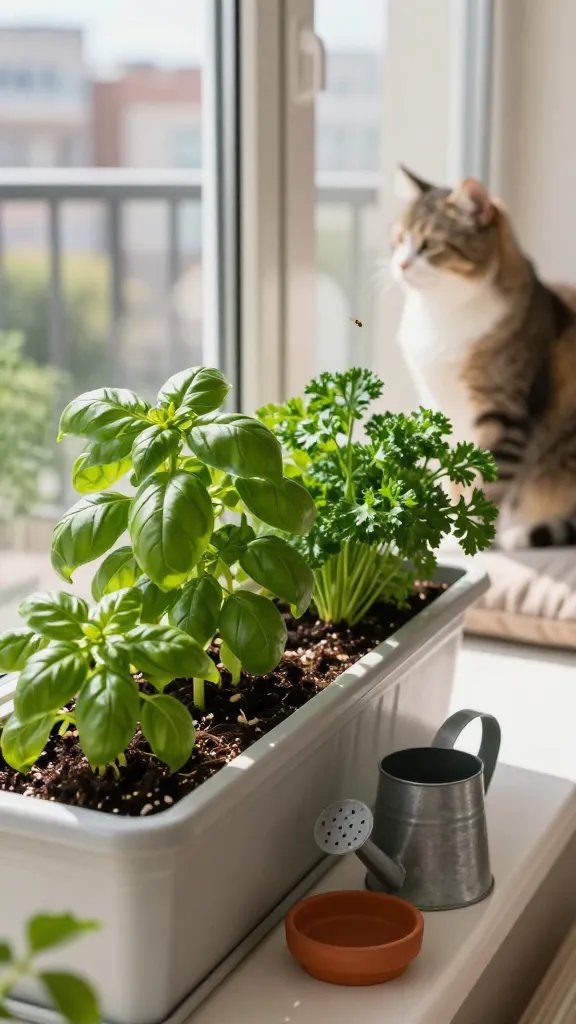
These two go together like pizza and movie night. Both are pet-safe, fast-growing, and ridiculously good in everything from pesto to tabbouleh. They also enjoy similar conditions—bright light, regular watering, and good drainage—so they’re perfectly compatible roommates.
Why It Works
- Shared needs: Both love 6–8 hours of bright light and frequent trimming.
- Pest help: Basil’s scent can confuse pests, giving parsley some backup.
- Space-savvy: Compact growth that suits narrow sills or railing planters.
Snip from the top to keep them bushy and usable for weeks. Bonus: your pet can sniff them safely while you snip your dinner.
Quick Tips
- Choose a 10–12 inch wide container with drainage holes.
- Use a light potting mix and add a tiny bit of compost every few weeks.
- Rotate the pot weekly so both herbs get even sun.
Best for cooks who want zero-fuss, high-reward herbs that won’t worry your vet.
2. Catnip + Cat Grass: The Enrichment Corner That Saves Your Houseplants
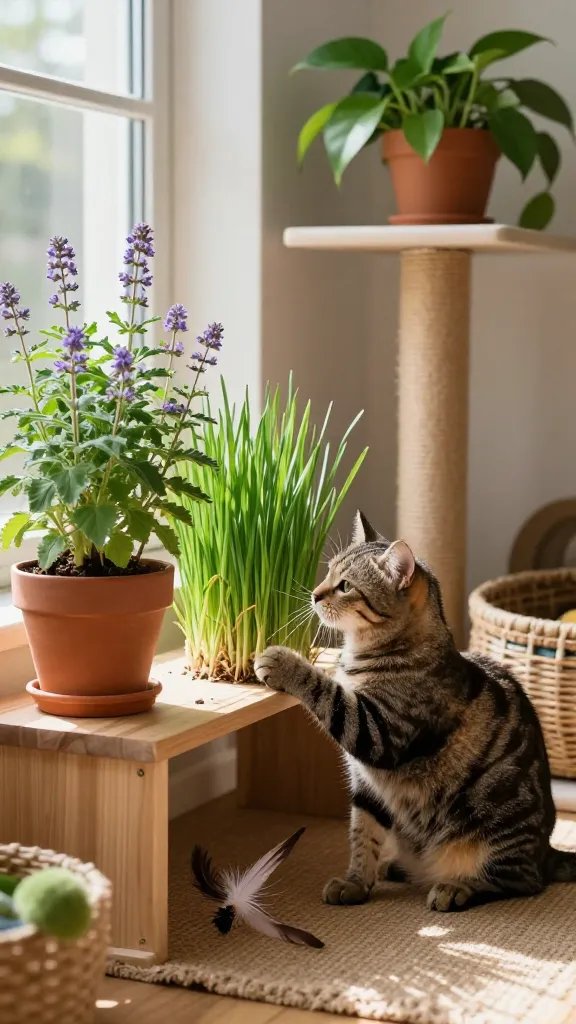
Let’s be honest: cats chew plants. Give them plants they’re allowed to chew. Pairing catnip (Nepeta cataria) with cat grass (usually wheatgrass or barley) creates a designated nibble zone that keeps your pothos and lilies out of the danger zone—because those are not pet-safe, FYI.
Why It Works
- Behavior redirect: Offer a legal chew toy to reduce interest in unsafe plants.
- Easy care: Cat grass sprouts fast; catnip likes bright light and occasional trims.
- Pet-safe enrichment: Stimulates play and digestion for indoor cats.
Cat grass grows in a week, which makes it instant gratification. Catnip takes a bit longer, but once it establishes, it’s basically the party plant.
Set-Up Tips
- Use separate small pots in a single tray so you can swap out the grass as it ages.
- Place near a sunny window but out of major foot traffic, because zoomies are real.
- Trim catnip regularly to prevent legginess and keep oils potent.
Perfect if your cat Houdinis onto shelves. This combo keeps curiosity satisfied and safe.
3. Marigolds + Thyme: Petite Powerhouses For Balcony Pests
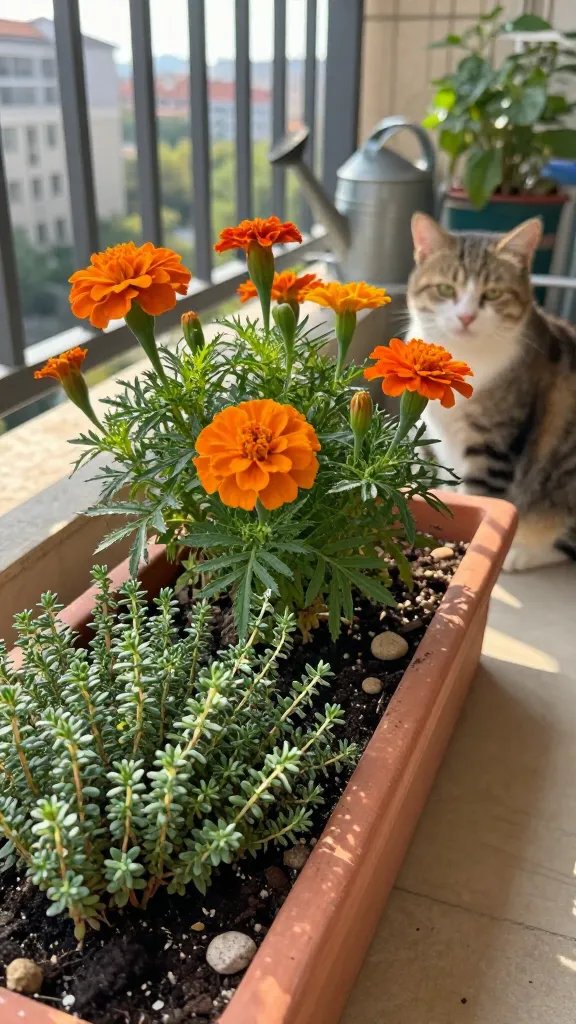
This duo punches above its size in pest defense. Marigolds (Tagetes) bring bright blooms and a scent that many pests dislike, while thyme creeps around the base and fills in gaps. Both are considered pet-safe and handle heat like champs.
Why It Works
- Natural deterrence: Marigolds help deter leaf-munchers; thyme’s oils add backup.
- Different heights: Marigolds stand tall while thyme trails—great for airflow.
- Low water needs: Both tolerate a little forgetfulness—because life happens.
Use a shallow, wide container to get that layered look. You’ll get color, fragrance, and a mini pest patrol all in one planter.
Care Notes
- Full sun preferred; 5–8 hours does the trick.
- Prune marigold spent blooms for continuous flowers.
- Harvest thyme with clean scissors to keep it bushy.
Ideal for sunny balconies or fire escapes where you want hardy beauty with functional benefits.
4. Strawberry + Chamomile: Sweet Treat Meets Soothing Sidekick
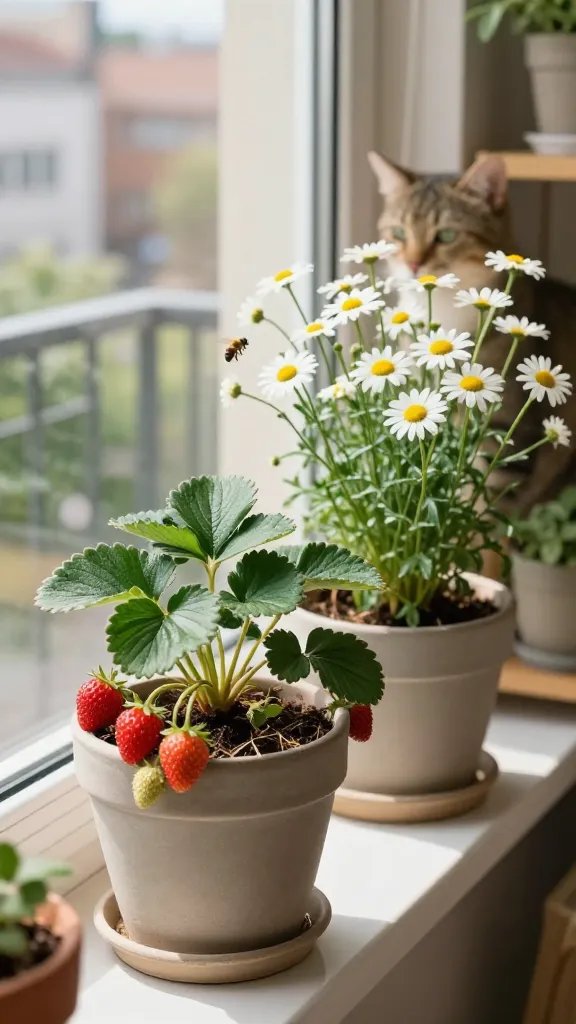
Yes, you can grow strawberries in an apartment—and your pets can hang out nearby safely. Pair them with German chamomile to attract pollinators, soften the soil surface, and create a cottage-garden vibe on a shelf. It’s cute, useful, and surprisingly easy.
Why It Works
- Pollinator magnet: Chamomile attracts beneficial insects if you have an open window or balcony.
- Soil help: Its fine roots can help with soil texture and moisture distribution.
- Pet-safe combo: Both plants are non-toxic to cats and dogs.
Strawberries love consistent moisture and bright light. Chamomile prefers similar conditions, so they share the watering schedule without drama.
How To Plant
- Use a 10–12 inch pot for one strawberry plant plus 1–2 chamomile starts.
- Place chamomile around the edge to cascade slightly as it grows.
- Mulch lightly with straw or coco coir to keep fruits clean.
Great for anyone who wants a treat you can actually eat and a tea herb you can dry—seriously, it’s a vibe.
5. Blue Echeveria + Haworthia + Calathea: The Pet-Safe Foliage Trio For Low-Light Corners
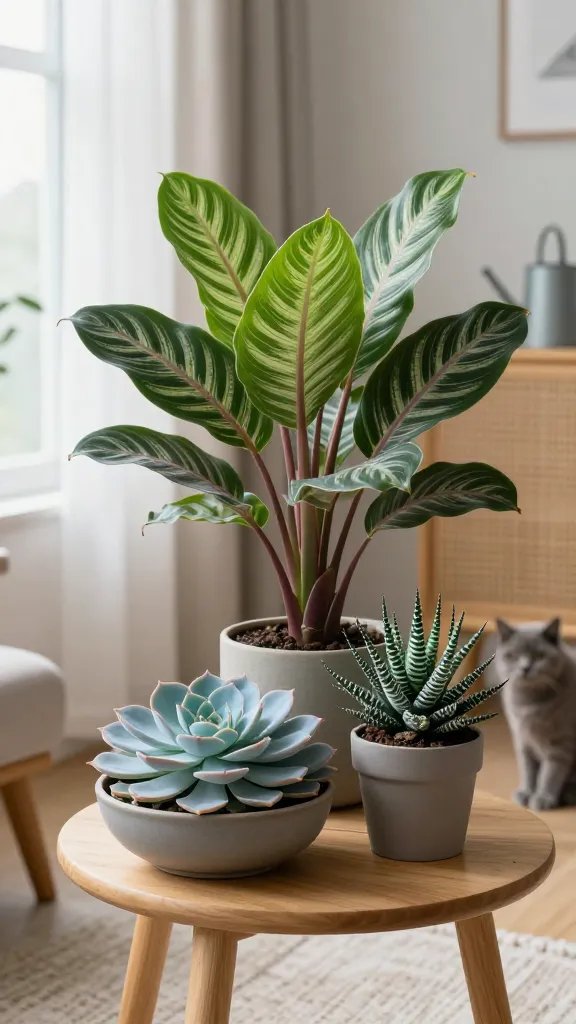
Succulent lovers, rejoice—with a twist. While many succulents are pet-safe, some aren’t, so this combo keeps it clean: Echeveria and Haworthia for sculptural form and Calathea for dramatic leaves and shade tolerance. Together they create a textured arrangement that looks designer without the designer price tag.
Why It Works
- Textural contrast: Rosettes meet stripes and ripples—hello, visual interest.
- Shared tolerance: All do fine in bright indirect light; Calathea even loves medium light.
- Pet-safe picks: These are commonly listed as non-toxic to cats and dogs.
Place Echeveria and Haworthia toward the brighter side of a room and tuck Calathea slightly back. The mix reads lush, not fussy.
Care Cheat Sheet
- Water succulents sparingly; keep Calathea evenly moist but never soggy.
- Use a blended soil: 2 parts potting mix, 1 part perlite for the succulents; add a moisture-retaining top layer near the Calathea side.
- Mist Calathea occasionally if your air runs dry.
Use this when you want a statement planter that pets can investigate without worry—IMO, it’s the perfect living decor for coffee tables.
Pet-Safe Planting Essentials
- Confirm toxicity: Cross-check plant names with trusted lists (ASPCA’s database is solid).
- Skip systemic pesticides: Opt for insecticidal soap, neem oil, or hand-wiping leaves.
- Secure containers: Heavier pots or sticky pads prevent tip-overs during zoomies.
- Soil and mulch: Use pet-safe options—no cocoa mulch; choose straw, sphagnum, or pebbles.
- Fertilizer sanity: Dilute to half strength and store bottles out of pet reach.
Small-Space Companion Planting Tips
- Light mapping: Watch how sun moves across your space and group by light preference.
- Root zones: Pair shallow-rooted herbs with compact flowers to reduce crowding.
- Airflow: Leave a finger’s width between plants to limit mildew.
- Watering zones: Keep thirsty plants together; drought-tolerant plants together—no mixed signals.
- Modular trays: Use a tray to move an entire mini-garden when you chase the sun.
Troubleshooting (Because Stuff Happens)
- Yellow leaves? Ease up on watering and check drainage holes.
- Leggy growth? They want more light; rotate or scoot closer to the window.
- Fungus gnats? Let soil partly dry, add a top layer of sand, and use sticky traps.
- Curious chewers? Offer cat grass and a scratch post nearby. Redirect, don’t scold.
Companion planting in an apartment doesn’t need acreage or a greenhouse—just a few clever pairings and a sunny spot. These combos keep pets safe, pests confused, and your space deliciously green. Start with one planter, see the magic, then scale up—trust me, you’ll crave that tiny jungle glow-up.