
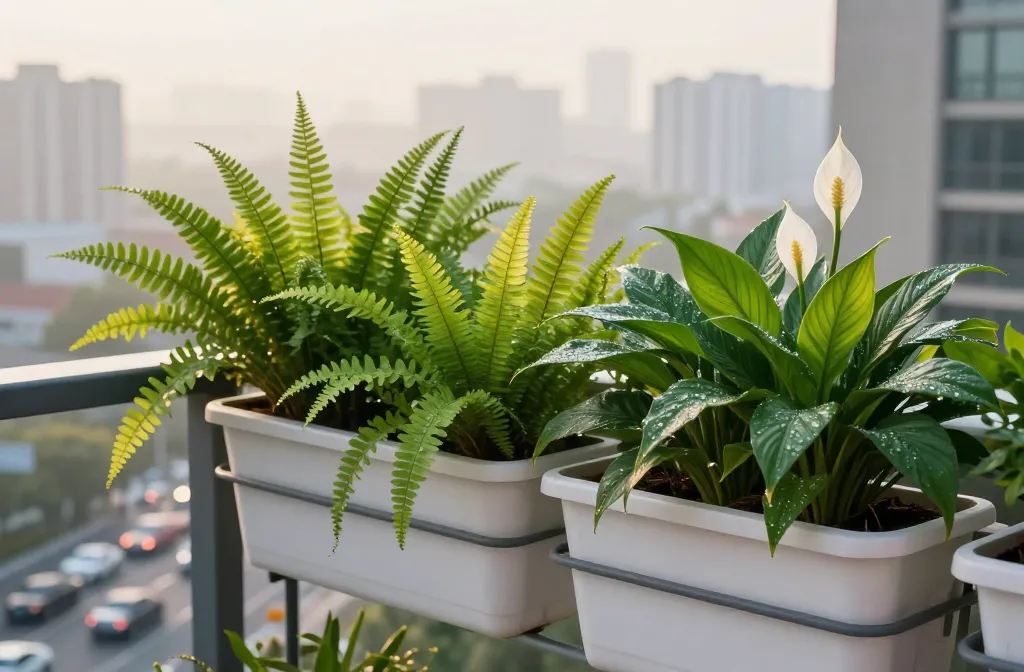
City air got your balcony plants wheezing? Pair them up like power couples and let them scrub the air while looking gorgeous. These smart combos tackle particulate matter, VOCs, and street grime, all while saving space. Grab your pots—your lungs (and neighbors) will thank you.
We’re talking compact, low-drama partnerships that handle balconies, fire-escape vibes (where legal), and sun patterns like champs. Ready to build your mini smog-fighting jungle?
1. Ferns + Peace Lily: The Humid-Loving Dust Trappers
When your windows face a busy street, dust and fumes crash the party. Pair a lush fern with a peace lily and you get a leafy vacuum that also tells you when it’s thirsty—peace lilies droop dramatically. Drama with benefits.
Why This Pair Works
- Boston or Maidenhair Fern grabs fine particulates and loves humidity.
- Peace Lily (Spathiphyllum) filters benzene and formaldehyde, and blooms in low light.
- Together they build a moist microclimate, which improves particulate capture on leaf surfaces.
Set-Up Tips
- Use a wide container with peat-free, moisture-retentive mix plus perlite for drainage.
- Place 3–5 feet from a window with bright, indirect light or a north window.
- Mist or use a pebble tray; wipe leaves every two weeks to remove grime.
- Add a small USB fan on low to keep air moving and prevent fungal issues.
Best for: Shady balconies and indoor window boxes where air feels dry and dusty. IMO, perfect starter duo if you “forget” watering schedules.
2. Spider Plant + Pothos: The Unkillable VOC Busters
Want plants that thrive on neglect and still mop up airborne nasties? Spider plants and pothos handle low light, tolerate city heat, and bounce back after mild drought. It’s the beginner-friendly combo that won’t judge you.
Why This Pair Works
- Spider Plant (Chlorophytum) absorbs carbon monoxide and formaldehyde; also captures particulates on arching leaves.
- Pothos (Epipremnum aureum) handles VOCs from paints and adhesives and cascades like a green waterfall.
- Different leaf architecture = better air contact time and more surface area for pollutant capture.
Placement & Care
- Hang pothos high to trail; keep spider plant on a railing shelf or stand below.
- Bright, indirect light makes variegation pop; they’ll tolerate low light, just grow slower.
- Water when top inch dries; flush pots monthly to prevent salt buildup from city tap water.
Benefits: Easy propagation, fast coverage, cleaner air around your work-from-home desk. Seriously, they’re almost too forgiving.
3. Rosemary + Lavender: The Mediterranean Smog Shield
City pollutants meet aromatic armor. Rosemary and lavender handle wind, heat, and pollution while releasing essential oils that make your balcony smell like a holiday. Plus, pollinators adore them—bee VIP lounge, anyone?
Why This Pair Works
- Rosemary tolerates roadside conditions and captures particulates on needle-like leaves.
- Lavender deals with ozone and produces antimicrobial volatiles; both repel some pests.
- Shared drought tolerance = super low maintenance once established.
Container Strategy
- Use a terra-cotta trough with gritty, well-draining mix (add coarse sand or pumice).
- Full sun (5–7 hours). South or west balconies win.
- Prune lightly after bloom; do not overwater—roots hate soggy vibes.
Bonus Uses
- Snip sprigs for cooking and homemade sachets.
- Companion for balcony tomatoes—aromas may confuse pests.
Best for: Hot, bright balconies near traffic where you want fragrance plus function. FYI, choose compact varieties like ‘Arp’ rosemary and ‘Hidcote’ lavender for containers.
4. Snake Plant + ZZ Plant: Night-Shift Air Fixers For Low-Light Corners
No sun? No problem. Snake plant and ZZ plant thrive in dim entryways and east-facing windows while quietly filtering indoor pollutants from cooking and candles. They also look sculptural—urban-chic without trying.
Why This Pair Works
- Snake Plant (Sansevieria/Dracaena trifasciata) tolerates neglect and continues gas exchange at night.
- ZZ Plant (Zamioculcas zamiifolia) stores water in rhizomes and handles low light like a champ.
- Upright sword leaves + glossy leaflets create a layered modern look and maximize vertical space.
Care Playbook
- Choose a tall cylinder pot for snake plant; a low, wide pot suits ZZ’s stability.
- Use chunky, fast-draining soil; water every 2–4 weeks depending on season.
- Dust monthly—clean leaves work harder. Add a grow light if your space feels cave-like.
When To Use: Hallways, offices, and shaded balconies where other plants sulk. Trust me, these two make low-light living look intentional.
5. Golden Marigold + Nasturtium: The Grit-Catching Color Bomb
Want flowers that fight pollution while brightening the mood? Marigolds and nasturtiums don’t just look sunny—they also help sequester heavy metals and trap grime on their foliage. Plus, they feed pollinators and your salad.
Why This Pair Works
- French/Golden Marigold (Tagetes) handles urban stress and produces compounds that deter pests.
- Nasturtium (Tropaeolum) cascades beautifully and is edible; leaves and flowers trap dust.
- They grow fast from seed—perfect for budget gardeners and renters.
Grower Notes
- Full sun preferred; morning sun + afternoon shade works in heat waves.
- Use a balcony box with consistent moisture and decent drainage.
- Deadhead marigolds to keep blooms coming; harvest nasturtium leaves while tender.
- If you garden near heavy traffic, rinse edibles well or reserve for decor to reduce pollutant intake.
Benefits: Instant color, pollinator magnetism, and a little phytoremediation power. It’s the cheerful duo that actually pulls its weight.
Ready to turn your apartment into a mini clean-air oasis? Start with one pairing, watch it thrive, then stack another on the next ledge. Small balcony, big impact—your lungs, plants, and vibe are about to level up.