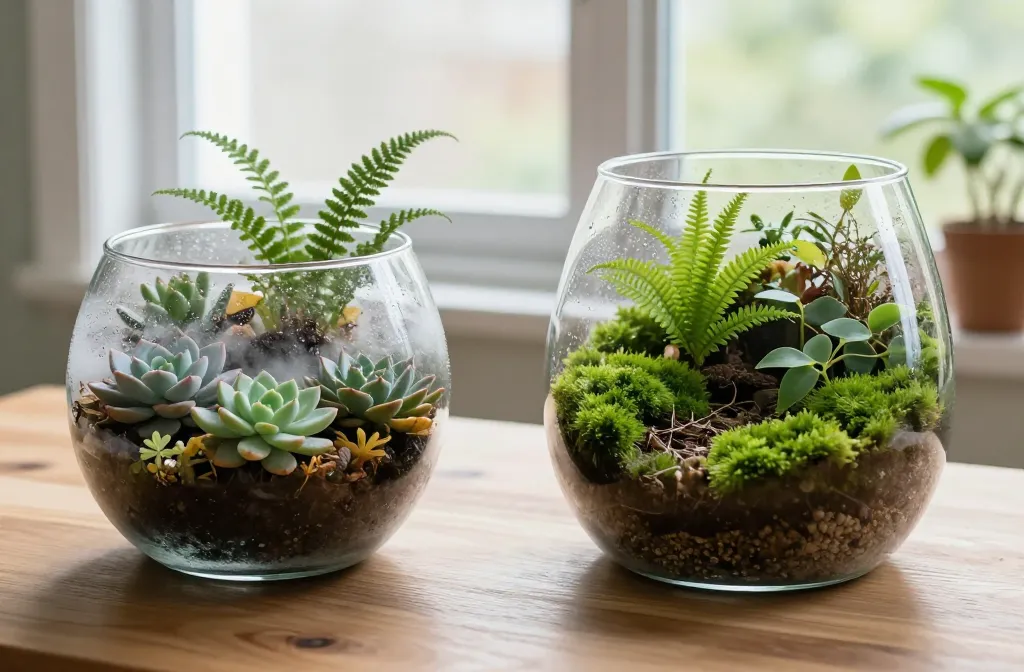
I learned to build terrariums by ruining a few. I remember the pretty bowl I crammed with ferns, succulents, and a moss carpet — it fogged up, smelled swampy, and collapsed in a month. If you’ve watched leaves melt or moss crisp even though you “did everything right,” you’re not alone. In this guide I’ll show you five plant pairings that always fail, why they fail, and exactly what to plant instead so your glass garden stays clear, green, and easy to care for.
1. Mixing Desert Succulents With Moisture-Loving Ferns
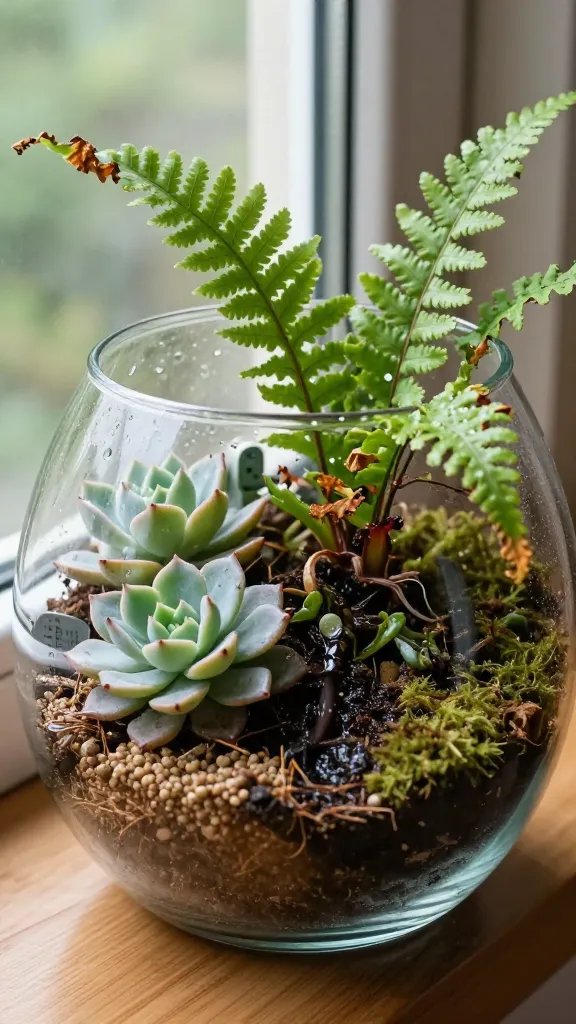
This combo looks cute on day one and fails by week four. The succulents rot in the humidity a fern needs, and the ferns crisp when you back off watering to save the succulents.
Why It Fails
- Humidity mismatch: Ferns prefer a constantly moist, humid microclimate; succulents demand dry air and drying soil.
- Watering conflict: One watering schedule cannot keep both healthy in a closed or semi-closed container.
- Light needs diverge: Succulents want brighter light than most fern-safe terrariums can offer without overheating.
Signs To Watch For
- Succulents with translucent, squishy leaves and blackened stems
- Ferns with brown, crispy tips despite moist soil
- Condensation daily plus a sour smell from the soil
What To Use Instead
- For a humid, closed terrarium: Neanthe bella palm (parlor palm) seedlings, Asparagus fern, Fittonia (nerve plant), and cushion moss. All enjoy steady moisture and humid air.
- For a dry, open dish: Haworthia, Gasteria, and small Echeveria with a sandy cactus mix, top-dressed with pebbles. Keep it open to room air.
Action today: Decide if your container will be humid (lid on) or dry (open). Plant only species that like that single climate.
2. Pairing Moss Carpets With Thirsty, Tall Growers
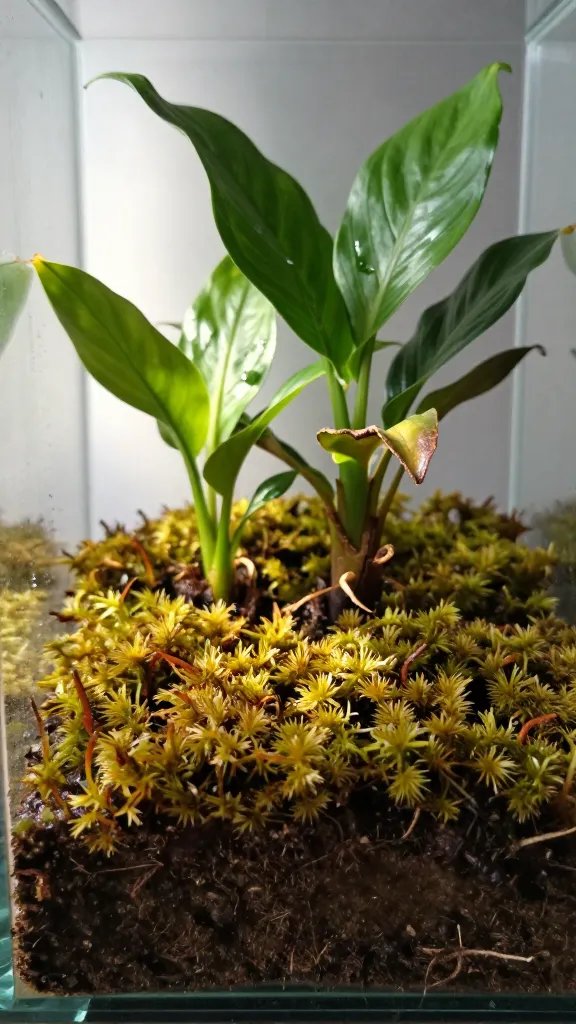
Blanketing the soil with moss under taller, leafy plants looks lush at first. Then the moss yellows and lifts as taller plants steal moisture and shade the floor too deeply, while the tall plants suffer root rot from the soggy layer you maintain for the moss.
Why It Fails
- Water competition: Moss sits on the surface and dries fastest, so you water more. Deeper soil stays waterlogged and suffocates larger roots.
- Light blockage: Dense canopies starve moss of light. Moss needs bright, indirect light hitting the soil surface.
- Poor airflow: A tight moss mat traps moisture against stems, inviting fungus.
Signs To Watch For
- Moss turning pale, then brown, with patchy bare spots
- Mushrooms or white fuzz around plant bases
- Lower leaves of tall plants yellowing while top growth stalls
What To Use Instead
- For a moss-first build: Keep plants small and airy — Selaginella, mini Fittonia, and Pilea depressa. Prune to keep light reaching the floor.
- For a foliage-first build: Skip the full carpet. Use clumps of cushion moss as accents with Peperomia and Anthurium clarinervium seedlings or small Cryptanthus (earth stars) in brighter spots.
Takeaway: If you want thriving moss, choose compact companions and leave open patches so light hits the soil.
3. Throwing Tropical “Easy Houseplants” Into A Sealed Jar
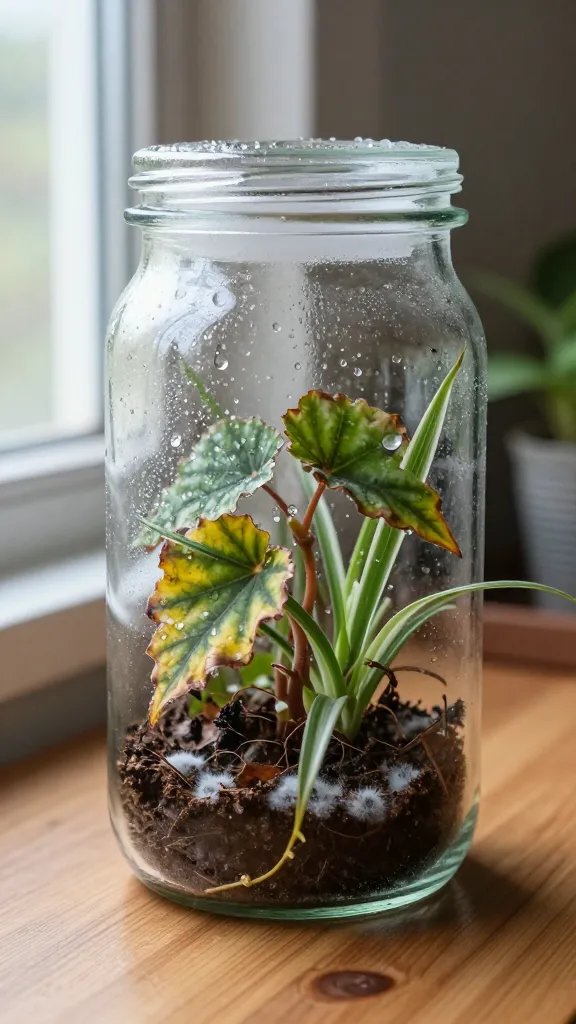
Begonias, pothos, and spider plants survive a living room, so many people seal them in a jar expecting zero care. In a closed terrarium they often stretch, rot, or mildew because they outgrow the space and exhale more moisture than the jar can handle.
Why It Fails
- Size and vigor: Common houseplants grow too large and fast for confined glass, creating a damp, shaded tangle.
- Gas and moisture buildup: Oversized leaves drive heavy condensation and promote fungal growth.
- Pruning burden: You end up opening the jar weekly, which defeats the closed-terrarium stability.
Signs To Watch For
- Condensation covering over half the glass at midday for days in a row
- Leggy stems pressed against the lid and pale leaves
- Leaf spotting and gray mold where leaves touch glass
What To Use Instead
- Choose miniature or slow growers bred for terrariums: Peperomia ‘Pixie Lime’, Ficus pumila ‘Quercifolia’, Hemianthus micranthemoides (as a tiny groundcover), Anubias nana ‘Petite’ emersed in very moist zones.
- Favor fine textures and small leaves that won’t press on the glass: Marcgravia cuttings, Hydrocotyle tripartita mini forms, and small ferns like Microsorum ‘Crocodyllus’ juveniles.
Action today: If your closed jar has plants touching glass, remove the lid for two hours at midday and replace the fastest grower with a true miniature.
4. Combining High-Light Lovers With Shade Plants In One Window Spot
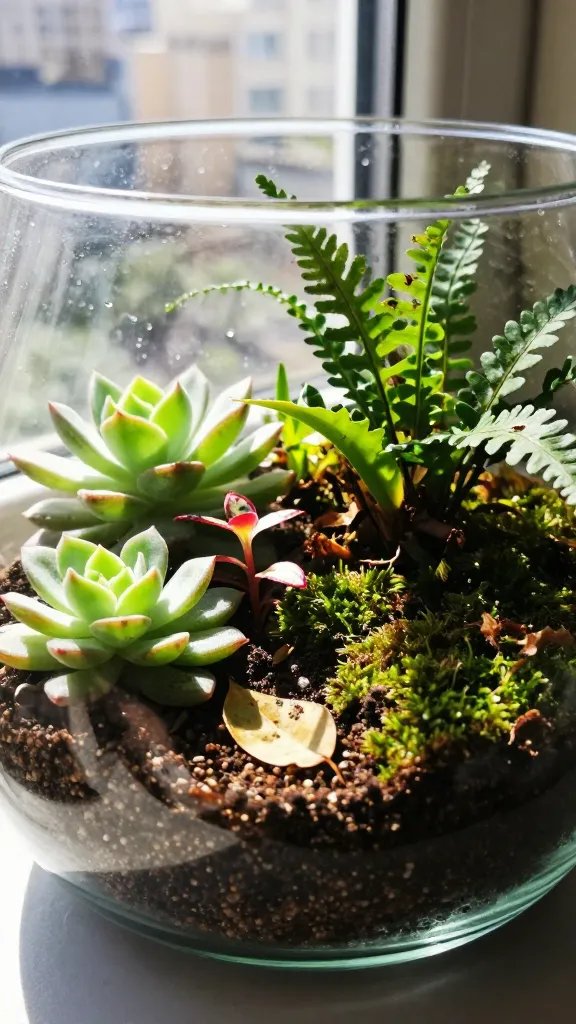
One side of the terrarium will thrive while the other sulks. The sun lovers stretch and pale or cook near glass, and the shade plants scorch if you move it closer to the window to save the light-hungry species.
Why It Fails
- Glass amplifies heat: High-light species near direct sun overheat inside glass, even if they like bright light.
- Uneven illumination: A single placement can’t deliver “bright indirect” and “low light” at once.
- Stress juggling: Constantly moving the terrarium shocks plants and destabilizes humidity.
Signs To Watch For
- Bleached or crispy patches where leaves touch sun-warmed glass
- Long internodes and tiny new leaves on “sun lovers”
- Algae bloom on the glass closest to the window
What To Use Instead
- Build for one light level: For bright indirect light near a window, use Cryptanthus, small Peperomia, pileas, and fittonias.
- For lower light across a room: Focus on mosses, Selaginella, and Parlor palm seedlings. Keep the glass out of direct sun to prevent heat spikes.
- If you want contrast, use variegated forms of low-to-medium light plants instead of true high-light species.
Takeaway: Pick one light category for the whole terrarium and place it once — bright indirect near a window or gentle light across the room — then choose plants to match.
5. Mixing Epiphytes With Heavy Soil Rooters In The Same Substrate
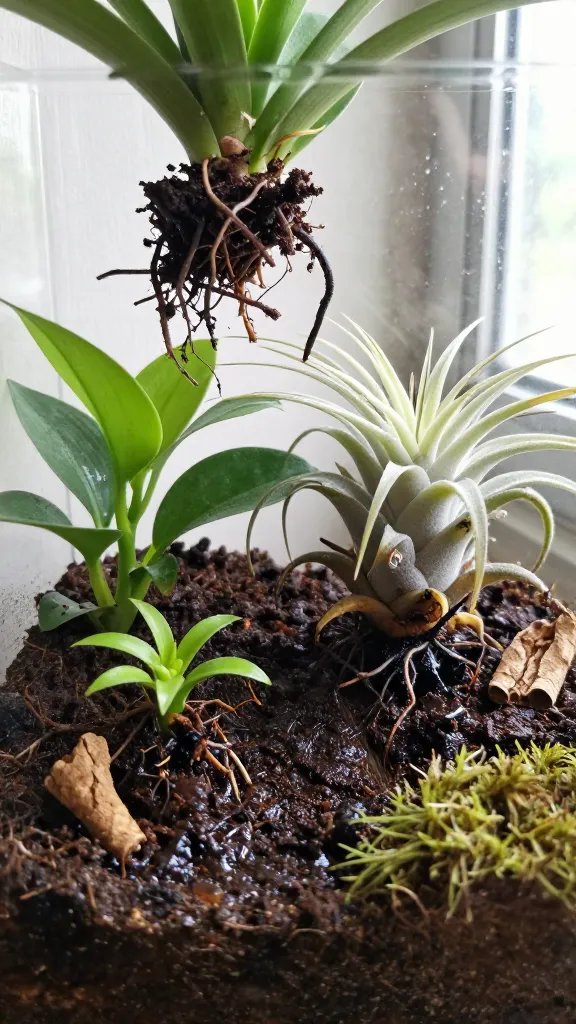
Epiphytes like air plants (Tillandsia), some orchids, and many ferns expect air around their roots. When you tuck them into potting mix beside soil-rooted companions, epiphytes rot while the soil lovers stay fine.
Why It Fails
- Wrong anchor: Epiphytes evolved to grow on bark, rock, or moss pads, not dense potting mix.
- Water retention mismatch: Shared watering for soil plants keeps the base too wet for epiphytes.
- Poor positioning: Epiphytes often get shaded by soil plants, cutting airflow and light.
Signs To Watch For
- Tillandsia bases turning black where they touch soil
- Orchid roots turning brown and mushy instead of firm and green/silver
- Fungal spots where epiphyte leaves rest on damp surfaces
What To Use Instead
- Mount epiphytes on cork bark or a stone with a small cushion of moistened sphagnum moss, secured with garden twine.
- Keep soil-rooted plants in a separate zone with a standard indoor potting mix blended with a handful of orchid bark for drainage.
- Choose epiphyte-friendly companions: Tillandsia with moss, miniature orchids, and a few tidy Peperomia kept back from the mount.
Action today: Gently lift any epiphyte that’s sitting in soil and tie it onto a piece of cork with a thumb-thick pad of sphagnum at the base.
Frequently Asked Questions
How do I know if my terrarium is too wet for the plants I chose?
Check the glass at midday. If more than half the surface stays fogged for several hours, it’s too wet for anything but true humidity lovers. Open the lid for 1–2 hours and blot any visible water from the soil surface with a paper towel. For ongoing control, water with a spray bottle using 1–2 tablespoons at a time, then wait a full day before adding more.
Can I rescue succulents that started rotting in a closed terrarium?
Yes, if the rot hasn’t reached the crown. Unpot immediately, cut away any mushy tissue, and let the healthy part dry on a tissue for 24–48 hours. Replant in a shallow, open dish with a cactus mix and a pebble top layer. Keep it near bright indirect light and water only when the mix is completely dry to the touch.
What soil should I use for a mixed tropical terrarium from a garden centre?
Use a good quality indoor potting mix and blend in a few handfuls of orchid bark for air pockets. Add a thin base layer of small stones and a sheet of window screen to keep soil from sinking, then 5–8 cm of your potting mix. Top with a light layer of decorative gravel to keep leaves off wet soil. This setup keeps roots oxygenated and reduces fungus.
How often should I prune to keep moss from dying under taller plants?
Plan a quick prune every two weeks. Trim back any leaves that cast deep shade over the moss, and remove any foliage touching glass where condensation collects. Aim to see dappled light on the moss at midday. Small, frequent trims keep the system stable without big shocks.
Where should I place a closed terrarium for best results without special lights?
Set it near a bright window where the sun doesn’t hit the glass directly — a bright sill with sheer curtains or a table 1–2 meters from an east or north window works well. Avoid south-facing direct sun to prevent overheating. Rotate the container a quarter turn each week to keep growth even.
Can I mix moss with air plants successfully?
Yes, if you stage them correctly. Keep the moss on the soil surface and mount the air plants above it on cork or a stone so their bases dry quickly. Mist the air plants directly 2–3 times a week and let excess water drip off before replacing the lid. Keep leaves from resting against constantly wet moss.
Conclusion
Healthy terrariums come from matching plants to one simple climate — humid or dry, bright or gentle — and sticking to it. Choose one of the “What to use instead” sets and rebuild a small test jar this week; once you see stable growth and clear glass, scale up with confidence.