
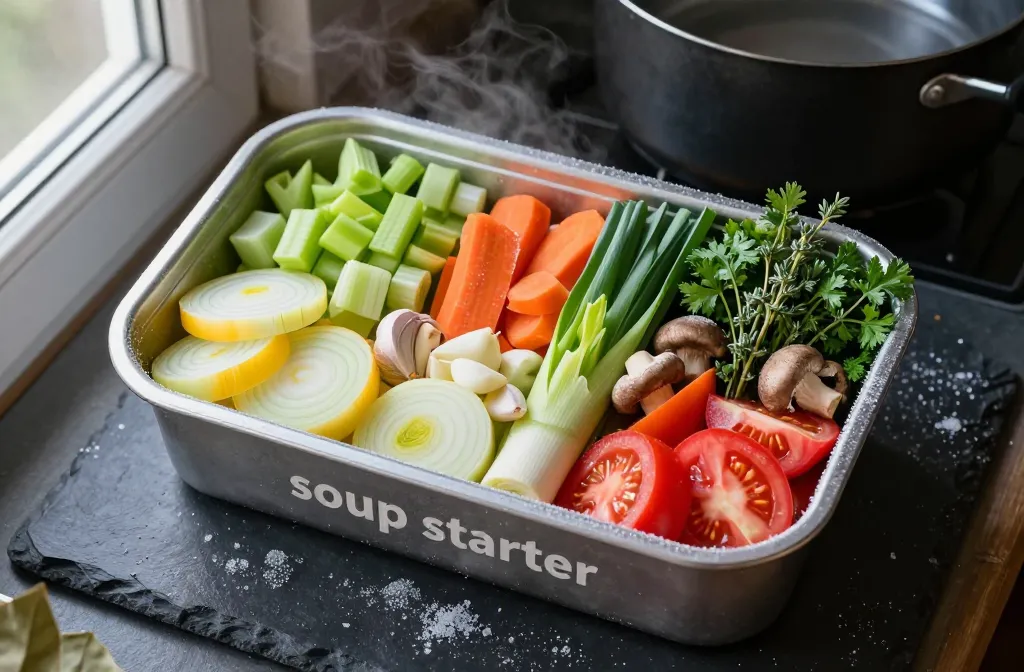
Your future self will thank you when dinner starts with a jar of flavor magic. A “soup starter” container is basically your shortcut to rich, slurp-worthy broth whenever you want. Chop, freeze, and boom—instant base for soups, stews, and sauces. Ready to stock your freezer with the MVP veggies?
1. The Mighty Onion: Flavor Foundation You Can’t Fake
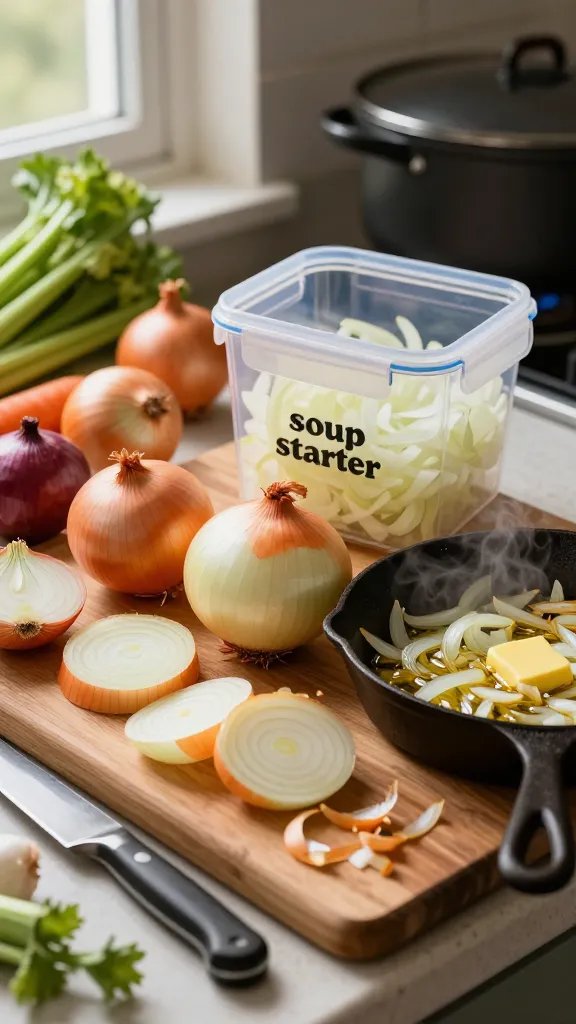
Onions do the heavy lifting in almost every soup. They bring sweetness, depth, and that cozy aroma that says, yes, dinner is happening. Red, yellow, white—use what you’ve got, but yellow onions hit the sweet-savory sweet spot.
Tips
- Slice or dice before freezing to save time later.
- Sauté in a splash of oil or butter for a richer base.
- Mix varieties for complexity—yellow for body, red for zing, shallots for elegance.
Onions build a strong flavor base for everything from chicken noodle to French onion (obviously). FYI, don’t skip them unless you love bland soup.
2. Carrots: Sweetness And Color In One Chop
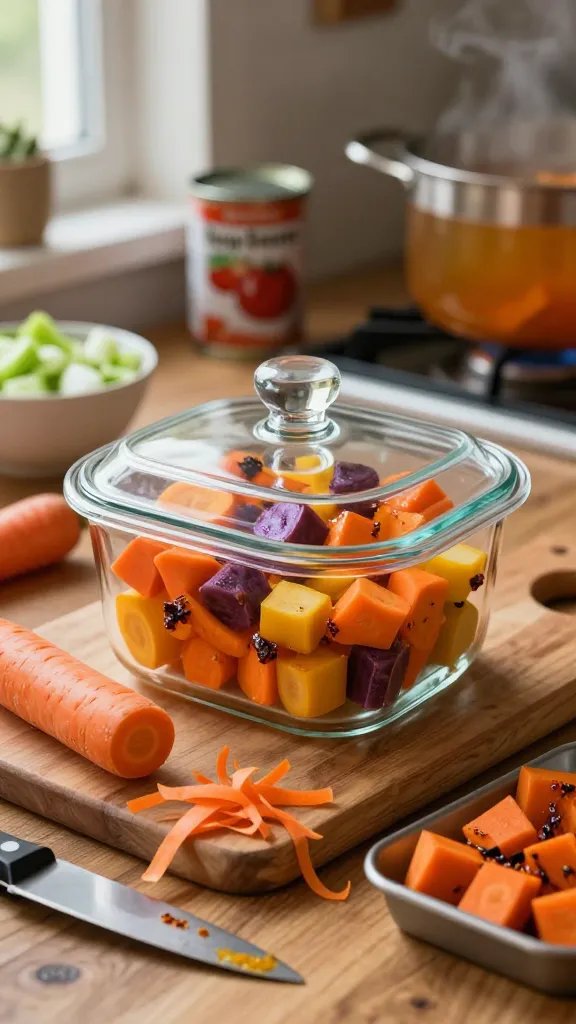
Carrots add natural sweetness and a cheerful color that makes any pot look inviting. They mellow acidic tomatoes and round out savory broths like a pro. Plus, they freeze like champs.
Key Points
- Peel for cleaner flavor; dice for even cooking.
- Roast a batch before freezing for caramelized undertones.
- Rainbow carrots add subtle flavor differences and dramatic color—why not?
Use carrots in every soup where you want balance, especially tomato, lentil, and chicken soups. They’re the low-effort crowd-pleaser.
3. Celery: The Quiet Hero With Serious Aromatics
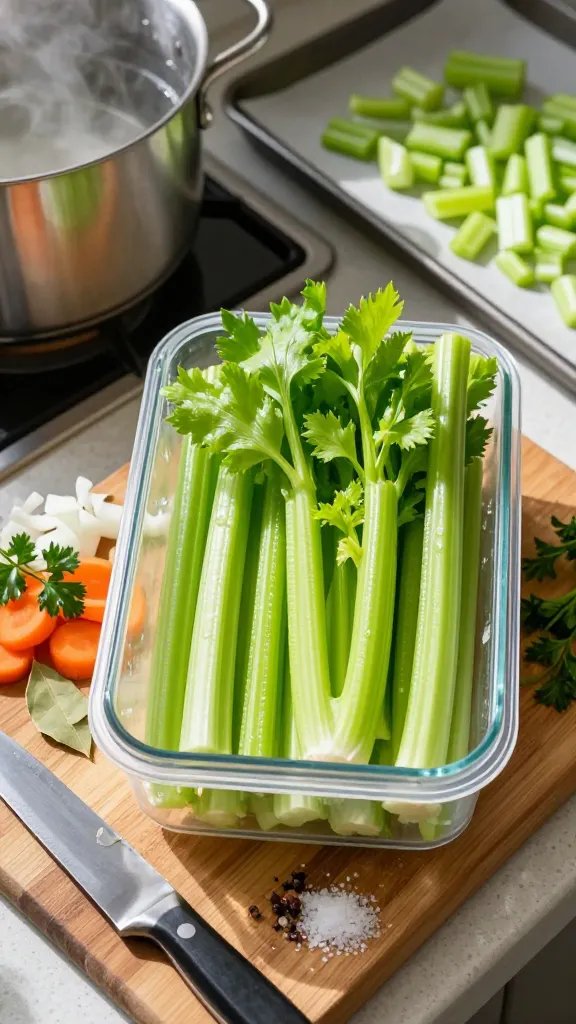
Celery is the unsung backbone of good soup. It brings freshness, salinity, and a clean brightness that keeps rich soups from feeling heavy. Think of it as your flavor insurance.
Tips
- Use both stalks and leaves—leaves add herbaceous oomph.
- Slice thinly so it softens at the same pace as carrots.
- Freeze chopped celery on a tray first to avoid clumps.
Celery shines in chicken soups, chowders, and any broth that needs lift. Add it early for depth, late for crunch.
4. Garlic: The Instant Upgrade Button
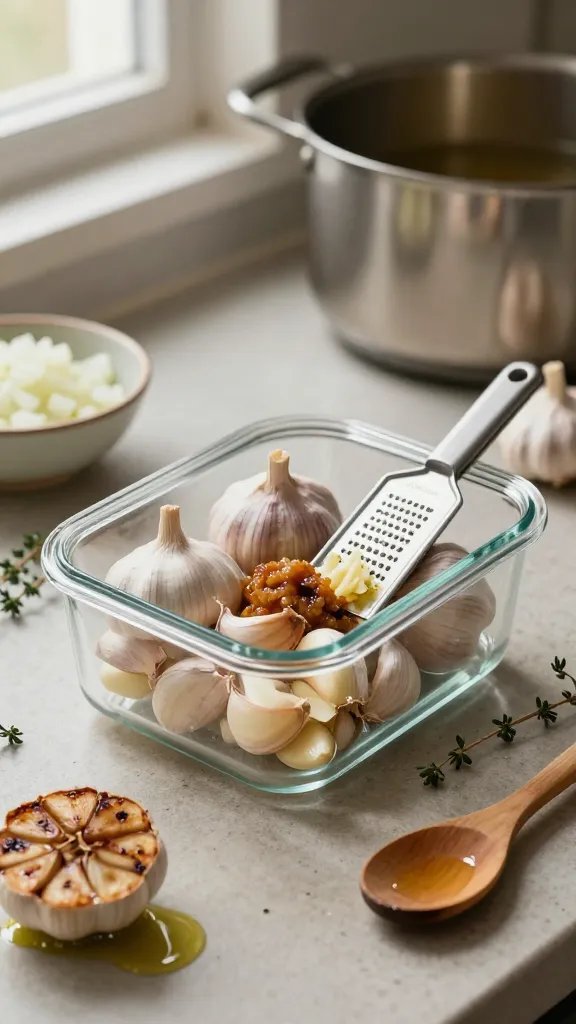
Garlic is your shortcut to “Did you cook this all day?” energy. It infuses broth with warmth, bite, and a little mystery. A little goes far, but also…more garlic never hurt anyone (IMO).
Smart Moves
- Freeze peeled cloves whole; grate from frozen into the pot.
- Roast a whole head and freeze in teaspoons for mellow sweetness.
- Sauté garlic after onions to avoid burning.
Garlic works in literally every soup style—from miso-ginger vibes to rustic Italian. Use it to build layers or finish with a quick sizzle.
5. Leeks: Silky, Sweet, And Totally Worth The Rinse
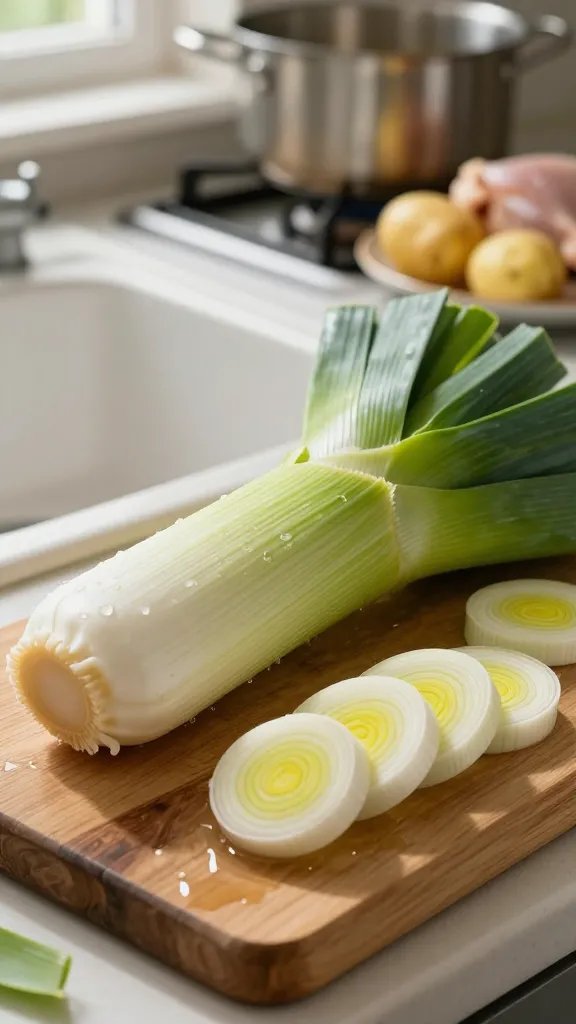
Leeks add gentle, buttery sweetness that tastes fancy with zero effort. They turn ordinary potato soups into comfort-food nirvana and make chicken broth feel restaurant-level.
Prep Notes
- Slice lengthwise, rinse out grit, then thinly slice.
- Use whites and light greens for softness; dark greens for stock.
- Sweat leeks low and slow for silkiness.
Leeks belong in potato-leek, chicken, and seafood soups. Want deluxe vibes? Start with leeks.
6. Parsnips: The Secret Sweet-But-Spicy Boost
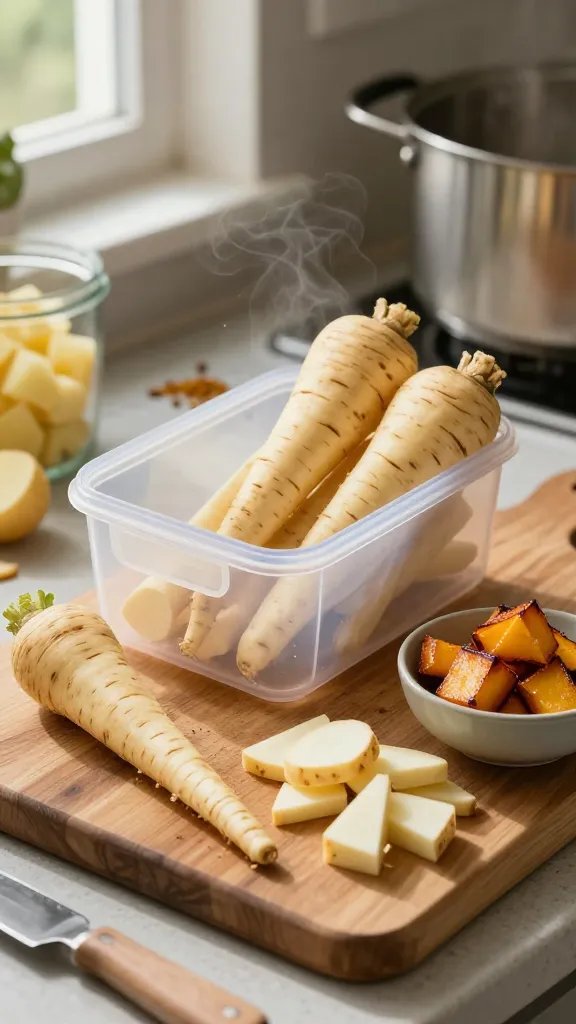
Parsnips are like carrots’ moody cousin—sweeter, slightly spicy, and wildly aromatic. They add body and nuance, especially to creamy or blended soups.
Key Points
- Peel to remove any bitterness; dice small.
- Roast to intensify sweetness before freezing.
- Blend with potatoes for silky, complex purées.
Use parsnips in root-veg soups, chicken stews, and anything with curry spices. They bring depth without drama.
7. Fennel: Anise-Kissed Brightness That Wakes Up Broth
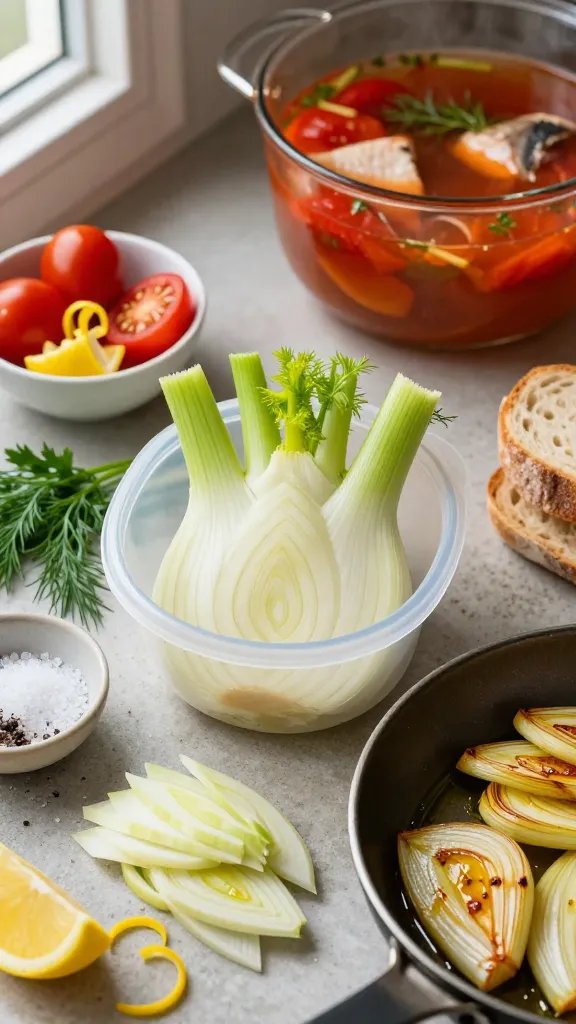
Fennel brings a subtle licorice note that tastes fresh, not weird—promise. It brightens tomato soups, loves seafood, and pairs beautifully with citrus and herbs.
Tips
- Thinly slice the bulb; save fronds for garnish.
- Caramelize for sweetness or keep crisp for crunch.
- Use sparingly if you’re fennel-shy; it’s potent.
Fennel plays best in minestrone, fish soups, and tomato bases. Add it when you want elegance without effort.
8. Tomatoes: Umami, Acidity, And That Cozy Red Glow
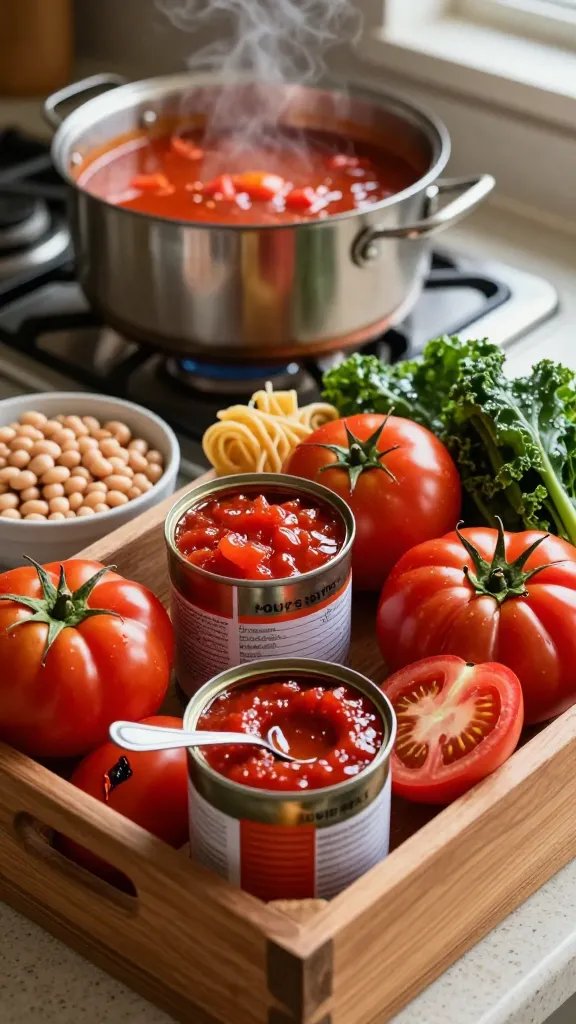
Tomatoes deliver umami and brightness in one scoop. They thicken broths, add color, and make everything taste more intentional. Use canned, fresh, or paste—each hits differently.
What To Stock
- Tomato paste: Concentrated, caramelizes beautifully.
- Diced tomatoes: Texture and acidity for chunkier soups.
- Fire-roasted: Smoky note without the grill.
Tomatoes love beans, pasta, and hearty greens. Use when you want tang, body, or that classic Italian vibe.
9. Mushrooms: The Vegetarian Umami Bomb
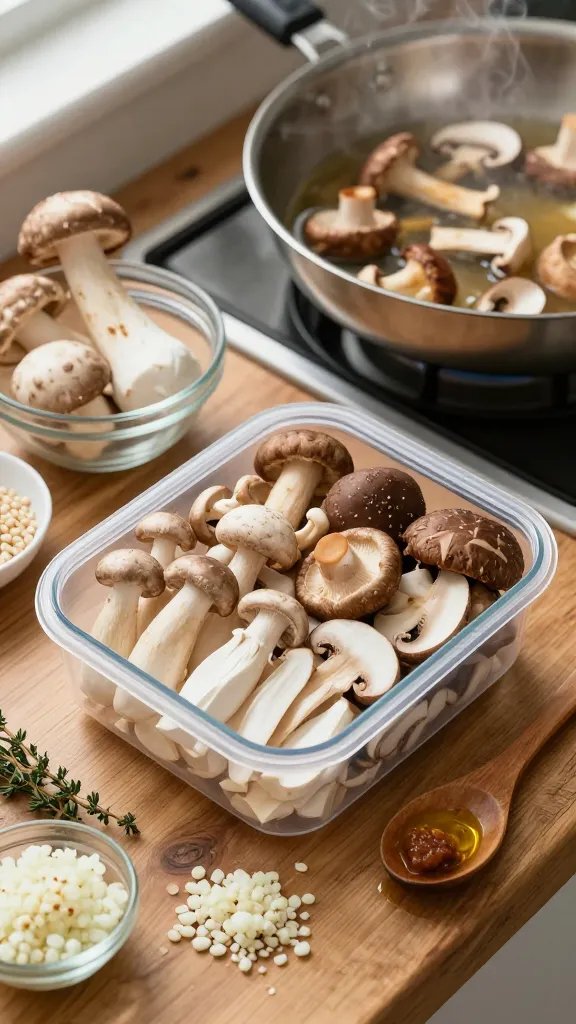
Mushrooms bring savory depth and rich, meaty energy—no meat required. They transform simple broths into something you’ll sip straight from the ladle (no judgment).
Power Moves
- Use a mix: cremini for body, shiitake for intensity, porcini for drama.
- Freeze stems for stock; sauté caps for soup.
- Dry-sauté first to drive off moisture and boost flavor.
Perfect in barley soup, miso broths, and creamy blends. Add when you crave umami and coziness—seriously, total win.
10. Leafy Greens: Spinach, Kale, And Friends For Fresh Finish
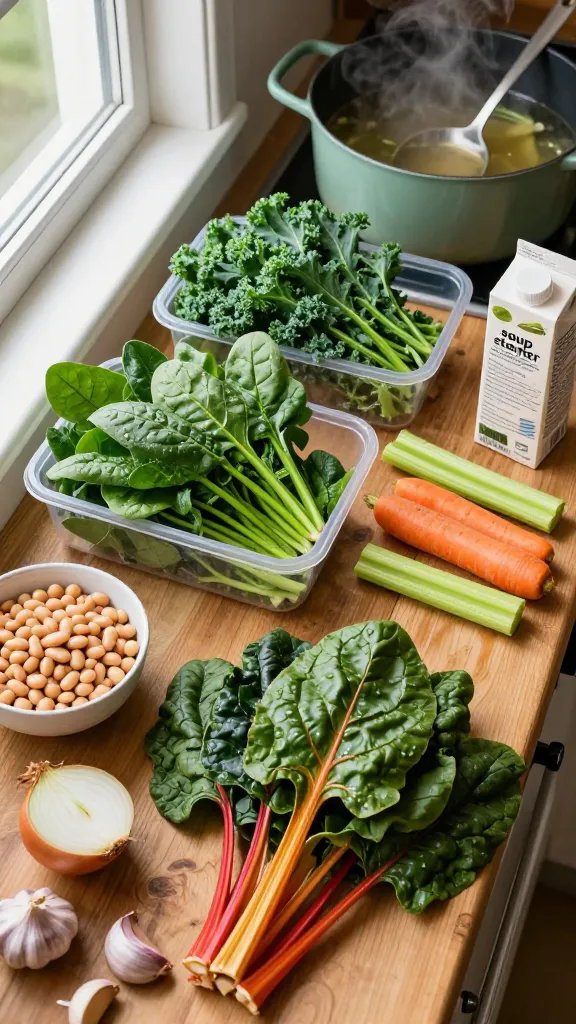
Greens finish soups with color, nutrients, and a gentle bite. They keep things lively and cut through richness like a squeeze of lemon in vegetable form.
Good Options
- Spinach: Tender and quick—toss in at the end.
- Kale: Sturdy and earthy—add earlier to soften.
- Swiss chard: Silky leaves and sweet stems—use both.
Add greens to bean soups, chicken soup, and minestrone. They make any pot look intentional and taste fresher.
How To Build Your “Soup Starter” Container Like A Pro
Now that you’ve got the players, let’s assemble a freezer MVP. Think mix-and-match packets you can grab and toss into a pot without a second thought. Each bag should feel like a head start, not homework.
Starter Combos
- Classic Mirepoix: Onion + carrot + celery (2:1:1). Add garlic when cooking.
- Cozy Mushroom Base: Onion + mushrooms + garlic + thyme.
- Tomato Lift: Onion + fennel + diced tomato + a spoon of tomato paste.
- Silky Leek Blend: Leek + potato + parsnip for creamy soups.
Freezer Tips
- Flash-freeze chopped veg on a tray, then bag. No clumps, no crying.
- Label with date and combo. Future you is forgetful—help them out.
- Portion in 2–3 cup bags for weeknight sanity.
These prepped mixes turn a random Tuesday into Soup Night with almost no effort. You’ll cook more at home because it’ll actually feel easy.
Stock, Broth, Or Water? Choose Your Liquid Wisely
Your starter needs a cozy bath. The liquid sets the tone—from delicate and clean to bold and beefy. Choose based on the vibe you’re chasing.
Quick Guide
- Water: Works if your starter is loaded with aromatics and umami.
- Vegetable broth: Neutral, great for mushroom and tomato bases.
- Chicken broth: Rich comfort—ideal with mirepoix and leeks.
- Beef broth: Hearty stews, barley, and mushroom-heavy situations.
No broth? Add a splash of soy sauce, miso, or nutritional yeast with water. Instant depth, minimal drama.
Spice And Herb Moves That Make You Look Talented
Vegetables bring the soul; spices bring the attitude. You don’t need a million—just smart combos. Keep it simple, but intentional.
Winning Combos
- Italian-ish: Garlic, thyme, rosemary, bay leaf.
- Warm & Cozy: Smoked paprika, cumin, coriander.
- Bright & Zingy: Lemon zest, dill, parsley.
- Umami Boost: Soy sauce, miso, Worcestershire (anchovy alert), tomato paste.
Finish with acid—lemon juice or vinegar—and a drizzle of good olive oil. Your soup will suddenly taste finished, not “fine.”
When To Add What: Timing For Best Texture
Great soup is about timing as much as ingredients. Add sturdy veg early, delicate ones late. Easy rule, big payoff.
Timeline
- Start: Onion, celery, carrot, leeks—sweat until soft.
- Middle: Mushrooms, parsnips, fennel, tomatoes—build body and flavor.
- Finish: Garlic (briefly), greens, herbs, acid—keep them bright.
This prevents mushy greens and bitter garlic. Your texture game just leveled up.
Storage, Shelf Life, And Zero-Waste Tricks
Waste less, soup more. You can turn odds and ends into liquid gold and save cash while you’re at it.
Pro Tips
- Collect clean trimmings (onion skins, leek tops, mushroom stems) in a freezer bag for stock.
- Avoid bitter bits like brassica cores in stock (cabbage, broccoli) unless you love strong flavors.
- Use within 3 months for best taste and texture.
Zero-waste for the win and cheaper groceries too. That’s a flex.
Sample 30-Minute Soup Using Your Starter
Need a proof-of-concept? Try this simple template and tweak it with what you’ve got. It’s flexible, fast, and delicious.
Quick Method
- Heat oil, sauté a “Classic Mirepoix” starter (about 3 cups) until soft.
- Add 1 tbsp tomato paste and 1 tsp smoked paprika; cook 1 minute.
- Pour in 6 cups broth, one can beans, and a handful of small pasta or diced potatoes.
- Simmer 12–15 minutes; finish with spinach, lemon juice, and parsley.
It tastes like you tried hard. You didn’t. That’s the beauty.
Final Touches That Make People Ask For The Recipe
Garnishes turn good soup into “Can I get this recipe?” moments. They add crunch, creaminess, or heat in seconds.
Favorites
- Croutons or toasted breadcrumbs for texture.
- Yogurt, sour cream, or olive oil for richness.
- Chili flakes, hot honey, or peppery greens for a kick.
Little touches, big payoff. Your soup starter just went pro—trust me.
Ready to build your “Soup Starter” container? Grab a knife, put on a podcast, and chop your way to weeknight bliss. You’ll love the freedom of tossing a bag into a pot and calling it dinner. Go make future-you proud!