
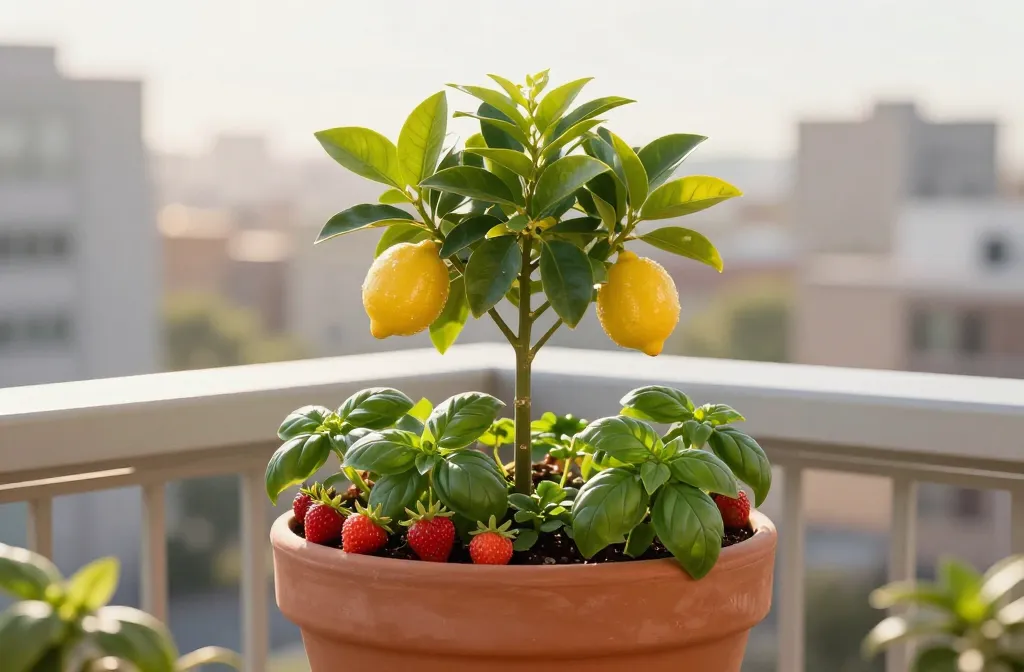
You’ve mastered basil and tomatoes on a windowsill. Now you want the spicy, finicky, high-reward stuff that makes other apartment gardeners say “how did you do that?” These five advanced companion setups push containers to the edge with microclimates, root matchmaking, and pest jujitsu. Ready to juggle light, airflow, and pot geometry like a boss? Let’s go.
1. Citrus + Alpine Strawberry + Basil: Balcony Micro-Orchard With Built-In Pest Control
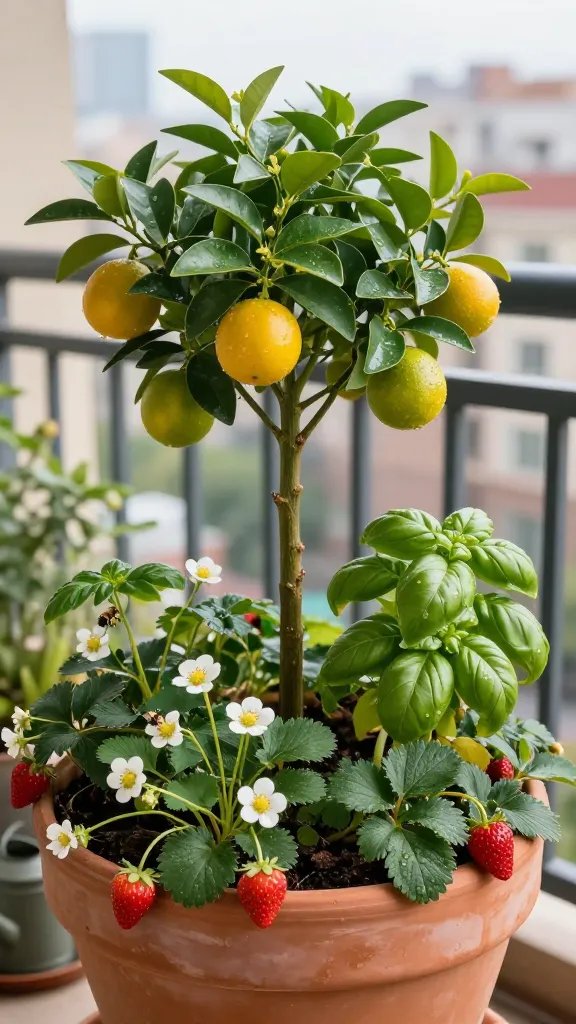
Small citrus trees crave bright light, steady moisture, and company that doesn’t hog root space. Enter alpine strawberries and basil as a living understory that cools soil, lures pollinators, and confuses pests. You’ll get fragrance, fruit, and fewer fungus gnats in one glamorous tub.
Why This Works
- Citrus drinks deep and appreciates humidity from leaf-level companions.
- Alpine strawberries form a shallow, shade-giving groundcover that reduces evaporation.
- Basil releases aromatic volatiles that deter aphids and whiteflies, FYI.
Container Setup
- One 15–20 gallon container with excellent drainage.
- Soilless mix: 60% high-quality potting mix, 20% compost, 20% perlite/pumice.
- Plant a grafted dwarf Meyer lemon or calamondin centered; tuck 3–4 alpine strawberry starts and 2 basil plants around the edge.
Tips
- Feed citrus with a citrus-specific fertilizer rich in micronutrients (iron, magnesium) every 4–6 weeks in season.
- Keep basil pruned to prevent shading the citrus trunk; harvest often.
- Rotate the pot monthly for even light and to discourage scale hot spots.
Use this when you want year-round fragrance and steady pollinator traffic on a sunny balcony. The strawberries pay rent with snackable fruit and moisture control.
2. Chili Pepper Pyramid: Hot Peppers + Marigold + Garlic Chives For Thrips Warfare
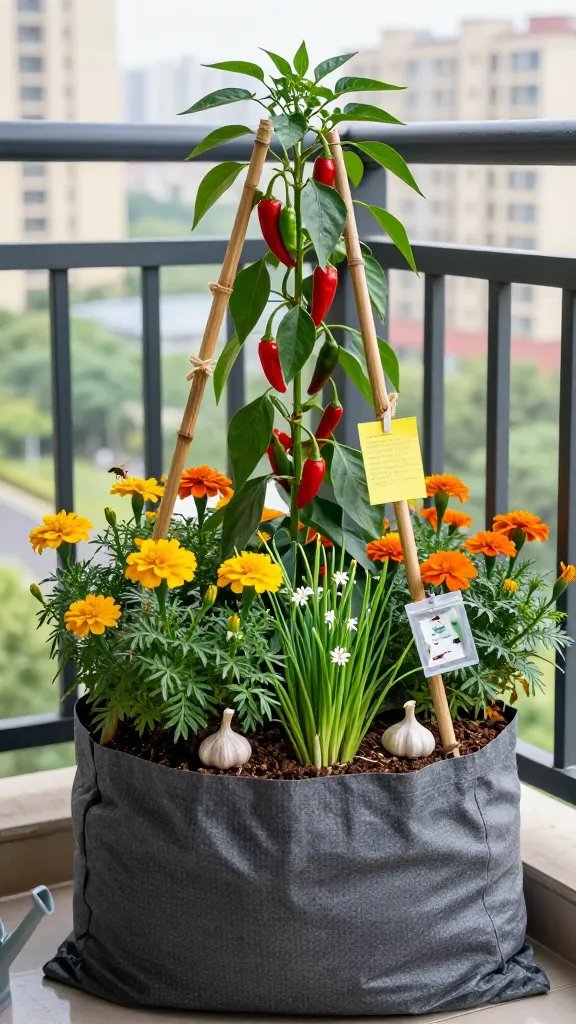
Peppers in apartments often suffer from thrips and spider mites. Pairing hot chilies with marigolds and garlic chives turns your container into a pest ambush. You’ll also stack blooms for pollinators and keep soil health on point.
Build The Trio
- Hot peppers (Thai, habanero, or a compact cayenne) as the vertical anchor.
- French marigolds for root-zone nematode suppression and pest-disorienting scent.
- Garlic chives to add mild allium defense and edible greens.
Container & Spacing
- 10–15 gallon fabric pot for airflow and drainage.
- Pepper in the center, 3 marigolds spaced evenly, a ring of garlic chives near the rim.
- Mulch with fine bark or coco chips to stabilize moisture.
Care Notes
- Keep peppers on the dry side between waterings; marigolds tolerate it, chives forgive it.
- Foliar spray with neem or insecticidal soap weekly at dusk during high pest pressure.
- Feed lightly every 2 weeks with a balanced liquid fertilizer until fruit set, then move to a bloom-boosting mix with lower nitrogen.
Great for sunny windows or hot balconies where you want heat in the kitchen and fewer pest headaches. Marigolds and chives aren’t just cute—they’re your bodyguards.
3. Shade Tetris: Fern + Calathea + Mint (In a Divider) For Humidity And Fungus Gnat Reduction
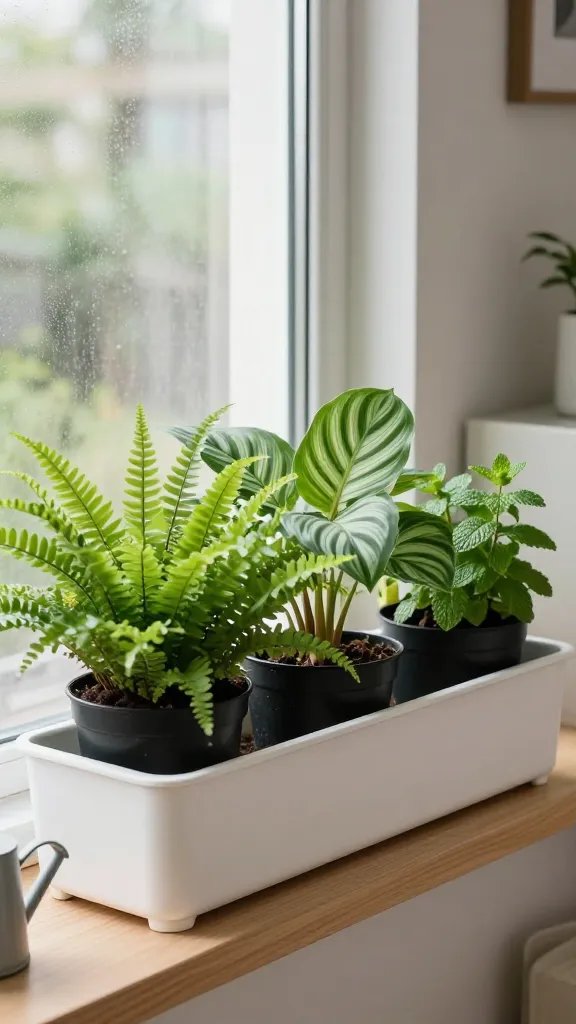
North-facing apartment? No problem. You can build a humidity oasis that actually smells fresh and keeps gnats in check. Ferns and calatheas love moisture, while mint acts as a fragrant sentinel—just don’t let it invade.
Smart Containment
- Use a wide trough with a built-in root barrier or nested pots: one large outer cachepot with two or three smaller nursery pots inside.
- Plant Boston or maidenhair fern in one, a calathea in another, and mint in a third—kept separated to stop mint from bullying everyone.
- Add a shallow pebble tray underneath to bump humidity without waterlogging.
Gnat Management
- Top-dress each pot with a 1 cm layer of coarse sand or pumice to disrupt gnat breeding.
- Water from the bottom when possible so the top layer dries quickly.
- Introduce yellow sticky traps and, if needed, a weekly Bacillus thuringiensis israelensis (BTi) drench.
Light & Water
- Bright indirect light; avoid direct sun to protect calathea leaves.
- Mist around the plants, not on the calathea leaves directly, to avoid spotting.
- Keep mint trimmed hard to prevent shading and to stimulate new growth.
Use this combo when you want a cooler, fragrant corner that doubles as a humidity engine for your whole plant shelf. The mint earns its keep in cocktails, too—trust me.
4. Tomato Espalier + Nasturtium + Oregano: Vertical Salsa Wall In One Pot
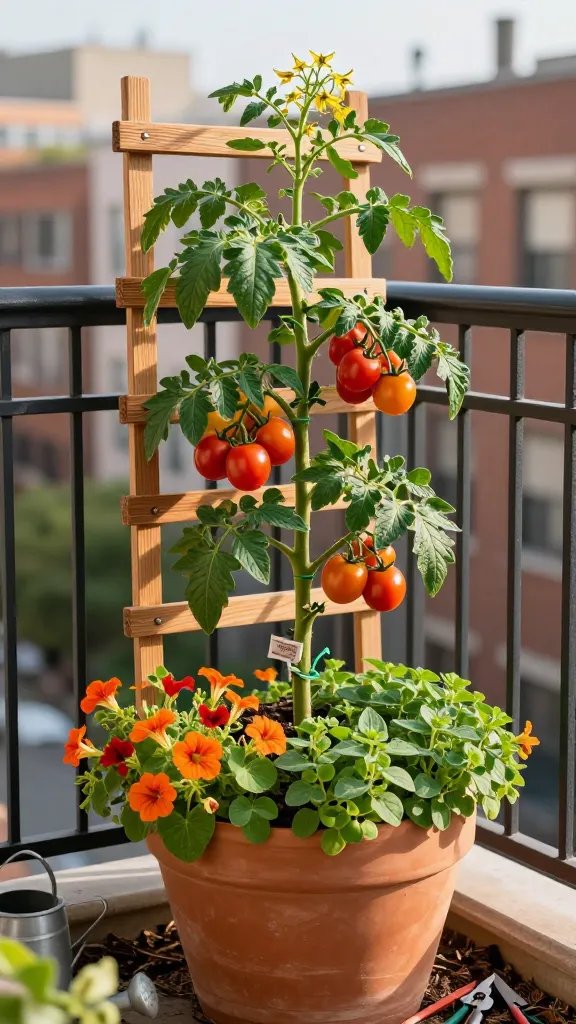
Space is tight, but your cravings aren’t. An espaliered determinate tomato with nasturtiums and oregano gives you a living wall that cascades flavor and shrugs off aphids. It looks wildly extra and performs even better.
How To Build It
- Choose a compact determinate tomato (Bush Early Girl, Patio Princess).
- Install a flat trellis against a wall or balcony railing to espalier branches horizontally.
- Underplant with trailing nasturtiums at the edges and a mound of oregano near the front.
Why It Works
- Nasturtiums act as trap crops for aphids and add edible flowers.
- Oregano’s aromatic oils confuse pests and attract lacewings/hoverflies.
- Horizontal training boosts light penetration and airflow, reducing mildew.
Care Cheats
- Use a 15–20 gallon container; tomatoes are thirsty divas.
- Prune suckers lightly to maintain a flat fan shape; tie with soft ties every week.
- Feed with a calcium-fortified tomato fertilizer; add crushed eggshells or gypsum if blossom end rot haunted you before.
Deploy this setup on a sunny balcony wall where airflow is decent. You’ll harvest tomatoes, bonus edible blooms, and herbs while turning a blank wall into a brag board.
5. Blueberry + Heather + Thyme: Acid-Lovers’ Stack For Balcony Bees
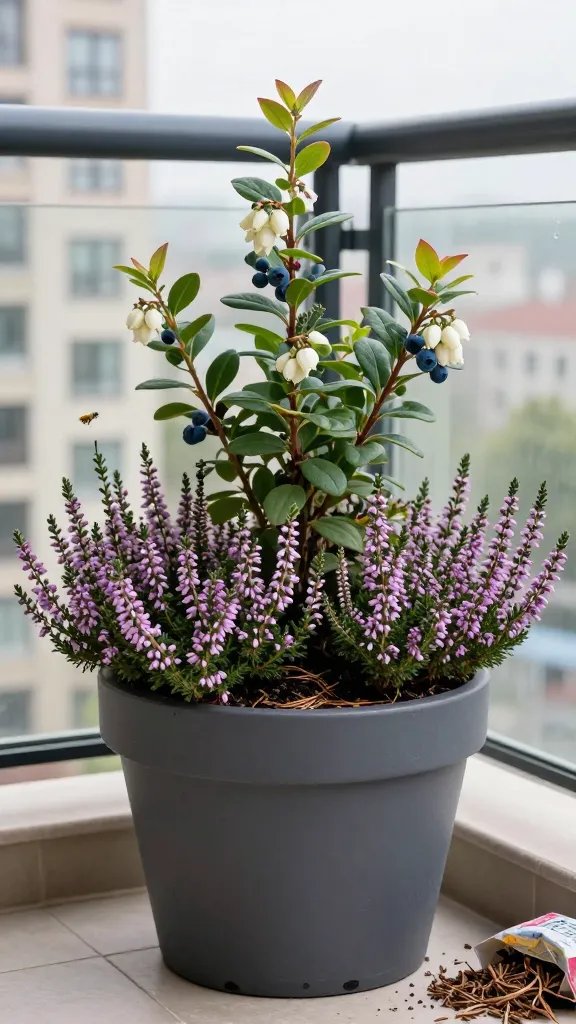
Blueberries in containers can be fussy, but they thrive with the right acidic siblings. Heather and thyme share similar preferences and round out the pot with flowers and food for pollinators. The trio also looks designer—no one complains about that.
Soil And Water Specs
- Use a high-acid mix: 50% ericaceous compost, 30% pine bark fines, 20% perlite.
- Water with rainwater if possible; hard tap water raises pH over time.
- Mulch with pine needles to retain acidity and moisture.
Planting Plan
- One dwarf blueberry (Top Hat, Jelly Bean) in a 10–15 gallon pot.
- Edge with creeping thyme for living mulch and edible garnish.
- Add a small heather (Calluna) for year-round structure and bee snacks.
Maintenance
- Feed in spring with a camellia/azalea fertilizer.
- Prune blueberry lightly after fruiting to keep a compact shape.
- Keep thyme trimmed so it doesn’t smother the crown; it loves sun and handles dry spells better than blueberry, so spot-water accordingly.
Use this when you want reliable balcony berries, low-key evergreen color, and buzzing pollinator activity. It’s a tidy, high-style combo that pays rent in fruit.
You’re more than ready for these advanced pairings. Start with one, dial in the watering rhythm, then scale up to a full-blown balcony ecosystem. Your plants will look happier, your pests will look confused, and your neighbors will definitely ask for your secrets—seriously.