
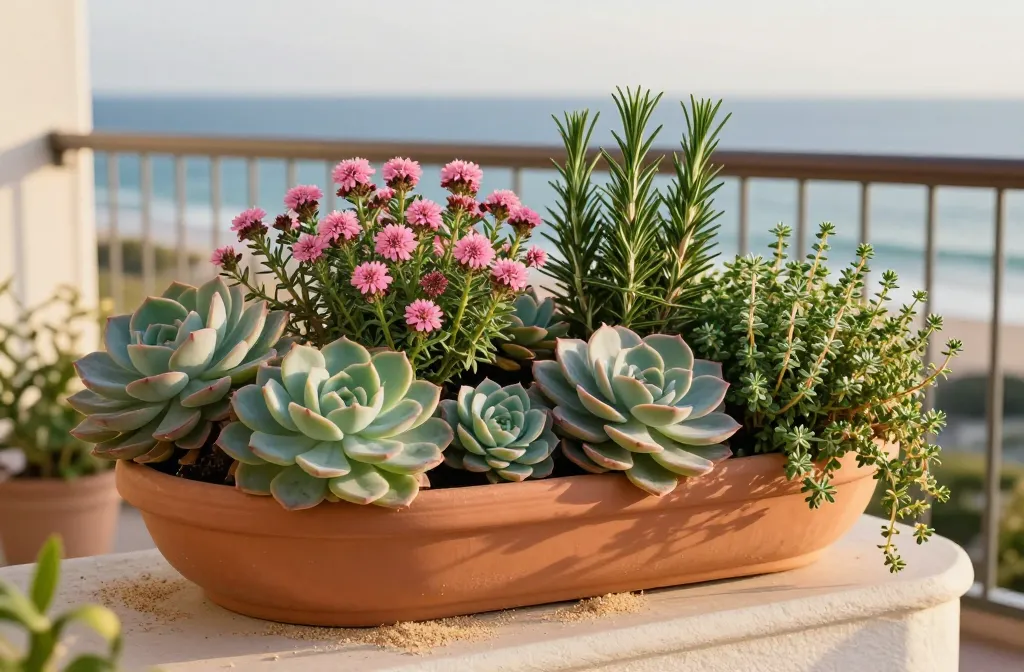
Salty breezes, gritty balconies, and still—lush, thriving plants? Absolutely. The right companion combos can shrug off sea spray, squeeze into containers, and still look like a mini botanical vacation. These pairings boost each other’s resilience, attract pollinators, and keep pests from dominating your tiny coastal jungle. Ready to grow a balcony that laughs at salt and wind? Let’s plant smarter, not harder.
1. Succulent Shield + Herb Party: Ice Plant, Sea Thrift, Rosemary, and Thyme
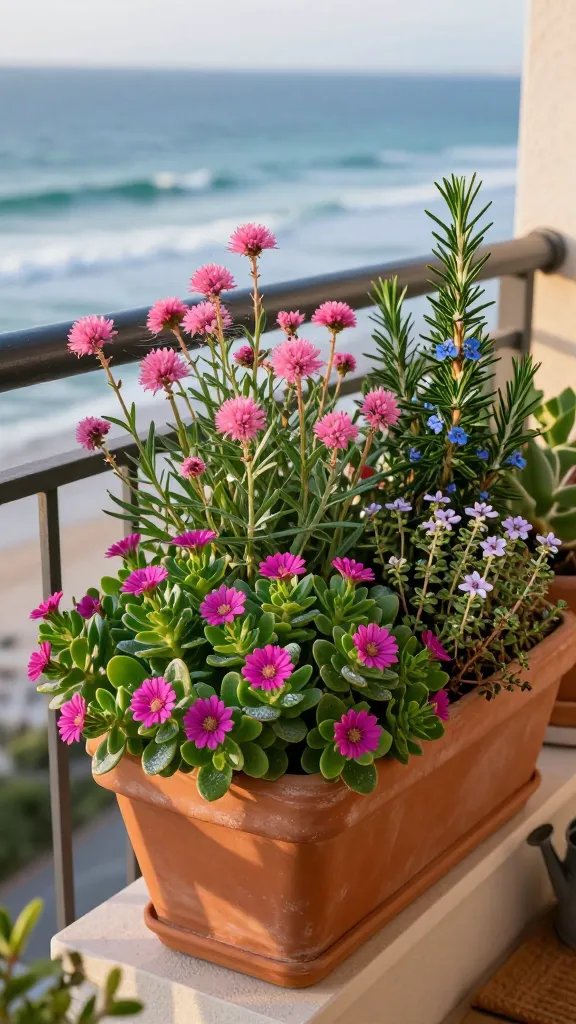
When your balcony catches salt spray every time the wind kicks up, you need a frontline defense. Enter ice plant and sea thrift—tough, gorgeous, and basically unbothered by salty air. Tuck in rosemary and thyme for fragrance, flavor, and pollinator joy, and you’ve got a low-water, high-style combo that thrives in shallow containers.
Why It Works
- Ice Plant (Delosperma) forms a succulent mat that blocks evaporation and buffers wind.
- Sea Thrift (Armeria maritima) loves the coast and adds cute pom-pom flowers.
- Rosemary brings height, aroma, and culinary wins.
- Thyme spills over edges and deters pests with its scent.
Container Setup Tips
- Use a wide, shallow pot with extra drainage holes—salt builds up fast, so water thoroughly to flush.
- Mix in coarse sand or pumice for airflow; these roots hate soggy soil.
- Place rosemary near the back as your “anchor,” with thyme trailing front, and ice plant + sea thrift filling gaps.
Best for sunny balconies that get afternoon wind. You’ll get bloom color, edible herbs, and a living mulch that stays pretty year-round—seriously.
2. Coastal Color Pop: Lavender, Santolina, Gaillardia, and Blue Fescue
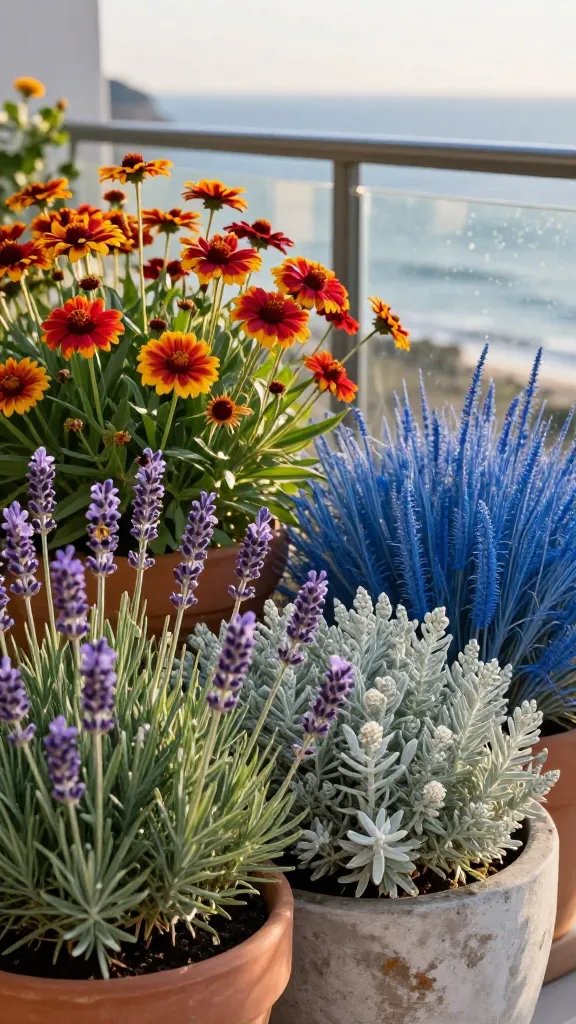
Want the beachy look with zero diva energy? This combo brings silver foliage, jewel-toned blooms, and graceful grasses that sway in the sea breeze. It’s drought-tolerant, salt-tolerant, and ridiculously photogenic, IMO.
Why It Works
- Lavender thrives with salt-laced air and hot sun, and attracts pollinators.
- Santolina (lavender cotton) pairs perfectly with lavender’s needs and smells clean and herbal.
- Gaillardia (blanket flower) delivers nonstop red-gold blooms that love neglect.
- Blue Fescue adds texture and cool-toned contrast that looks designer without trying.
Design + Care Notes
- Cluster 3 fescues for a mini grass tuft, then dot gaillardias between for fireworks.
- Choose a gritty mix: potting soil + perlite + fine gravel. These plants despise heavy media.
- Shear lavender and santolina lightly after flowering to keep compact.
Perfect when you want that chic “coastal cottage meets balcony” vibe. You’ll get humming bees, cheerful blooms, and plants that don’t need constant babying. FYI, they all handle wind like champs.
3. Edible Oasis With Grit: Sea Kale, Chard, Oregano, and Nasturtium
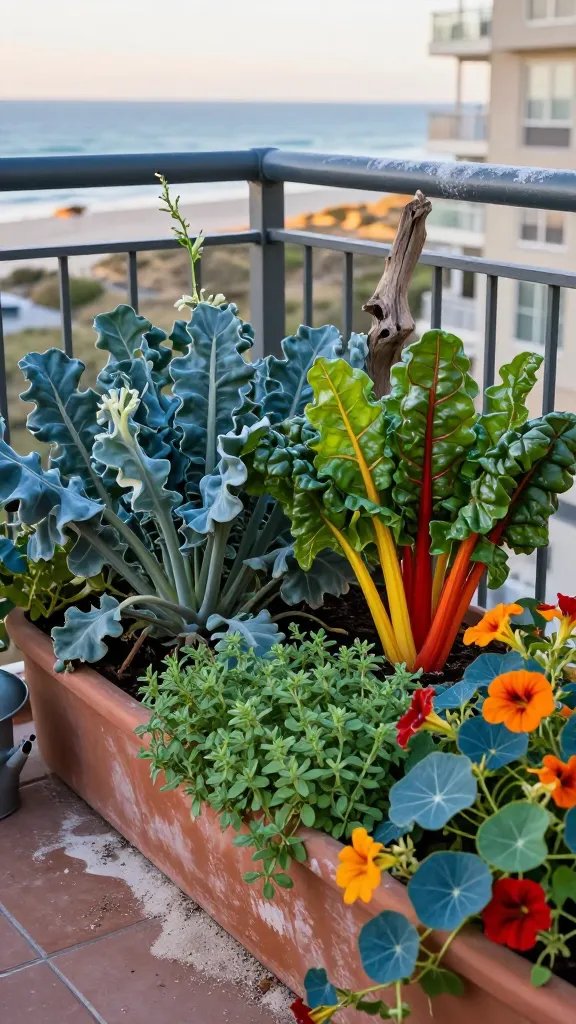
Yes, you can grow food by the ocean without everything turning crispy. This quartet combines salty-tolerant edibles with a peppery, edible flower that doubles as a pest decoy. It’s beautiful, it’s useful, and it tastes amazing—what’s not to love?
Why It Works
- Sea Kale (Crambe maritima) literally evolved for coastal living and offers tender leaves and edible shoots.
- Swiss Chard tolerates wind and salts better than spinach and brings rainbow stems for the drama.
- Oregano forms a fragrant carpet that suppresses weeds and invites pollinators.
- Nasturtium trails and attracts aphids away from your chard while providing edible blooms.
Container Strategy
- Choose a deep container for sea kale’s sizable root and give it the corner “throne.”
- Plant chard along the middle, oregano as a living mulch, and nasturtiums to spill over the sides.
- Water generously but let the top inch dry between sessions; occasional deep flushes help prevent salt buildup.
Harvest & Care
- Pick chard outer leaves first for constant regrowth.
- Snip oregano often to keep it compact and flavorful.
- Use nasturtium leaves and flowers in salads—they’re peppery and gorgeous.
Use this combo if you want a balcony harvest that doesn’t pout in salt air. It’s productive, resilient, and totally balcony-friendly—trust me, you’ll brag about it.
4. Windproof Scent Bar: Bay Laurel, Sage, Salvia, and Marigold
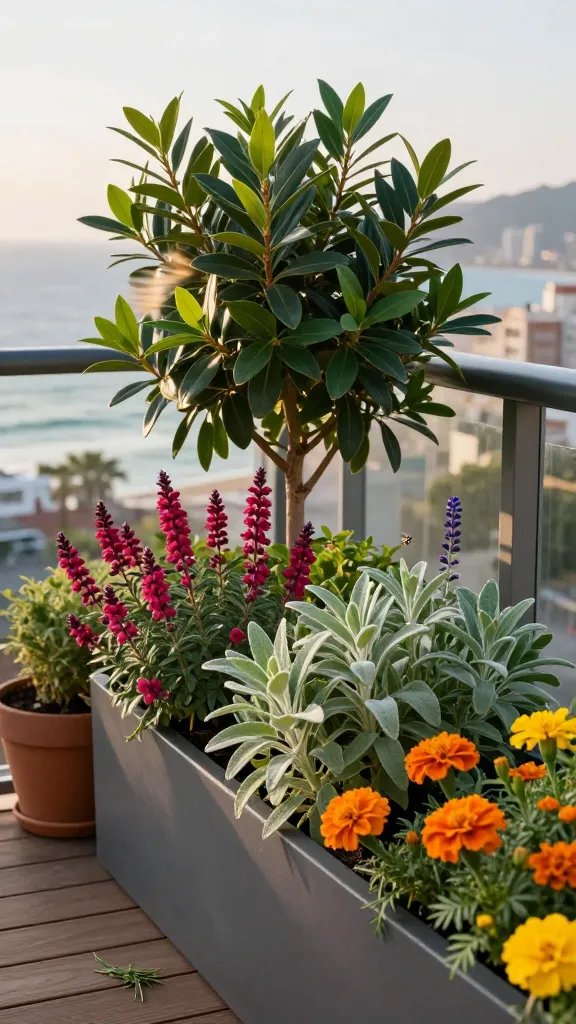
This is your multifunctional planter: cooking, fragrance, color, and pest-fighting all in one. The sturdy structure of bay laurel creates a natural windbreak for the rest, while marigolds and salvia keep pollinators and predators active.
Why It Works
- Bay Laurel handles salty breezes and provides aromatic leaves for soups and stews.
- Common Sage loves dry roots and helps deter pests with earthy essential oils.
- Salvia (ornamental) pumps out nectar-rich blooms that lure pollinators—even on blustery days.
- Marigold adds cheery color and supports beneficial insects while confusing pests.
Placement + Potting
- Plant bay slightly off-center in a larger container (at least 14–16 inches wide) as your “anchor.”
- Tuck sage on the leeward side to use bay’s leaves as a wind buffer.
- Fill gaps with salvia and marigolds for a layered, colorful ring.
- Use a well-draining mix; add a handful of crushed oyster shell or dolomitic lime if your water runs very soft—sage likes a touch of alkalinity.
Care Quickies
- Prune bay to keep it compact; it takes well to shaping.
- Deadhead salvia and marigolds to keep flowers coming.
- Avoid overwatering—this crew likes to dry out between drinks.
Ideal for balconies that need a wind-tough centerpiece with kitchen perks. Extra points if you love fresh bay leaves and constant blooms on a breeze-kissed ledge.
5. Beachy Green Wall: Saltbush, Cordyline, Creeping Rosemary, and Calendula
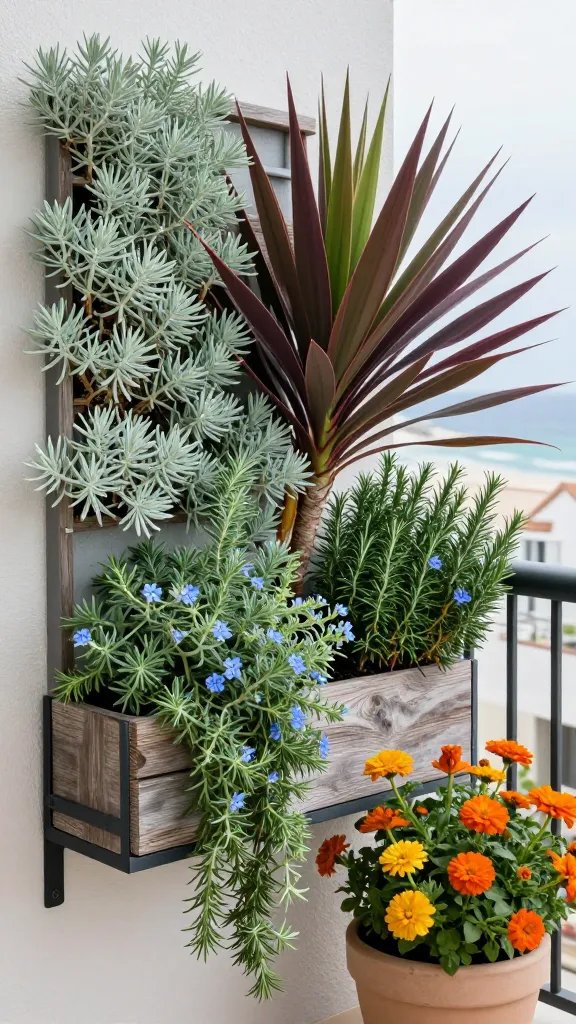
Small balcony? Go vertical. This combo stacks height, spill, and seasonal color while shrugging at salt and gusts. The result looks lush and architectural, like a tiny seaside courtyard garden.
Why It Works
- Saltbush (Atriplex) handles sea spray better than most and forms a durable backdrop.
- Cordyline adds dramatic, sword-like leaves in stylish colors that won’t flop in wind.
- Creeping Rosemary (prostratus) trails down and perfumes the air—plus, roasting potatoes says thanks.
- Calendula brings sunny blooms that attract beneficial insects and tolerates cool, coastal conditions.
Setup Ideas
- Use a tall trough planter or vertical pockets; place saltbush and cordyline in the back for height and shelter.
- Let creeping rosemary cascade from the front or upper pockets to soften edges.
- Dot calendulas as seasonal color bursts; they reseed politely if happy.
- Choose a mix with compost + coarse perlite for structure; add slow-release organic fertilizer at planting.
Maintenance Tips
- Flush containers monthly to reduce salt accumulation—water until it drains freely.
- Trim rosemary to encourage dense trails; quick snips double as kitchen herbs.
- Replace calendula seasonally if it tires; it’s fast and forgiving.
Use this when you want a privacy-ish screen that still fits apartment life. You’ll get architectural drama, edible herbs, and bright blooms that handle coastal moods swings like pros.
Ready to turn your salty slice of outdoors into a thriving mini-ecosystem? These companion combos bring color, flavor, and resilience without the drama. Grab a few pots, add gritty soil, and let the sea breeze do its thing—your balcony is about to glow up.