
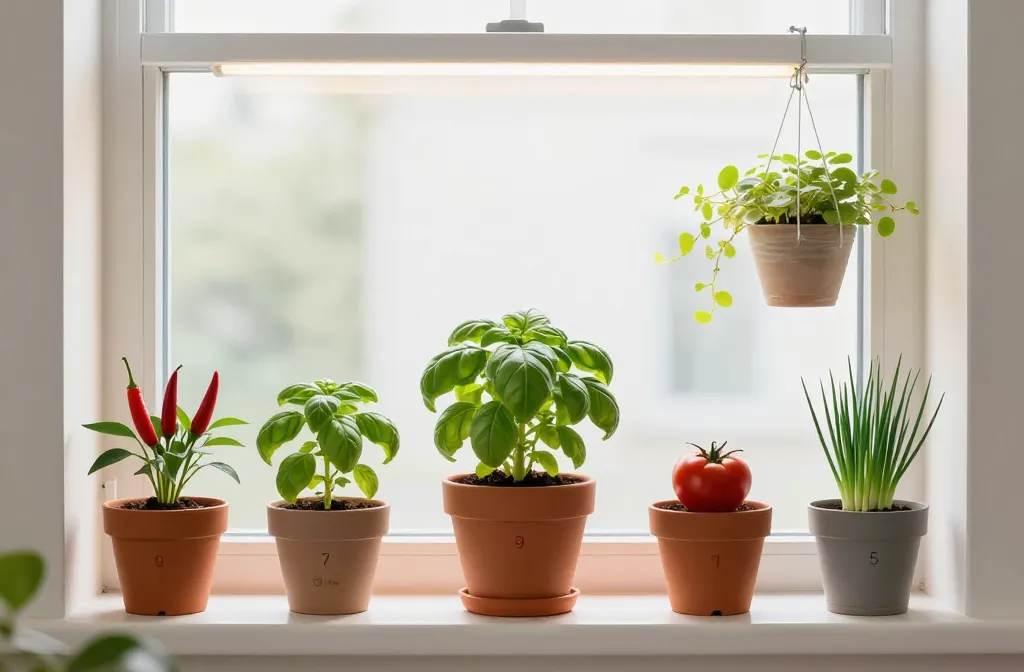
Got four windowsills and a dream? Perfect. Companion planting lets your tiny garden do double duty: more flavor, fewer pests, smarter space. You’ll stack, hang, and tuck plant pals together so they thrive in close quarters. Ready to squeeze a micro-jungle out of your shoebox apartment?
1. Basil + Tomatoes In One Pot, Zero Drama
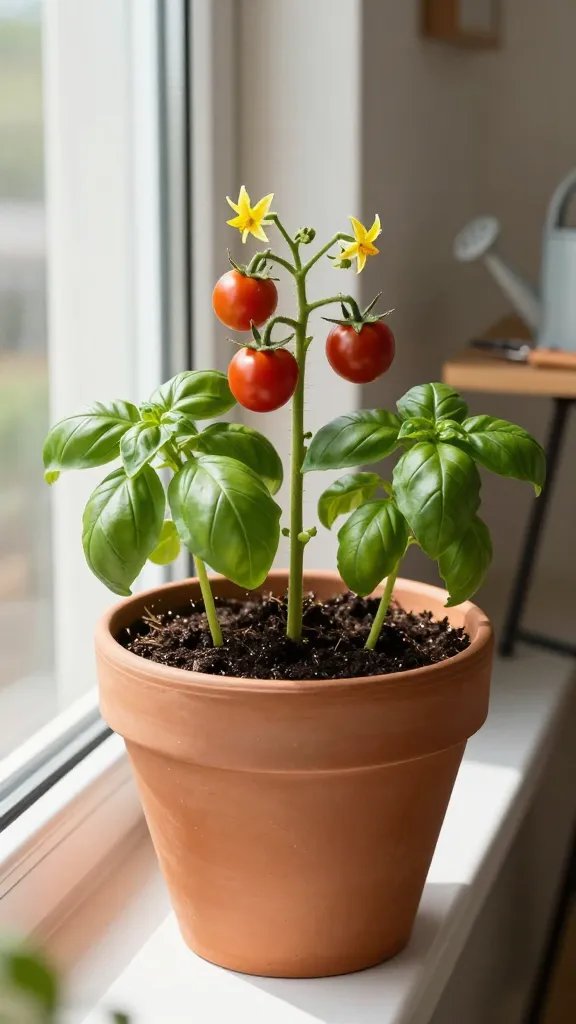
This classic duo earns its hype. Basil boosts tomato flavor, confuses pests, and fits right under a compact tomato variety like ‘Tiny Tim’ or ‘Patio Princess.’ You get a summer salad on a stick without a yard.
Use a 12–14 inch container with a tomato in the center and two basil plants tucked around the edges. Keep the basil trimmed so it doesn’t shade the tomato flowers, and the tomato won’t hog all the light.
How To Plant
- Container: 5-gallon pot with drainage
- Soil: Lightweight potting mix with compost
- Layout: Tomato in center, basil at 3 and 9 o’clock
- Light: 6–8 hours of sun or a full-spectrum grow light
Water deeply when the top inch of soil feels dry. Pinch basil regularly for bushy growth. Bonus: basil’s scent helps deter whiteflies and mosquitoes near your window. This combo shines on sunny sills and balconies where space runs tight.
2. Chili Peppers + Alliums: The Spicy Pest Patrol
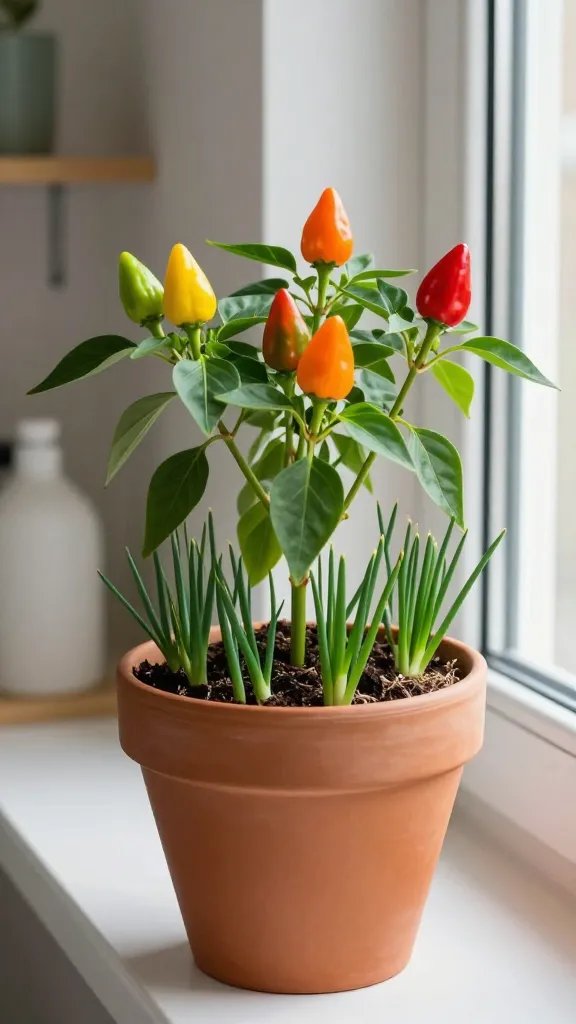
Peppers get moody in cramped conditions, but pair them with chives or green onions and they toughen up. Alliums repel aphids and spider mites, while peppers appreciate the airflow and compact companions.
Choose dwarf peppers like ‘Numex Twilight,’ ‘Cayenne Compact,’ or ‘Basket of Fire.’ Plant chives in the rim of the pot, and let peppers own the center spotlight.
Key Points
- Container: 3–5 gallon pot minimum for peppers
- Companions: Chives, scallions, or garlic greens
- Fertilizer: Balanced, then switch to low-nitrogen during fruiting
- Spacing: One pepper per pot; 3–4 chive clusters around the edge
Harvest chives often so they don’t crowd the pepper. FYI: strong allium scent reduces pest pressure, and you’ll always have garnish-ready greens. Great for bright kitchens and fire-escape rail planters.
3. Lettuces + Radishes + Herbs: The “Salad Bar” Window Box
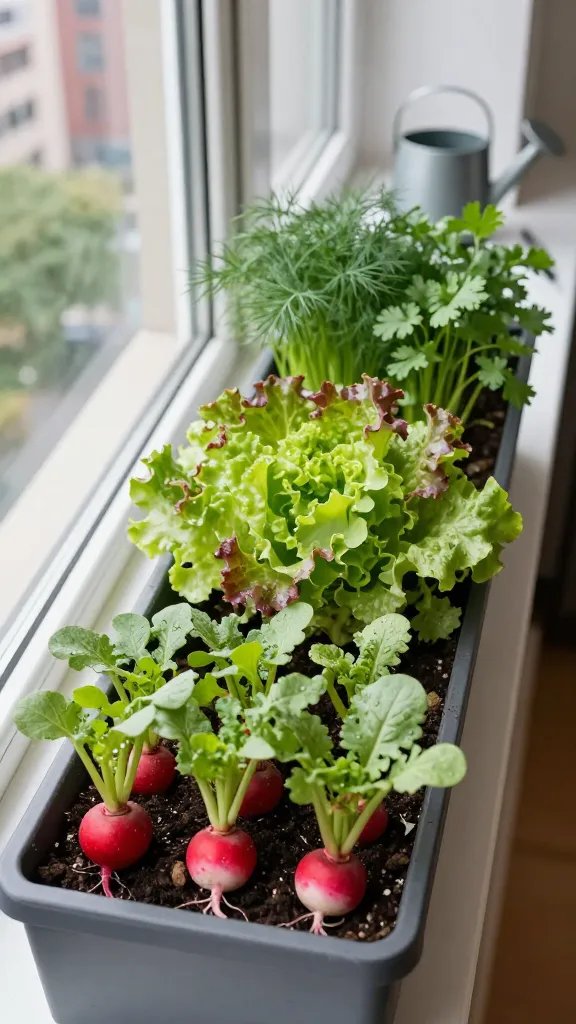
Want fast harvests in tiny footprints? Stack quick growers. Leaf lettuces fill out shallow boxes, radishes pop up like confetti, and fine-rooted herbs tuck in without drama.
Mix cut-and-come-again lettuces with a line of radishes and threads of dill or cilantro. You’ll harvest something every week, which is the apartment gardener’s dream.
Layout That Works
- Front row: Radishes (they finish in ~25 days)
- Middle: Loose-leaf lettuces (lollo rossa, buttercrunch)
- Back: Dill or cilantro for vertical feathery texture
Keep soil consistently moist; shallow boxes dry out faster than your group chat. Snip lettuce outside leaves and reseed radishes every two weeks for a steady stream. This setup thrives on east-facing sills with bright morning light.
4. Strawberries + Thyme: The Edible Groundcover Hack
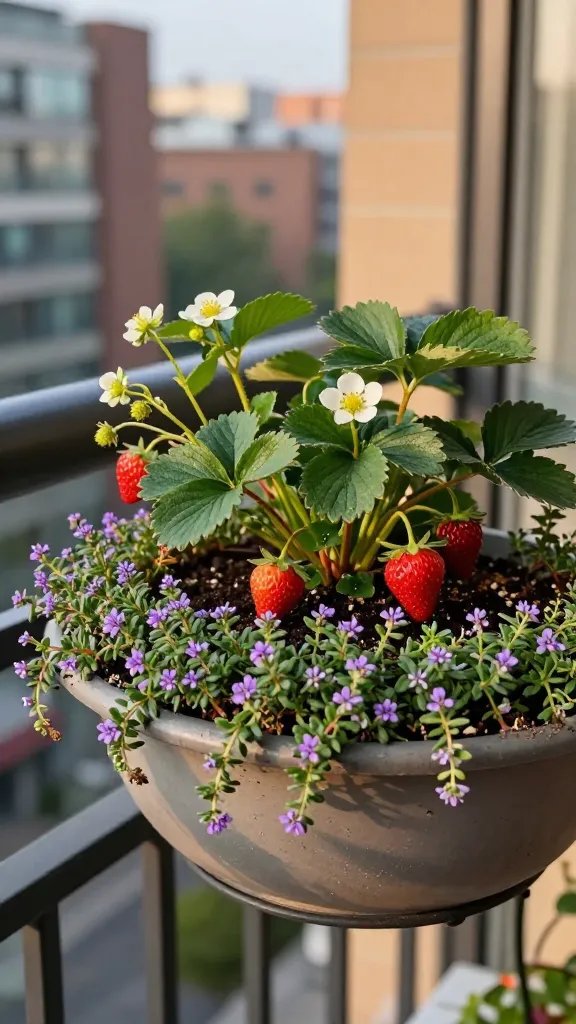
Strawberries love company, and thyme fits like a chic green carpet. Thyme’s aromatic oils discourage pests while it shades soil, which helps strawberries hold moisture in containers.
Choose everbearing strawberries like ‘Albion’ or ‘Mara des Bois’ for ongoing fruit. Plant one strawberry in the center and trail creeping thyme around the edges for a soft, cascading look.
Tips
- Container: Wide, shallow bowl or rail planter
- Soil: Well-drained; add perlite to keep roots happy
- Water: Even moisture; never soggy
- Care: Remove runners unless you want a mini strawberry empire
Thyme blooms invite pollinators if you have a balcony, and it doubles as a kitchen hero. Use this combo for sunny windows and places where you want edible decor with low fuss. Seriously, it’s adorable.
5. Cucumbers + Nasturtiums On A Vertical Trellis
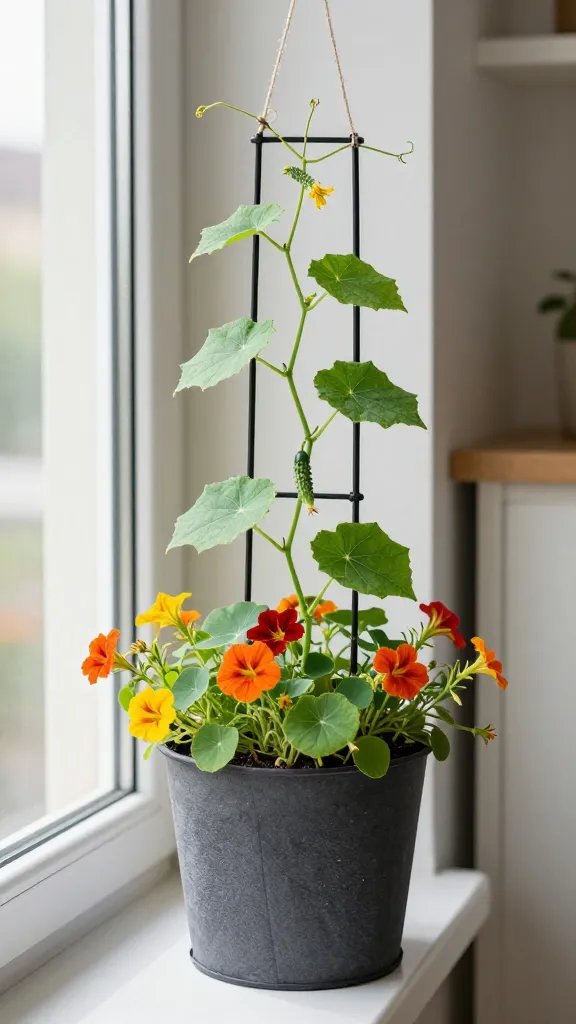
No floor space? Go up. Compact cucumber varieties like ‘Bush Pickle’ or ‘Spacemaster’ climb happily, and nasturtiums spill down the sides. They repel aphids and taste peppery in salads—flowers included.
Mount a slim trellis or use jute twine from a shelf to the pot. Nasturtiums act as living mulch and a gorgeous decoy plant that lures pests away from your cukes.
Materials
- Container: 5–7 gallon fabric pot for airflow
- Support: Narrow trellis or twine ladder
- Companion: Trailing nasturtium (choose a dwarf type for small pots)
- Feeding: Potassium-forward fertilizer once flowering begins
Train vines early, then prune lightly so they don’t hog the window. Harvest cucumbers small for crisp texture and higher yield. Use this when you’ve got a bright corner and a taste for crunchy snacks on repeat.
Companion planting turns a studio into a powerhouse pantry with built-in pest control. Mix compact varieties, aromatic herbs, and quick crops for nonstop harvests. IMO, once you taste the difference, you’ll never go back to sad grocery basil again—trust me.