
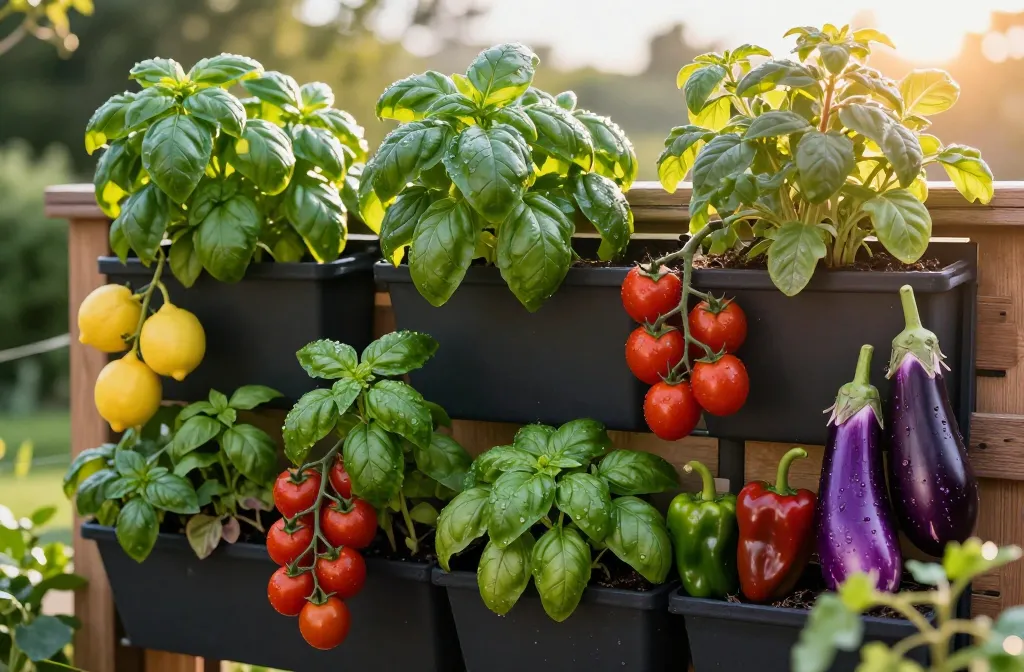
Short on space but big on flavor? Vertical gardens let you stack veggies sky-high and pack in amazing herbs as built-in bodyguards. The right aromatic companions boost taste, repel pests, and make your garden smell like an Italian market in July. Ready to grow smarter, not wider?
1. Basil + Tomatoes, Peppers, And Eggplant
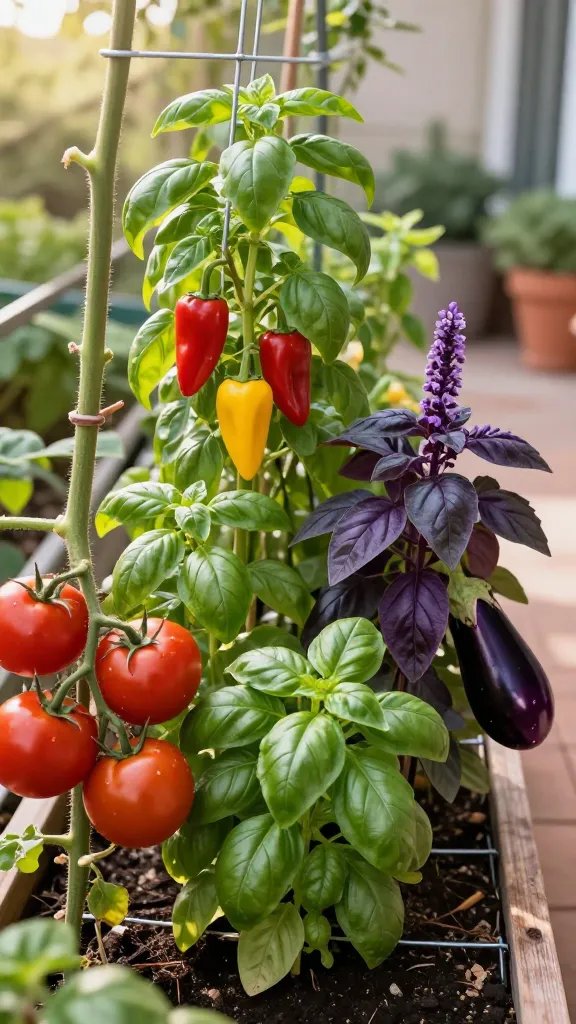
Basil doesn’t just taste incredible; it acts like a tiny air freshener with benefits. Its strong scent confuses pests that target nightshades while amplifying that classic summer flavor. Vertical setups keep air flowing, so basil’s oils stay potent and your tomatoes avoid drama.
Key Pairings:
- Tomatoes + Sweet Basil: Classic for sweetness and aphid distraction.
- Peppers + Lemon Basil: Citrus notes that nudge pests away.
- Eggplant + Thai Basil: Robust flavor and leafhopper confusion.
Plant basil at hand height in towers or pocket planters for easy snipping. Keep tomatoes on trellises or cages behind them so the scent drifts forward. Pinch basil blooms early to push leaf growth—trust me, your caprese will notice.
Tips
- Water in the morning; basil hates soggy nights.
- Harvest with the “two-leaf rule” (never strip a stem bare) for constant regrowth.
- Rotate basil varieties to diversify pest pressure.
Use this when you want a low-maintenance power duo that handles heat and rewards you with pizza-level payoffs.
2. Dill + Cucumbers, Zucchini, And Brassicas
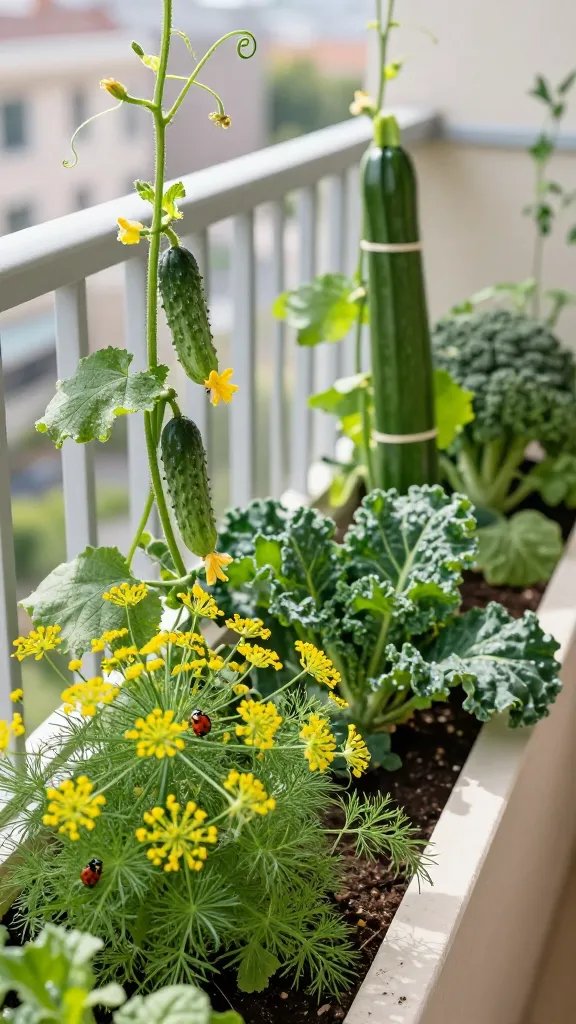
Dill pulls double duty: it draws beneficial insects while jazzing up everything from pickles to salads. The feathery leaves fit perfectly into narrow vertical gaps without shading your divas. Plus, dill’s umbrella flowers are like five-star restaurants for ladybugs and lacewings.
Smart Placement
- Cucumbers + Dill: Run cukes up a trellis, tuck dill on the sunnier edge.
- Zucchini (trained vertically) + Dill: Add airflow, reduce mildew risk.
- Kale/Broccoli + Dill: Invite predators to feast on caterpillars.
Let a few dill plants bolt to feed beneficials, but succession sow others for fresh greens. Stake taller dill in windy balconies so it doesn’t flop over your cucumbers like an overenthusiastic fan.
Quick Wins
- Thin aggressively so stems don’t crowd vines.
- Clip dill fronds young for best flavor.
- Save seed heads for pickling—chef’s kiss.
Choose this combo if you love crunchy cucumbers and want nature to handle most of the pest patrol for free.
3. Thyme + Strawberries, Cabbage Family, And Onions
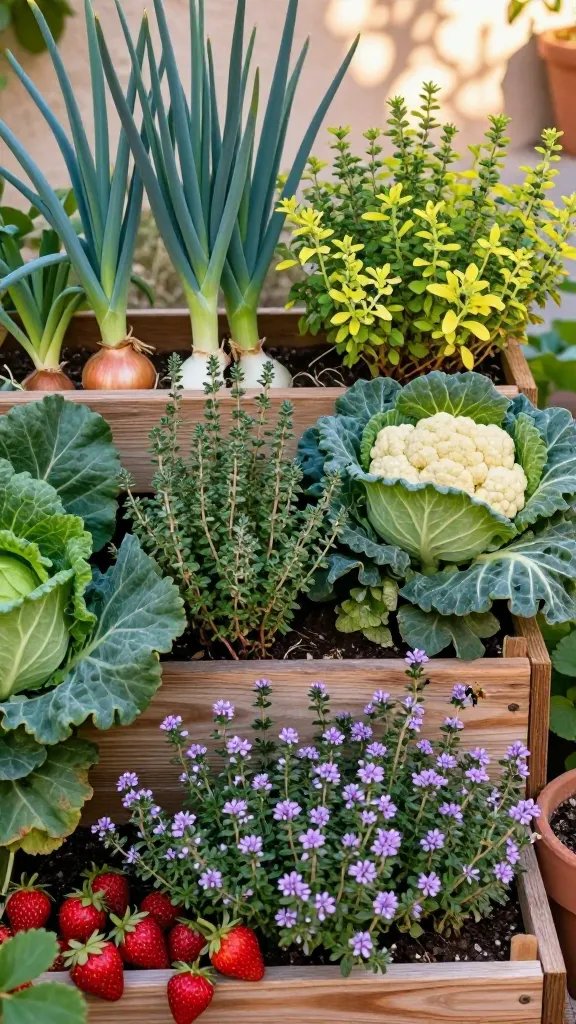
Thyme is the low-key hero that fills awkward edges and smells like a Mediterranean daydream. Its woody texture thrives in shallow pockets where other herbs sulk. The aroma masks targets for pests, and the flowers bring pollinators that your strawberries crave.
Best Partners
- Strawberries + Creeping Thyme: Ground-level tiers for spillover sweetness and pollinator traffic.
- Cabbage, Cauliflower + Common Thyme: Fewer moth visits, less caterpillar headache.
- Onions/Leeks + Lemon Thyme: Layered flavors and superb drainage buddies.
Place thyme at the edges or lowest pockets where runoff happens—the plant actually appreciates lean, quick-drying spots. Trim lightly after flowering to keep it compact and continuously aromatic.
Care Cheats
- Full sun delivers maximum oils and resilience.
- Water sparingly; thyme dislikes wet feet.
- Use a gritty potting mix or add perlite for drainage.
Use thyme when you want year-round structure and a quiet pest-deterrent that doesn’t beg for attention. FYI, it makes your strawberries taste like dessert even before the sugar.
4. Mint (In Pots!) + Brassicas, Peas, And Root Veggies
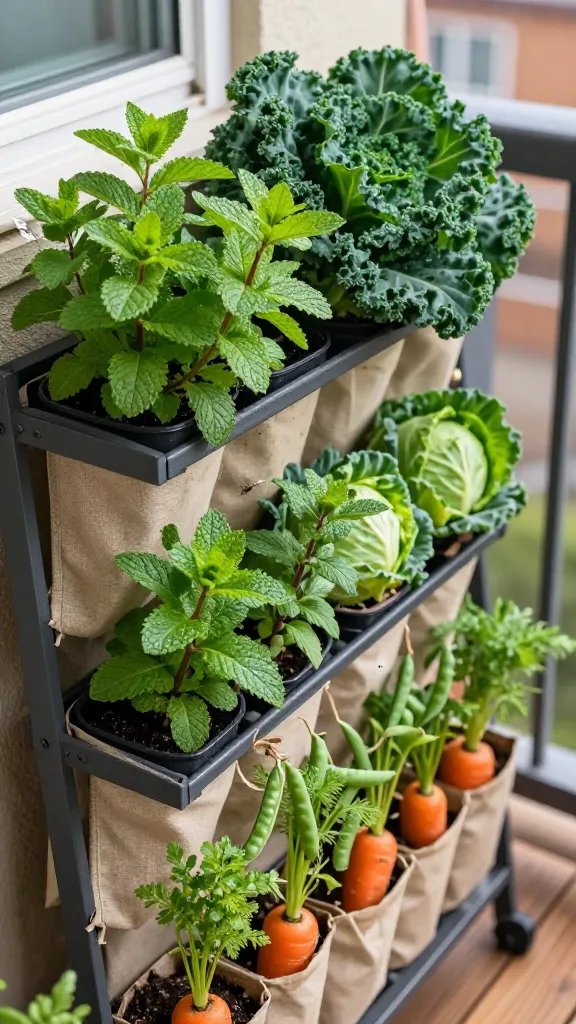
Mint is the friend you love at brunch and regret at 3 a.m.—keep it contained. In vertical gardens, plant mint in its own pocket or a separate pot clipped to the frame. You get the aroma wall without letting it sneak into everyone’s space.
Where Mint Shines
- Cabbage/Kale + Spearmint: Odor confuses cabbage moths.
- Peas + Peppermint: Cool scent that invites hoverflies.
- Carrots + Spearmint (nearby): Scent distraction for carrot flies.
Prune mint like you mean it. It grows fast in vertical microclimates, and you don’t want it shading slow growers. Bonus: constant trimming keeps the flavor bright and less harsh.
Pro Moves
- Use a root barrier or keep it in a nursery pot slipped into a pocket.
- Water evenly; mint handles more moisture than delicate herbs.
- Choose varieties: apple mint (soft), chocolate mint (dessert vibes), peppermint (bold).
Great for balconies that need a fragrant bug buffer and a steady supply of mojito magic. Seriously, it’s the most fun “pest control” you’ll ever drink.
5. Rosemary, Oregano, And Sage + Beans, Tomatoes, And Squash
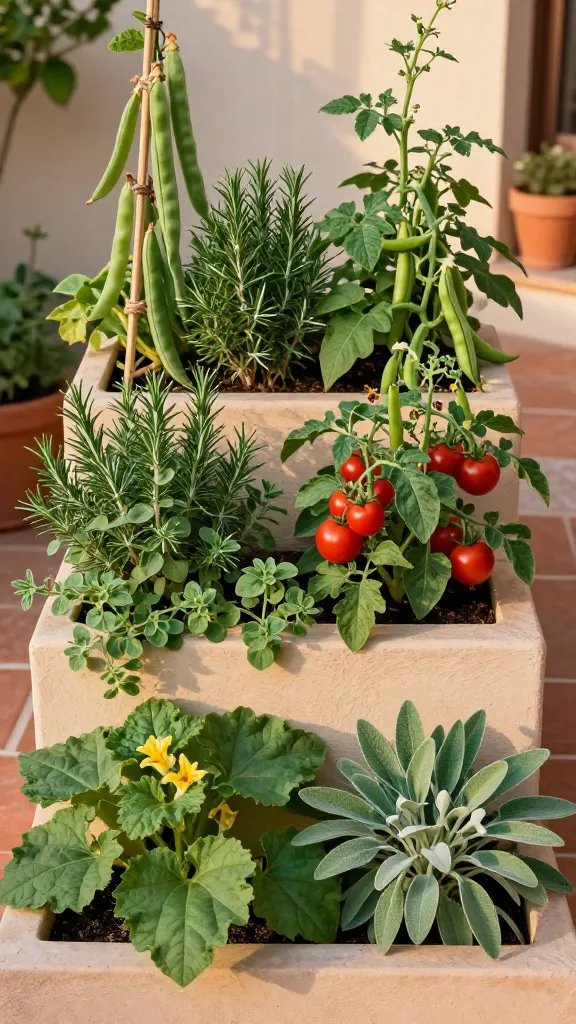
Call this the Mediterranean defense squad. These woody, resinous herbs pump out strong aromas that fend off pests and add deep, savory notes to your harvests. They love sun, forgive missed waterings, and look ridiculously good in vertical pockets.
Dynamic Trios
- Tomatoes + Oregano: Compact and fragrant, perfect near mid-height tiers.
- Pole Beans + Rosemary: Beans climb high, rosemary anchors the base and deters beetles.
- Squash + Sage: Helps with pest pressure and keeps lower tiers tidy.
Give these herbs the hottest, driest pockets—top or outer edges. Clip sparingly and often to keep them from woody overgrowth. If you see flowers forming, harvest stems to nudge leafy growth back on track.
Setup Tips
- Soil: fast-draining mix; add sand or perlite.
- Sun: 6–8 hours minimum for peak oils.
- Spacing: don’t cram—these herbs need airflow to avoid mildew.
Use this squad when you want low-maintenance structure, serious flavor, and year-long good looks. IMO, nothing smells more “garden goals” than a rosemary hedge you can eat.
Ready to build your dream herb-powered veggie wall? Mix one or two pairings per tier, keep thirsty plants together, and prune like a boss. Your harvests will taste better, your pests will panic, and your kitchen will smell like you hired a private chef. Go vertical and never look back.