
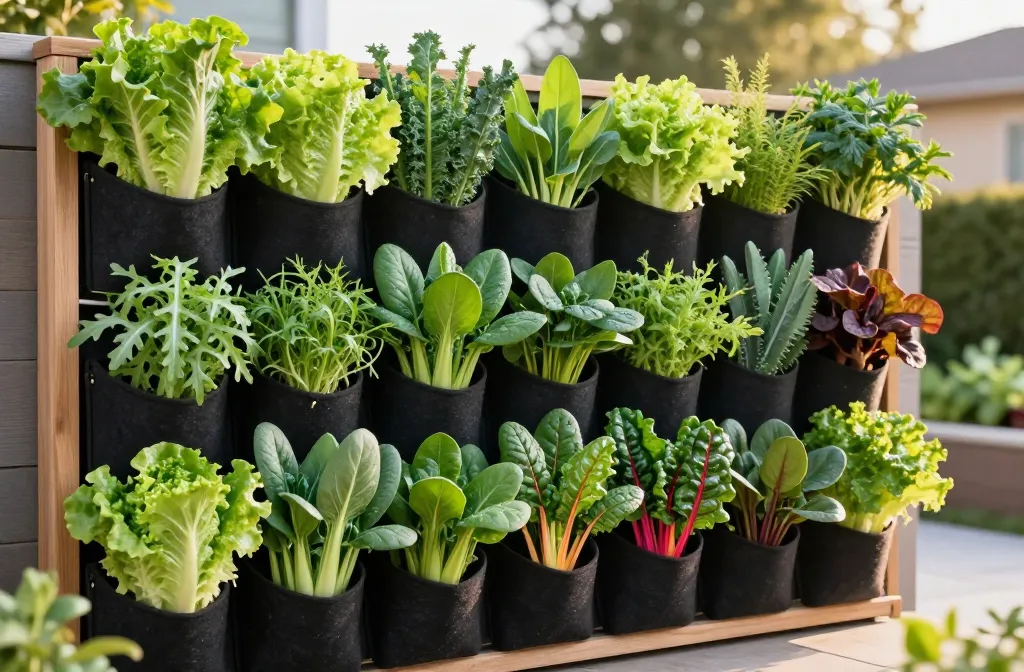
Vertical gardens look like living art and save big on space. The trick? Pair plants that vibe together, not fight each other. I’ve grouped the most reliable plant families into combos that share water needs, light preferences, and root behavior. Pick one group per panel or mix two adjacent ones—your wall will thank you.
FYI: Each section includes practical pairings you can copy-paste into your planter pockets. Want drama, herbs, or low-maintenance greenery? We’ve got it all.
1. Leafy Street Food Wall: Aster, Brassica, and Amaranth Families
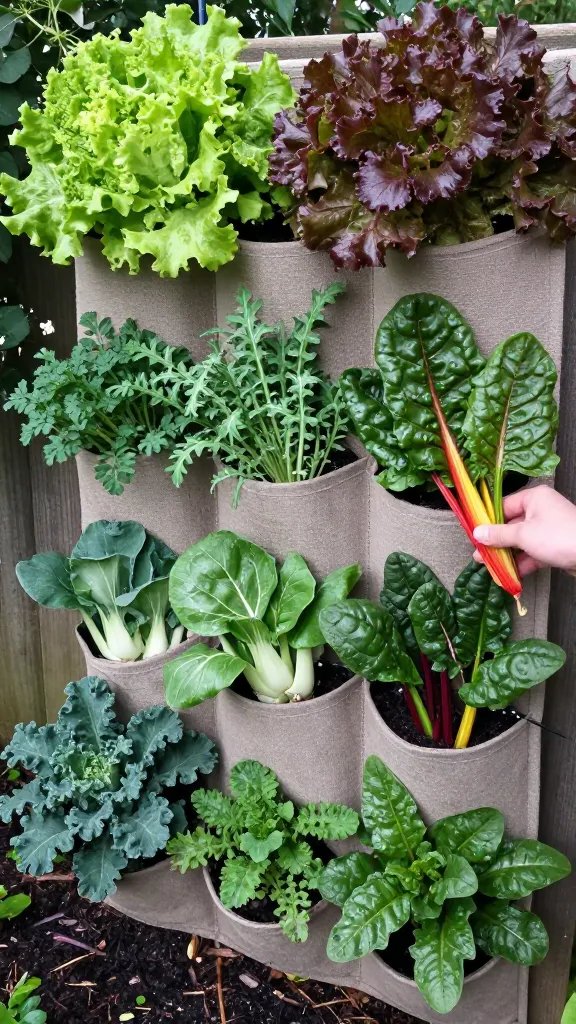
Build a snackable, super-productive panel with big leaves that stay happy in shallow pockets. These families love consistent moisture and cooler roots, which vertical planters offer with the right mulch and spacing. You’ll harvest fast, often, and deliciously.
Great Pairings
- Asteraceae: Lettuce (butterhead, romaine), endive, chicory
- Brassicaceae: Arugula, pak choi, tatsoi, kale (dwarf types)
- Amaranthaceae: Spinach, Swiss chard, baby beets (for greens)
Why They Click
- Similar needs: Cool-ish temps, even moisture, frequent feeding with mild fertilizer
- Shallow roots: Perfect for 4–6 inch planter pockets or felt panels
- Fast harvests: Cut-and-come-again keeps the wall lush
Tips
- Stack taller kale or Swiss chard higher; place soft lettuces lower to catch shade.
- Water lightly but frequently; add a thin coco coir or sphagnum layer to prevent splash and leaf rot.
- Rotate rows monthly to spread pest pressure and keep texture varied.
Use this combo when you want edible abundance without deep soil. Seriously, it’s like having a salad bar on your wall.
2. Fragrant Chef’s Ladder: Mint, Basil, and Thyme Families
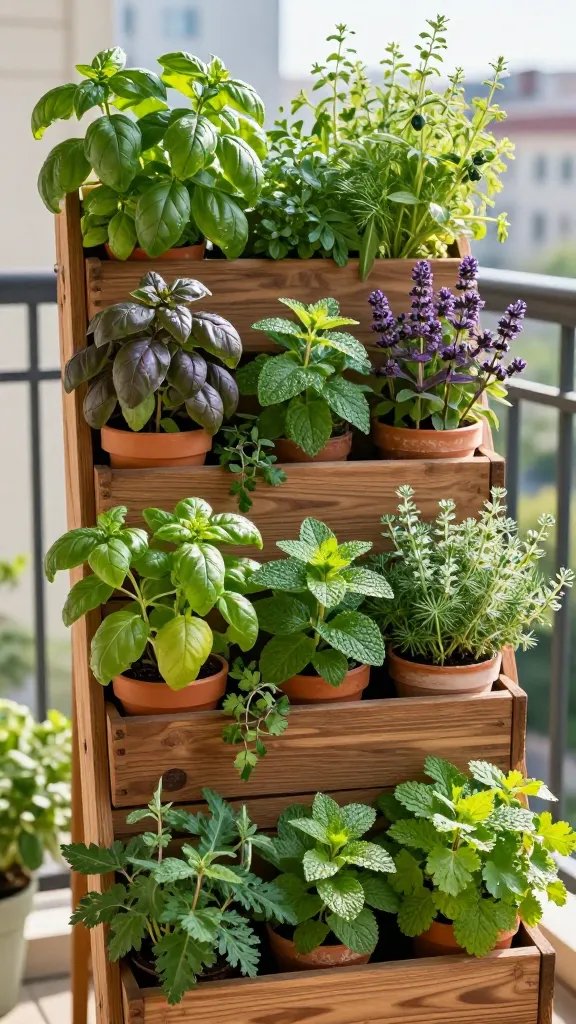
Herbs in a vertical garden make your balcony smell like a market in June. Group culinary stars with compatible thirst levels and you’ll harvest nonstop. You can keep it tidy and still get that messy, aromatic jungle vibe.
Great Pairings
- Lamiaceae (Mint Family): Basil, mint (in containers), thyme, oregano, marjoram, lemon balm
- Apiaceae (Parsley Family): Parsley, cilantro/coriander, dill (edge plant)
Why They Click
- Aromatic oils: Help deter pests and smell amazing
- Similar light: Full sun to bright partial sun
- Flexible watering: Basil and parsley like more water; thyme and oregano like less—position accordingly
Layout Tips
- Top row: Thyme and oregano (dryer, trailing habit).
- Middle rows: Basil and marjoram (moderate water, bushy).
- Lower pockets: Parsley and cilantro (cooler, stays happier).
- Contain mint in its own pocket or insert—mint bullies neighbors.
Perfect for foodies who want fresh flavors within arm’s reach. Trust me, your pasta and mocktails get an instant upgrade.
3. Succulent City: Stonecrop, Aloe, and Cactus Cousins

Want ultra-low maintenance? Go succulent. These families store water, laugh at drought, and turn your wall into a geometric dream.
Great Pairings
- Crassulaceae: Sedum, Echeveria, Crassula (jade), Kalanchoe
- Asphodelaceae: Aloe (dwarf varieties), Haworthia, Gasteria
- Cactaceae: Small epiphytic cacti (Rhipsalis) for trailing texture
Why They Click
- Shared soil: Gritty, fast-draining mix with perlite, pumice, and a bit of bark
- Sparse watering: Let pockets dry completely; water deeply but rarely
- Structure: Rosettes, paddles, and tendrils create striking patterns
Design Moves
- Alternate rosette sizes to avoid a flat look.
- Use trailing Rhipsalis or string-of-buttons to soften edges.
- Angle pockets slightly to improve drainage and reduce rot.
Use this combo for sun-drenched walls or if you forget to water. It’s low-effort, high-impact, IMO the best beginner set for drama.
4. Tropical Texture Stack: Aroids, Ferns, and Peperomia
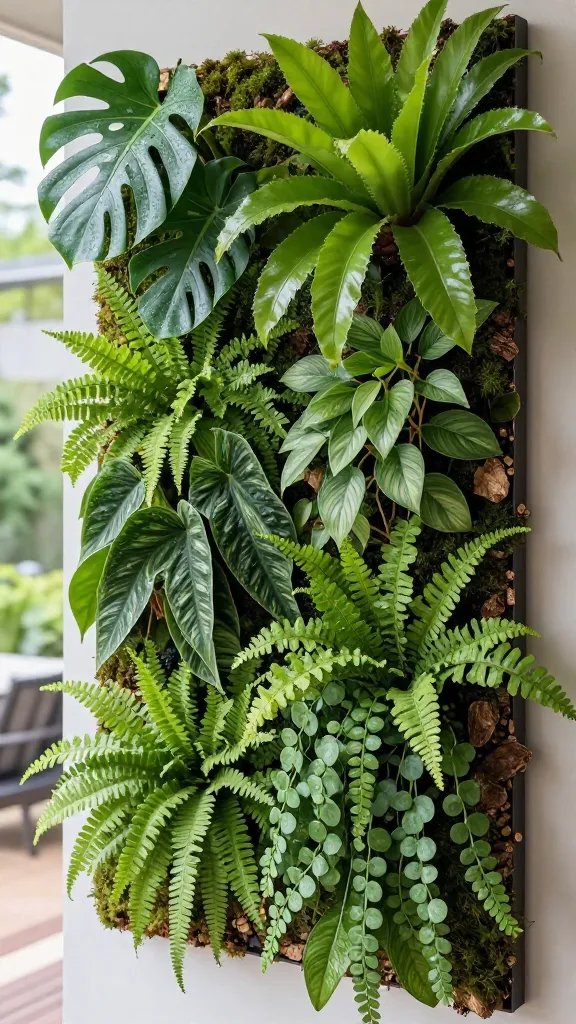
If your space gets bright indirect light and loves humidity, go lush. These tropicals thrive in vertical planters, especially indoors or in shaded patios. Think spa vibes with zero pretension.
Great Pairings
- Araceae (Aroids): Philodendron (small-leaf), Monstera adansonii, Pothos, Scindapsus
- Polypodiaceae and Friends (Ferns): Boston fern, bird’s nest fern, rabbit’s foot fern
- Piperaceae: Peperomia (caperata, rotundifolia)
Why They Click
- Moisture lovers: Enjoy evenly moist, airy substrate with chunky orchid bark and coco coir
- Complementary habits: Vines climb and drape; ferns fill; peperomia buttons the gaps
- Root-friendly: Shallow, fibrous roots adapt well to pockets and felt panels
Care Tips
- Mist lightly or run a small fan to prevent fungus; aim for good airflow.
- Feed quarter-strength monthly; aroids burn easily if you overdo it.
- Place vining aroids high to cascade and ferns mid-lower where it’s cooler.
Choose this if you want a living wall that screams rainforest and hides any ugly corner instantly. Bonus: it’s forgiving if you’re not perfect with watering.
5. Pollinator Party Wall: Nightshade, Allium, and Marigold Support Squad
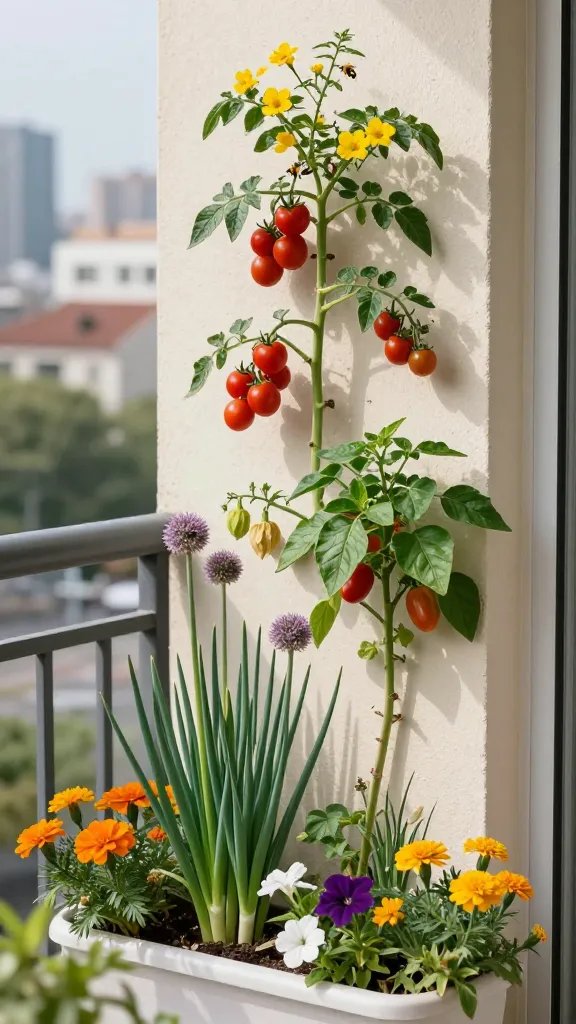
Yes, you can grow fruiting veggies vertically with the right companions. This setup boosts pollinators, manages pests, and gives you snacks. It’s a tiny ecosystem with real payoff.
Great Pairings
- Solanaceae (Nightshade): Cherry tomatoes, peppers (compact), tomatillos (dwarf)
- Alliaceae/Amaryllidaceae (Alliums): Chives, garlic chives, green onions
- Asteraceae: Marigolds (Tagetes), calendula, dwarf zinnias
Why They Click
- Mutual benefits: Alliums deter some pests; marigolds attract beneficial insects
- Vertical training: Peppers and cherry tomatoes trellis easily in pockets
- Shared sun love: They all like 6–8 hours of direct light
Setup Tips
- Top rows: Cherry tomatoes or peppers with clips and soft ties on a mesh grid.
- Mid rows: Marigolds and calendula for pollinators and color.
- Lower rows: Chives and green onions to edge the panel and repel pests.
- Fertilize regularly—fruiting plants are hungry; use a balanced, slow-release plus occasional bloom booster.
Use this combo if you want a productive, colorful wall that doubles as a pollinator magnet. It’s a mini farm with curb appeal—win-win.
Conclusion: Vertical gardens don’t have to be fussy. Match plant families with similar habits and you’ll get a gorgeous, low-drama living wall. Start with one group, dial in your watering, then scale—your space (and your salads) will thank you.