
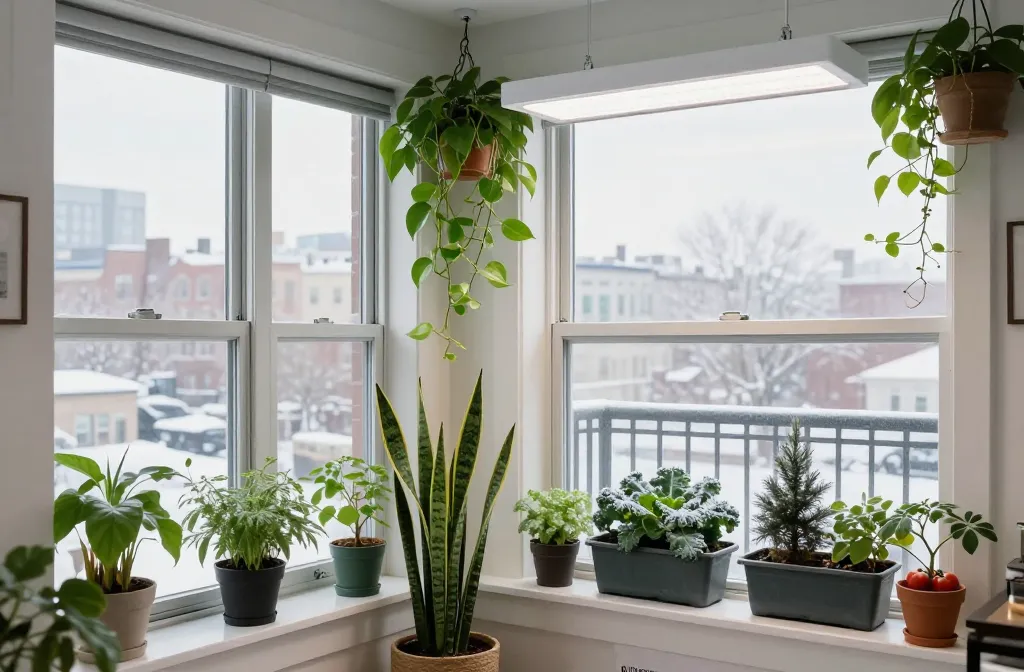
You can grow a legit mini-jungle in the Upper Midwest without a yard, a greenhouse, or a trust fund. You just need smart plant picks and a plan that respects our dramatic seasons. This guide breaks down what to grow indoors and outdoors, how to time it, and how to keep everything alive when winter throws shade. Ready to turn your apartment into a four-season oasis? Let’s dig in.
1. Sun, Shade, And Reality Checks: Read Your Light Like A Pro
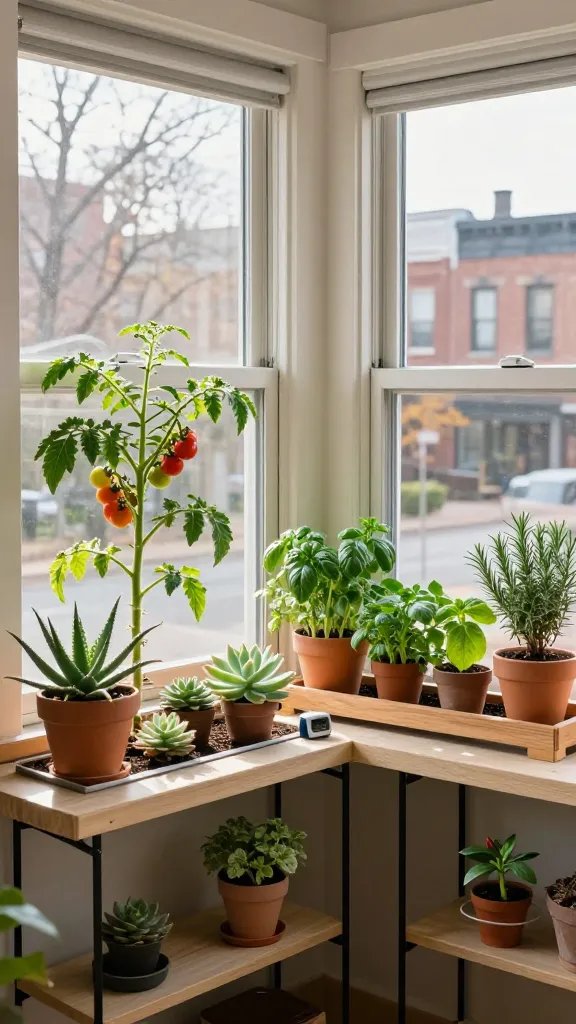
Lighting makes or breaks apartment gardens, especially in the Upper Midwest where winter daylight clocks out early. Nail your light situation first, and the rest gets way easier. You’ll save money, avoid crispy leaves, and actually eat herbs you grew yourself.
How To Test Your Light (Fast)
- South-facing windows: Brightest, best for fruiting plants and succulents.
- East-facing windows: Gentle morning sun—perfect for herbs and leafy greens.
- West-facing windows: Hot afternoon sun—great in spring/fall, can scorch in deep summer.
- North-facing windows: Low light—choose shade-tolerant foliage or use grow lights.
Hold your hand a foot from the wall at midday. Sharp shadow? Bright light lover. Blurry shadow? Medium light. No shadow? Low light plant territory—or hello, grow lights.
Grow Lights Without Regret
- Full-spectrum LEDs with 4000–6500K color temp keep plants happy and your living room non-purple.
- Distance: 8–12 inches from foliage for herbs/greens; 12–18 inches for houseplants.
- Timers: 12–14 hours winter, 10–12 hours spring/fall. Set it and forget it.
Dial in light first, and your plants won’t sulk every February. You’ll get sturdier growth, fewer pests, and fewer “why is this dying” texts to your plant friend.
2. Indoor All-Stars: Herbs, Greens, And Houseplants That Don’t Drama
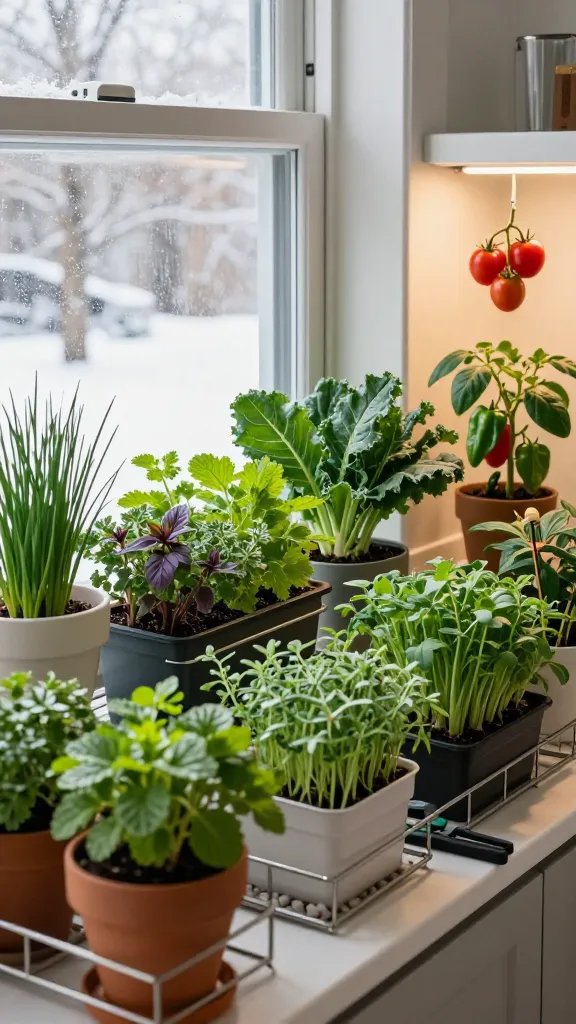
Apartments love compact, fast growers and chill houseplants. Choose plants that forgive missed waterings and low winter light. You’ll harvest more, stress less, and your windowsills will look smugly lush.
Foolproof Edibles For Indoors
- Herbs: Chives, parsley, mint, Thai basil, oregano, thyme. Cilantro bolts—grow it cool and cut young.
- Leafy Greens: Cut-and-come-again mixes, baby kale, spinach, arugula, microgreens.
- Compact Fruit: Dwarf cherry tomatoes and peppers under strong light only—FYI, they’re needy.
Houseplants That Thrive In Upper Midwest Apartments
- Low light champs: ZZ plant, pothos, snake plant, peace lily.
- Medium/bright indirect: Monstera, peperomia, hoya, philodendron.
- Bright light lovers: Aloe, haworthia, jade—great in sunrooms or rigged with lights.
Setup Tips
- Soil: Use high-quality potting mix; add perlite for drainage. Herbs like airy mixes.
- Pots: Always choose drainage holes. Cachepots (decor outer pots) keep shelves tidy.
- Watering: Bottom water when top inch is dry; less in winter. Use room-temp water.
- Feeding: Mild liquid fertilizer every 2–4 weeks during active growth—skip midwinter if growth stalls.
Stick to resilient plants and your indoor garden will survive snowstorms, dry radiators, and your weekend trips, seriously.
Quick Problem Solver
- Leggy, pale growth? Add light or reduce distance to the fixture.
- Brown tips? Low humidity or overfertilizing. Ease up on feed, mist lightly, or add a tray with pebbles + water.
- Gnats? Let soil dry between waterings, add a light sand layer, and use sticky traps.
Grow what fits your light and vibe, and you’ll harvest year-round salads and enjoy glossy leaves without drama.
3. Balcony And Patio Magic: Containers That Crush Our Seasons
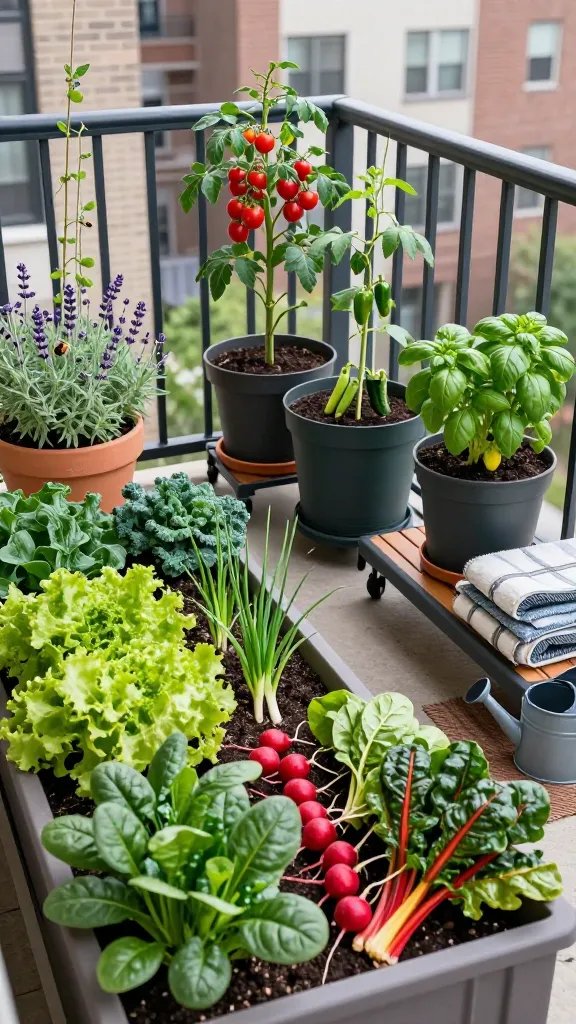
Short season? No problem. Containers warm up faster than ground soil, so you’ll harvest earlier and avoid ground pests. Plus, you can drag pots inside during surprise cold snaps—because the Upper Midwest loves a May frost.
Best Balcony Crops (Zone 3–5 Friendly)
- Cool-season (April–June, September): Lettuce, spinach, radishes, peas, scallions, kale, Swiss chard.
- Warm-season (after last frost): Cherry tomatoes, bush beans, dwarf peppers, cucumbers (compact varieties), basil.
- Pollinator pots: Lavender, calibrachoa, marigolds, zinnias, alyssum—pretty and useful.
Containers And Soil
- Size matters: 5+ gallons for tomatoes/peppers; 10+ gallons for cucumbers. Smaller pots dry too fast.
- Material: Fabric grow bags drain fast and root-prune—great for balconies.
- Soil: Use potting mix, not garden soil. Mix in compost and slow-release fertilizer at planting.
Watering + Wind Hacks
- Water deeply until it drains; mulch with shredded leaves or straw to hold moisture.
- Wind protection: Group pots, add a trellis screen, or tuck plants behind railings.
- Self-watering planters save busy weeks and heat waves, IMO they’re worth it.
Frost Timing (Rough Guide)
- Zone 3–4 last frost: Mid-May to early June.
- Zone 5 last frost: Early to mid-May.
- First frost: Late September to October—cover plants or bring them in.
Containers unlock earlier harvests and flexible setups—even on tiny balconies. You’ll eat more from less space, faster.
4. The Seasonal Game Plan: Seed Starting, Transplants, And Overwintering
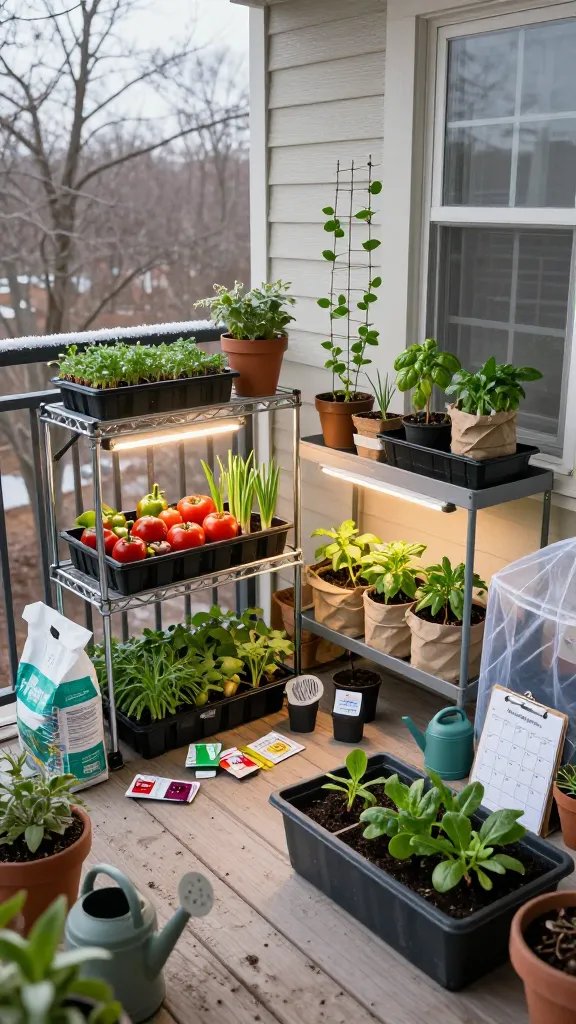
Timing makes your garden feel effortless. By staggering plantings and using a simple indoor-start calendar, you squeeze more harvest from a short growing season. Bonus: you won’t panic-buy sad seedlings in May.
Simple Upper Midwest Calendar (Adjust By Zone)
- Late February–March: Start onions, leeks, and slow herbs indoors. Start microgreens anytime.
- March–April: Start tomatoes, peppers, and basil indoors under lights.
- April: Direct sow peas, spinach, radishes in containers if temps cooperate; cover during frosts.
- Mother’s Day ± 1–3 weeks: Harden off and transplant warm-season crops after danger of frost.
- July: Succession sow greens after heat breaks; start fall crops like kale and chard.
- September: Bring tender houseplants inside before nights dip below 50°F. Harvest, dry, or freeze herbs.
Hardening Off (Don’t Skip)
- Start with 1–2 hours of shade outdoors, increase daily exposure over 7–10 days.
- Introduce morning sun first, then longer sun windows.
- Protect from wind and cold nights during the process.
Overwintering Wins
- Herbs: Bring in rosemary, basil won’t love winter—reseed late winter.
- Peppers: You can overwinter dwarf peppers indoors with strong light; prune lightly.
- Bulbs/Tubers: Store dahlia tubers or canna in a cool, dark space; replant in spring.
With a simple schedule, you double your harvests and avoid the “oops, frost” heartbreak. Trust me, planning once saves you all season.
5. Small-Space Layouts: Vertical, Modular, And Actually Cute
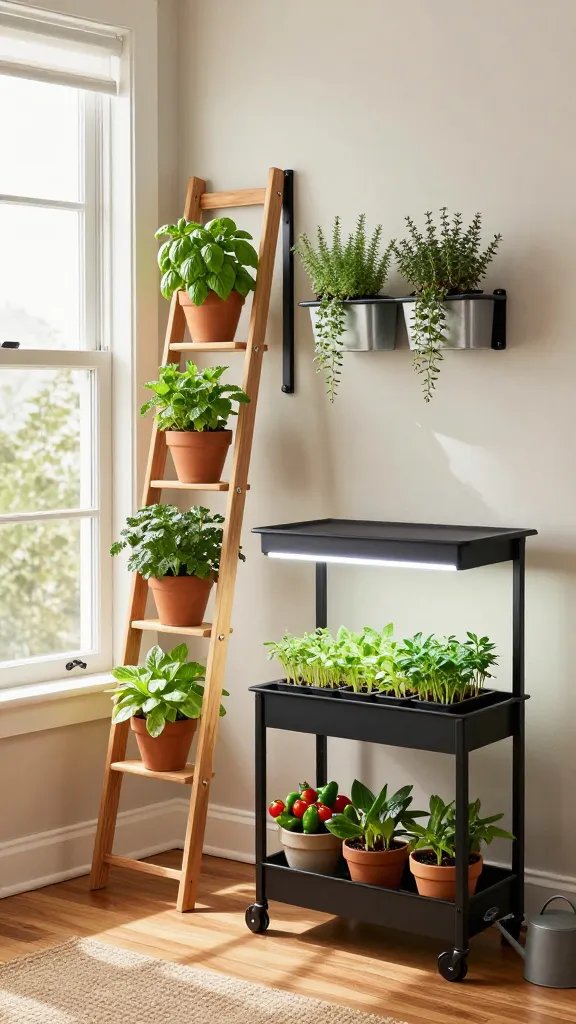
Even the tiniest apartment can fit a productive garden that looks intentional, not chaotic. Aim for vertical growth, modular pieces, and multipurpose setups that move with the seasons. You’ll create zones that feel styled and functional.
Indoor Layout Ideas
- Window Herb Ladder: Tiered shelves with small pots—basil top, parsley middle, mint bottom.
- Magnetic or Rail Systems: Metal strips or kitchen rails for small planters by sunny windows.
- Grow-Light Cart: A two- or three-tier rolling cart with LEDs for greens and seedlings.
Balcony/Patio Layouts
- Vertical Trellis Wall: Snap peas in spring, cucumbers in summer, string lights in fall—done.
- Corner Power Pot: 10–15 gallon pot with cherry tomato, basil underplanting, and marigolds.
- Rail Planters: Leafy greens and flowers for instant curb appeal and salads.
Design Tips That Save Space
- Plant stacking: Tall plants in back, medium in middle, trailing in front of containers.
- Companions: Basil with tomatoes, nasturtiums with cucumbers, chives near everything.
- Color + Texture: Mix glossy foliage with ferny herbs and bright flowers for “I planned this” energy.
Tools And Supplies That Pull Weight
- Moisture meter: Avoid overwatering—especially in winter.
- Snips and twine: Clean harvests, tidy vines, zero drama.
- Lightweight hose or watering can: Your back will thank you.
A smart layout turns limited square footage into a lush, productive zone that’s easy to maintain and nice to look at. Yes, you can have form and function.
Ready to grow like a Midwestern plant whisperer? Start with your light, pick forgiving plants, and follow the seasonal rhythm. You’ll eat fresher, brighten your space, and honestly, your balcony will become everyone’s favorite hangout. Now go get those seeds and make it happen!