
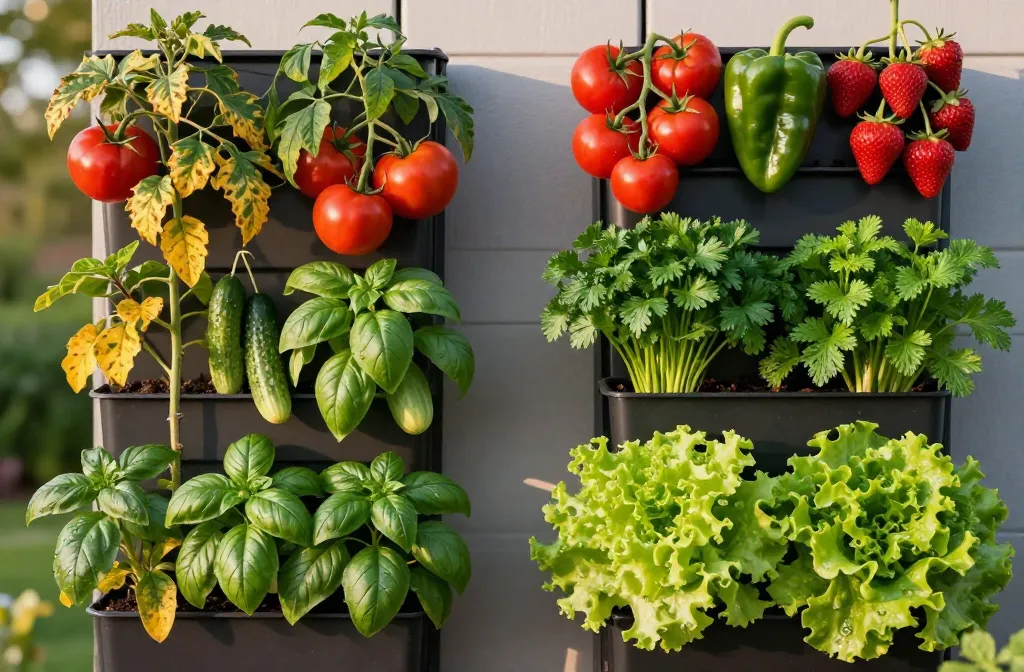
Vertical gardens look dreamy until your cucumbers choke your basil and your strawberries sulk in the shade. Companion planting can save your setup—or sabotage it—depending on a few make-or-break choices. Let’s skip the heartbreak and keep your wall of greens thriving. Below are the five biggest “don’ts” that cause chaos in vertical setups, and what to do instead.
1. Stacking Sun Hogs With Shade Lovers
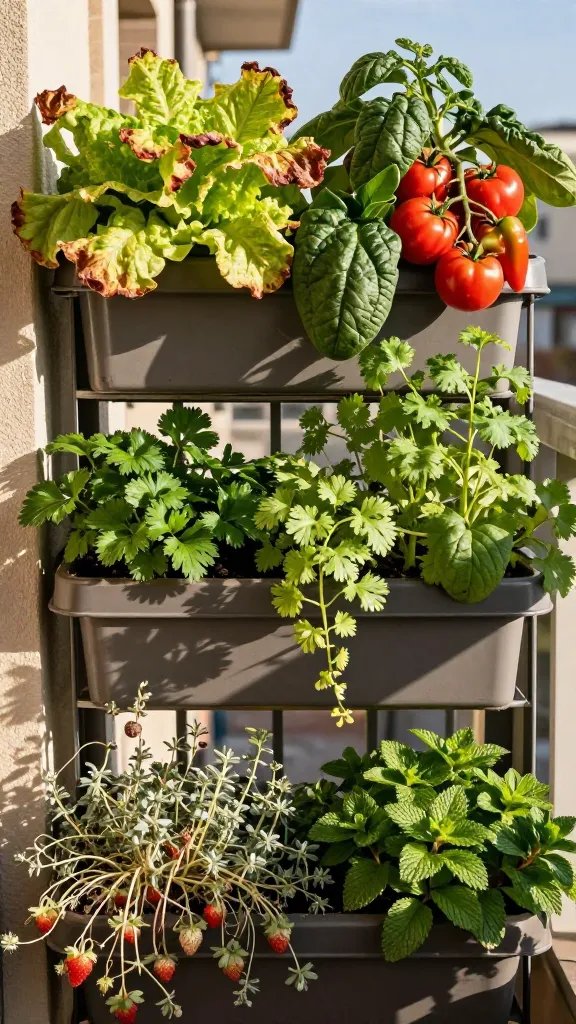
Light makes or breaks a vertical garden faster than pests do. Plants arranged top to bottom get wildly different light exposure, so mixing sun-worshippers with shade-lovers in the same column can doom one or both. You want plants that agree on sunshine, or you’ll babysit a wall of drama.
Key Points
- Top tiers get the most light and heat—perfect for tomatoes, peppers, strawberries, and thyme.
- Mid tiers suit partial-sun herbs like parsley, cilantro, and chives.
- Lower tiers thrive with shade-tolerant greens: lettuces, spinach, arugula, and mint (contained!).
Don’t stack tomatoes over lettuce unless you want a salad of bitterness and bolting. Group by light needs within each vertical column, not just across the entire wall. FYI, reflective walls or pale backdrops bounce light lower—use that to your advantage.
Quick Fix
- Place sun hogs up high; plant shade champs down low.
- Use vining sun-lovers (like cucumbers) on trellised outer edges so they don’t shade neighbors.
- Rotate planters seasonally as the sun angle shifts.
Do this and you get steady harvests without crispy basil or sulky greens. Your photos will also look way better, IMO.
2. Ignoring Root Behavior In Tight Spaces
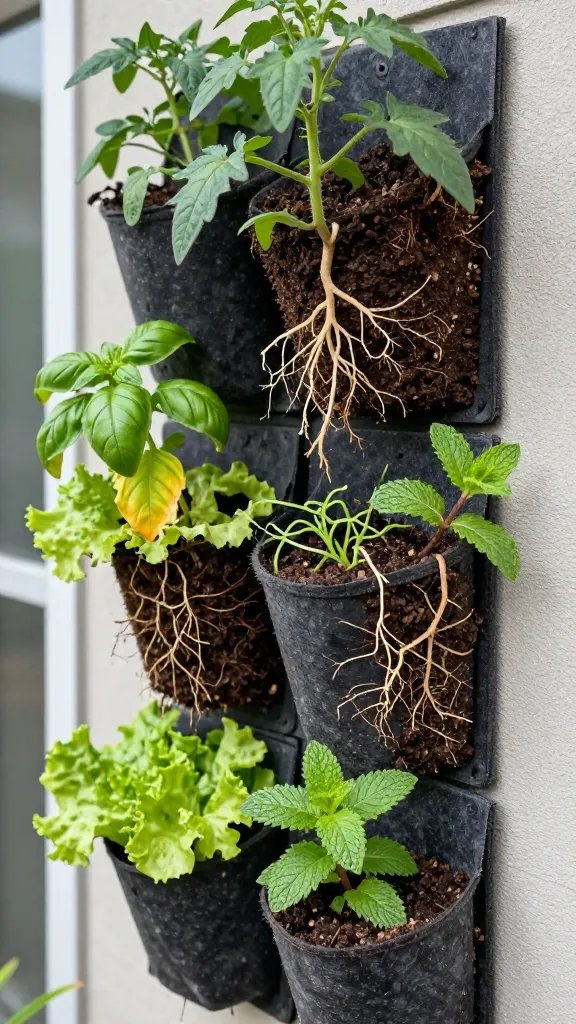
Vertical planters compress root zones, which magnifies incompatibilities. Some plants spread shallow and wide; others dive deep and fast. Pair the wrong roots and you create nutrient turf wars.
Watch Out For
- Deep feeders like tomatoes, cucumbers, and eggplant that pull heavy nutrients and water.
- Shallow sippers like lettuce and basil that hate being constantly disturbed.
- Thugs like mint that invade every pocket unless caged.
In a narrow pocket, a tomato’s roots will happily invade the basil’s space and starve it. Meanwhile, carrots in tiny pockets twist themselves into veggie modern art.
Smart Pairings
- Deep + shallow with barriers: Tomato with basil or chives—only if each sits in its own pocket or insert.
- Shallow + shallow: Lettuce with cilantro or dill for gentle cohabitation.
- Aromatic buffers: Thyme or oregano between heavy feeders to deter pests and reduce competition.
Use inserts or liners to give bully roots boundaries. You’ll get cleaner harvests and fewer sad, stunted plants.
3. Overcrowding Because “It’ll Fill In”
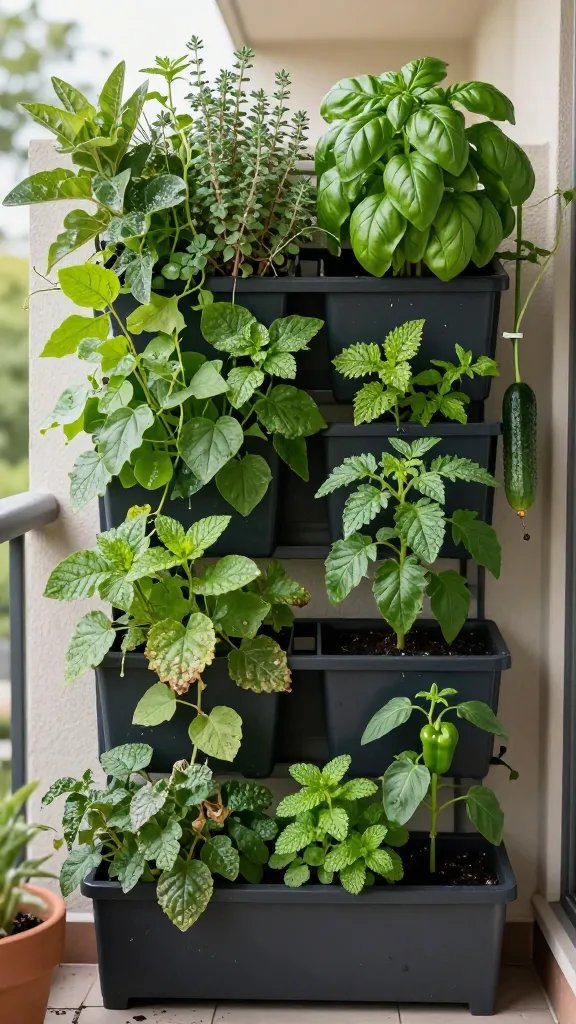
Vertical gardens look sparse on day one and jungle-thick by week three. If you cram seedlings for instant curb appeal, you’ll tank air flow and invite powdery mildew, aphids, and drama.
Spacing Rules That Actually Work
- Leafy greens: 6–8 inches apart. You can cut-and-come-again tighter, but leave breathing room.
- Herbs: Basil 8–10 inches; thyme and oregano 6–8 inches; mint only in its own container.
- Fruiting plants: Tomatoes and peppers one per large pocket or pot; cucumbers one per column with trellis support.
Think “tall to small” and “front to back.” Put bulkier, vining, or fruiting plants where they can sprawl outward, and keep compact herbs accessible for frequent trims. Bonus: good spacing makes watering more even and reduces leaf splash that spreads disease.
Pro Tips
- Choose compact or dwarf varieties labeled for containers.
- Train vines away from lower tiers to protect light and airflow.
- Prune ruthlessly. If it rubs, it rots. If it shades, it fades.
Avoid the temptation to “just tuck one more in.” Less crowding equals more harvest—seriously.
4. Mixing Water Guzzlers With Drought Divas
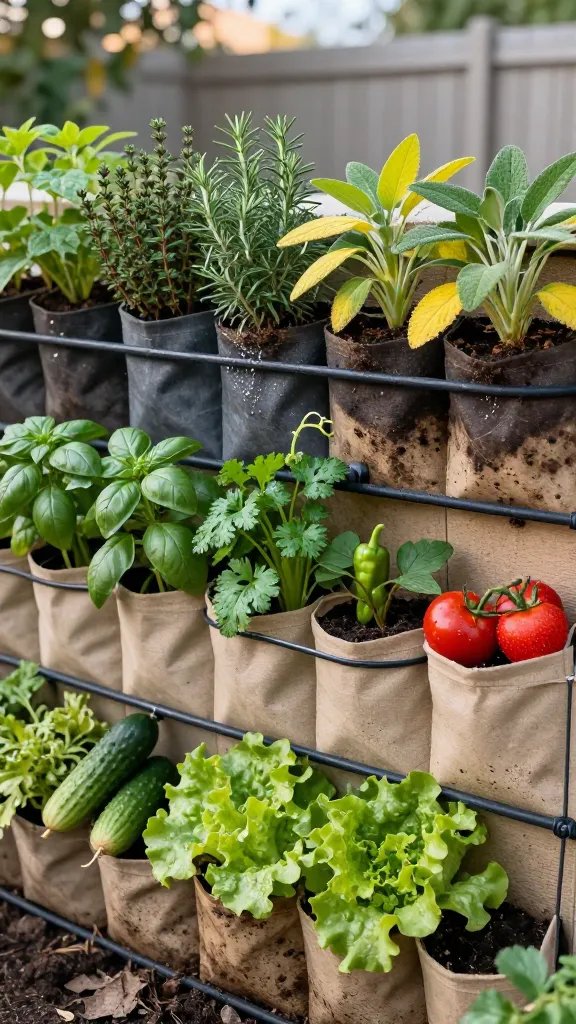
Vertical systems often share irrigation lines, which sounds convenient until your thyme drowns while your cucumbers beg for a drink. Companion planting depends on matching thirst levels as much as pest control.
Group By Hydration, Not Just Vibes
- High water needs: Lettuce, spinach, cucumbers, strawberries, tomatoes (consistent moisture).
- Moderate: Basil, parsley, cilantro, peppers.
- Low: Thyme, oregano, rosemary, sage. These hate wet feet.
If you must mix, place drought-tolerant herbs in upper or outer pockets that dry faster and keep moisture-lovers in deeper pockets with more media. Also, media matters: a sandy mix drains fast for herbs, while moisture-retentive mixes help leafy greens.
Watering Strategy
- Use separate zones or emitters if possible: low-flow for Mediterranean herbs, regular for greens.
- Layer mixes: add perlite for drainage or coconut coir/compost for water retention as needed.
- Water early morning. Evening watering + cramped foliage = fungus party.
Match the thirst, and everything stays perky. Your rosemary will thank you by not pretending to be a stick.
5. Assuming Classic Companions Work The Same Vertically
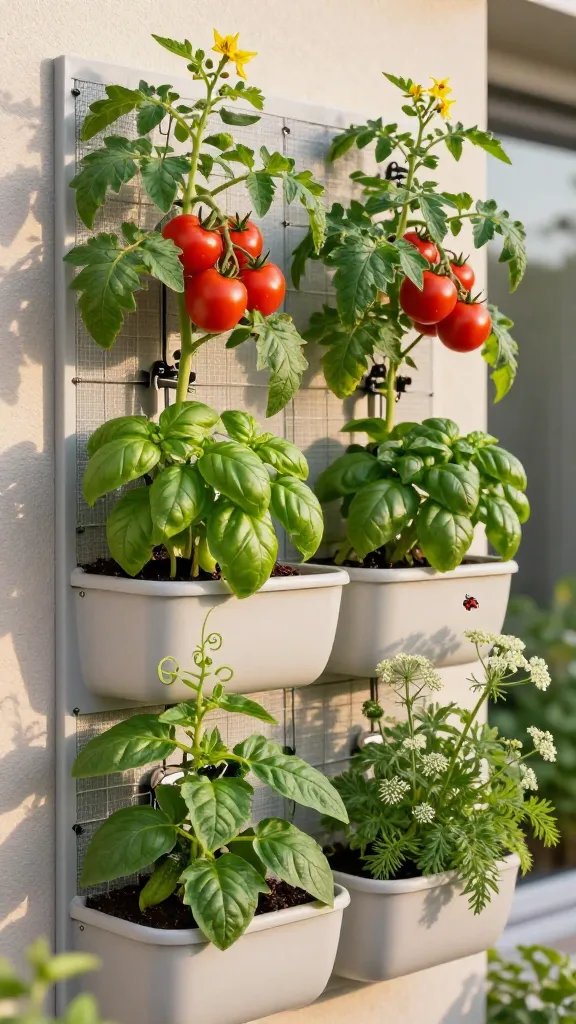
Classic pairings—like the famous tomato-basil duo—don’t behave exactly the same on a wall. Vertical setups change airflow, light angles, nutrient distribution, and pest movement. You need vertical-specific tweaks, not blind faith in old charts.
Popular Pairings, Vertical Edition
- Tomato + Basil: Great aroma and pest deterrence, but keep them in adjacent pockets to avoid root competition. Put tomato higher, basil mid-level for gentler light and easier harvesting.
- Cucumber + Dill: Dill attracts beneficial insects. Train cucumber outward and upward; tuck dill to the side pockets where it won’t shade the vine.
- Strawberry + Thyme: Thyme spills beautifully and deters pests. Give strawberries a deeper pocket; thyme can dangle from shallower edges.
- Lettuce + Chives: Chives repel some pests and don’t hog space. Keep chives at the same tier or slightly above; avoid overshadowing.
And the “nope” list? Don’t put fennel with anything (it’s allelopathic), skip potatoes entirely in vertical pockets (disease risk and space hog), and keep mint caged or separate, always.
Extra Vertical-Savvy Moves
- Stagger bloom times to support pollinators along the whole panel: early dill, mid basil, late thyme.
- Feed strategically: Use slow-release organic fertilizer for stable feeding across tiers; spot-feed heavy fruiters.
- Pest patrol: Plant marigolds or nasturtiums at edges to lure pests away and add color.
Adjust the classics to your wall’s microclimate and you’ll get flavor, fragrance, and fewer pest flare-ups. Trust me, it’s worth the tiny tweaks.
Ready to build a happier vertical jungle? Skip these mistakes and pair plants with the same sun, sip, and space needs. You’ll harvest more, fuss less, and actually enjoy your wall garden instead of apologizing to it. Go plant the good stuff and watch it climb.