
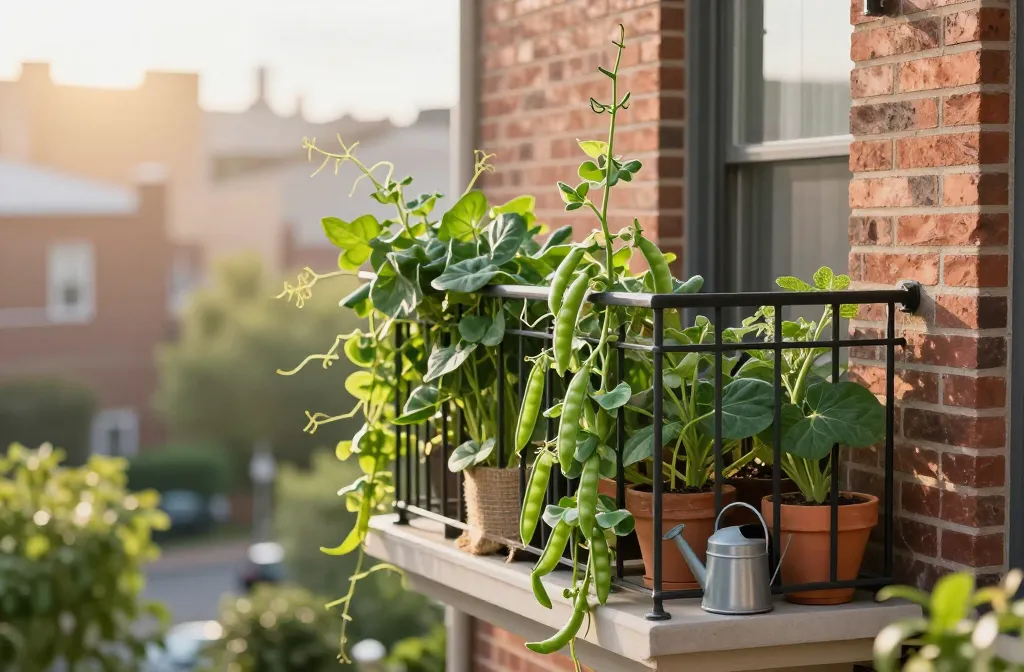
Your shady balcony doesn’t need to be a plant graveyard. Plenty of climbing veggies actually thrive with a few hours of indirect light. They’ll wrap around rails, soften walls, and throw you a harvest that tastes better than anything store-bought. Ready to turn your low-light nook into a snackable jungle?
1. Peas That Pop In The Shade
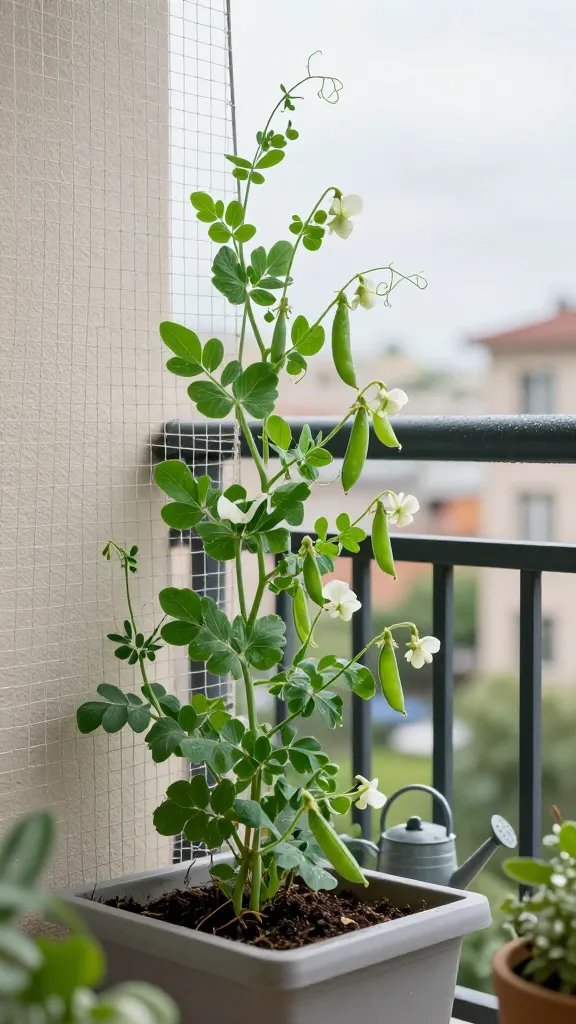
Peas adore cool temps and handle shade way better than most summer divas. They climb fast, look charming, and reward you with sweet pods you can eat right off the vine. Plus, they enrich the soil with nitrogen—basically the veggie version of a good roommate.
Best Varieties And Setup
- Snow peas and sugar snaps do great with 3–5 hours of dappled light.
- Choose compact climbers like ‘Sugar Ann’ or ‘Oregon Sugar Pod’.
- Use a narrow trellis or balcony netting—nothing fancy. They’ll hook on fast.
Water consistently and keep them slightly cool; afternoon shade helps prevent bitterness. Harvest young and often for the sweetest crunch.
Benefits: reliable spring and fall harvests, minimal fuss, and gorgeous tendrils that make your railing look like a cottage-core movie set.
2. Spinach On A String (Malabar Spinach)
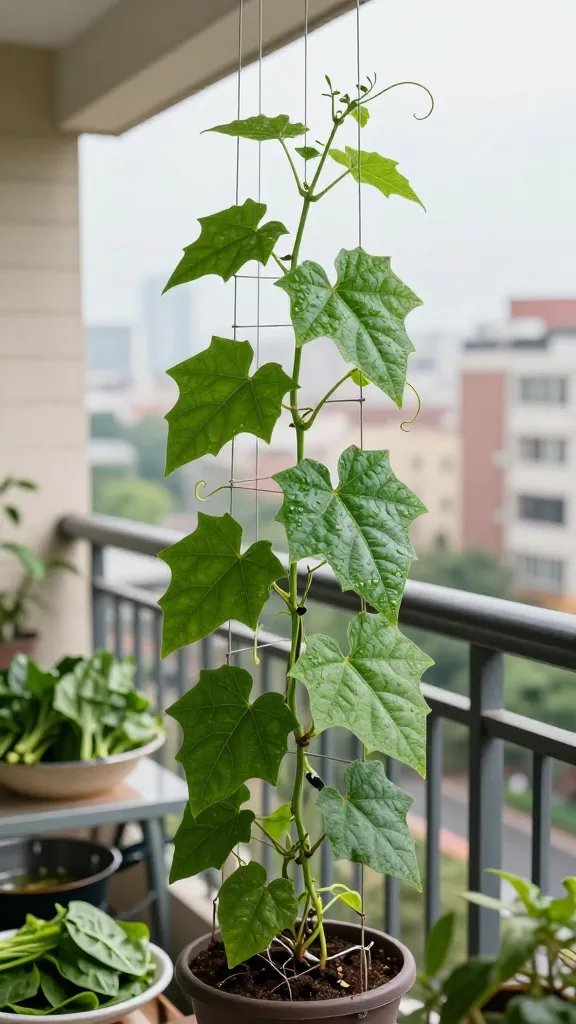
Regular spinach sulks in heat, but Malabar spinach climbs like it’s training for a marathon. It isn’t true spinach, but the leaves look and taste similar—slightly succulent, mild, and perfect for stir-fries. It tolerates partial shade and humidity like a champ.
Tips For Happy Vines
- Give it a sturdy vertical support—string lines or a grid works great.
- Keep soil evenly moist; it loves a little extra water in warm weather.
- Pinch tips to encourage bushier growth and more harvestable leaves.
In salads, use young leaves; save larger ones for cooking. FYI, purple-stemmed types like ‘Rubra’ look stunning against brick or metal railings.
Benefits: fast coverage, continuous greens all summer, and a leafy look that screams “urban jungle.”
3. Climbing Nasturtiums That You Can Eat (Yes, Really)
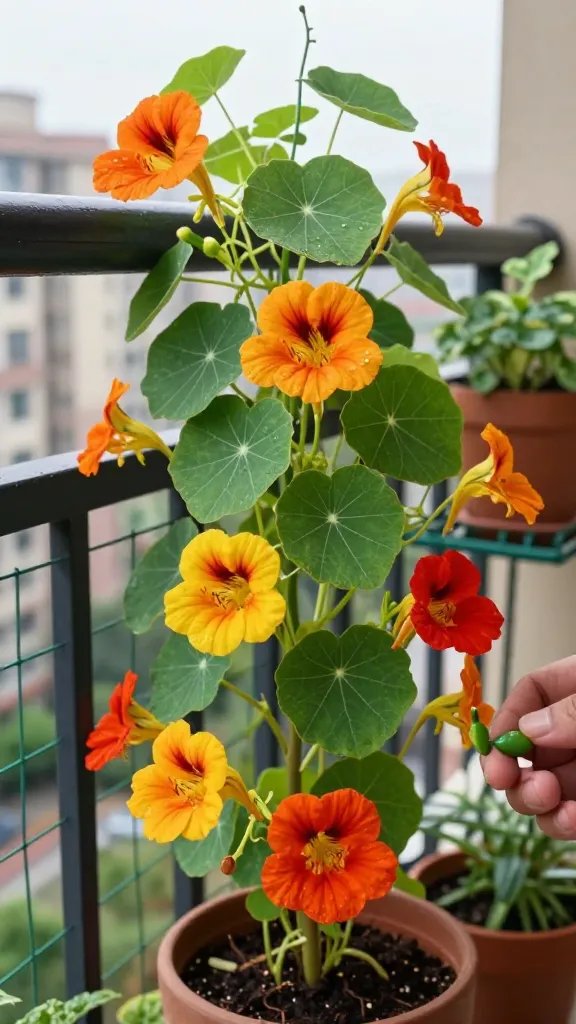
Nasturtiums are technically flowers, but they moonlight as a spicy salad green and mild caper stand-in. The vines happily scramble up a trellis in part shade, and the blooms bring pollinators plus serious color. They give you edible leaves, flowers, and seed pods—basically the plant version of a three-for-one deal.
How To Get The Most Flavor
- Less fertilizer = more flowers. Keep it lean for better bloom and flavor.
- Train stems gently; they’ll cling to netting or wind through railings.
- Harvest flowers and leaves young for a peppery bite; pickle immature pods.
Pick a trailing variety like ‘Tall Climbing’ to cover space fast. Seriously, your salads will never look boring again.
Benefits: edible, ornamental, and shade-tolerant enough to keep things blooming where other veggies pout.
4. Pole Beans That Don’t Need Full Sun
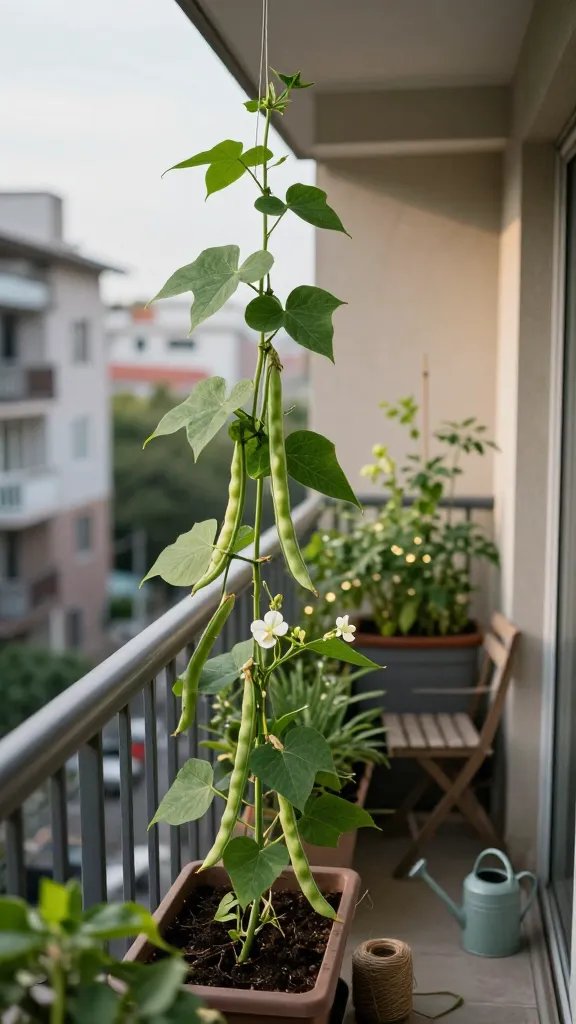
Beans want sun, but many pole beans still produce in bright shade or 3–5 hours of light. They’re polite climbers with slim footprints—perfect for tight balconies. You’ll get flowers, pods, and a living green screen that softens your view.
Varieties And Care
- Try ‘Blue Lake Pole’, ‘Fortex’, or yardlong beans if your shade still gets warm afternoons.
- Use a vertical string trellis; tie the base to encourage the first climb.
- Keep soil evenly moist and feed lightly with a balanced fertilizer mid-season.
Harvest frequently to keep vines productive and tender. IMO, few balcony crops feel as satisfying as a bowl of freshly snapped beans.
Benefits: tall coverage, steady yields, and an easy way to turn rails into a snack machine.
5. Cucumbers That Chill In Partial Shade
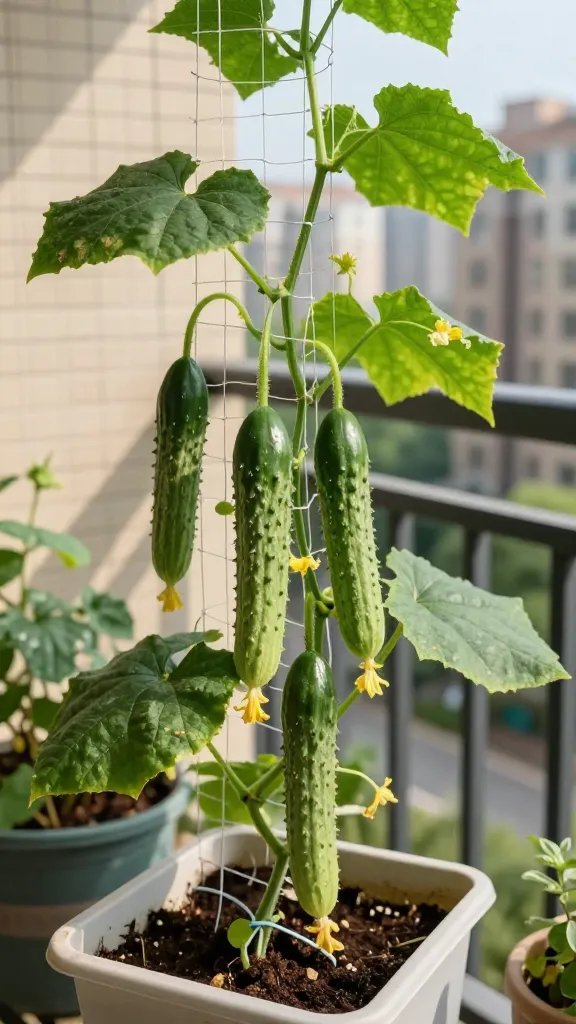
Shade-tolerant cucumbers? Yep—look for compact, thin-skinned types that don’t need blazing sun to set fruit. Partial shade helps reduce bitterness and keeps vines calmer in heat. They climb neatly and bring a crisp, cool crunch to any balcony lunch.
Go For The Right Types
- ‘Diva’, ‘Telegraph’, and mini cucumbers do nicely with morning light or bright shade.
- Use vertical netting so fruit hangs straight—less curling, fewer blemishes.
- Mulch to keep roots cool and water consistent to avoid bitterness.
Prune lightly to channel energy into fruiting and airflow. Hand-pollinate with a small brush if pollinators can’t find your balcony.
Benefits: crisp harvests, manageable vines, and zero garden envy when you bite into your first homegrown cuke.
6. Climbing Kale And Relatives (Ceylon/Tree Kale)
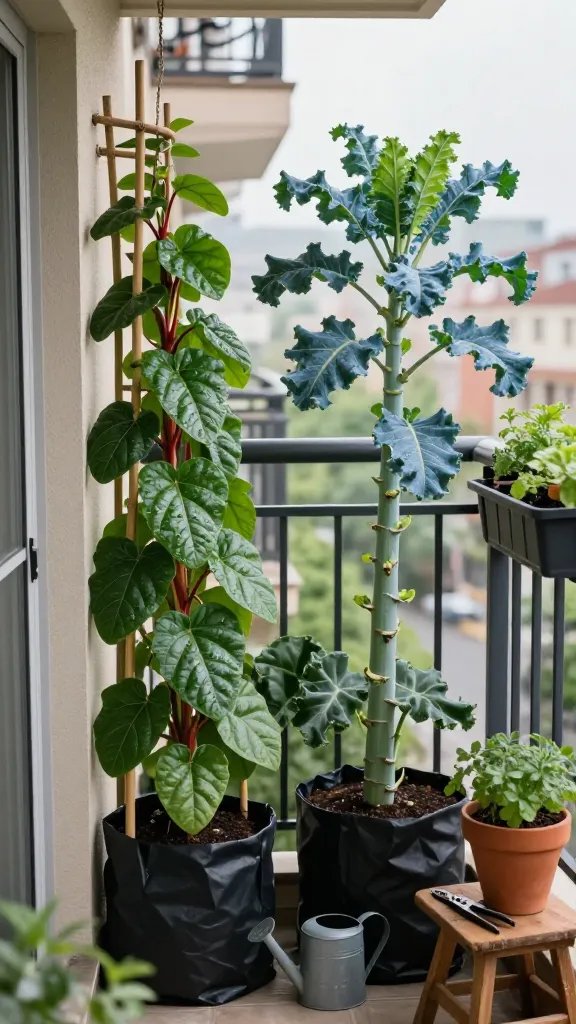
Regular kale doesn’t climb, but Ceylon spinach (Basella) and perennial/tree kale give you vertical greens without full sun. They don’t mind partial shade and keep pumping out leaves for months. You get nutrition-dense greens with a small footprint—win, win.
What To Grow And How
- Ceylon spinach (similar to Malabar but milder) climbs with twining stems.
- Tree kale (like walking stick kale) can be staked tall and pruned for leaves.
- Use sturdy supports and harvest lower leaves first to encourage height.
They handle light shade with ease and bounce back fast after trimming. Add leaves to soups, sautés, and smoothies—your future self will thank you.
Benefits: continuous greens, sculptural form, and that “what is that?!” curiosity from neighbors.
7. Tomatoes That Tolerate Less Light (Cherry And Currant Types)
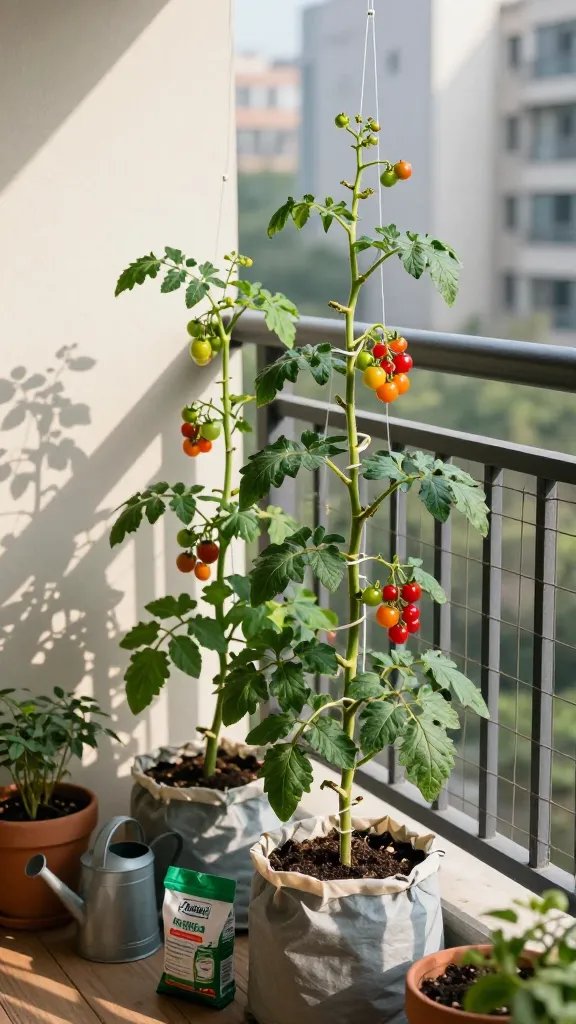
Tomatoes love sun, but compact indeterminate cherries still set fruit with 4–5 hours of light. They climb strings like pros, and the smaller fruits ripen faster in shadier spots. Think sweet snacking tomatoes you grab every time you water.
Dial In The Details
- Choose vigorous varieties: ‘Sweet Million’, ‘Sungold’, or currant tomatoes.
- Use the Florida weave or a single-string trellis with soft ties.
- Prune to one or two leaders for airflow and better light penetration.
Feed lightly but regularly; consistent moisture prevents splitting. Hand-pollinate with a gentle shake of the trellis during midday for better fruit set—trust me, it helps on wind-sheltered balconies.
Benefits: big flavor in small spaces, fast ripening, and the smug joy of homegrown tomatoes despite “not enough sun.”
General Balcony Setup Tips
- Light Reality Check: Track hours of direct and indirect light. Morning sun plus bright afternoon shade beats harsh all-day glare.
- Containers: Use 10–20 L pots for fruiting crops; 5–10 L works for leafy climbers.
- Soil: High-quality potting mix with added compost. Avoid garden soil—it compacts and suffocates roots.
- Water: Deep, infrequent watering for fruiting crops; steady moisture for leafy vines.
- Vertical Gear: Nylon netting, bamboo teepees, or paracord lines anchored to railing brackets.
- Fertilizer: Slow-release granular at planting, then a gentle liquid feed every 2–3 weeks.
- Pest Patrol: Check undersides of leaves. Use neem or insecticidal soap at dusk if needed.
Smart Pairings For Shade
- Peas + Nasturtiums: Cool-season synergy and edible flowers under a shared net.
- Malabar/Ceylon Spinach + Cucumbers: Greedy climbers that like similar water schedules.
- Tomatoes + Basil (Bush Type): Basil acts as a living mulch; both tolerate bright shade.
Ready to turn your balcony into a vertical buffet? Start with two or three of these climbers, string up a simple trellis, and let them do their thing. Shade doesn’t stand a chance when you choose the right plants—your future snack bowl is about to overflow.