
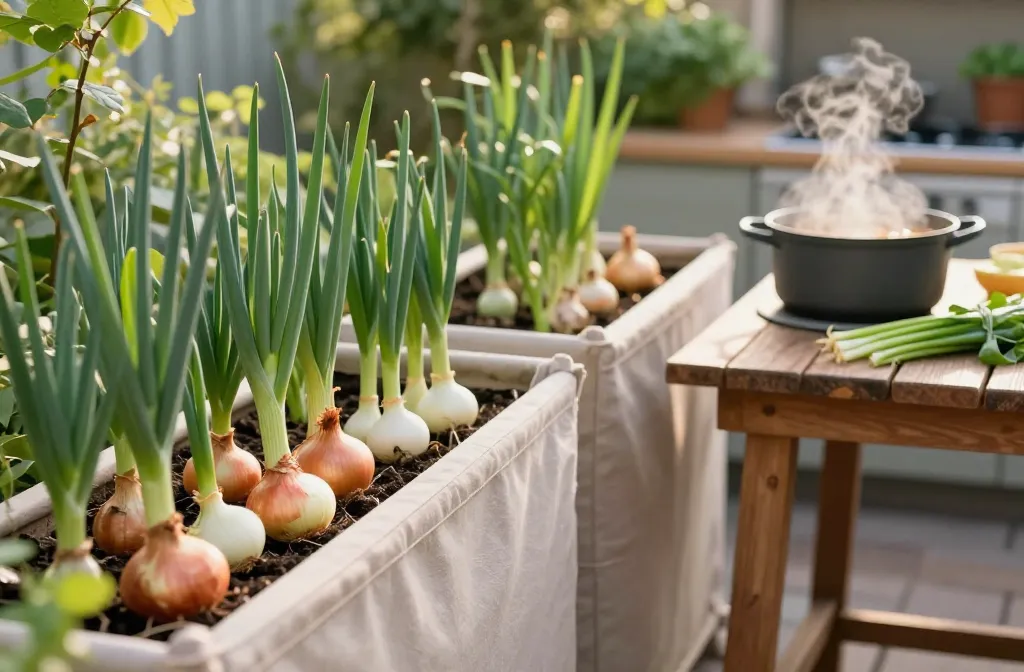
Hungry for soups that taste like you simmered them in a countryside kitchen? Let’s build a container garden packed with veggies that jump into your pot all year long. We’ll keep it simple, compact, and ridiculously practical—because weeknight soup deserves fresh flavor. Ready to turn your patio into a simmering, slurpy pantry?
1. Build Your Base: Aromatic Allium Trio
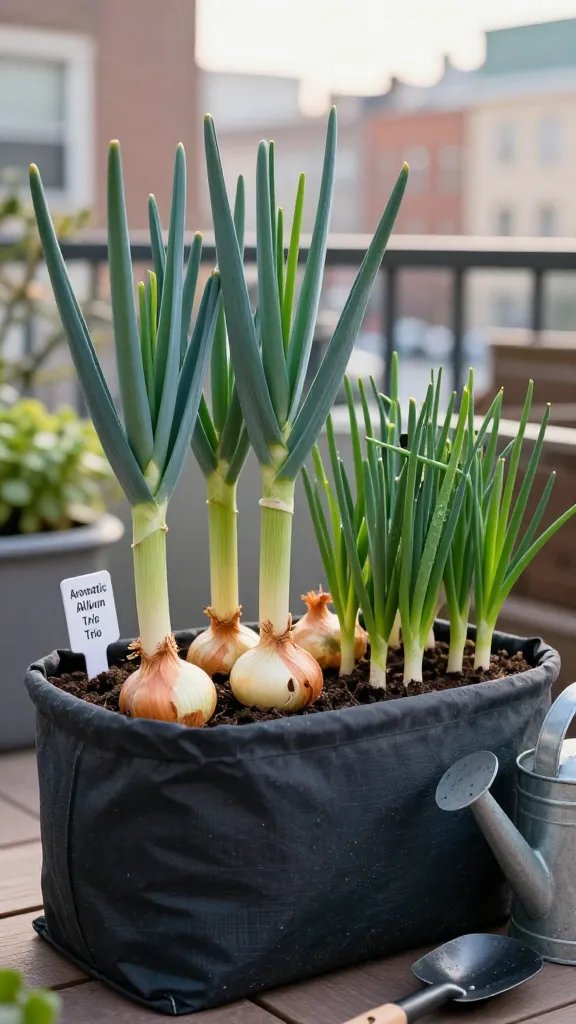
Start with the flavor backbone that makes every soup taste pro-level: onions, leeks, and green onions. They’re compact, cold-tolerant, and incredibly productive in containers. Plant these once, and your soup game levels up for months.
What To Grow
- Bulb Onions (day-neutral varieties for flexibility)
- Leeks (long harvest window, sweet and silky)
- Green Onions/Scallions (fast-growing and cut-and-come-again)
Container & Setup
- Size: 10–15 gallon fabric pot or deep window box for leeks; 8–10 inches deep for scallions
- Soil: Fluffy mix with compost; leeks love rich soil
- Spacing: Onions 4–6 inches apart; leeks 6 inches; scallions 1–2 inches
Plant leeks deep and hill soil around them to blanch the stems. Scallions regrow fast—harvest outer stalks and let the center keep producing. Add these to virtually any broth and watch flavors pop.
Best for: Classic chicken soup, potato-leek soup, quick ramen toppings.
2. Leafy Lifesavers: Greens That Keep Giving
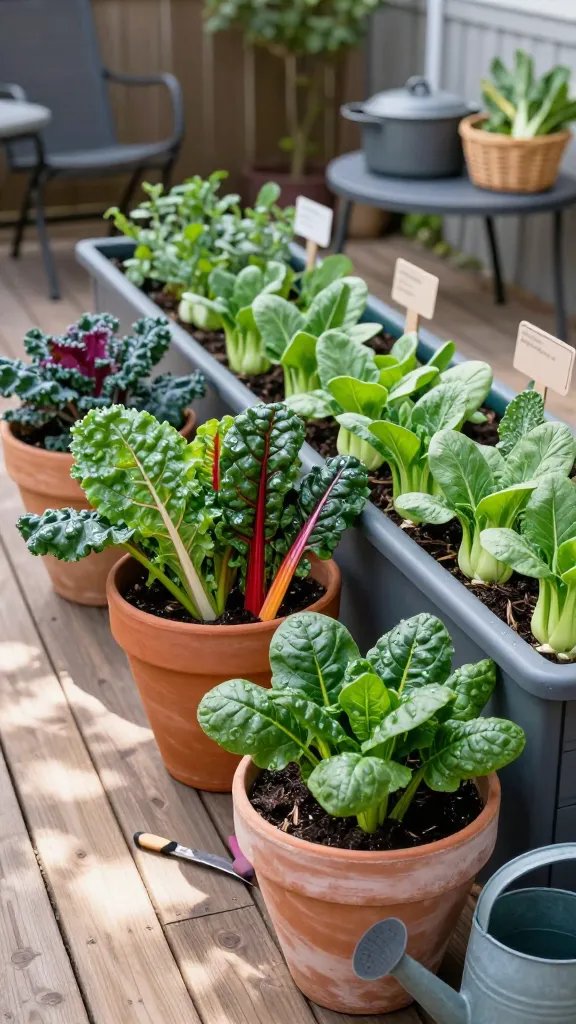
Greens add color, nutrients, and that farm-to-bowl vibe. The right varieties thrive in containers and handle cool seasons, which means more harvests and fewer grocery runs. Bonus: they’re forgiving for new gardeners.
What To Grow
- Kale (Lacinato or Red Russian—tender and reliable)
- Spinach (fast-growing, loves cool temps)
- Swiss Chard (rainbow stems = instant food styling)
- Pak Choi/Bok Choy (baby heads for quick stir-fry soups)
Container & Setup
- Size: 7–10 gallon pots for kale/chard; window boxes for spinach; 10-inch pots for bok choy
- Sun: 4–6 hours minimum; afternoon shade prevents bolting
- Spacing: Kale/chard 12 inches; spinach 3–4 inches; bok choy 6–8 inches
Harvest outer leaves regularly and let plants keep producing. Spinach and bok choy shine in shoulder seasons, while kale and chard endure most weather with a light frost blanket.
Best for: Tuscan bean soup, miso soup with greens, sausage-and-kale stew.
3. Soup Sweethearts: Roots That Make It Hearty
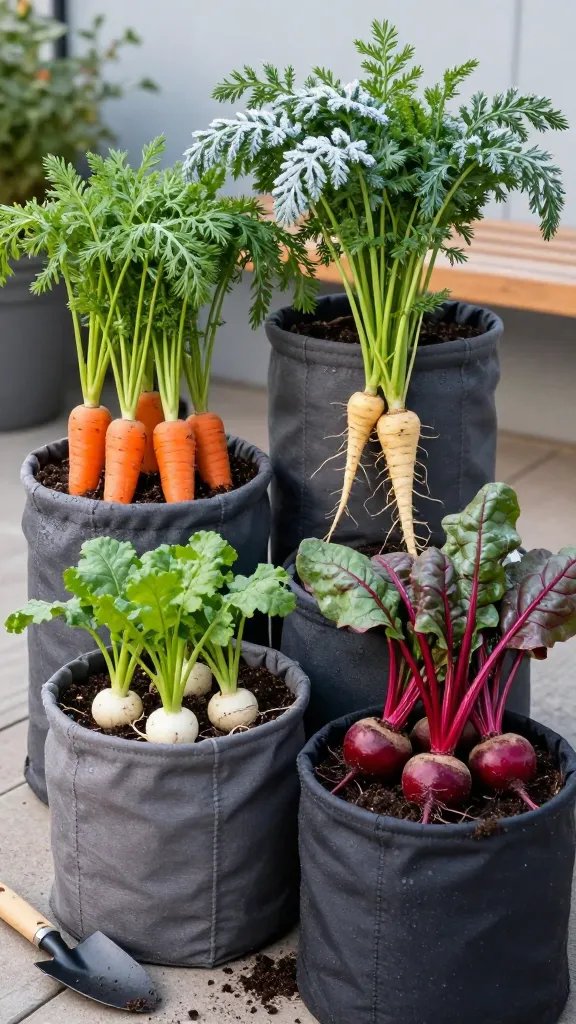
Root veggies turn a thin broth into a cozy meal. They store well, hold flavor, and love cooler temps—perfect for shoulder-season container gardening. Stick them in deep pots and forget the sad supermarket bags.
What To Grow
- Carrots (choose shorter types like Nantes or Chantenay for pots)
- Parsnips (sweet and nutty after a frost)
- Turnips (fast-growing; greens are edible too)
- Beets (roots and greens = two-for-one)
Container & Setup
- Size: 10–15 inch deep containers; fabric pots drain best
- Soil: Fine, stone-free mix; avoid fresh manure to prevent forked roots
- Spacing: Carrots 2 inches; parsnips 4 inches; turnips and beets 3–4 inches
Thin seedlings early for straight, happy roots. Harvest turnips young for tender texture and milder flavor. FYI: beet greens sauté beautifully and slide right into broth.
Best for: Chicken noodle with carrots, roasted root vegetable soup, borscht with beet greens.
4. The Flavor Bombs: Herbs & Soup Staples
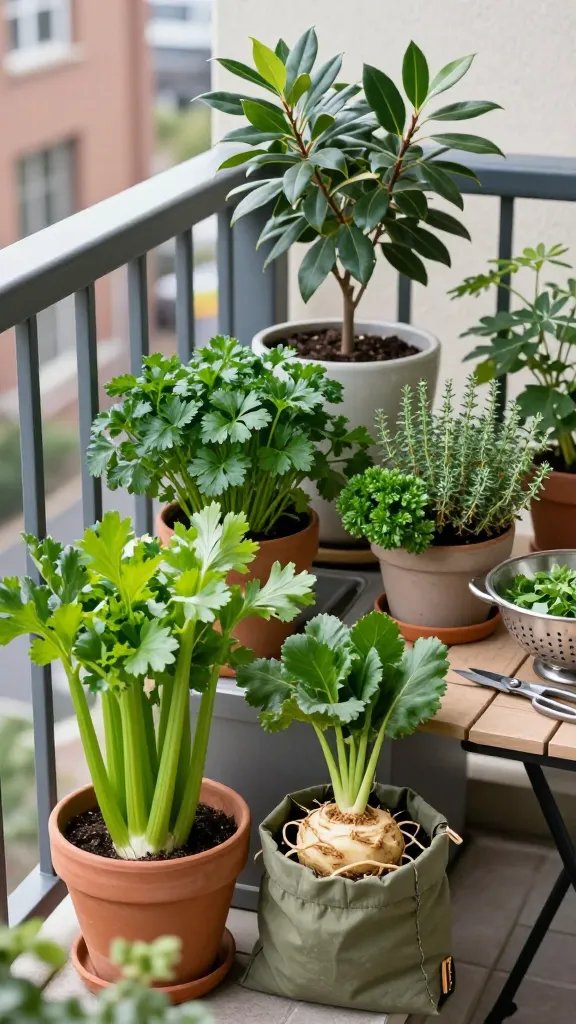
Herbs and classic soup veggies give you that chef-y flourish. With containers, you can keep a steady supply at arm’s length, even on a balcony. Snip what you need and skip the sad, soggy store bunches.
What To Grow
- Celery (compact varieties like ‘Golden Self-Blanching’)
- Celeriac (celery flavor, creamy texture—underrated star)
- Parsley (flat-leaf for flavor, curly for garnish)
- Thyme (tiny leaves, giant impact)
- Bay Laurel (perennial in pots; one leaf changes everything)
Container & Setup
- Size: Celery/celeriac 5–7 gallon pot; herbs 10–12 inch pots; bay in 12–16 inch planter
- Sun: 6+ hours; thyme and bay love full sun
- Moisture: Keep celery consistently damp; never let it dry out
Harvest parsley and thyme often to keep plants bushy. Celeriac takes time but rewards you with a velvety, savory base for blended soups—seriously, it’s magic. Bay lives for years in a container with a light winter shelter.
Best for: Mirepoix bases, minestrone, blended celeriac-potato soup, slow-simmered stocks.
5. The Seasonal All-Stars: Nightshades & Cool-Weather Champions
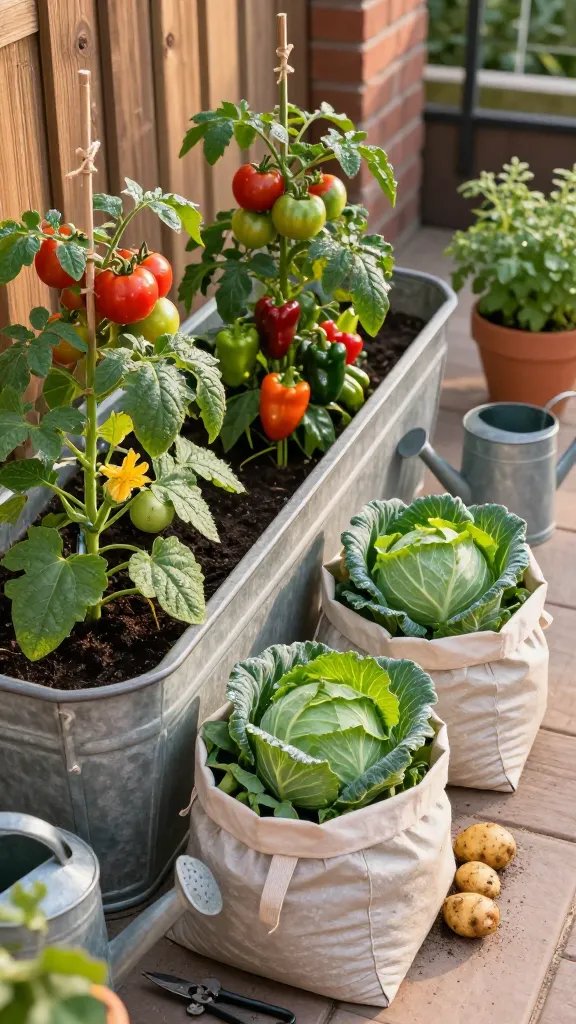
Round out your soup garden with seasonal heavy hitters. You’ll get bright summer flavor and deep winter comfort from the same small space. Think past the salad bowl—these guys belong in your pot.
Warm-Season Veggies
- Tomatoes (paste or Roma types concentrate flavor)
- Peppers (sweet bells or smoky poblanos for depth)
- Zucchini (one plant = endless minestrone material)
Cool-Season Veggies
- Cabbage (dense, sweet after frost; great for dumpling soups)
- Potatoes (grow bags make harvest absurdly easy)
Container & Setup
- Size: Tomatoes/peppers 10–15 gallon; zucchini 15–20 gallon; cabbage 7–10 gallon; potatoes 10–15 gallon grow bag
- Support: Cage tomatoes and peppers; give zucchini airflow
- Feeding: Monthly organic fertilizer; tomatoes appreciate extra calcium to prevent blossom end rot
Tomatoes become the base for brothy tomato soups and stews. Zucchini sneaks into everything and bulks up minestrone. Potatoes and cabbage own winter bowls, especially with sausage or beans.
Best for: Tomato-basil soup, tortilla soup, hearty cabbage-and-potato chowders.
Planting Calendar Snapshot
- Early Spring: Spinach, scallions, parsley, carrots, beets
- Late Spring: Tomatoes, peppers, zucchini, basil’s cousin parsley keeps thriving
- Summer: Keep harvesting greens; start fall carrots/turnips
- Fall: Kale, leeks, bok choy, cabbage; plant parsley to overwinter
- Winter (mild climates or with protection): Leeks, kale, chard, parsley, bay
Watering & Care Tips
- Use deep watering: Soak thoroughly, then let the top inch dry. Consistency beats frequency.
- Mulch the surface: Straw or shredded leaves keep moisture and roots stable.
- Rotate pots: Shift positions for light and to dodge pest pressure.
- Fertilize smart: Liquid seaweed/compost tea every 2–3 weeks for leafy growth; add bone meal for roots.
15 Vegetables Checklist (All In This Plan)
- Onions
- Leeks
- Green Onions
- Kale
- Spinach
- Swiss Chard
- Bok Choy
- Carrots
- Parsnips
- Turnips
- Beets
- Celery
- Celeriac
- Tomatoes
- Peppers
Quick Container Pairings
- Pot A (15 gal): Leeks + parsley underplanting
- Pot B (10 gal): Kale + thyme around edges
- Pot C (12 gal, deep): Carrots + scallions tucked between rows
- Grow Bag: Potatoes (hill with compost as they grow)
- Large Pot: Tomato with basil’s sturdier cousin parsley nearby (trim to avoid crowding)
Harvest-Into-Pot Ideas
- 5-Minute Broth Boost: Sauté scallions, celery, and thyme; add stock and chopped greens.
- Creamy Celeriac-Potato: Simmer celeriac, potatoes, and leeks; blend with a splash of cream.
- Garden Minestrone: Tomatoes, zucchini, carrots, chard stems, parsley, pasta—done.
- Ginger Bok Choy Ramen: Add scallions, bok choy, soft-boiled egg; thank yourself later.
You don’t need acreage to ladle out something epic. With a few smart containers and these 15 veggies, your soup pot stays busy—and delicious—every month of the year. Start small, harvest often, and IMO, prepare to become that friend who “just threw together” the best soup anyone’s had lately.