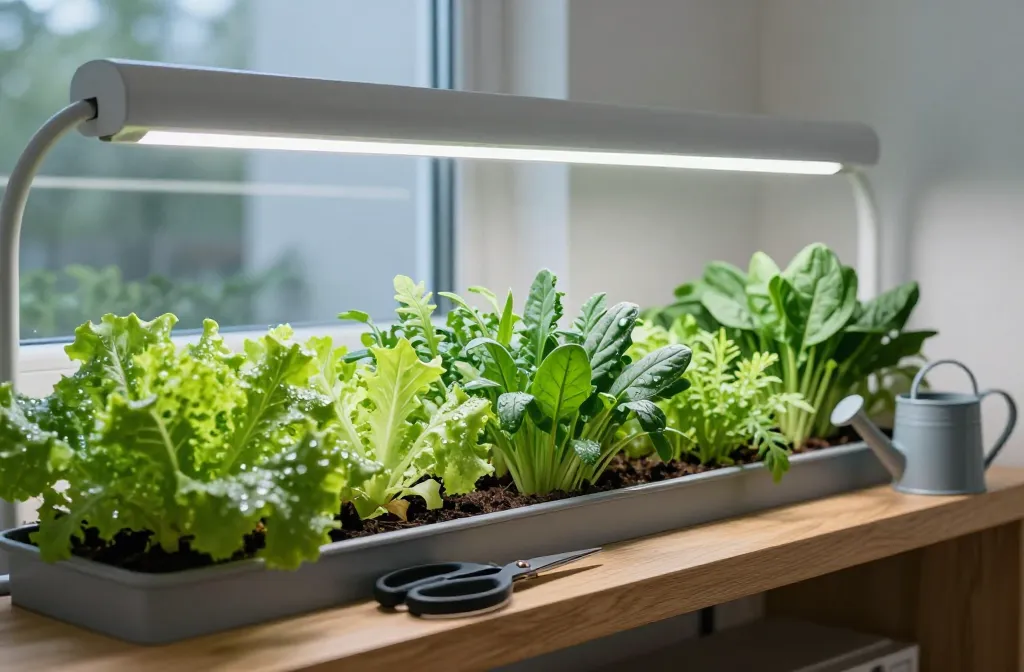
Think you need a sun-drenched window to grow food? Not even close. Plenty of delicious edibles thrive in shady corners, on shelves, and under cheap LEDs. This list shows you exactly what to plant, how to keep it happy, and what to eat first. Ready to turn your dim apartment into a snack factory?
1. Leafy MVPs: Cut-and-Come-Again Greens
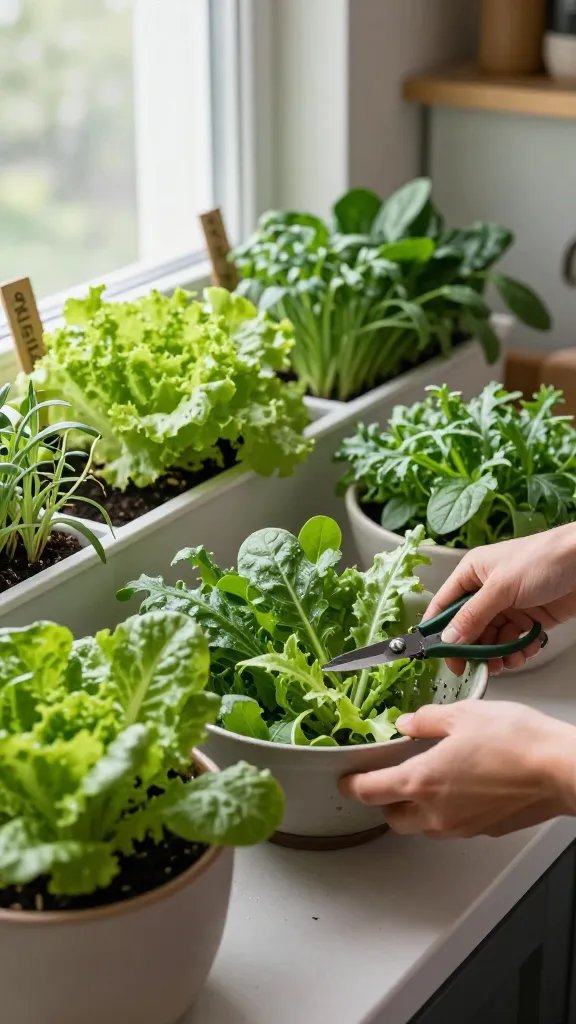
Salad lovers, rejoice. Tender greens like baby lettuce, mesclun mixes, arugula, spinach, and tatsoi grow fast and stay happy in low to medium light. You harvest a little at a time, and they bounce back like champs.
Why They Rock
- Quick germination and harvest in 25–40 days
- Shallow roots fit in slim planters and window boxes
- Cool temps and lower light keep leaves sweet and tender
Use wide, shallow containers and sow densely. Snip outer leaves with scissors when they hit 3–5 inches, then let the center regrow. Keep soil consistently moist—never soggy—and rotate the container weekly so everyone gets a fair share of whatever light you have.
Tips
- Choose varieties labeled “baby leaf,” “shade-tolerant,” or “cool-season.”
- Water in the morning; greens sulk if they dry out by lunch.
- Boost flavor: give a tiny dose of diluted liquid kelp or fish emulsion every 10–14 days.
Benefits: Continuous salads, minimal fuss, and IMO the best “first win” for anyone starting a low-light indoor garden.
2. Shade-Tolerant Herbs That Actually Taste Like Something
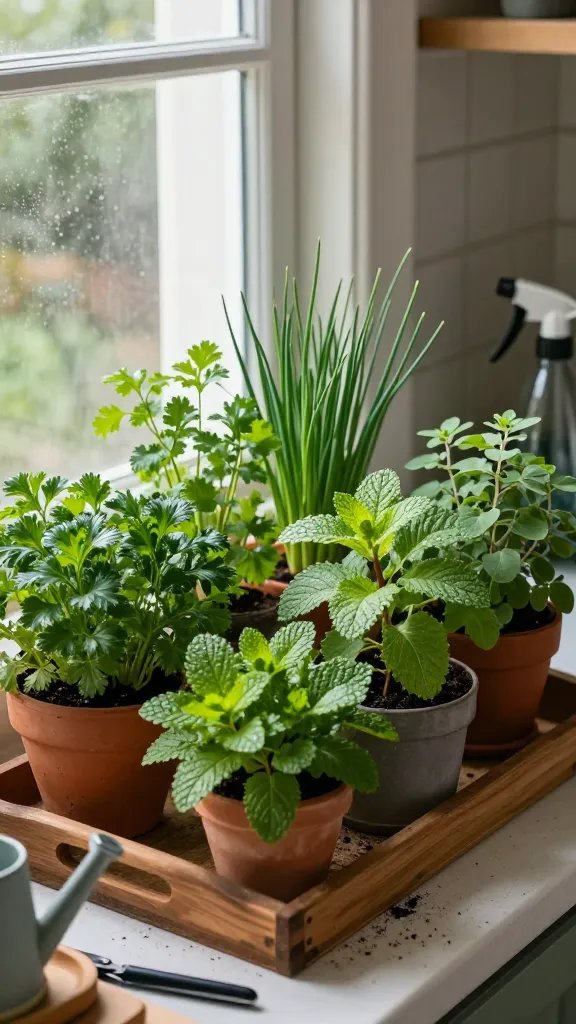
You want that fresh-herb magic without a sunny windowsill? Go for herbs that evolved for woodland edges and cooler climates. Mint, parsley, cilantro, chives, lemon balm, and oregano handle low to medium light with ease.
Herb Matchmaking
- Mint: Grows like it has a personal vendetta against empty pots. Keep it contained.
- Parsley: Slow starter, long finisher—harvest for months.
- Cilantro: Prefers cool temps; low light delays bolting (win!).
- Chives: Little oniony straws of happiness; very forgiving.
- Lemon Balm: Great for tea; thrives with less light.
- Oregano: Compact, aromatic, and not fussy.
Use a light, well-draining mix and pots with drainage holes. Water when the top inch of soil feels dry. For bushier growth, pinch tips often. Cilantro likes a slightly deeper pot because of its taproot, while chives and mint don’t care—they’re chill like that.
Pro Moves
- Group herbs by thirst: mint and lemon balm together; chives, parsley, and oregano separate.
- Snip in the morning for the most fragrant leaves.
- Rotate weekly and give a monthly micro-dose of balanced organic fertilizer.
Benefits: Fresh flavor on tap, zero sun guilt, and a windowsill that smells like an herb shop. Seriously, the return on effort here is elite.
3. Microgreens & Sprouts: The 7-Day Flavor Bombs
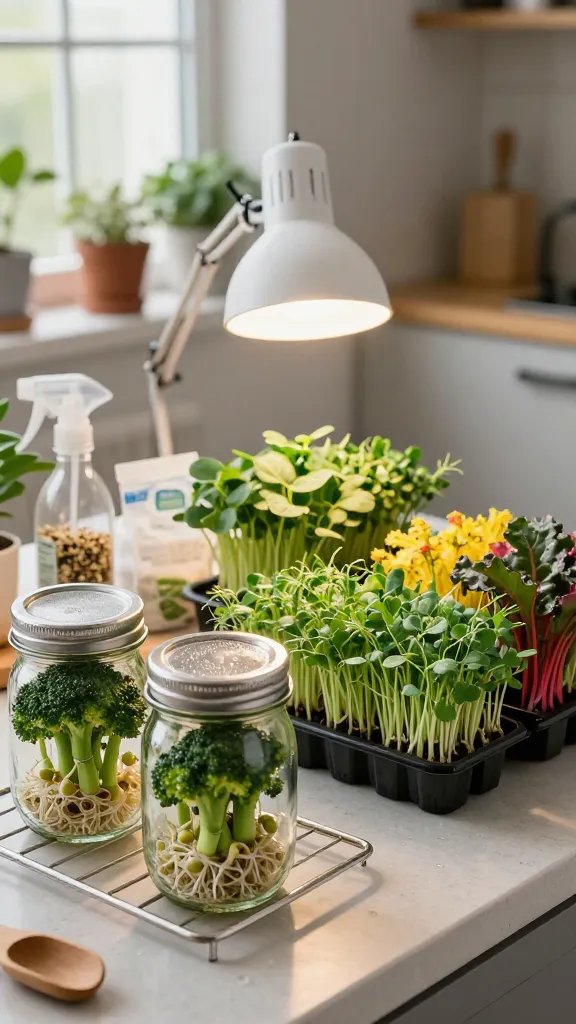
No light? No problem. Sprouts don’t even need soil, and microgreens need just a whisper of light. They’re fast, nutrient-dense, and perfect for impatient gardeners who want results yesterday.
All-Star Options
- Sprouts: Broccoli, alfalfa, mung bean, radish
- Microgreens: Pea shoots, sunflower, radish, mustard, kale
Sprouts grow in jars with mesh lids—soak, rinse twice daily, harvest in 3–5 days. Microgreens grow in shallow trays with seed-starting mix; scatter seeds thickly, mist, and harvest in 7–14 days with scissors when the first true leaves appear. Sunflower and pea shoots like a tad more light, but even a bright room or basic LED works.
Gear You Actually Need
- Quart jar + mesh lid (for sprouts)
- 10×10 or 10×20 tray + seed-starting mix (for microgreens)
- Spray bottle for gentle misting
- Optional clip-on LED grow light (full spectrum, 10–12 inches above)
Rinse sprouts thoroughly and keep everything clean to avoid funky smells. For microgreens, bottom-water to avoid damping off. Harvest right before you eat for peak crunch.
Why You’ll Love Them
- Stupid-fast harvests
- Concentrated flavor—radish microgreens are spicy, pea shoots are sweet
- Year-round growing, no garden drama
Benefits: Perfect for tight spaces and low patience. If you want instant gratification, this is your lane.
4. Root & Bulb Heroes That Don’t Demand Sunshine
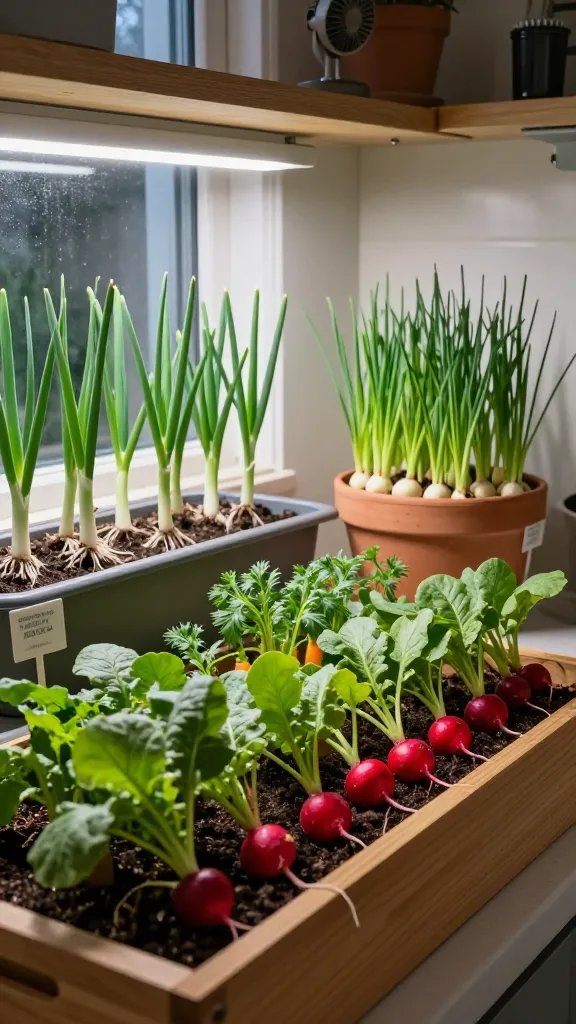
Roots care more about what’s happening below the surface. With steady moisture and decent airflow, you can grow crunchy, flavorful staples in dim corners with a boost from basic LEDs.
Top Picks
- Radishes (French Breakfast, Cherry Belle): Harvest in 25–35 days; low to medium light with 10–12 hours under LEDs.
- Baby Carrots (Parisian, Little Finger): Round or short types thrive in 6–8 inches of soil.
- Green Onions/Scallions: Start from seed or regrow from grocery-store roots.
- Garlic Greens: Plant cloves for a constant supply of garlicky shoots.
Use tall containers for carrots (8–10 inches) and at least 6 inches for radishes and scallions. Keep soil evenly moist; dry spells make radishes woody and carrots split. Provide a cheap full-spectrum LED for 10–12 hours if your space is gloomy—your yields will thank you.
Quick How-To
- Radishes: Sow seeds 1/2 inch deep, thin to 2 inches apart after sprouting.
- Baby carrots: Choose a loose mix; avoid compacting. Thin aggressively for straight roots.
- Scallions: Sow thickly; harvest outer stalks and let the center regrow.
- Garlic greens: Plant cloves pointy side up, 2 inches deep; snip leaves as needed.
Want a steady harvest? Stagger plantings weekly. Toss radish greens into pesto; snip garlic greens over eggs. You’ll feel like a kitchen wizard.
Bonus LED Setup (Simple and Cheap)
- Clip-on full-spectrum LED (15–20W) per 1–2 trays
- Distance: 10–12 inches from foliage
- Timer: 12 hours on, 12 off
Benefits: Crunchy, flavorful staples without needing a south-facing window. They’re reliable, compact, and fun to pull from the soil—like edible surprises.
5. Fruiting Undercover: Dwarf Peppers, Bush Beans, And Strawberries
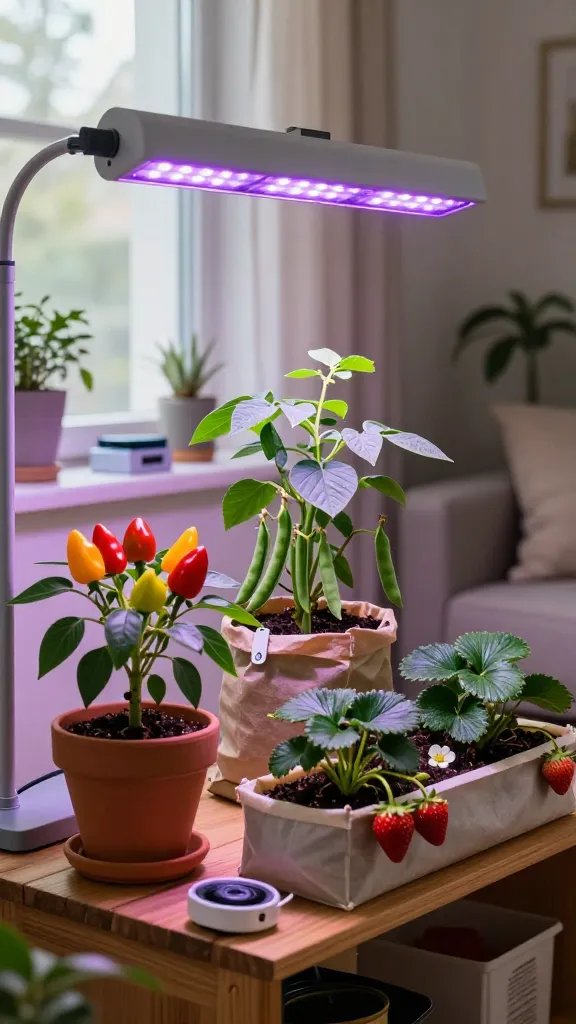
Can you grow fruiting plants without direct sun? Yes—with a little strategy. Compact varieties and efficient LEDs make peppers, beans, and strawberries totally doable indoors, even in low-light rooms.
Choose the Right Varieties
- Dwarf/mini peppers: ‘Mini Bell’, ‘Lunchbox’, or ornamental-edible types (look for “compact,” “patio,” or “dwarf”).
- Bush beans: Quick, reliable, and self-pollinating; choose dwarf “bush” not “pole.”
- Day-neutral strawberries: ‘Albion’, ‘Seascape’, or ‘Mara des Bois’ fruit steadily with moderate light.
Unlike leafy things, fruiting plants need a bit more light to set flowers. Use a brighter LED (30–45W per plant area), placed 8–10 inches from the canopy, 12–14 hours daily. Keep temps around 65–75°F and give a balanced fertilizer every 2–3 weeks, switching to a bloom formula when buds appear.
Pollination & Support
- Gently shake plants or use a soft paintbrush to move pollen between flowers.
- Stake peppers if fruits weigh branches down.
- For strawberries, keep crowns above soil and trim runners to focus energy on fruit.
Container size matters: 2–3 gallons for peppers, 1–2 gallons for beans, and a wide shallow trough for strawberries. Water deeply but let the top inch dry between sessions to avoid root issues. FYI, beans and strawberries reward you faster than you’d think indoors.
Why Bother?
- Fresh peppers in a dim kitchen = bragging rights
- Beans add nitrogen and crank out pods quickly
- Strawberries perfume the room and taste like summer
Benefits: Small-space fruit production that actually works. It’s a little extra setup, but the payoff is snackable sweetness on demand—trust me, it’s worth it.
Ready to turn that gloomy corner into a mini farm? Start with greens and herbs for easy wins, then level up to roots and fruit once you’ve got the rhythm. You’ll eat better, spend less, and honestly, it’s fun to harvest dinner in slippers. Go plant something—your future self will thank you.