
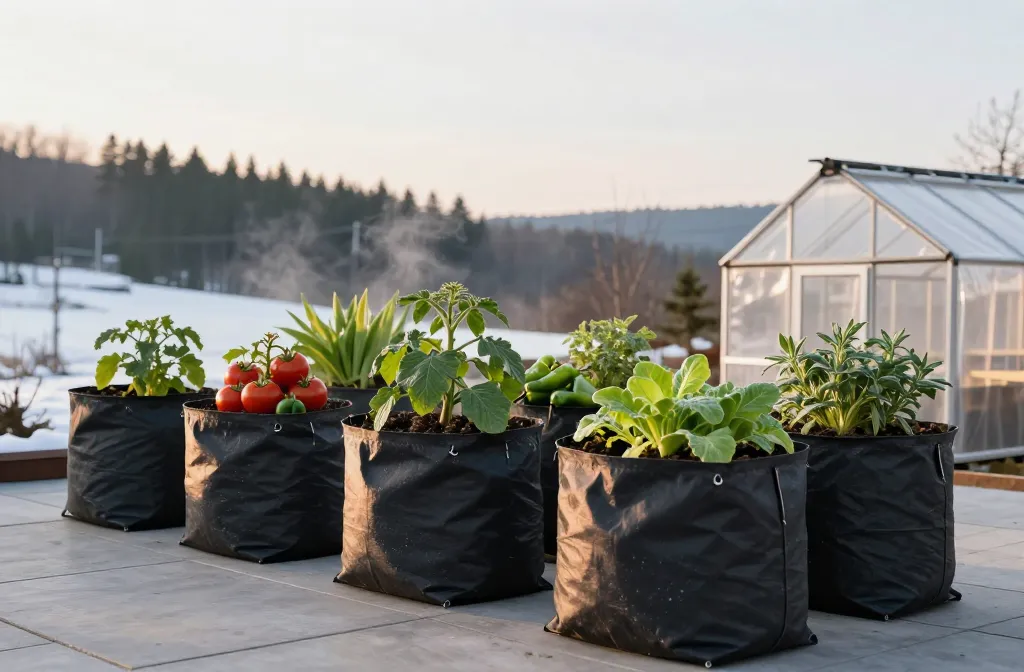
If your growing season feels shorter than a weekend, you’re in the right place. Zone 3–5 gardeners juggle late frosts, surprise cold snaps, and plants that act like divas. Good news: containers let you cheat the calendar, crank up heat, and harvest earlier than your neighbors. Let’s build a smart, flexible system that gives you fast results, more flavor, and less drama—seriously.
1. Choose Containers That Speed Heat, Not Just Look Cute
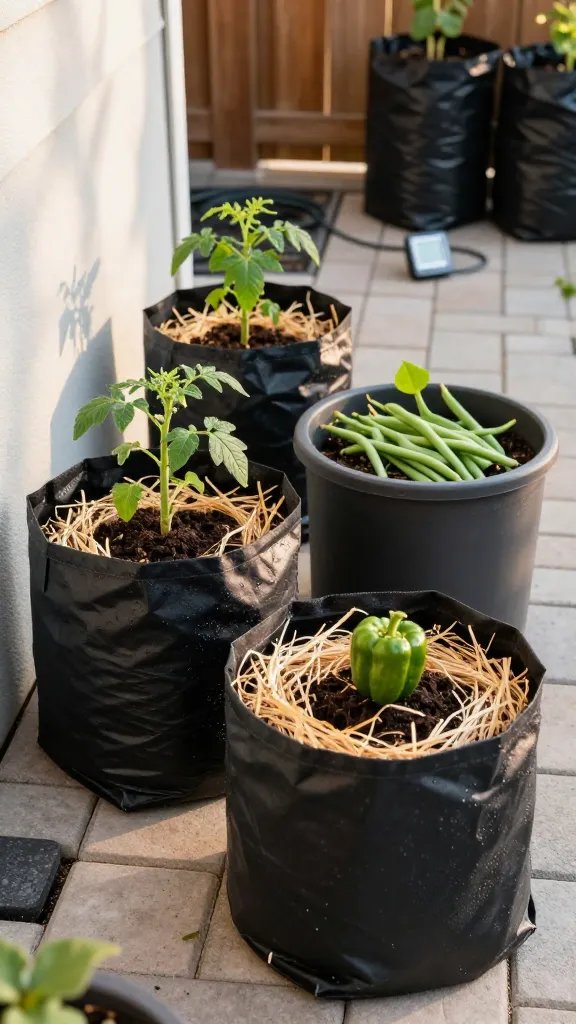
In short seasons, your pots need to be more than pretty—they need to be mini microclimate machines. The right containers warm soil faster, shed excess water, and keep roots happy when temps swing. This is how you get tomatoes red before the first football game.
What Actually Works
- Dark, insulated pots: Black fabric grow bags and double-walled resin planters warm up quickly and buffer cold nights. Fabric bags also prevent root circling and improve drainage.
- Right size for right crop: 20–25 gallons for tomatoes and peppers; 10–15 for bush beans, cucumbers, and zucchini; 3–7 for greens and herbs. Small pots dry out too fast and stunt growth.
- Drainage, drainage, drainage: Drill extra holes if needed. Add pot feet or bricks to get containers off cold patios and prevent soggy roots.
- Lightweight mixes: Use a peat- or coir-based potting mix with perlite. Avoid garden soil—it compacts and stays cold.
Pro Tips
- Warm soil early: Move dark containers into full sun 2–3 weeks before planting. Fill them, water deeply, and let them “preheat.” FYI, warm soil equals faster germination and stronger starts.
- Skip cheap plastic: Thin plastic turns into a heat trap on hot days and a freezer at night. Fabric or insulated beats it every time.
- Use saucers smartly: Keep saucers under pots during wind to reduce evaporation, but empty standing water immediately after watering.
Use this when you want a head start without building raised beds. The right pot choice alone can buy you a full week or two of growth.
2. Plant Early, But With Protection: Row Covers, Cloches, And Mobile Microclimates
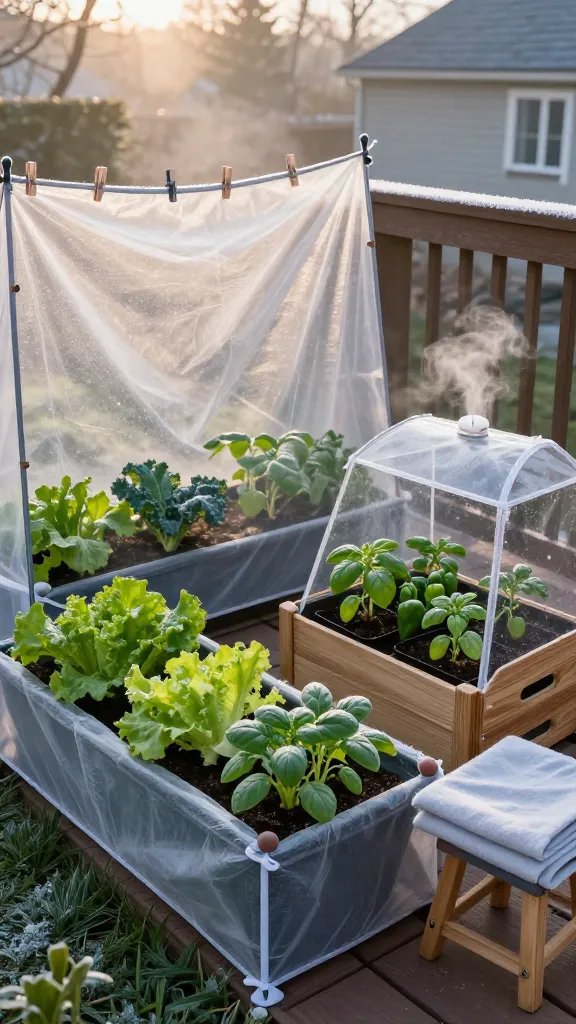
Zone 3–5 gardeners need a little armor. Season extenders let you plant before your last frost date and keep growing after your first. The secret? Lightweight protection you can throw on at dusk and pull off after breakfast.
Your Short-Season Toolkit
- Frost cloths (row cover): Buy 0.5–0.9 oz/yd² fabric for 2–4°F of protection. Toss it over wire hoops or directly over plants on cold nights.
- Pop-up cloches: Great for single peppers, basil, or cucumbers. They trap heat and reduce wind stress.
- Cold frames on wheels: Place a clear storage bin with ventilation holes over a pot for a DIY mini greenhouse. Lift off on warm days.
- Heat sinks: Set a black water-filled jug near plants under cover. It absorbs heat by day and releases it at night.
When To Use What
- Last frost -3 weeks to +2 weeks: Keep frost cloth handy every night. Vent during the day to prevent overheating.
- Night temps below 45°F: Cover tomatoes, peppers, and basil. They sulk under 50°F, and sulky plants stop growing.
- Windy days: Use covers as windbreaks. Wind steals heat and moisture faster than you think.
Simple Setup
- Stick flexible hoops or bamboo in the pot’s edges.
- Drape row cover, clip with clothespins or binder clips.
- Weigh down edges with bricks if it’s gusty.
Use this strategy to run weeks ahead of schedule and to rescue heat-lovers from spring tantrums. It’s the cheapest yield booster you’ll ever buy, IMO.
3. Grow Fast Varieties And Time Them In Waves
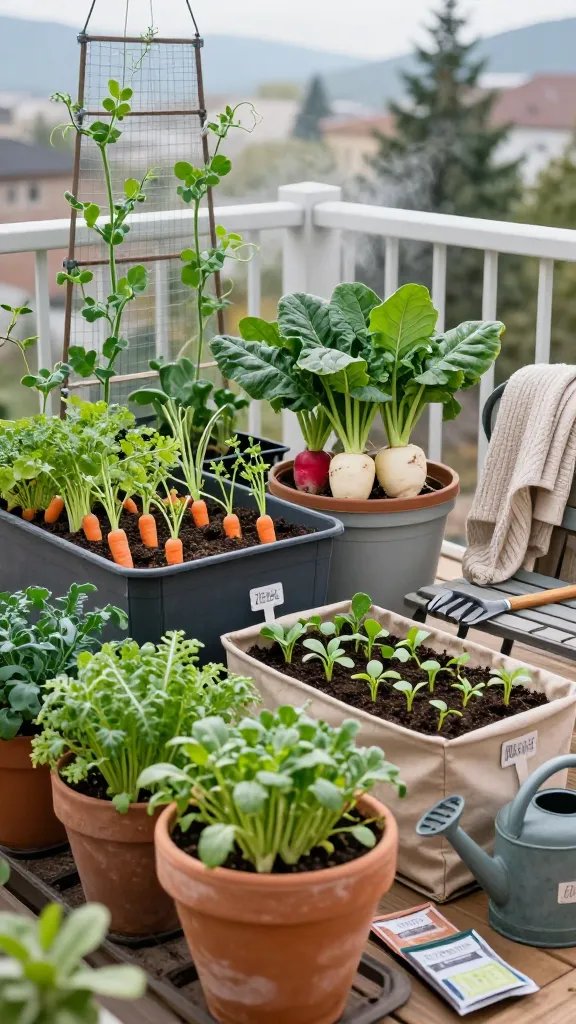
You can’t outmuscle the calendar, but you can outsmart it. Choose varieties bred for cool nights and short seasons, and plant in succession so your containers never sit idle. Translation: more harvests, less waiting.
Fast, Cold-Tolerant Winners
- Greens (20–35 days): Arugula, mizuna, baby kale, spinach, tatsoi. Look for “cold tolerant” on seed packets.
- Root crops (30–60 days): French Breakfast radishes, Hakurei turnips, Napoli carrots (baby). Use deep pots for carrots—at least 12–14 inches.
- Peas (55–65 days): Sugar Ann, Little Sweetie, Tom Thumb (dwarf, perfect for pots).
- Bush beans (50–60 days): Provider, Mascotte (excellent in containers).
- Compact cucumbers (50–60 days): Patio Snacker, Salad Bush. Trellis them to save space.
- Tomatoes (55–70 days): Glacier, Siberian, Stupice, Fourth of July, Tiny Tim (dwarf). These set fruit in cooler temps.
- Peppers (60–75 days): Early types like King of the North, Ace, Czech Black. Smaller-fruited peppers ripen faster.
- Herbs: Chives, parsley, dill, thyme, cilantro (bolt-resistant types like Calypso).
Succession Schedule That Works In Zones 3–5
- Early spring (as soon as soil thaws and warms in pots): Spinach, arugula, radish, peas. Cover at night.
- Mid-late spring: Second sowing of greens and radish. Start bush beans in a warm, covered pot.
- After your last frost: Transplant tomatoes and peppers you pre-started indoors. Tuck basil between them later.
- Midsummer: Replant greens where peas or radishes finished. Sow a late round of bush beans for fall.
- Late summer: Fall greens: spinach, arugula, mizuna. Use row cover as days shorten.
Spacing For Containers (Quick Guide)
- Tomato (determinate or dwarf): 1 plant/20–25 gal
- Pepper: 1–2 plants/10–15 gal
- Bush beans: 6–8 plants/10–15 gal
- Peas: 10–12 plants/10–15 gal with trellis
- Radish: 12–16 plants/3–5 gal
- Greens: 8–12 plants/5–7 gal (or cut-and-come-again dense sowing)
Use this when you want continuous harvests instead of one big boom-and-bust. You’ll eat earlier and longer, which is the entire point.
4. Soil Mix, Fertility, And Watering That Keep Plants Sprinting
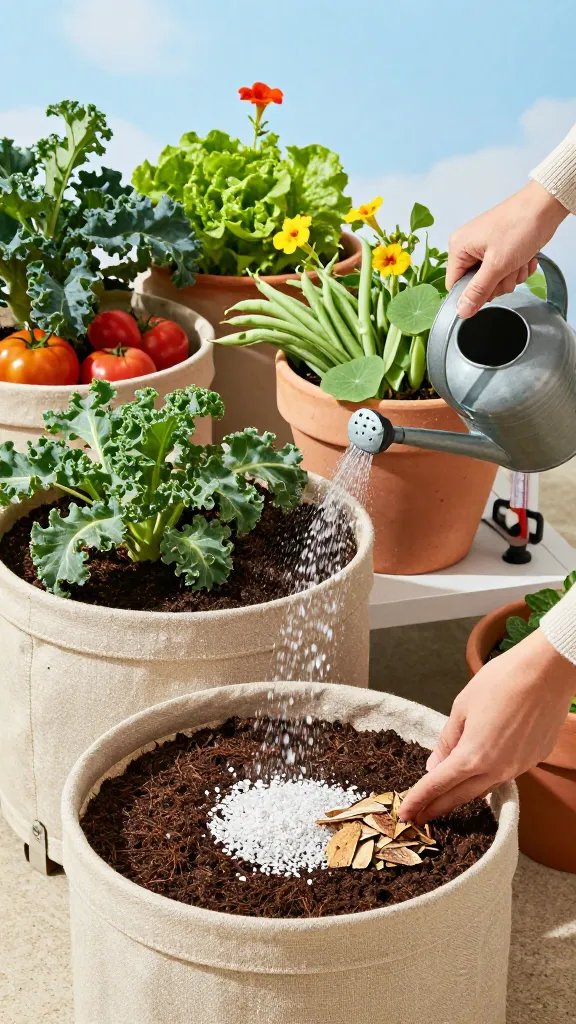
Containers don’t forgive sloppy watering or weak soil. You need a mix that drains fast but still feeds consistently. Think of it as plant training: quick sips, steady snacks, no swampy shoes.
Make A High-Performance Potting Mix
- Base: 60% quality potting mix (peat or coir), 20% compost, 20% perlite or pumice.
- Extra drainage: Add a handful of coarse bark or rice hulls for large containers.
- Do not add gravel at the bottom: It creates a perched water table. Let the mix drain on its own.
Fertilizing That Actually Works In Pots
- Pre-charge: Mix in a slow-release organic fertilizer at planting (tomato/veg formula).
- Weekly feed: Use a balanced liquid feed at half strength every 7–10 days once plants establish. For fruiting crops, switch to a bloom/fruit formula when flowers appear.
- Calcium insurance: For tomatoes and peppers, add a pinch of gypsum or use a fertilizer with calcium to reduce blossom-end rot.
Watering Rules For Short Seasons
- Front-load mornings: Water deeply early so plants face the day hydrated. Shallow, frequent sips lead to shallow roots and tantrums in heat.
- Lift test: Pick up the container or stick a finger in. If it feels light or dry an inch down, water until it flows out the bottom.
- Mulch matters: Top with 1–2 inches of shredded leaves, straw, or fine bark to stabilize moisture and soil temp.
- Self-watering systems: Consider sub-irrigated planters (SIPs) or a simple drip kit with a timer. Consistency boosts yields, especially for cucumbers and tomatoes.
Quick Fixes For Problems
- Yellowing leaves: Underfeeding or overwatering. Check weight and schedule a feed.
- Flowers dropping: Night temps too low for peppers/tomatoes. Cover at night or wait it out—new blooms will set.
- Leggy seedlings: Not enough light or heat stress. Move to full sun and harden off properly.
Use this setup if you want lush growth without babying your plants every hour. It’s the difference between “meh” and “wow.”
5. Design A Portable, Frost-Dodging Garden Layout
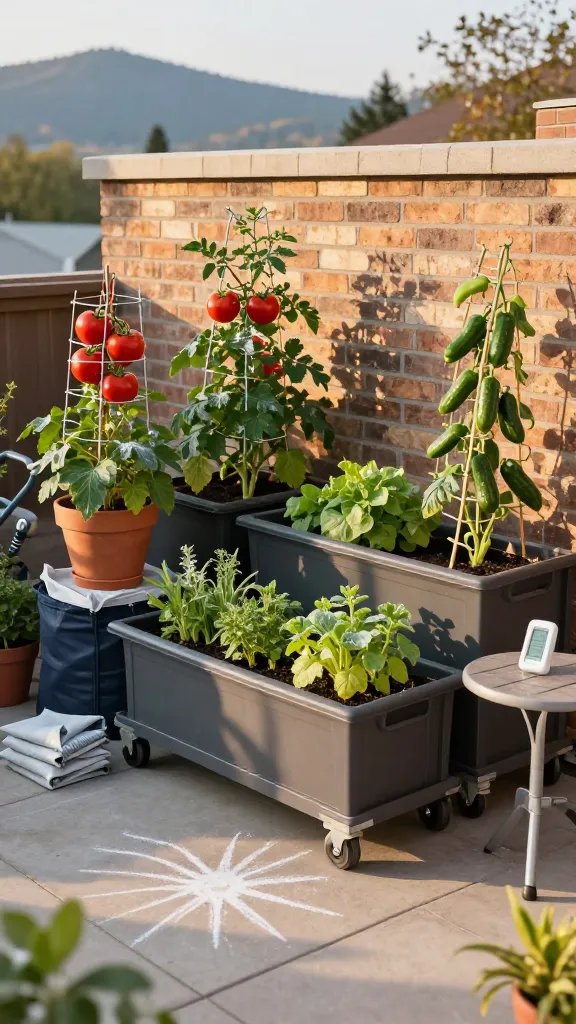
You can’t control the weather, but you can move your garden. Containers let you chase sun, dodge frost pockets, and ride out storms. Your patio becomes a tactical battlefield—and you’re winning.
Smart Layout Principles
- Sun map your space: Watch where you get 6–8 hours of direct sun. Put heat lovers (tomatoes, peppers, cukes) in the brightest, most sheltered spot.
- Tall in back, short in front: Line up by height to avoid shading. Use trellises on the north or back edge so everyone gets light.
- Wheels are magic: Plant big crops in rolling caddies. Slide them against a south-facing wall for extra warmth or under cover before a cold snap.
- Group by water needs: Tomatoes, cukes, and squash drink more; herbs and greens drink less. Grouping saves time and prevents overwatering.
- Companion planting, container-style: Tuck basil with tomatoes, dill near cucumbers, chives with greens. Avoid packing heavy feeders together in small pots.
Quick Frost-Response Plan
- Step 1: Water earlier in the day—moist soil holds heat better.
- Step 2: Drag containers to a wall or into a garage/shed overnight if possible.
- Step 3: Cover with frost cloth or old sheets. Clip tight. Add a jug of warm water under the cover for extra heat if temps look brutal.
- Step 4: Uncover by mid-morning to avoid overheating once the sun hits.
Compact Trellis Ideas For Containers
- Bamboo teepees: Stable, cheap, and cute. Great for peas and beans.
- Fence panel slice: Zip-tie a 2×3-foot piece of wire panel to a stake in the pot.
- String trellis: Screw eyelets into a fence or railing and run twine down to stakes in the pot.
Use a portable layout when your spring acts chaotic (so, always). You’ll save plants and sanity, trust me.
Ready to start? Grab a couple of sturdy containers, choose fast varieties, and set up protection before you need it. Your Zone 3–5 container garden can crank out greens in weeks and tomatoes by mid-summer. Go get those early harvest bragging rights—your future salads will thank you.