
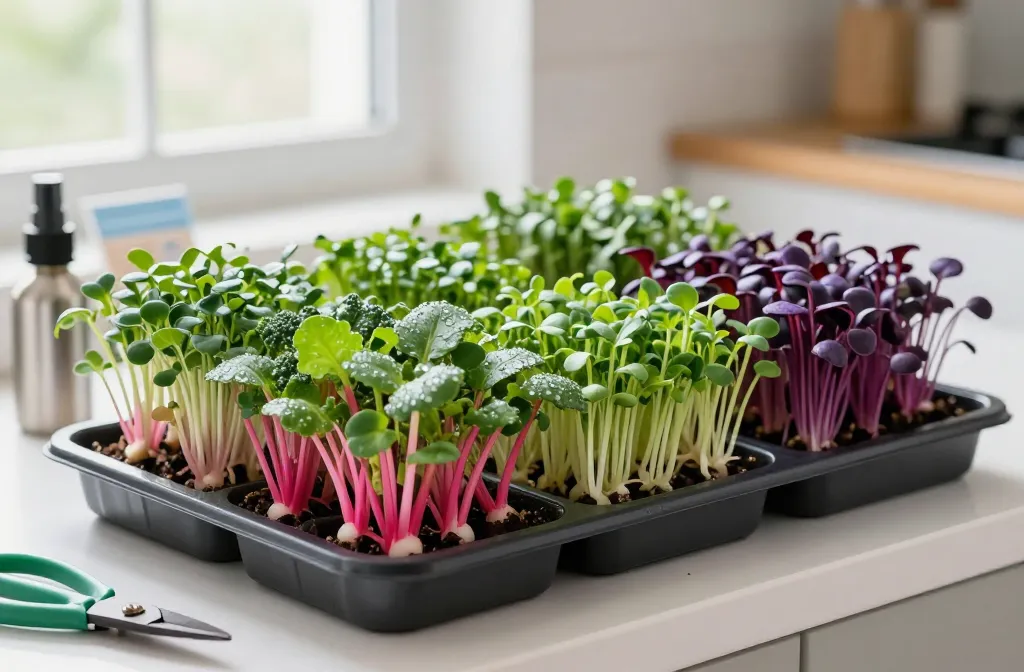
Want crunchy, nutrient-packed greens in days, not months? Microgreens are tiny flavor bombs that grow fast, taste bold, and look gorgeous on literally everything you eat. No backyard? No problem. Set up a sunny shelf and you’ll harvest a mini jungle before your next grocery run.
You’ll find 20 speedy varieties, simple setups, and pro tips that actually work. Ready to grow your own indoor salad bar? Let’s get those trays sprouting.
1. The Speed-Demon Varieties: 20 Microgreens That Race From Seed To Fork
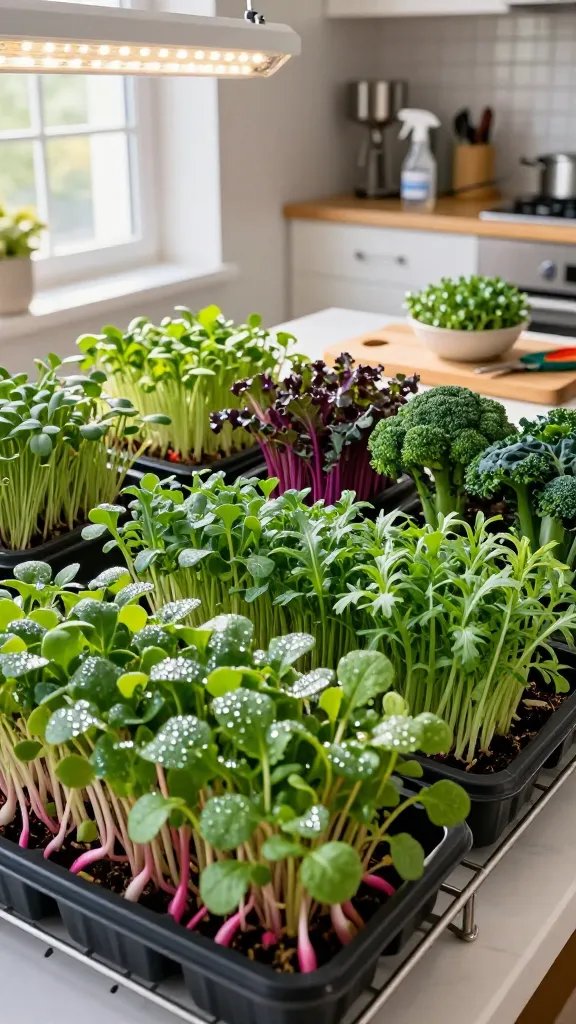
If you want wins fast, start with the sprinters. These 20 varieties germinate quickly and hit harvest size in 7–14 days, sometimes sooner if your room runs warm. They pack big flavors—peppery, nutty, lemony, earthy—so you can mix-and-match like a chef.
Fastest Finishes (7–10 Days)
- Radish (Daikon, China Rose): Spicy, crunchy, vibrant stems.
- Broccoli: Mild, versatile, and insanely nutrient-dense.
- Kale (Red Russian, Lacinato): Tender, sweet-green flavor.
- Arugula: Peppery zing; great in eggs and flatbreads.
- Kohlrabi: Mild brassica with pretty purple stems.
- Mustard (Mizuna, Red Giant): Wasabi vibes, wakes up any dish.
- Turnip (Tokyo Cross): Crisp and bright, subtle heat.
- Tatsoi: Silky texture, buttery greens.
Still Quick (10–14 Days)
- Pea Shoots (Dwarf Grey Sugar): Sweet, tendrils, huge yield.
- Sunflower (Black Oil): Nutty crunch, satisfying bite.
- Basil (Genovese, Thai): Aromatic; great for finishing dishes.
- Cilantro: Citrusy pop; slightly slower but worth it.
- Chard (Rainbow): Colorful stems, gentle flavor.
- Amaranth (Garnet Red): Stunning magenta, earthy-sweet.
- Cabbage (Red, Savoy): Crisp, mild brassica note.
- Pak Choi/Bok Choy: Juicy and fresh, great in ramen.
- Fenugreek: Maple aroma, Indian-cuisine friendly.
- Dill: Feathery, aromatic, perfect on fish and eggs.
- Beet (Bull’s Blood): Candy-red stems, earthy-sweet.
- Leek/Onion: Chive-like, bright allium flavor.
Mix a spicy blend (radish + mustard + arugula) for kick, or a sweet-crunch blend (pea + sunflower) for a kid-friendly bowl. Benefits? Lightning harvests, tiny space, massive flavor uplift.
2. The Zero-Drama Setup: Gear That Makes Microgreens Basically Foolproof
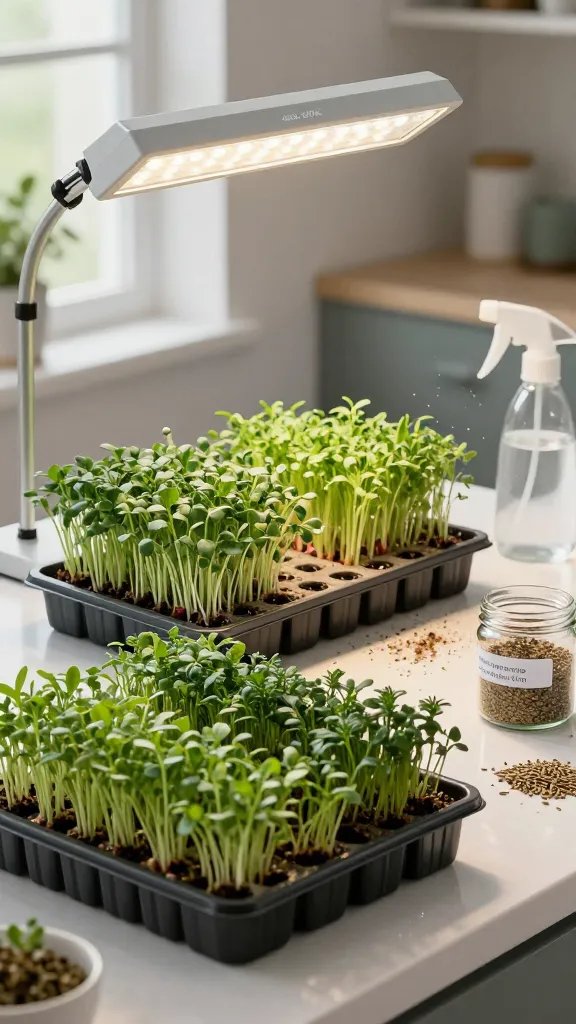
You don’t need a greenhouse or a trust fund. A few trays, quality seed, and steady light beat fancy gadgets every time. Set it once, rinse occasionally, and harvest like a pro.
Core Kit
- Trays: Two 10×20 trays per crop—one with drainage holes, one solid to catch water.
- Medium: Coco coir, seed-starting mix, or hemp/wood fiber mats. Keep it clean and even.
- Seeds: “Microgreen” labeled, untreated, high-germination lots.
- Light: LED shop light or grow light (4000–6500K). 12–16 hours daily.
- Mister + Bottom-Water: Fine mist for germination, then water from below to avoid mold.
- Weight + Humidity Dome: Another tray or a book as a weight; lid or plastic wrap for first 2–3 days.
- Shears: Clean, sharp scissors for harvest.
Simple Workflow
- Prep: Fill tray with 0.5–1 inch medium. Smooth and firm slightly.
- Sow: Scatter evenly—dense, but don’t create seed pyramids. Press seeds in.
- Moisten: Mist generously. Add weight + cover for blackout.
- Germinate: 2–4 days in the dark. Keep moist, not soggy.
- Light: Remove cover, give bright light. Bottom-water as needed.
- Harvest: Snip at soil line when first true leaves peek or height hits 2–4 inches.
Use this once and you’ll run trays on autopilot. The benefit? Consistent results without drama or mystery.
Tips
- Airflow: Small fan on low prevents damping-off and keeps stems strong.
- Sanitize: Wash trays with 3% hydrogen peroxide or diluted bleach between crops.
- Label: Variety + sow date. Your future self will thank you.
Dial this in and you’ll scale from 1 tray to 6 without breaking a sweat. FYI, it’s addictive.
3. The 7–14 Day Playbook: Exact Schedules For Fast, Flavor-First Harvests
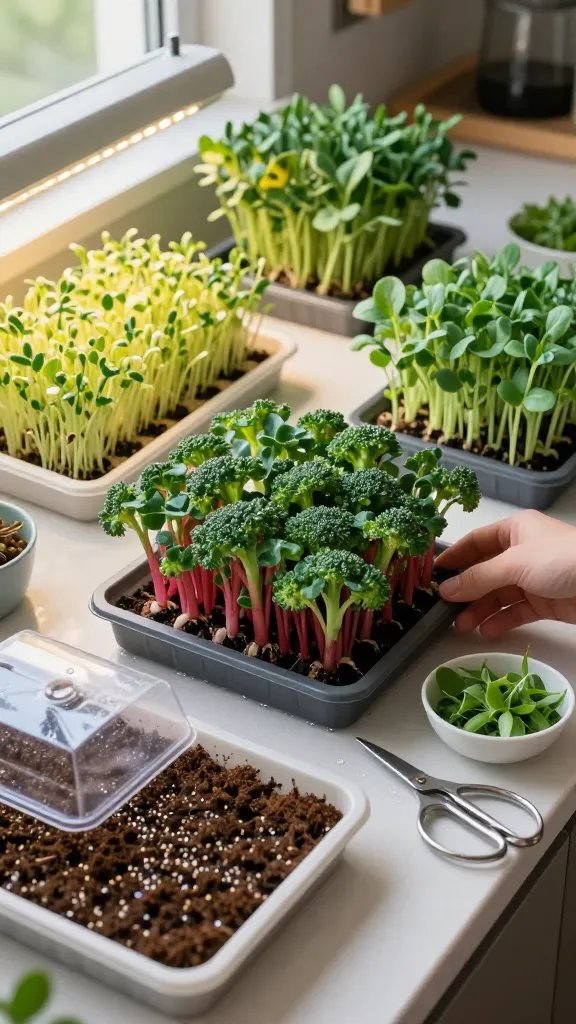
Want cheat codes? Here are proven day-by-day cues so you know exactly what to do and when. Use them like recipes—follow once, then tweak for your space.
Radish, Broccoli, Kale (7–10 Days)
- Day 0: Sow. Mist. Weight + cover.
- Day 2–3: Germinated? Remove weight. Place under lights.
- Day 3–7: Bottom-water when tray feels light. Keep surface barely moist.
- Day 7–9: Harvest at 2–3 inches, cotyledons open, first true leaves just starting.
Pea Shoots, Sunflower (10–14 Days)
- Day 0: Pre-soak 6–8 hours (peas, sunflower), drain well. Sow thick.
- Day 1–3: Heavy weight + cover to encourage sturdy stems.
- Day 4: Lights on. Water generously from below; they’re thirsty.
- Day 10–14: Harvest when tendrils (peas) or thick leaves (sunflower) feel crisp.
Delicate Aromatics: Basil, Cilantro, Dill (10–14+ Days)
- Day 0: Sow thinly. Mist lightly. Gentle cover (no heavy weight).
- Day 3–5: Lights on. Keep medium evenly moist—don’t let it dry out.
- Day 12–16: Harvest once cotyledons fully open; snip carefully.
Clutch Ratios (Per 10×20 Tray)
- Radish: 40–60 g seed
- Broccoli/Kale: 20–30 g
- Pea: 100–150 g (pre-soak)
- Sunflower: 80–120 g (pre-soak)
- Basil/Cilantro/Dill: 10–20 g (lighter density)
These timelines keep you in the flavor sweet spot—tender, juicy, and bright. Go longer if you like bolder bite, shorter for milder greens.
4. Flavor Pairings, Meal Ideas, And Storage: Make Every Snip Count
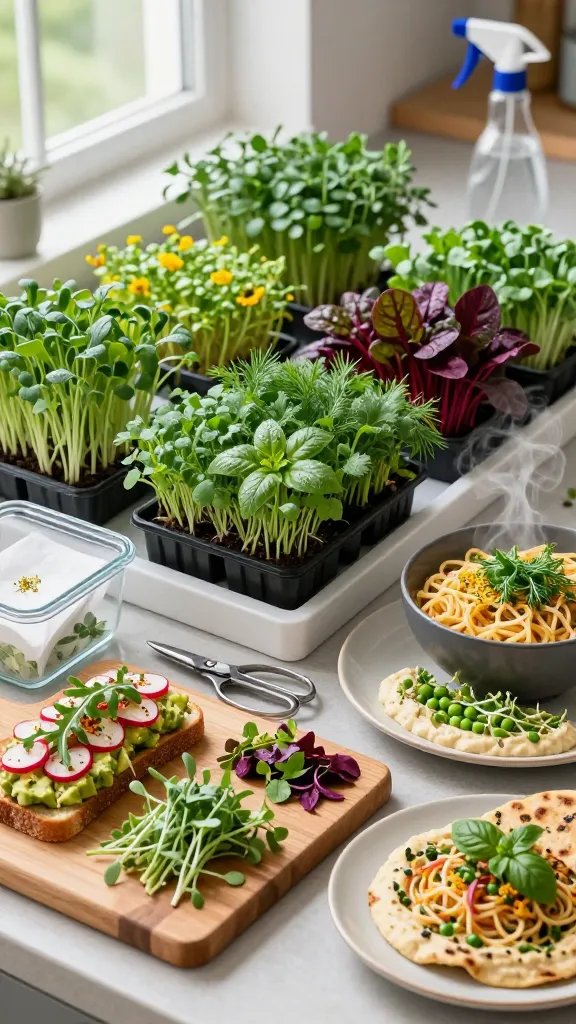
You grew them—now give them star roles. Microgreens turn “meh” meals into “whoa, did you hire a chef?” moments. Keep them cold, dry, and add them at the end for maximum crunch and color.
Go-To Pairings
- Spicy Set (radish, mustard, arugula): Avocado toast, tacos, ramen, grain bowls.
- Sweet-Crunch Set (pea, sunflower): Omelets, stir-fries off-heat, sandwiches, hummus boards.
- Herby Set (basil, cilantro, dill): Pho, pasta, fish, spring rolls, yogurt dips.
- Color Pop (amaranth, beet, chard): Flatbreads, sushi bowls, burrata salads.
- Everyday Boost (broccoli, kale, kohlrabi): Smoothies, wraps, roasted veggie bowls.
Storage That Actually Works
- Harvest Dry: Don’t wash before storing. Moisture is the enemy.
- Container: Clamshell with a paper towel. Minimal air, not vacuum-tight.
- Fridge Zone: 34–38°F in the crisper. They’ll last 4–7 days.
- Wash Right Before Use: Quick rinse, spin or pat dry.
Easy 10-Minute Meals
- Micro Pesto Flatbread: Basil microgreens + olive oil + parmesan + lemon + garlic blitzed into pesto. Smear on naan, top with pea shoots.
- Eggs, But Elevated: Soft scramble, finish off-heat, shower with chives/leek micros and sunflower crunch.
- Soba Bowl: Cold noodles, sesame dressing, tofu, radish micros on top. Done.
Use micros as fresh finishing touches, not cook-all-day ingredients. The benefit? Maximum nutrients and that restaurant-level flourish, fast.
5. Troubleshooting And Pro Moves: Beat Mold, Boost Yield, And Stay On Schedule
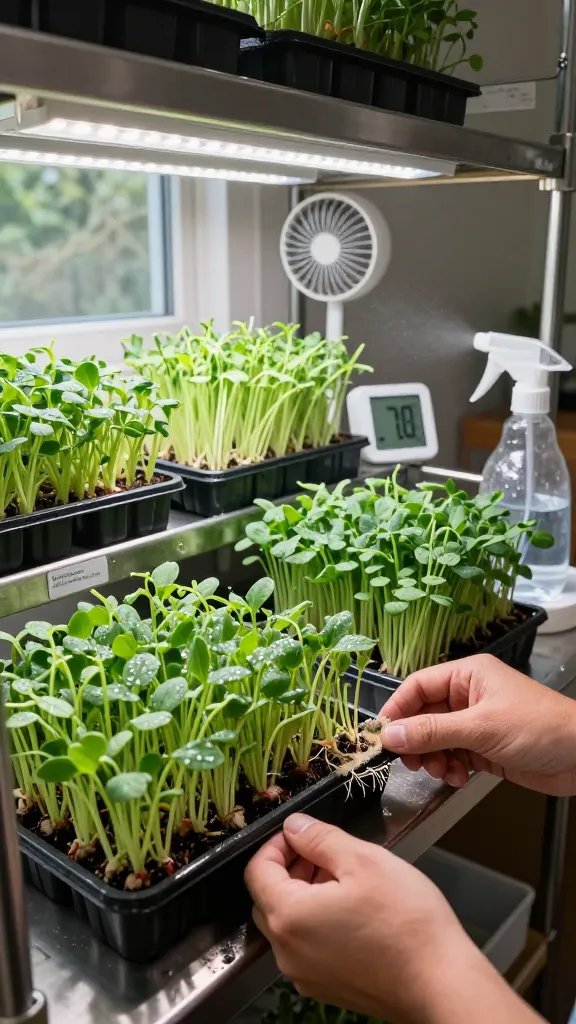
Things happen—fuzz, flops, and sad stems. Good news: most issues have quick fixes. With a few habits, you’ll pull photogenic trays every time, seriously.
Common Issues + Fixes
- White Fuzz At Base? Likely root hairs, not mold. Check smell. If it smells earthy, you’re fine. If musty, increase airflow and reduce surface wetness.
- Leggy, Pale Stems: Increase light intensity or lower the fixture to 6–10 inches above canopy. Ensure 12–16 hours daily.
- Slow Germination: Room too cold. Aim for 68–75°F. Keep blackout weight consistent for strong push.
- Yellow Leaves After Uncovering: Totally normal—chlorophyll forms under light. They’ll green up in a day.
- Patchy Growth: Uneven sowing or lumpy medium. Pre-fluff and level, then sow with a shaker for even spread.
- Wilt Or Collapse: Overwatering or poor drainage. Bottom-water only when tray feels light; dump excess after 30 minutes.
Yield Boosters
- Right Density: Don’t choke your greens. Follow the seed rates above.
- Gentle Bottom Heat: A seedling mat speeds germination for slow herbs.
- Stack And Weight: Stack 2–3 seeded trays with a top weight during blackout for stout stems (use for peas, sunflower, brassicas).
- Stagger Sowing: Seed 2–3 trays on different days so you never run out.
Cleaning And Safety
- Sanitize Between Batches: Quick soak in peroxide solution, rinse, air-dry.
- Fresh, Potable Water: Especially important for bottom-watering.
- Buy From Reputable Seed Suppliers: Microgreen-labeled lots reduce contamination risk.
Once you master airflow, light, and water timing, mold ghosts you and yields jump. IMO, that’s when the hobby turns into a superpower.
Ready to build your indoor microgreen garden? Start with two trays—one spicy, one crunchy—and enjoy your first harvest in a week. Keep it playful, keep it consistent, and your counter will turn into a mini farm before you finish your next jar of pickles.