
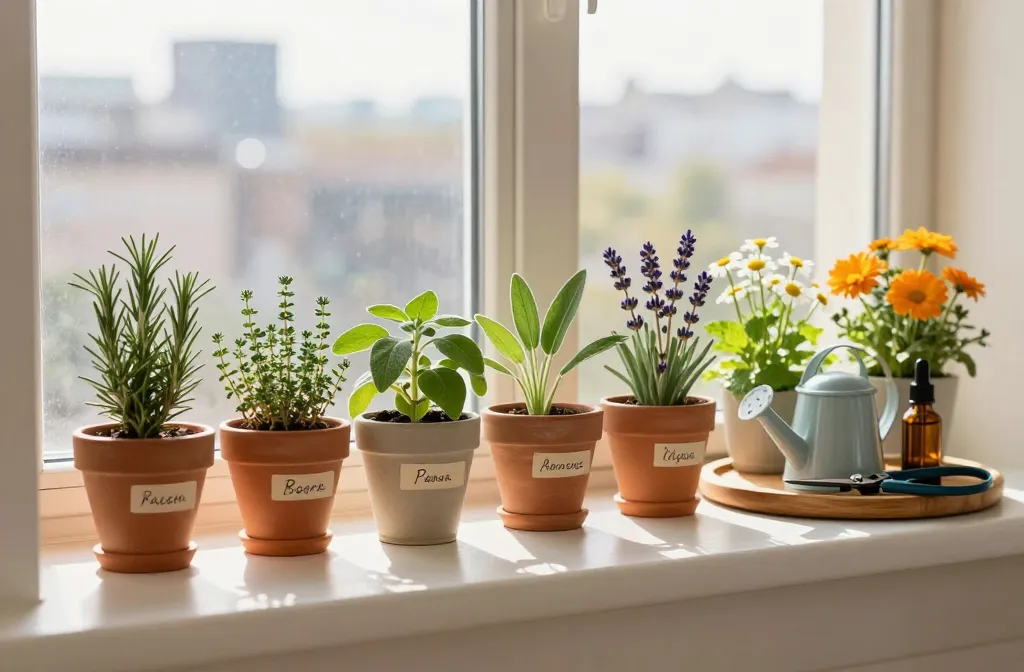
Your windowsill can moonlight as a mini apothecary. No yard? No problem. These container-friendly healing herbs thrive on balconies, fire escapes (safely), and sunny kitchen ledges—and they taste amazing too. Let’s turn that tiny space into a wellness garden you can snip from daily.
1. Sun-Soaked Saviors: Mediterranean Staples That Love Pots
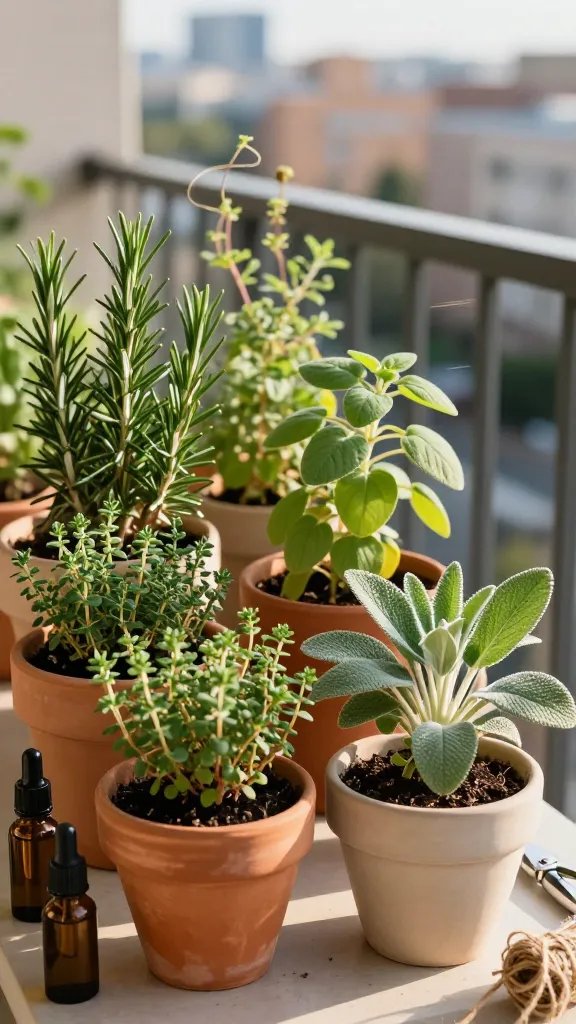
Some herbs basically beg to live in containers, especially the Mediterranean crowd. They handle inconsistent watering, soak up heat, and stay compact with regular trimming. If your apartment gets strong afternoon light, start here.
All-Star Lineup (12 Healing Favorites)
- Rosemary – Focus and memory support, antimicrobial, stellar for sore muscles.
- Thyme – Respiratory ally, cough soother, powerful kitchen MVP.
- Oregano – Antioxidant powerhouse, supports immunity, pizza’s best friend.
- Sage – Sore throat soother, mood-supporting aroma, crispy in butter (heaven).
- Lavender – Calming aroma, sleep aid, skin-soothing infusions.
- Lemon Balm – Gentle anxiety relief, sleep support, lemony tea magic.
- Peppermint – Digestion support, headache helper, minty fresh everything.
- Chamomile – Relaxation tea staple, skin-calming rinse, gentle on the gut.
- Calendula – Skin-healing petals, infusions for cuts and scrapes.
- Basil – Anti-inflammatory, stress-soothing aroma, pesto therapy.
- Parsley – Nutrient-dense, breath freshener, supports digestion.
- Chives – Mild antimicrobial, easy garnish, shockingly resilient.
Container Setup Tips
- Pots: 6–10 inch diameter per plant. Go terracotta for airflow, fabric pots for lightweight balconies.
- Soil: Well-draining potting mix + perlite. For woody herbs (rosemary/thyme/sage), mix in some coarse sand.
- Drainage: Non-negotiable. Add a saucer but empty it—no wet feet.
- Light: Aim for 6–8 hours. South or west windows rock; supplement with a grow light if needed.
Use these as your core team. They cover everyday wellness, taste amazing, and won’t throw a diva fit in containers.
2. The “Sip Your Stress Away” Crew: Tea Herbs That Thrive Indoors
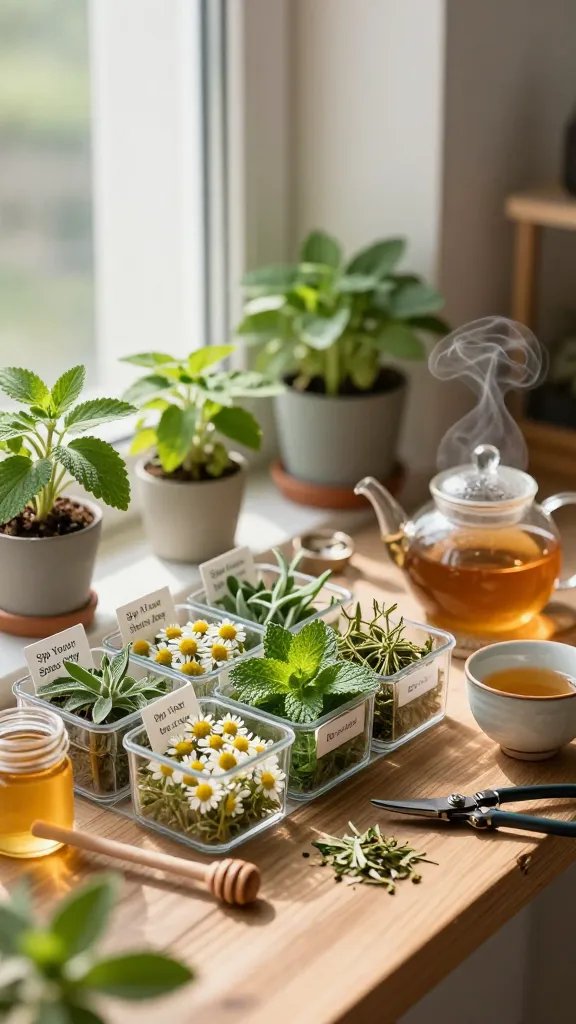
Nothing feels more luxurious than clipping leaves and making tea on the spot. These herbs grow fast, smell divine, and convert your apartment into a calm zone—cheap therapy, IMO.
Top Tea Makers
- Lemon Balm – Bright, lemony, and gently calming. Keeps you chill without nap time.
- Chamomile – Apple-scented flowers that help you wind down. Great before bed.
- Peppermint – Soothes the stomach, clears the head, and wakes up your senses.
- Sage + Honey – A classic for sore throats; tastes sophisticated and cozy.
- Lavender – Use sparingly in tea or combine with chamomile for dreamy nights.
Brew-It-Right Basics
- Fresh vs. Dry: Fresh herbs = double the amount you’d use dried. Start with 1–2 tablespoons fresh per cup.
- Steep Time: 5–10 minutes. Cover your mug to trap the good stuff.
- Mix & Match: Lemon balm + peppermint = calm focus. Chamomile + lavender = sleep potion. Thyme + honey = cough helper.
Growing Hacks
- Harvest often: Pinch tips to keep plants bushy and prevent bolting.
- Rotate pots: Give every side a turn toward the sun each week to avoid lanky growth.
- Water cues: Stick a finger in the soil—if the top inch feels dry, water thoroughly.
When stress hits or sleep refuses to cooperate, you’ll love having these within arm’s reach. Seriously, it’s a vibe.
3. Mini First-Aid Kit: Skin-Soothers and DIY Balms
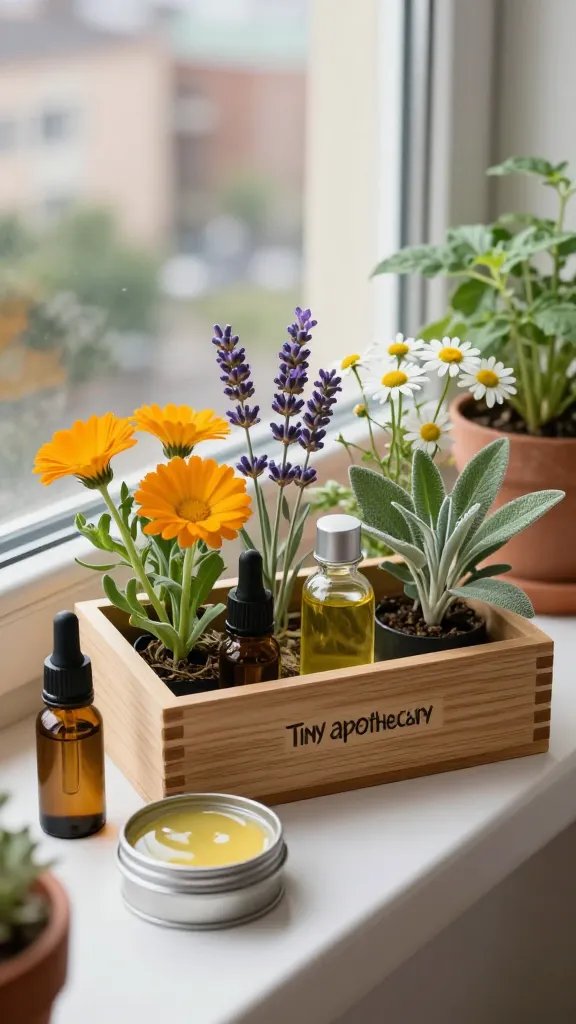
Tiny garden, big relief. These herbs shine when your skin throws a tantrum—minor cuts, scrapes, dry spots, and bug bites don’t stand a chance. You’ll whip up balms and sprays faster than a pharmacy run.
Hero Plants
- Calendula – Bright petals rich in flavonoids; supports wound healing and reduces redness.
- Lavender – Antimicrobial and calming; perfect for a gentle skin spray.
- Chamomile – Anti-inflammatory; use cooled tea as a compress for irritated skin.
- Sage – Mild antiseptic; astringent rinse for oily or sweaty areas.
DIY Basics (Beginner-Friendly)
- Calendula Infused Oil: Dry petals, cover with sweet almond or olive oil in a jar, and let sit in a sunny window for 2–4 weeks. Strain. Boom—golden goodness.
- Simple Balm: 1 part beeswax to 4 parts infused oil. Melt gently, pour into tins, cool. Label like a pro.
- Lavender Spray: Mix cooled lavender tea with a splash of witch hazel. Store in the fridge for instant calm-on-demand.
Container Care
- Calendula: Loves sun; deadhead flowers to keep blooms coming.
- Lavender: Needs bright light and excellent drainage. Go easy on water.
- Chamomile: Keep slightly moist, harvest flowers often.
Keep these on hand for everyday skin hiccups and self-care nights. Your future self with the paper cut will thank you.
4. Flavor Meets Function: Culinary Herbs With Real Benefits
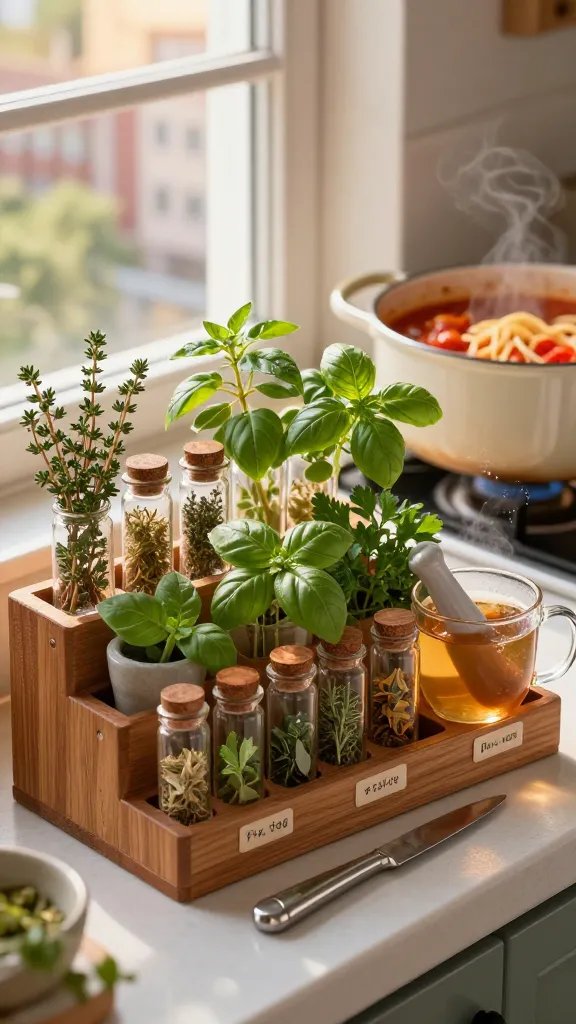
Herbs don’t have to choose between tasty and helpful. These plants pack flavor while supporting digestion, immunity, and inflammation control. Translation: your pasta becomes a wellness strategy.
Kitchen Workhorses
- Thyme – Helps with coughs and colds; throw into stews and steam inhalations.
- Oregano – Antimicrobial; sprinkle on tomatoes, add to soups, brew a strong tea when you feel a tickle.
- Basil – Anti-inflammatory eugenol; boosts mood just by smelling it. Pesto is basically edible joy.
- Parsley – Vitamin C and K; supports fresh breath. Chop and toss like confetti.
- Chives – Mild onion kick; adds antioxidants with zero effort.
- Rosemary – Memory-support aroma; great in infused olive oil and on roasted veg.
Grow Smart in Small Spaces
- Prune regularly: Frequent snips trigger branching and keep herbs compact.
- Feed lightly: Monthly liquid fertilizer at half strength keeps leaves lush without bitterness.
- Companion pots: Group sun-lovers (rosemary/thyme/oregano/sage) together and keep moisture-lovers (basil/parsley/chives) separate.
Fast Flavor Upgrades
- Herb Oil: Blend basil or oregano with olive oil and a pinch of salt. Drizzle on everything.
- Thyme Steam: Pour hot water over a handful of thyme, tent with a towel, inhale to ease congestion.
- Rosemary Salt: Chop finely, mix with flaky salt, and store in a jar. Instant gourmet.
Use these daily. They turn basic meals into restaurant-level plates while quietly supporting your body.
5. Apartment-Proof Setup: Light, Water, Harvest, Repeat
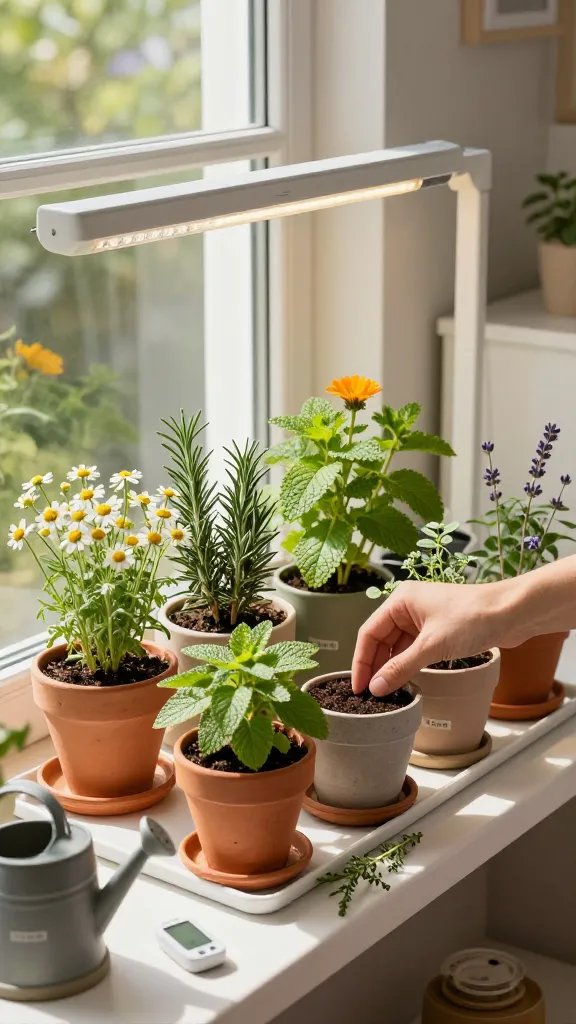
Here’s where your herbs either thrive or die dramatically. Dial in light, watering, and harvesting, and everything else feels easy. Set a few routines and your mini apothecary runs itself.
Light Like You Mean It
- Best spot: South or west window for 6–8 hours of direct sun.
- Grow light backup: Full-spectrum LED, 12–14 inches above plants, on for 12–14 hours daily. Put it on a timer so you don’t forget.
Water and Drainage
- Finger test: Water when the top inch feels dry. Mediterranean herbs prefer to dry out more between drinks.
- Soak thoroughly: Water until it drips from the bottom, then empty the saucer.
- Airflow: A tiny fan on low prevents mildew and strengthens stems.
Soil, Pots, and Spacing
- Soil mix: Quality potting mix + perlite. For lavender/rosemary/thyme/sage, add coarse sand.
- Pot size: Start 6–8 inches, upgrade if roots circle the pot. Deep pots for rosemary and lavender.
- One plant per pot: They’re not great roommates unless they share water needs.
Harvesting and Storage
- Morning harvest: Oils peak then. Snip above a node to encourage branching.
- Drying: Tie small bundles upside down in a dry, dark spot or use a dehydrator on low.
- Freezing: Chop and freeze in olive oil in ice cube trays for instant sauces.
Safety FYI
- Know your body: If you’re pregnant, nursing, on meds, or have conditions, research interactions for each herb.
- Pets: Keep potentially problematic herbs (like large amounts of rosemary or oregano) out of reach.
- Moderation: Culinary amounts are generally fine; concentrated preparations deserve a little caution.
With a few habits in place, you’ll harvest nonstop. And yes, you will feel wildly competent while doing it—trust me.
Ready to grow your own wellness corner? Start with two or three herbs you’ll use constantly, then expand as you gain confidence. Your apartment’s about to smell amazing, your meals will glow up, and your future self will love this tiny garden flex.