
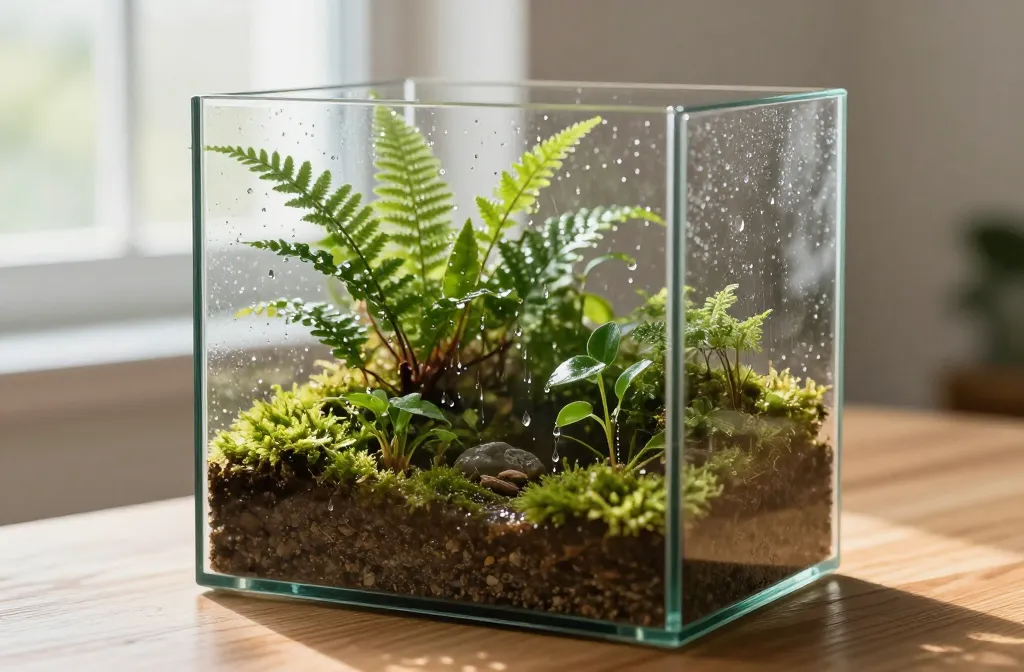
I used to crack open my sealed terrariums every week to “give them a drink,” and I kept wondering why they went swampy or dried out a month later. Once I understood the tiny weather system inside the glass, my terrariums ran for a year without a single top-up. In this article, I’ll show you how the terrarium water cycle actually works, how to set moisture once, and how to read the glass for foolproof maintenance. You’ll stop guessing and start growing healthy, low-effort mini-forests.
Why Closed Terrariums Need Almost No Water
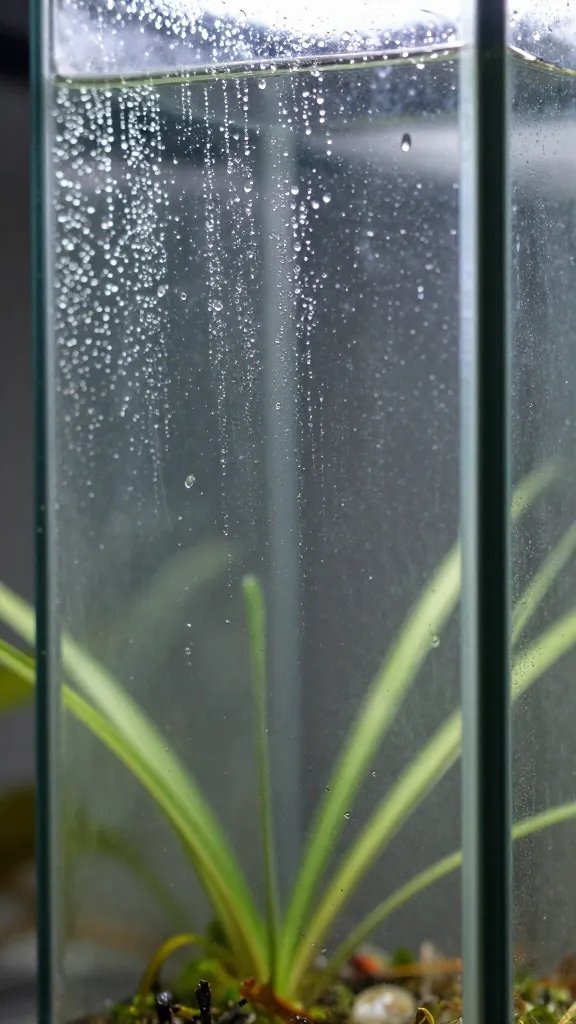
A closed terrarium runs a complete water cycle. Water evaporates from the substrate and plants, condenses on the cooler glass, and drips back down — like rain in a jar.
That loop recycles the same moisture day after day. When you add extra water, you break the balance and create a bog. When you underfill at the start, the system never establishes and plants struggle.
Takeaway: Treat watering as a one-time setup, not a routine task — once sealed and stable, you rarely add more.
The Moisture “Set Point”: How Wet Is Right At The Start

The starting moisture level decides whether your terrarium becomes a rainforest, stays stable, or turns to sludge. I use the “squeeze test” on the substrate before planting.
Grab a handful of your mix and squeeze hard. You want one or two drops to appear and the clump to hold shape without dripping — that’s the correct set point. If it crumbles, mist more. If it streams, add dry mix and blend until it calms down.
Step-By-Step: Dialing In Initial Moisture
- Prepare a good quality potting mix from the garden centre, cut 50:50 with fine orchid bark or coco coir for air, then mix in a thin layer of horticultural charcoal.
- Mist and blend until the squeeze test gives one to two drops.
- Pack the mix firmly but not smashed — press with fingers, not fists.
- Plant, tidy leaves, then seal the lid.
Action: Do the squeeze test today on any new build — adjust until one to two drops appear, then plant.
Reading the Glass: Condensation As Your Water Gauge
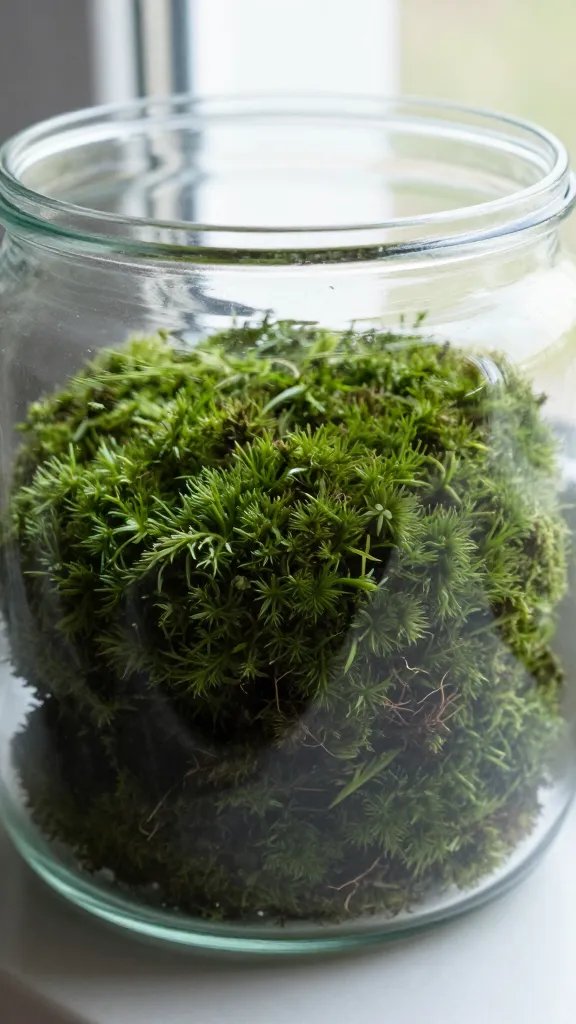
You don’t need meters. The glass tells you everything if you check it at the same time each day, ideally mid-morning or midday.
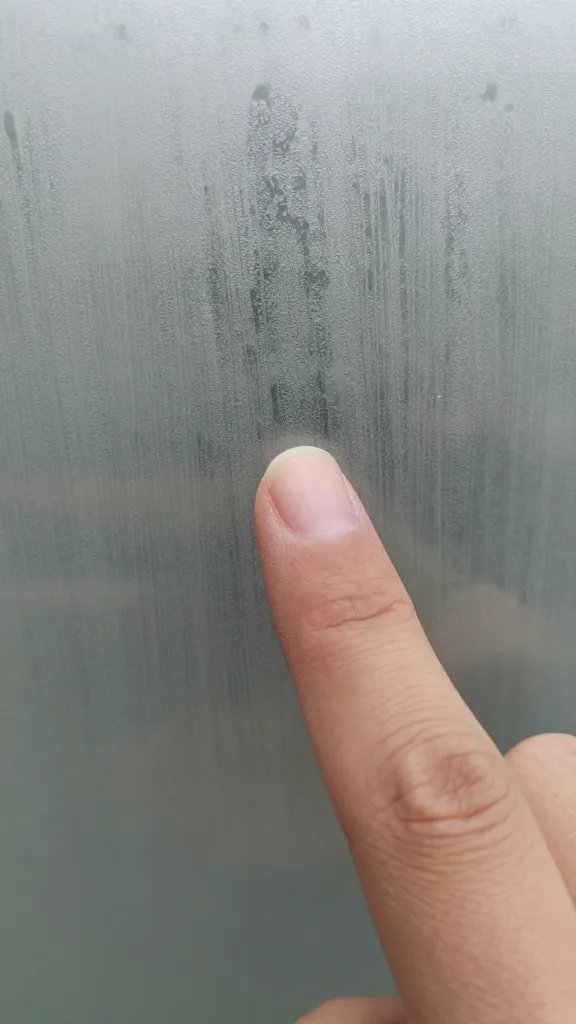
- Balanced: Light misting or tiny beads on 25–50% of the glass that clears by afternoon.
- Too Wet: Heavy droplets running down most of the glass all day. The substrate looks shiny or spongy.
- Too Dry: Glass stays bone dry for several days, leaves feel limp, and new growth stalls.
Quick Fixes Based On What You See
- Too Wet: Open the lid for 1–3 hours in bright indirect light. Repeat daily until condensation drops to a light mist.
- Too Dry: Add 1–2 tablespoons of water with a spray bottle around the edges, not straight on stems. Reseal and recheck in 24 hours.
Takeaway: Check condensation at the same time daily for one week — use the lid like a dimmer switch to fine-tune moisture.
The Real Engine: Heat, Light, And Plant Respiration

Evaporation needs warmth and light. A spot with bright indirect light near a window runs the cycle gently; harsh sun cooks the jar and floods the glass with water.
Plants also release moisture through leaves. Lush, fast growers push the cycle harder than slow mosses. That’s why the same jar behaves differently with different plant lists.
Action: Move your terrarium to a bright spot that never gets hot midday sun — about one metre from an east or bright north-facing window works reliably.
Drainage And Layers: Not Just Pretty, Actually Functional
In a closed system, excess water needs somewhere to sit without drowning roots. I always build a clear drainage layer at the bottom.
- Base: 1–2 cm of rinsed aquarium gravel or LECA from the garden centre.
- Barrier: A cut circle of mesh or window screen to stop mix falling through.
- Charcoal Band: A thin sprinkle of horticultural charcoal to keep smells down.
- Substrate: Your prepared potting mix, 4–8 cm depending on jar size.
If water collects below the mesh, roots still breathe. If you see a permanent puddle rising into the substrate, you started too wet or added too much later.
Takeaway: If you’re rebuilding or starting fresh, add a 1–2 cm drainage layer with mesh — it forgives small watering errors.
Plants That Behave Well In A Closed Water Cycle
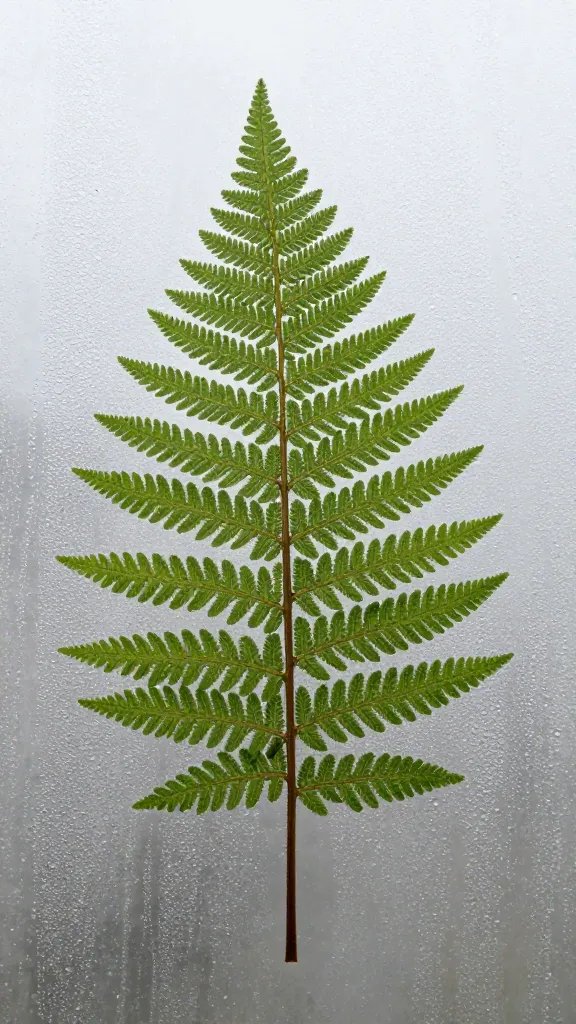
I pick small, humidity-loving, slow-to-moderate growers that won’t outpace the system. Avoid thirsty tropicals that want constant fertiliser or plants that demand strong sun.
Reliable Choices From Any Garden Centre
- Ferns: Maidenhair cultivar minis, button fern, lemon button fern.
- Pepperomias: Peperomia obtusifolia ‘Mini’, Peperomia prostrata (string of turtles in small amounts).
- Pileas: Pilea depressa, Pilea glauca.
- Mosses: Sheet moss or cushion moss from terrarium suppliers; avoid wild collection.
- Fittonia: Nerve plant “mini” varieties.
Warning: Do not use succulents or cacti — they rot in the closed cycle.
Action: Replace any struggling sun-lovers with one compact fern or fittonia — your condensation will stabilise within a week.
Common Water-Related Problems And Simple Fixes
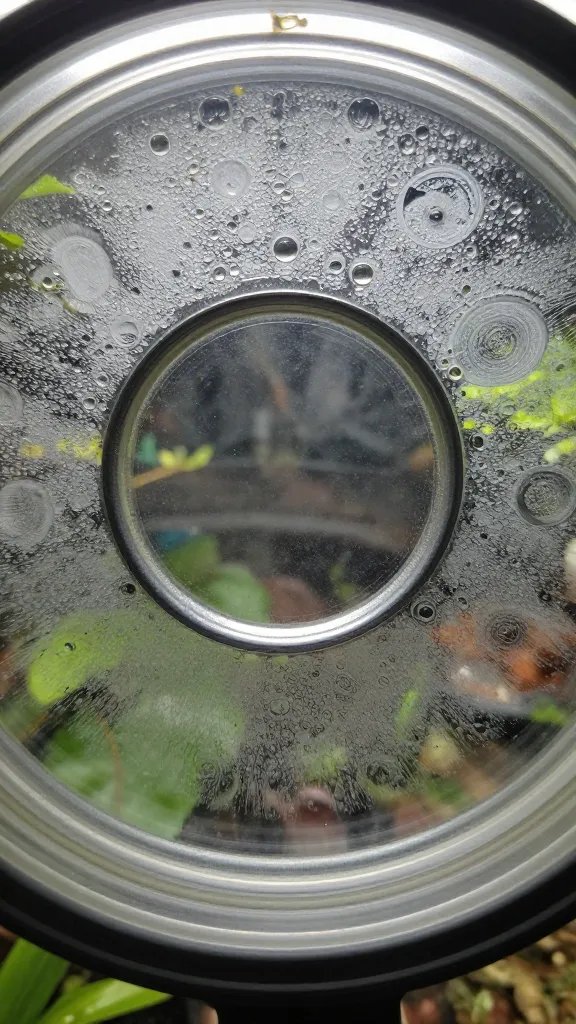
Most failures trace back to moisture misreads. Tackle what you see, not what you fear.
Warning Signs And What To Do
- Persistent Fogging All Day: Too wet or too warm. Vent 2 hours daily for 2–3 days and move 30–60 cm farther from the window.
- Mold On Leaves Or Wood: Remove affected bits with tweezers, wipe glass, and vent daily for a week. Add a small fan near (not at) the jar during venting to move room air.
- Algae On Glass: Light is too intense and moisture high. Shade with a sheer curtain and vent for 1–2 hours. Wipe the glass with a clean paper towel wrapped around a chopstick.
- Wilting Despite Condensation: Roots suffocated. Open the lid for a day, trim any rotting stems, and let the substrate dry back slightly.
Takeaway: When in doubt, vent in short sessions and reduce light intensity — both correct most water cycle issues safely.
Minimal Maintenance For A Stable, Self-Watering Jar

Once the cycle balances, you “tend” more than you “water.” I prune, clean glass, and reset the lid seal if needed.
- Open monthly for 10 minutes to remove yellow leaves and wipe the inside of the glass.
- Fertilise never or at most once per year with half-strength liquid feed — excess nutrients fuel algae and mold.
- Top up water in teaspoons, not cups, and only after three consecutive dry-glass days.
Action: Set a monthly calendar reminder: quick tidy, glass wipe, 10-minute air, then reseal.
Frequently Asked Questions
How much water do I add on day one?
Moisten the substrate until the squeeze test gives one to two drops. In a medium jar (about 2–3 litres), that usually means misting with roughly 60–120 ml in total as you mix, not pouring a cup at once. Stop as soon as the mix holds shape without dripping. Plant, seal, and observe the glass the next day.
What if my terrarium has zero condensation?
If the glass stays dry for three days in a row, add 1–2 tablespoons of water with a spray bottle around the edges and reseal. Move it closer to bright indirect light to encourage gentle evaporation. Check again at midday the following day. Repeat in tablespoon steps until you see a light mist.
Why does my terrarium fog heavily every morning?
Morning fog is normal because the glass is coolest then. It should clear by afternoon. If it doesn’t, vent for 1–2 hours and reduce heat or direct sun on the jar. Aim for light beads on up to half the glass at midday, not a full blur.
Can I use tap water?
Yes, if your tap water tastes clean and not salty. If you get limescale crusts on kettles, use filtered or bottled water to avoid mineral film on the glass. Always add in tablespoons, not pours, to keep the cycle stable. Avoid softened water because it adds salts.
How do I fix a swampy substrate without tearing it all down?
Open the lid and allow 24 hours of air in bright, not hot, light. Wick out excess water by pushing in a paper towel strip to the bottom layer and removing it after it soaks. Repeat with fresh strips until the glass shows only a light mist by midday. Reseal and monitor for three days.
Do I need a drainage hole or valve?
No. A proper drainage layer handles small excesses, and venting corrects large ones. Holes break the closed cycle and turn maintenance into routine watering. If water consistently pools into the substrate layer, reset your moisture set point rather than modifying the jar.
Conclusion

You don’t keep a closed terrarium alive by watering it — you keep it alive by setting the right moisture once and letting the water cycle work. Start with the squeeze test, place it in bright indirect light, and read the glass each midday for a week. Today, pick one jar, adjust with a single vent or a tablespoon of water, and watch how predictably it responds. When you see that light midday mist, you’ll know you’ve built a self-watering world that runs on its own.