
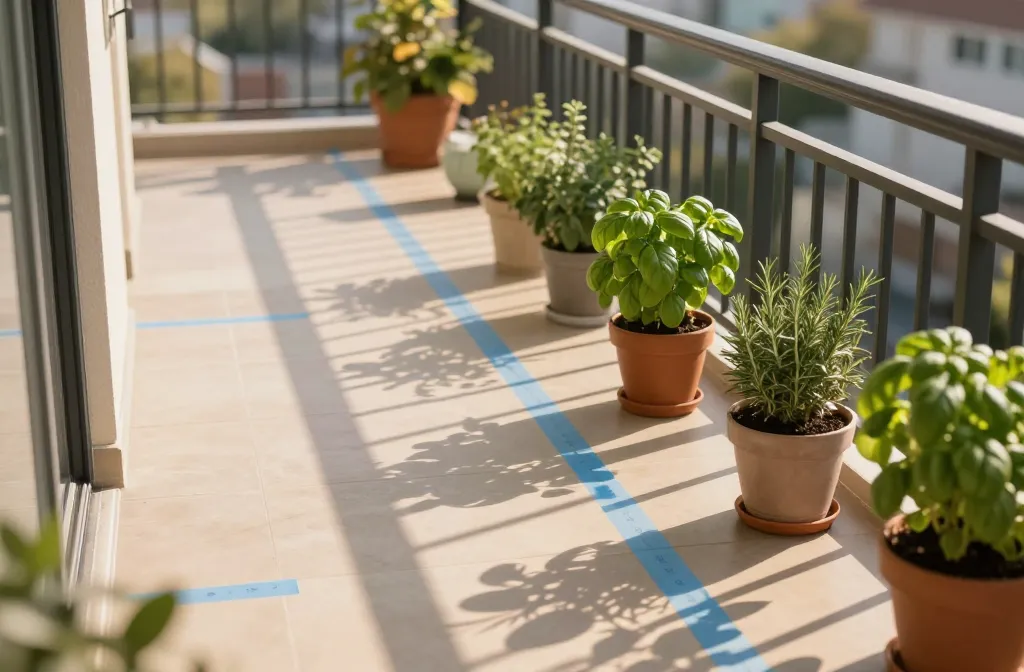
I used to wonder why my balcony basil thrived in June but sulked by September on the exact same shelf. The plants weren’t confused — I was. The sun’s angle and your neighbor’s roofline change your balcony’s light more than you think. In this guide, I’ll show you how to build a simple “light map” so you place each plant once and watch it perform all year.
Why Sun Angle Changes Your Balcony More Than the Weather
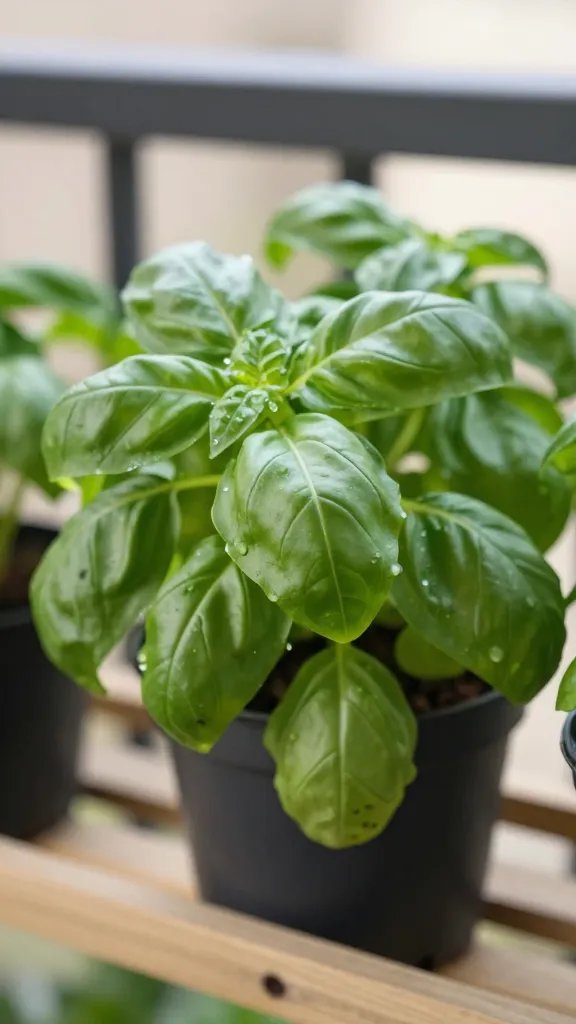
The sun sits high in summer and low in winter. That shift changes where beams land, how far they reach, and what nearby buildings and railings shade.
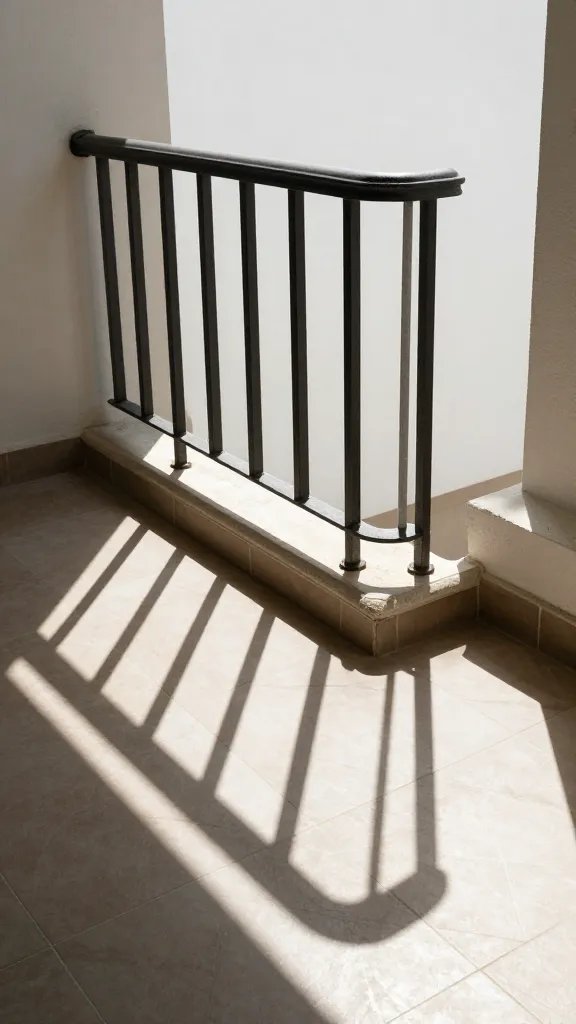
On a balcony, a 30–60 cm eave or the top rail can block hours of light in winter but almost none in midsummer. The result: a summer “sun patch” can slide a full meter across your floor by autumn.
Action today: At noon, stand where your favorite plant sits and look up — if you see balcony ceilings, beams, or rooflines between you and the sun, expect heavy winter shade there.
How to Build a Simple Light Map with Tape and a Phone
You don’t need meters. You need a day and a bit of tape. Mark the sun, track the patches, and sketch the results.
- Pick a clear day. Set phone alarms for 8 a.m., 10 a.m., noon, 2 p.m., and 4 p.m.
- At each time, place a strip of painter’s tape where full sun hits the floor. Write the time on the tape.
- Take one photo straight down of the floor and one wide shot of the whole balcony.
- Repeat on a weekend three months later. Different season, different angles.
- Sketch your balcony and transfer the tape positions. Outline areas that get 4+ hours, 2–4 hours, and under 2 hours.
Do this once in late spring and once in late autumn to catch the extremes. Your map will predict the rest.
Action today: Put painter’s tape and a marker by your door and set the five phone alarms for the next sunny day.
Translate the Map Into Plant Spots That Work
Group plants by light appetite, then match them to zones on your map. Think in hours, not vibes.
- 6+ hours direct sun: Tomatoes, chilies, strawberries, Mediterranean herbs.
- 4–6 hours: Dwarf citrus, roses, peppers, compact veg like bush beans.
- 2–4 hours or bright reflected light: Lettuce, spinach, parsley, mint, ferns.
- Bright indirect only: Pothos, philodendron, snake plant, cast iron plant.
When in doubt, start a plant one zone shadier than the tag suggests. Burned leaves recover slowly; a slightly shadier plant still grows.
Action today: Move one sun-loving plant into your longest-sun tape zone and a tender plant one step back from direct rays.
Use Balcony Orientation and Obstacles to Predict Seasons
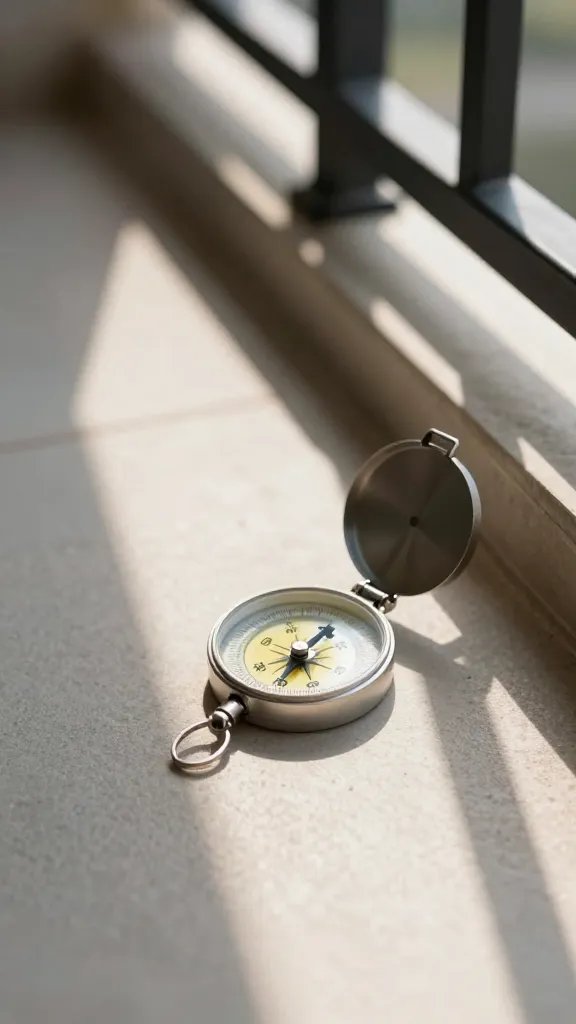
You can predict light with a compass and your eyes. No apps required.
- South-facing (Northern Hemisphere)/North-facing (Southern Hemisphere): Strongest year-round sun. Winter still shorter; angle drops, so ceiling overhangs matter more.
- East-facing: Gentle morning sun, cooler afternoons. Great for greens and herbs that bolt in heat.
- West-facing: Harsh afternoon sun in summer. Heat stress hits containers here first.
- North-facing (Northern Hemisphere)/South-facing (Southern Hemisphere): Mostly indirect light; rely on reflection and light-colored walls.
Scan for seasonal shade-makers: opposite balconies with hanging screens, trees that leaf out, and railings that throw winter stripes across pots.
Action today: Open your phone’s compass, note your balcony’s facing, and write it on your sketch — it explains 80% of seasonal change.
Create and Steer Light with Simple, Cheap Gear

You can add hours of usable light by bouncing it, lifting pots, and trimming obstacles — without buying grow lights.
- Reflectors: Clip a sheet of white corrugated plastic or a foam board to the dark side of plants. Aim it to bounce sun into lower leaves.
- Plant stands: Raise pots 15–30 cm so they clear railing shadows in winter. In summer, drop them to hide from afternoon scorch.
- Sheer shade cloth: For west walls, a beige 30% cloth on a tension rod softens 3–5 p.m. burn while keeping brightness.
- Light walls: Keep adjacent walls clean and light-colored. A white wall adds consistent bright indirect light all day.
Small changes compound. One reflector plus a 20 cm lift can turn a 2-hour zone into a 3.5-hour zone.
Action today: Prop a white cutting board or foam board behind your shadiest planter and check leaf brightness at noon.
Rotate and Swap Plants on a Seasonal Schedule
Your light map lets you set a simple rotation so nothing struggles for months. Treat shelves like seats on a bus.
- April–September: Heat-lovers front row; lettuces and parsley tuck into partial shade behind them.
- October–March: Pull sun-hungry pots forward and up; slide tender or shade lovers toward walls to catch reflection and avoid cold winds.
- Monthly quarter-turn: Rotate each pot 90 degrees to keep even growth and prevent leaning.
Mark “Summer” and “Winter” positions with small pencil ticks on your shelf edges so swaps take five minutes.
Action today: Put a recurring calendar event for the first weekend of April and October labeled “Balcony plant swap + quarter turns.”
Spot Sun Stress vs. Shade Stress Fast

Plants tell you when your map needs a tweak. Learn the difference between too much sun and not enough.
Warning Signs to Read
- Too much sun: Crisped leaf edges, pale patches that turn white or tan, soil drying in 24 hours, pots hot to the touch at 3 p.m.
- Too little light: Long internodes (stretching), small pale new leaves, soil staying wet past 4 days, plants leaning hard toward a single direction.
Step-by-Step Fixes
- For scorch: Move the pot 30–60 cm back or add a sheer cloth for the hottest 3 hours.
- For stretch: Advance the pot one zone forward or add a white reflector and rotate weekly.
- For uneven growth: Quarter-turn the pot and raise it 10–20 cm to clear railing shade.
- Recheck after 10–14 days before making another change.
Action today: Touch your sunniest pot at 3 p.m.; if it feels hot, slide it back the width of your hand and add a reflector.
Rain, Wind, and Heat: Microclimates That Shift Your Map

Light is half the picture. Wind tunnels down corridors and heat bounces off glass, which changes what plants can handle in each zone.
- Windy edges: Dry leaves faster and increase sunburn risk. Tuck sensitive plants behind a railing panel or short screen.
- Hot glass: West-facing windows radiate heat into nearby pots. Keep foliage 20–30 cm off hot glass.
- Rain shadows: Overhangs block rainfall, so sunny front pots may dry less than you think while back corners never see a drop.
Adjust watering by position, not by the calendar. Front rail pots often need smaller, more frequent sips; back corners need a full soak and days to dry.
Action today: After watering, check which saucers fill under rain and which stay dry — mark “dry corner” and “rain zone” on your sketch.
Frequently Asked Questions
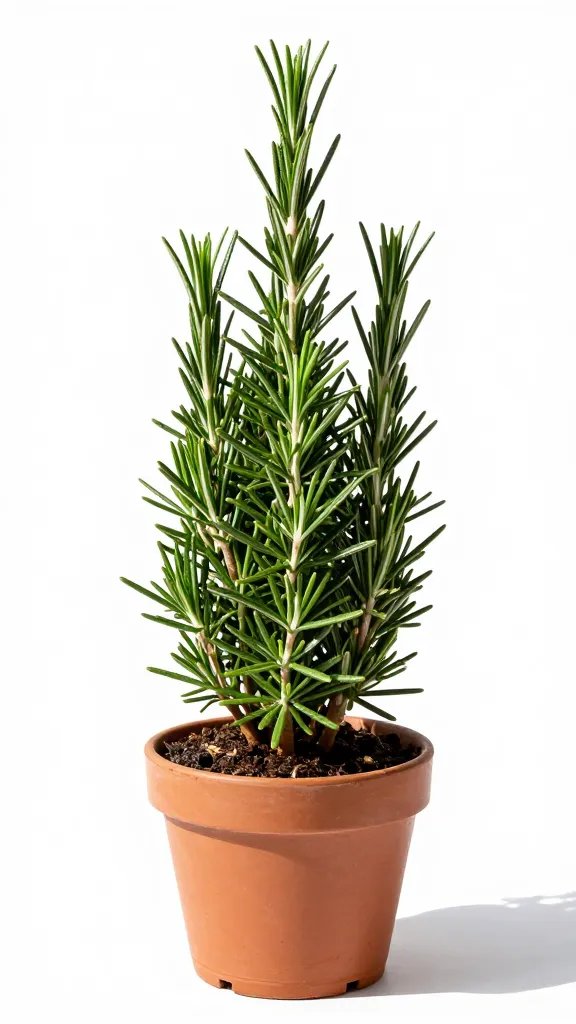
How many hours of sun do herbs need on a balcony?
Most Mediterranean herbs like rosemary, thyme, and oregano thrive with 6+ hours. Basil is happy with 4–6 hours and warm temperatures. Leafy herbs like parsley and mint grow well at 2–4 hours if the light is bright. Use your light map to give basil and rosemary the longest slot and tuck mint in partial shade.
My balcony only gets morning sun — what can I grow?
Morning sun is gentle and reliable. Grow greens (lettuce, spinach), peas, parsley, mint, cilantro, and compact flowers like pansies. Use a white reflector to extend brightness into late morning. Keep fruiting crops like tomatoes small and in the brightest, most open spot or skip them for herbs and salad bowls.
Do I need a light meter to make a light map?
No. Tape, timing, and photos are enough. Mark sun patches through the day and across seasons, then group plants by hours of direct sun. If you want a check, take a midday photo of leaf shadows — sharp, crisp shadows mean strong light; fuzzy shadows mean indirect light.
Why do my plants scorch only in August?
August combines long days with heat that raises leaf and pot temperatures. West-facing balconies get a hard 2–5 p.m. blast. Add a 30% shade cloth for those hours, water in the morning so roots have moisture, and raise pots off hot surfaces with a trivet. Move sensitive plants one step back on your map for that month.
How often should I update the light map?
Refresh it twice a year: once in late spring and once in late autumn. Take five photos at the same times you used before and adjust your sketch. If a neighbor adds screens or a tree leafs out, do a quick midday check and move plants the same week.
Conclusion
You now have a way to see your balcony the way plants do: by hours, angles, and obstacles. Build your light map on the next sunny day, then make one confident move — shift a sun-lover into the longest patch and give a tender plant a reflector. After two weeks, you’ll see sturdier growth and fewer crispy leaves, and you won’t chase problems month after month.