
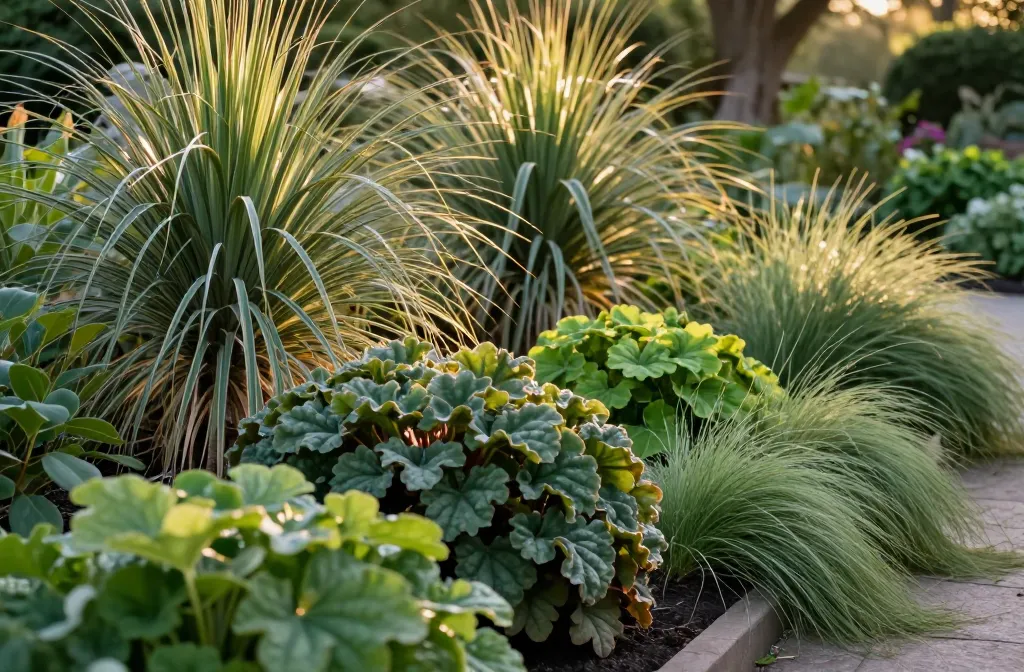
Your garden can look like it hired a stylist. Texture contrast—spiky next to silky, frilly beside glossy—creates instant drama without relying only on flowers. These bold plant pairings turn ho-hum beds into eye candy with year-round personality. Ready to play matchmaker with leaves, blades, and blooms?
1. Spikes + Ruffles: Drama You Can See From The Curb
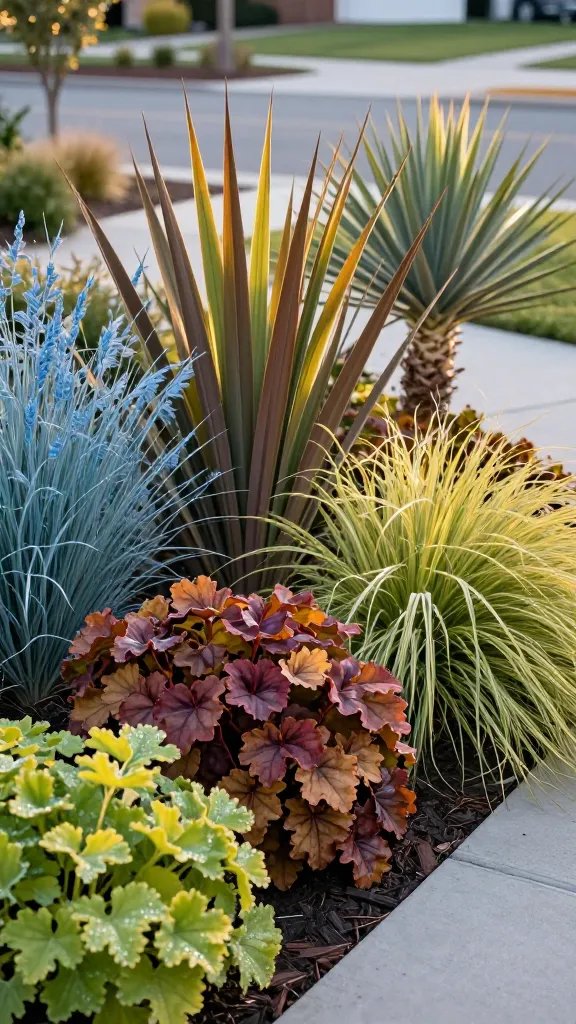
Sharp, architectural shapes love a fluffy friend. Pair upright swords with soft mounds to create instant tension and balance. It’s like leather jacket meets tulle skirt—opposites, but somehow perfect.
Bold Pairings (16 Total Across The Article—Start Here):
- New Zealand Flax (Phormium) + Heuchera (coral bells)
- Blue Oat Grass (Helictotrichon) + Lady’s Mantle (Alchemilla mollis)
- Yucca filamentosa + Japanese Forest Grass (Hakonechloa)
These combos use vertical thrust against low, ruffled mounds. The result? Clean sightlines that still feel lush. Plus, the ruffles soften any harsh edges around paths or stones.
Tips:
- Plant spiky forms in odd-numbered clusters for a sculptural vibe.
- Use ruffles as a living “skirt” around the base to hide bare stems.
- Match sun needs: all three pairings above love full sun to bright partial shade.
Use this when you want bold structure that still reads friendly. Great for front borders and modern designs that need a touch of romance.
2. Glossy Leaves + Fuzzy Foliage: Textures You Want To Touch (But Maybe Don’t)
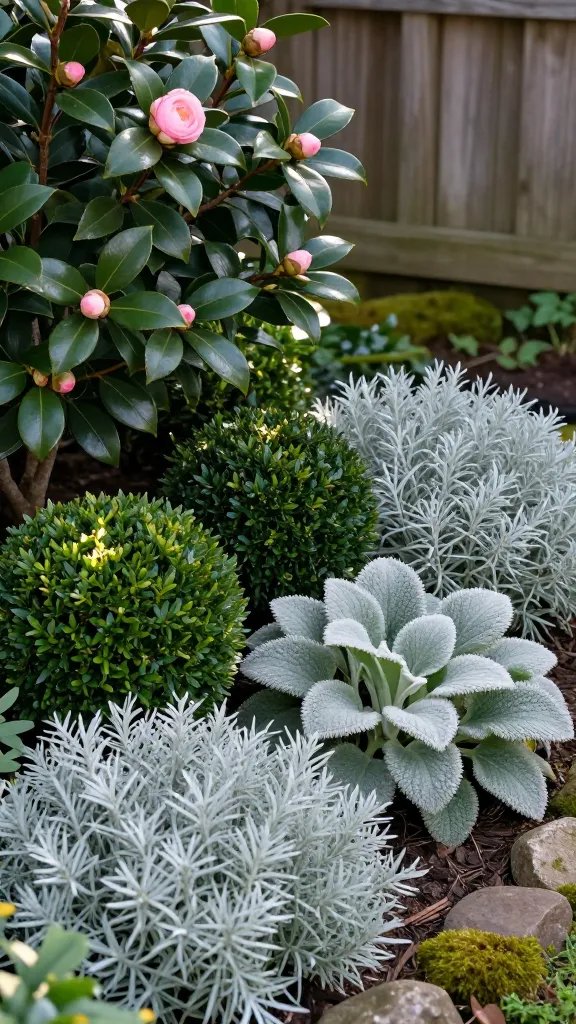
Shiny leaves reflect light; fuzzy leaves soak it up. Together, they create a dynamic push-pull that turns even a shady corner into a “what’s going on here?” moment. Your eyes ping-pong between surfaces, and that movement equals visual interest.
Shine-Meets-Soft Pairings:
- Camellia (glossy evergreen) + Lamb’s Ear (Stachys byzantina)
- Boxwood (sheared, glossy balls) + Artemisia ‘Powis Castle’ (silvery, feathery)
- Rhododendron (broadleaf, glossy) + Brunnera (hairy, heart-shaped leaves)
Gloss adds snap; fuzz adds softness. The silver tones of Artemisia and Lamb’s Ear brighten the area, while glossy leaves ground the palette with weight.
Quick Pointers:
- Keep fuzzy foliage away from constant overhead watering—it hates soggy leaves.
- Shear boxwood lightly to maintain clean shapes against the wild, airy Artemisia.
- Layer heights: tall glossy in back, fuzzy drifts in front for a plush edge.
Choose this when you want instant sophistication without fuss. It shines in foundation plantings and front-door vignettes where light hits leaves at different times of day.
3. Fine Needles + Big, Bold Leaves: Go Big Or Go Home
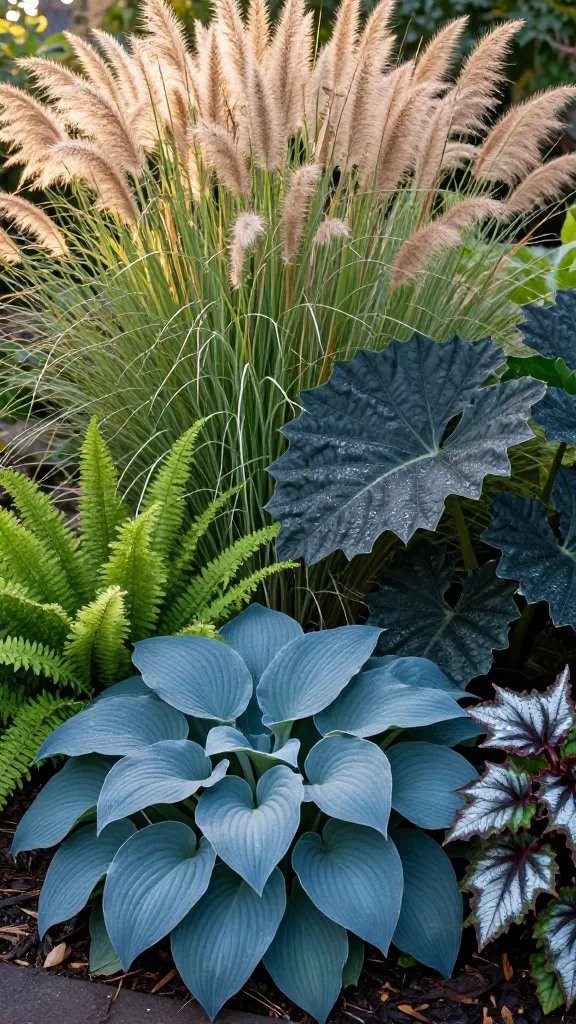
Nothing spotlights a giant leaf like setting it against a curtain of fine texture. Think refined versus jungle, and yes, you can have both on the same bed. The contrast makes each plant look more intentional, more sculptural, more “I planned that.”
Statement-Maker Pairings:
- Feather Reed Grass (Calamagrostis ‘Karl Foerster’) + Hosta (large-leaf varieties)
- Asparagus Fern (Asparagus densiflorus) + Elephant Ears (Colocasia/Alocasia)
- Threadleaf Coreopsis + Rex Begonia (bold, textured leaves)
The grasses and fine foliage act like a backdrop curtain that makes the headliners pop. You also get movement from plumes or fronds, which plays beautifully against solid slabs of leaf.
How To Nail The Look:
- Repeat fine textures in three spots to weave the design together.
- Let big leaves overlap the edges of paths or pots for that lush, “extra” vibe.
- Mind moisture: Elephant Ears crave more water; put them where they won’t dry out.
Use this combo when you want drama visible from your window. It works in both sun and shade, depending on the specific plants you choose—FYI, that flexibility is gold.
4. Matte Blues + Glossy Greens: Color-Texture Power Couple
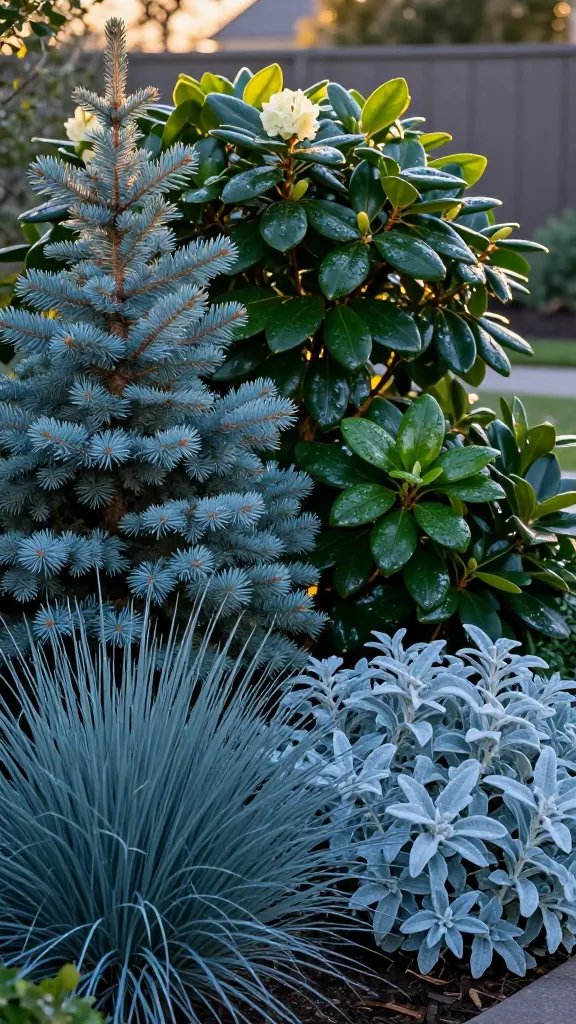
Color temperature changes how texture reads. Blue-gray foliage looks matte and cool, while deep greens often read glossy and rich. Pair them and you get a garden that looks styled at golden hour—basically all day.
Cool vs. Rich Pairings:
- Blue Spruce (Picea pungens ‘Globosa’) + Rhododendron
- Blue Fescue (Festuca glauca) + Hellebore (glossy leaves, winter flowers)
- Dusty Miller (Senecio cineraria) + Skimmia or Laurel (for shine)
Blue foliage cools hot color schemes and instantly reads modern. Glossy greens add depth so the blues don’t look washed out in harsh light.
Placement Tips:
- Put matte blues at the front to catch light and enhance that powdery look.
- Use glossy evergreens as anchors to frame pathways or seating areas.
- Mix in a warm-toned mulch or gravel so the blues don’t go icy; balance matters.
Try this when your garden leans warm and you need a cool counterpoint. It crushes it in urban courtyards and small spaces where subtle shifts make a big impact.
5. Vertical Wands + Cascading Drapes: Motion That Never Quits
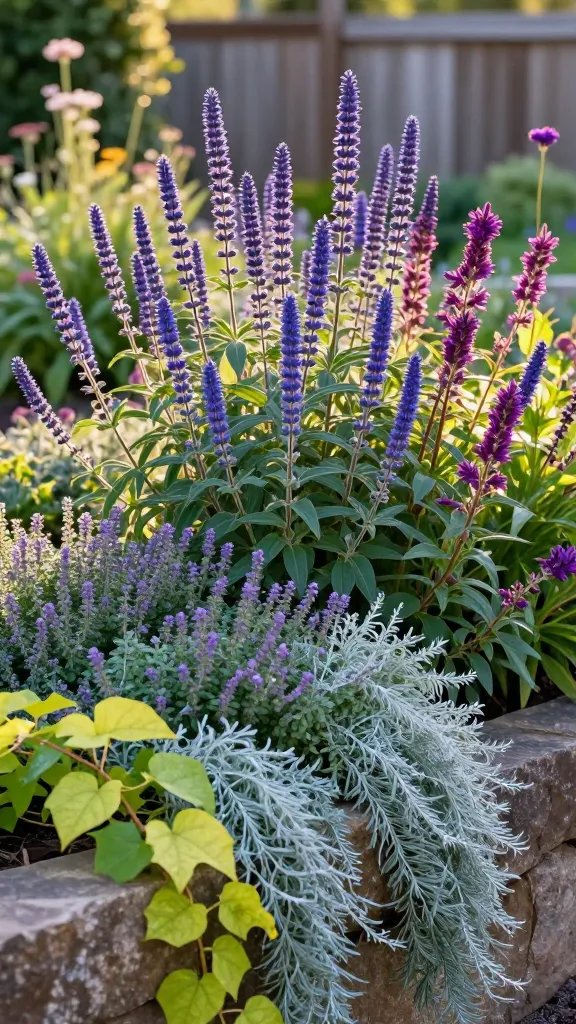
Plants don’t just sit there—they move. Pair upright wands with trailing or cascading plants and you get vertical energy plus soft flow. It’s the garden version of a great playlist: bops and ballads, all in rhythm.
Movement-First Pairings:
- Salvia nemorosa (spikes) + Creeping Thyme (carpet)
- Liatris spicata (bottlebrush spires) + Sweet Potato Vine (Ipomoea batatas) (trailing)
- Veronica spicata (vertical blooms) + Dichondra ‘Silver Falls’ (cascading)
Spikes pull the eye upward while drapes spill over edges and soften hard lines. The combo reads lively, even on still days—seriously, the motion feels constant.
Make It Work:
- Plant the wands in tight drifts for emphasis, then weave trailers between them.
- Use edges—retaining walls, raised beds, containers—to show off the spill.
- Feed trailing annuals regularly; they’re hungry performers and repay you fast.
Perfect for patios and border fronts where you want maximum visual rhythm in minimal space. IMO, this is the easiest way to make a bed look “designed.”
Quick Design Reminders Across All Pairings
- Repeat textures in threes to avoid a chaotic “plant museum” vibe.
- Scale matters: big leaves need room; don’t cramp the diva.
- Seasonal swap: trade annuals in and out to maintain contrast while perennials do their thing.
- Light = texture amplifier: morning and evening sun make glossy leaves gleam and fuzzy leaves glow.
- Soil and water compatibility first, aesthetics second—healthy plants always look better.
All 16 Bold Pairings, At A Glance
- New Zealand Flax + Heuchera
- Blue Oat Grass + Lady’s Mantle
- Yucca filamentosa + Japanese Forest Grass
- Camellia + Lamb’s Ear
- Boxwood + Artemisia ‘Powis Castle’
- Rhododendron + Brunnera
- Feather Reed Grass + Hosta
- Asparagus Fern + Elephant Ears
- Threadleaf Coreopsis + Rex Begonia
- Blue Spruce (‘Globosa’) + Rhododendron
- Blue Fescue + Hellebore
- Dusty Miller + Skimmia (or Laurel)
- Salvia nemorosa + Creeping Thyme
- Liatris spicata + Sweet Potato Vine
- Veronica spicata + Dichondra ‘Silver Falls’
- Bonus texture riff: Sedum ‘Autumn Joy’ + Russian Sage (Perovskia/Salvia yangii) for chunky vs. airy
You don’t need a giant yard to play with texture—just a few smart duos and a sunny afternoon. Pick one pairing that fits your light and zone, then repeat it in a rhythmic pattern. Trust me, your garden will look styled, intentional, and way more interesting than the neighbor’s “shrub blob” situation.