
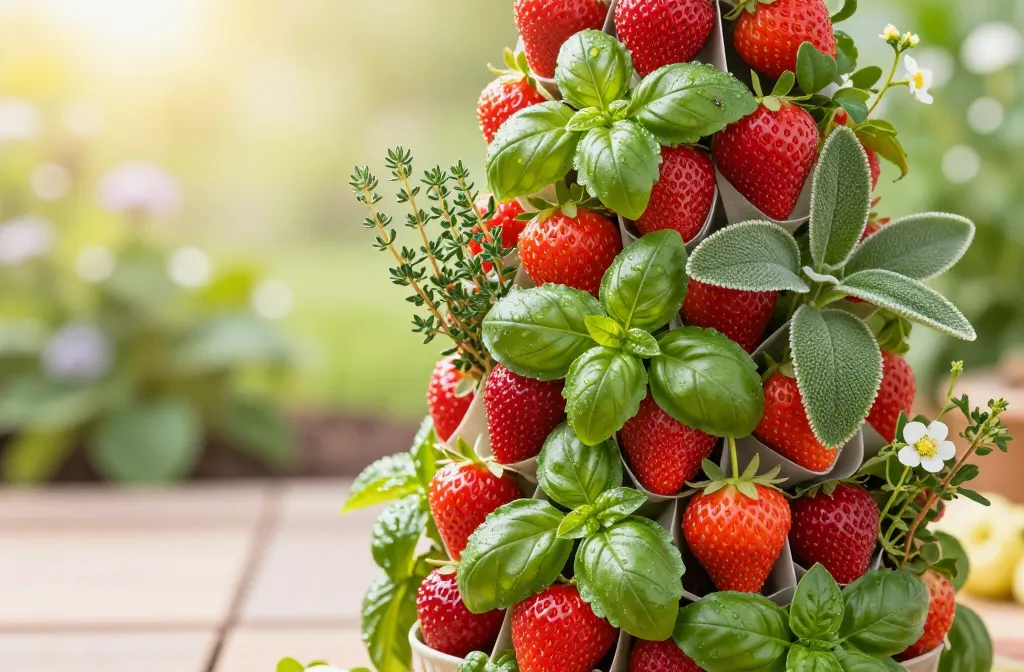
Your strawberry tower can crank out more berries with the right plant neighbors. Think fewer pests, juicier fruit, and less fussing over water and fertilizer. I’m talking real, practical combos you can plant this weekend—no green-thumb wizardry required. Ready to stack your tower like a pro and score a sweeter harvest?
1. Aromatic Bodyguards: Basil, Thyme, And Sage
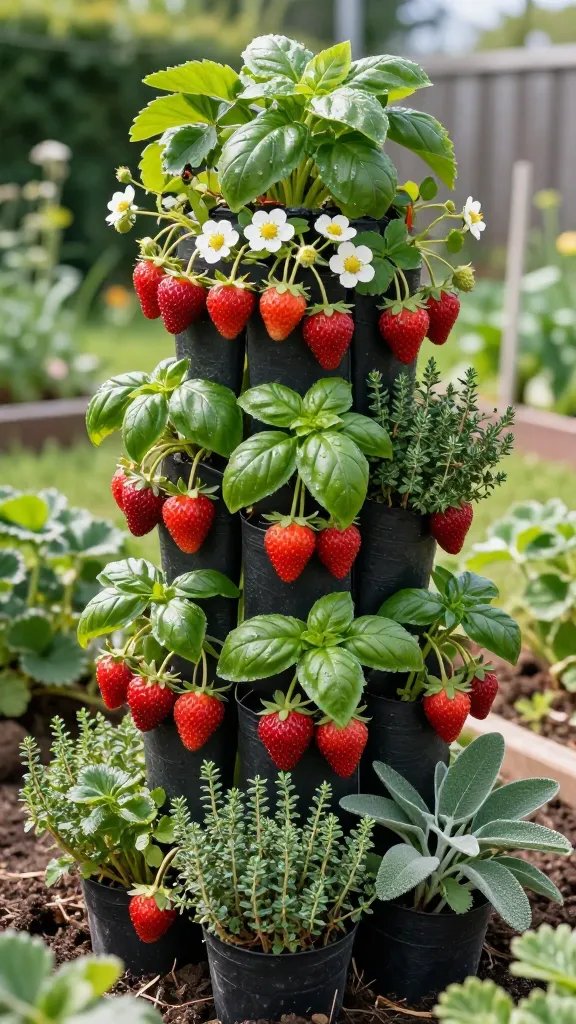
Herbs don’t just smell amazing—they confuse pests and make strawberries taste brighter. Basil, thyme, and sage thrive in the same sun-loving, well-drained setup as your tower. Plant them in pockets that get good airflow and you’ll notice fewer aphids and less fungal drama.
Why They’re Awesome
- Basil: Deters flies and aphids, and boosts flavor compounds in nearby fruit (yes, really).
- Thyme: Stays compact, handles heat, and helps repel spider mites.
- Sage: Aromatic leaves discourage slugs and some beetles—big win for berry skins.
Rotate herbs around the tower to create a scent “barrier.” Keep basil on the sunnier tiers, thyme on middle tiers, and sage on edges with good air movement.
Pro Tips
- Pinch basil regularly to prevent flowering and keep it bushy.
- Don’t overwater—herbs prefer to dry out between sips.
- Snip thyme and sage sparingly to avoid bald patches in small pockets.
Use this trio when pests keep crashing your berry party and you want low-maintenance, edible protection.
2. Fragrant Pest Shields: Marigolds And Nasturtiums
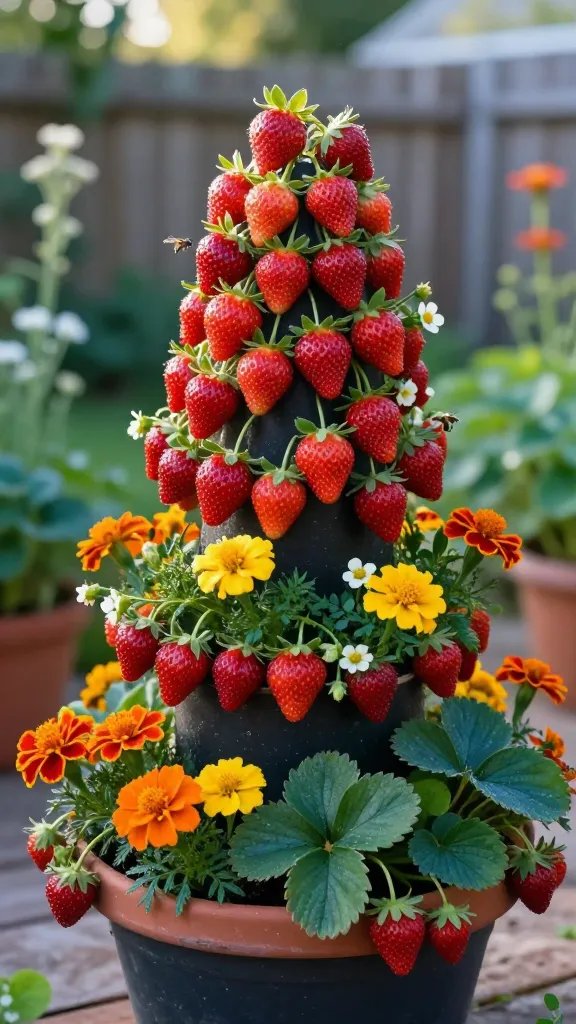
Want a pest-control system that also looks like a mini fireworks show? Marigolds and nasturtiums bring bold color, act as decoys or repellents, and spill beautifully over tower edges. They don’t hog nutrients and they lighten the vibe—kind of like your fun friend who also pays the tab.
Key Benefits
- Marigolds: Their roots release compounds that discourage root-knot nematodes; the flowers deter whiteflies and beetles.
- Nasturtiums: Trap aphids away from strawberry leaves and attract pollinators with easy-access blooms.
Let nasturtiums cascade from the upper tiers for an elegant, edible curtain. Tuck marigolds into sunny pockets around mid-level for consistent bloom and border protection.
Care Notes
- Deadhead marigolds weekly to keep blooms coming.
- Check nasturtiums for aphids; when they pile up, prune the worst leaves and toss them.
- Choose compact marigold varieties (French marigolds) so they don’t crowd strawberries.
Plant this combo when you want an instant color burst and a natural guard against aphids, beetles, and nematodes.
3. Pollinator Magnets: Alyssum, Borage, And Calendula
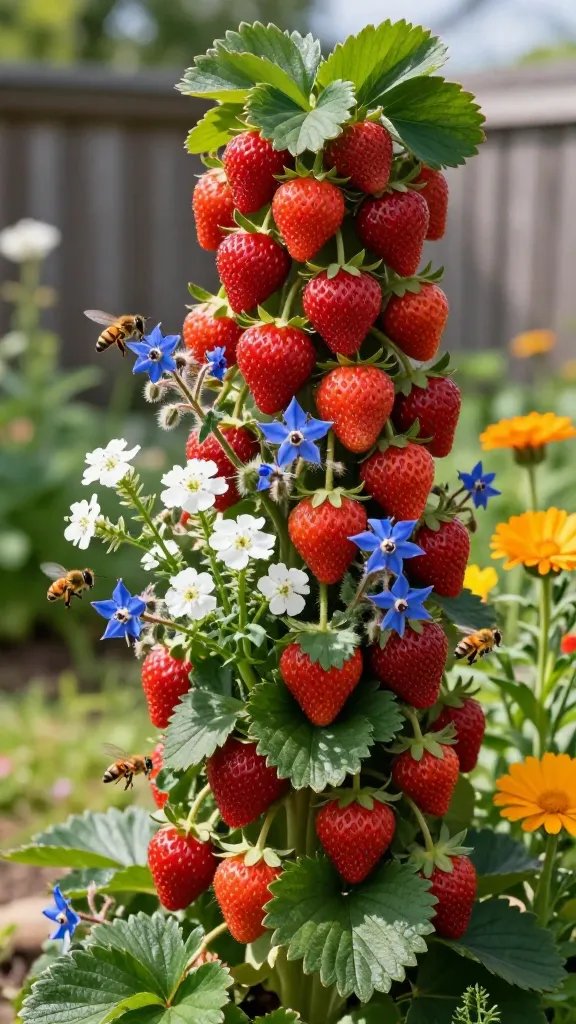
No pollinators, no berries—simple as that. These flowers lure bees and beneficial bugs like it’s a VIP brunch. More pollination means more uniform, bigger berries. Plus, all three play nicely in tower pockets without going full jungle.
Who Does What
- Sweet Alyssum: Tiny white blooms attract hoverflies that snack on aphids. Stays low and neat.
- Borage: Blue star flowers pull in bees and improve pollination; leaves can add trace minerals to soil as they break down.
- Calendula: Bright daisies bring pollinators and can deter some root pests with their scent.
Pop alyssum along lower tiers where it can spill softly. Plant borage in the top tier so it has room to reach upward without shading strawberries. Calendula fits anywhere sunny and gives long bloom windows.
Quick How-To
- Keep borage to one plant per tower—big leaves, big personality.
- Snip calendula blooms to encourage repeat flowering.
- Shear alyssum lightly midseason to refresh blooms.
Use these when you want that “bee highway” effect and consistent berry set, especially if you’ve had lopsided fruit before.
4. Moisture Managers: Lettuce And Spinach Understories
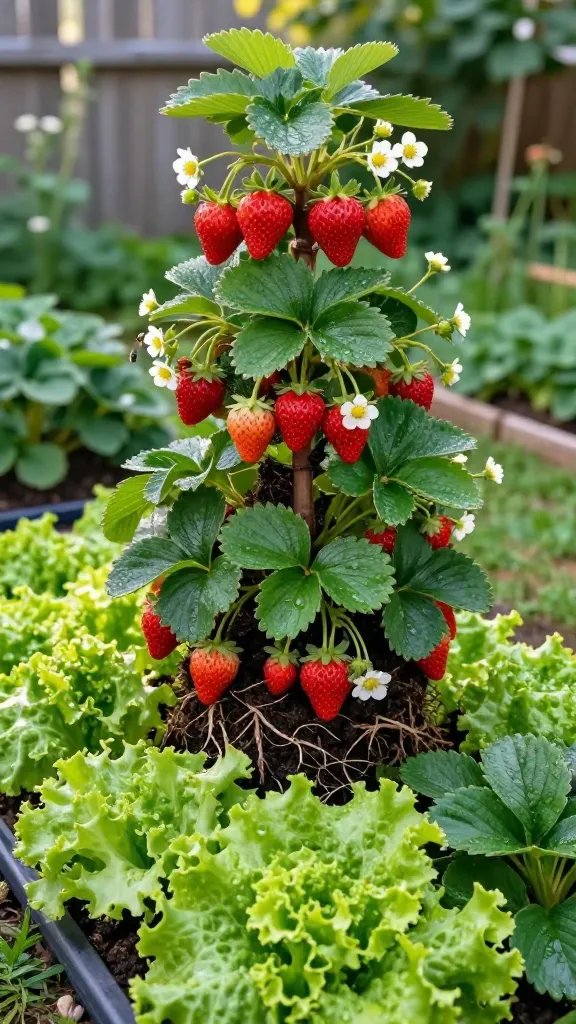
Strawberry towers dry out fast, especially in summer. Shallow-rooted leafy greens create a living mulch that cools soil, slows evaporation, and prevents splash-back that spreads disease. You’ll get salad and strawberries—double snack, minimal drama.
How They Help
- Lettuce: Quick-growing, shallow roots won’t steal strawberry food or space.
- Spinach: Loves the cooler microclimate under strawberry leaves and helps shade soil.
Plant greens in lower tiers or shaded sides of the tower. Replace them every 4–6 weeks as they bolt in heat—no big deal, they grow fast.
Smart Planting Tips
- Use loose-leaf lettuce varieties to harvest a handful at a time.
- Water first thing in the morning; the greens will flag first and remind you to irrigate.
- Mulch with a thin layer of straw around crowns—keep it off the strawberry centers.
Choose this pairing when your tower bakes in full sun and you struggle with dry pockets or inconsistent watering.
5. Bug Patrol And Soil Boosters: Chives, Onions, And Garlic
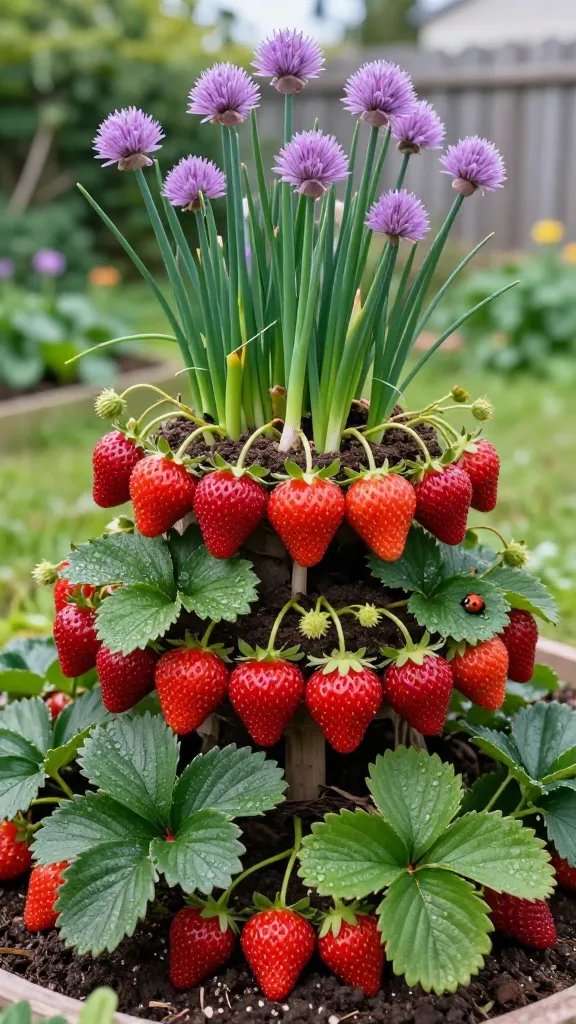
Alliums bring the quiet muscle. Their sulfurous compounds help deter aphids, thrips, and even some fungal issues. They fit neatly between strawberry crowns and won’t bully your berries.
Best Picks
- Chives: Compact, perennial, and pollinator-friendly when they bloom. Great for edging pockets.
- Green Onions (Scallions): Fast to harvest, easy to tuck in small spaces.
- Garlic: Plant fall cloves for spring scapes; interplant sparingly in deeper pockets.
Snip chives regularly for omelets and to prevent overcrowding. Tuck scallions beside strawberries where roots won’t compete heavily—think one scallion per small pocket.
Care Hacks
- Separate crowded chive clumps every season to keep growth tidy.
- Pull scallions as they size up to free space for berry runners.
- Avoid planting garlic directly against strawberry crowns; give a couple inches of buffer.
Use alliums when you want easy, edible insurance against sap-sucking pests and a gentle soil-health bump.
Quick Companion Cheat Sheet
- 9 Plants To Mix In: Basil, Thyme, Sage, Marigolds, Nasturtiums, Alyssum, Borage, Calendula, Chives/Scallions/Garlic (pick two of the alliums to hit nine total).
- Sun: 6–8 hours for strawberries and most companions—rotate towers if shade builds.
- Soil: Light, well-draining mix with compost; add perlite or coco coir for airflow.
- Water: Slow, even irrigation from top to bottom; check lower pockets for dry zones.
- Feeding: Balanced organic fertilizer every 3–4 weeks; ease up midseason to boost sweetness.
Common Mistakes To Dodge
- Overstuffing: Crowding cuts airflow and invites mold. Leave room around crowns.
- Waterlogging: Towers need drainage holes. If roots sit wet, berries sulk—seriously.
- Shady Bullies: Skip tall, dense plants that overshadow berries (looking at you, tomatoes).
- Mint: Delicious but invasive. Keep it in its own pot, FYI.
Sample Tower Layout (Top To Bottom)
- Top Tier: Borage (1), Basil (1), Strawberries around.
- Upper-Mid Tiers: Marigolds, Thyme, Calendula interspersed with strawberries.
- Lower-Mid Tiers: Chives or Scallions alongside strawberries; add Nasturtiums to spill over.
- Bottom Tiers: Lettuce and Spinach as living mulch around strawberries; Alyssum at the edges.
When To Plant What
- Early Spring: Spinach, lettuce, calendula, chives/scallions, strawberries.
- Late Spring: Basil, thyme, marigolds, nasturtiums, alyssum, borage.
- Fall (Optional): Garlic cloves for next year’s scapes and bulbs.
Here’s the big takeaway: mix aromatics for pest control, flowers for pollination, and greens for moisture. Your strawberries will reward you with bigger, sweeter harvests and way fewer headaches. IMO, that’s the dream.
Ready to turn your strawberry tower into a tiny, thriving ecosystem? Grab a few seed packets, plug in these combos, and watch the berries roll in. Trust me, you’ll taste the difference with every juicy bite.