
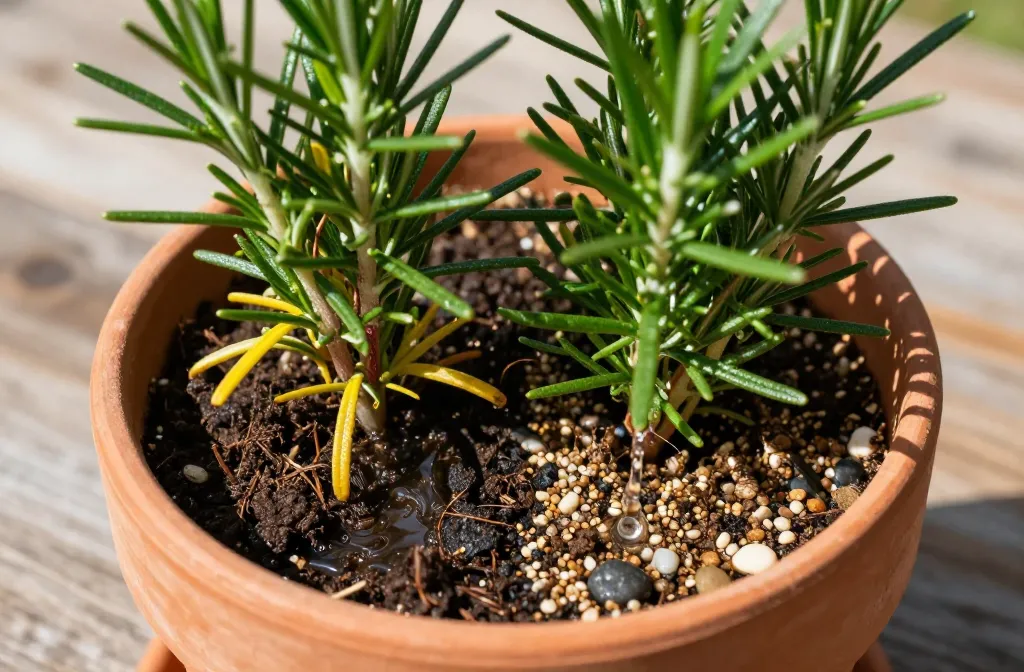
Rosemary looks tough, but it has diva energy. One wrong move and it sulks, turns brown, and crumbles like stale toast. The good news? Most rosemary problems have quick fixes you can totally handle today. Let’s troubleshoot the five biggest rosemary killers and bring your plant back from the brink.
1. Your Watering Is All Over the Place
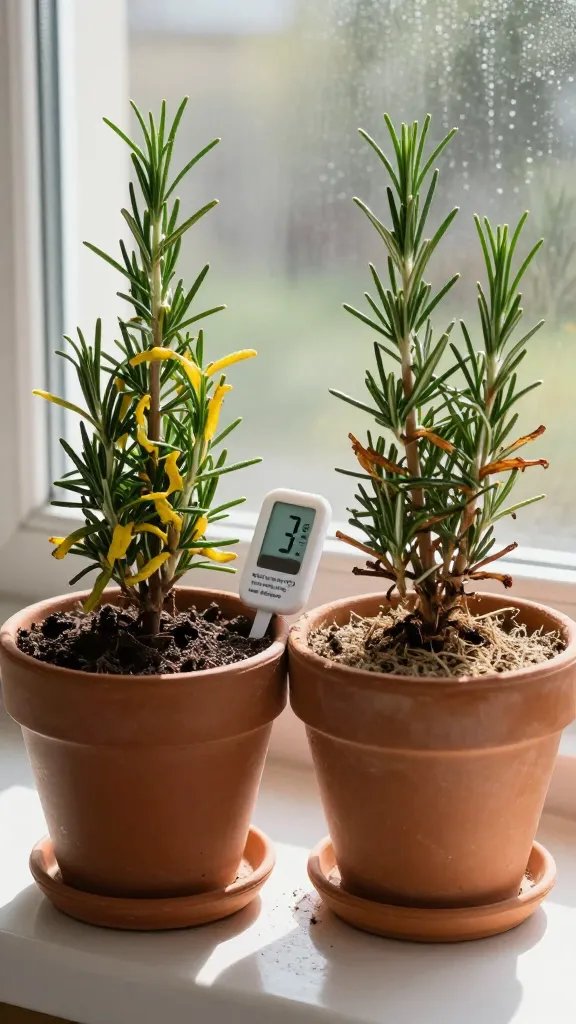
Rosemary hates wet feet and also hates bone-dry neglect. Confusing, right? It thrives with consistent, light moisture and excellent drainage. If you drench it, roots suffocate. If you forget it for weeks, the plant crisps up.
How To Diagnose
- Droopy, yellowing leaves with mushy stems: overwatering.
- Crispy, brown tips and brittle stems: underwatering.
- Pot feels heavy for days after watering: poor drainage or too much water.
Fix It
- Water on a schedule: Let the top inch of soil dry, then water deeply until it drains out.
- Empty saucers after 10 minutes. Standing water equals root rot.
- Use your finger test: If it feels barely dry, water. If it feels damp, wait.
Once you dial in a steady rhythm, rosemary stops panicking and grows dense, fragrant foliage. FYI, consistency beats perfection here.
2. The Soil Is Suffocating Your Roots
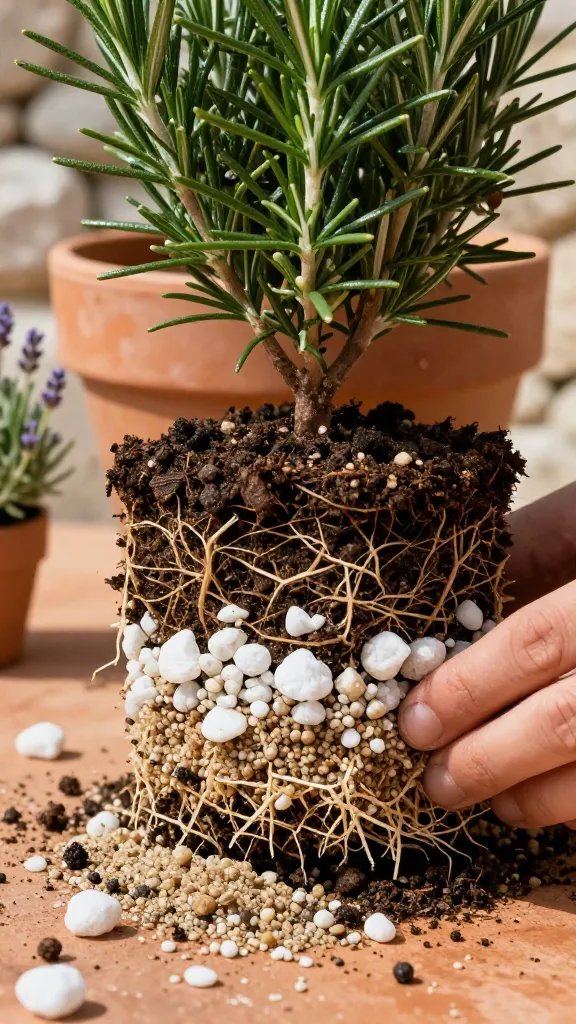
Garden center potting mix is often too heavy for rosemary. It evolved in rocky Mediterranean hills with quick-draining, sandy soil. If your plant sits in dense, peat-heavy sludge, roots rot and fungus parties hard.
Best Soil Blend
- 40% high-quality potting mix (lightweight, not moisture-control)
- 40% coarse materials like perlite or pumice
- 20% gritty add-ins like coarse sand or small gravel
Repotting Tips
- Choose a pot with big drainage holes. Terra cotta dries faster and helps.
- Gently loosen roots and trim any black, mushy sections.
- Plant slightly high in the pot so the crown never sits in a puddle.
Good soil equals happier roots, which equals more growth and fewer mysterious deaths. Seriously, this one change rescues most sad rosemary plants.
3. It’s Getting The Wrong Light (Too Little or Too Hot)
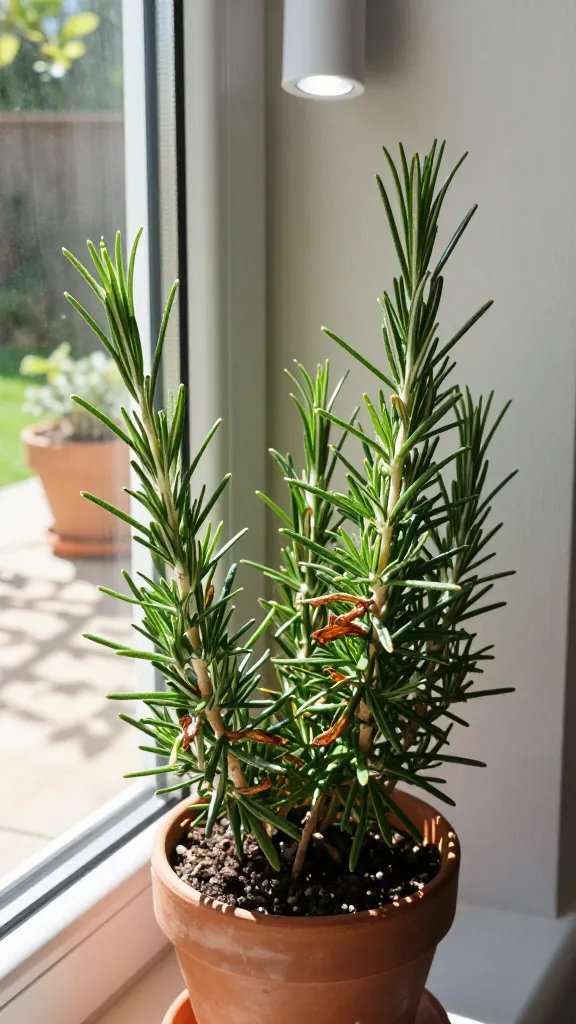
Rosemary craves bright light, like 6–8 hours of sun. Indoors, that’s tough without a sunny window or a grow light. Outdoors, brutal afternoon heat can scorch leaves, especially in pots.
Light Checklist
- Indoors: South- or west-facing window is ideal. East works if it’s bright.
- Grow lights: 12–14 inches above the plant, on for 10–12 hours daily.
- Outdoors: Full morning sun, light afternoon shade in extreme heat.
Signs of Light Issues
- Leggy growth and pale leaves: not enough light.
- Brown, crispy patches on sun-facing leaves: scorch from intense afternoon sun.
- Flat, dull scent: low light often dulls the essential oils.
Dial in the light and rosemary thickens up, smells stronger, and handles pruning like a champ. IMO, light is your biggest lever indoors.
4. You’re Treating It Like a Tropical Houseplant
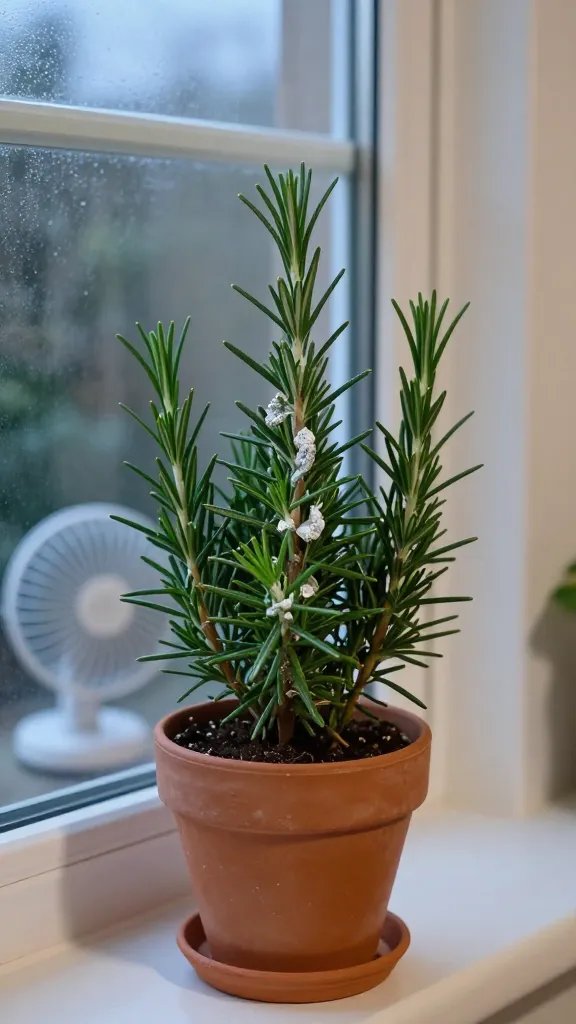
Rosemary likes cool nights, good airflow, and low humidity. Your steamy kitchen or overwatered terrarium? Not the vibe. Stagnant air and high humidity invite powdery mildew and other leaf problems.
Microclimate Makeover
- Keep it breezy: Place near an open window or use a small fan on low.
- Cool nights: 50–60°F nights actually help. Don’t worry, it’s tough.
- No misting: Moist leaves encourage mildew. Water only the soil.
Powdery Mildew 101
- Look for white, floury patches on leaves and stems.
- Prune affected bits and increase airflow.
- Spray option: 1 tbsp baking soda + 1 tsp dish soap in 1 quart water; apply weekly on affected areas.
Give rosemary fresh air and a little chill, and it rewards you with tighter growth and fewer fungal headaches. Think Mediterranean hillside, not rainforest terrarium.
5. You’re Neglecting Pruning, Feeding, or Seasonal Shifts
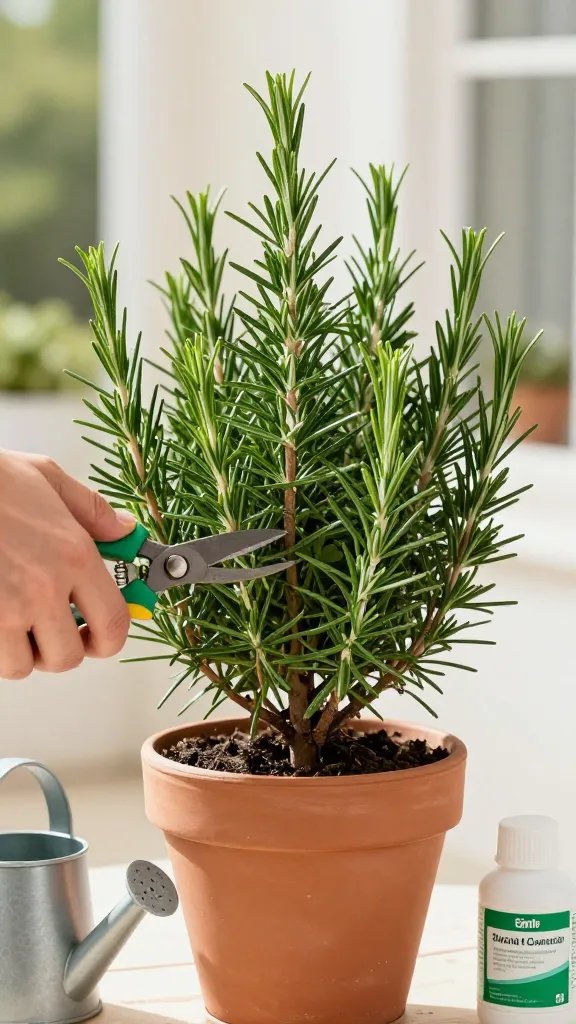
Rosemary needs a light snack, not a buffet. It also likes regular haircuts to stay bushy. And yes, it notices the seasons, especially if you move it between indoors and outdoors.
Pruning Rules
- Snip often: Take 2–3 inches from soft, green growth every few weeks in spring and summer.
- Don’t cut into old, woody stems: It won’t regrow from dead wood.
- Shape for airflow: Open the center slightly to prevent mildew.
Feeding Basics
- Light fertilizer once a month in spring–summer: half-strength balanced or organic herb fertilizer.
- No heavy nitrogen: It makes floppy, bland growth.
- Stop feeding in fall: Let it slow down naturally.
Seasonal Care
- Winter indoors: Cool, bright room; water less often; watch for spider mites.
- Spring transition: Harden off outside over 7–10 days to avoid shock.
- Hot summers: Morning sun, afternoon shade if temps roast above 95°F.
Regular trims, gentle feeding, and seasonal tweaks keep rosemary vigorous and flavorful. Plus, frequent snipping means more rosemary roasted potatoes—win-win.
Ready to rescue your plant? Start with drainage and light, then adjust watering and airflow. With a few tweaks, your rosemary goes from drama queen to reliable kitchen MVP. Go give it the glow-up it deserves, and enjoy that fresh, piney aroma every time you brush past it.