
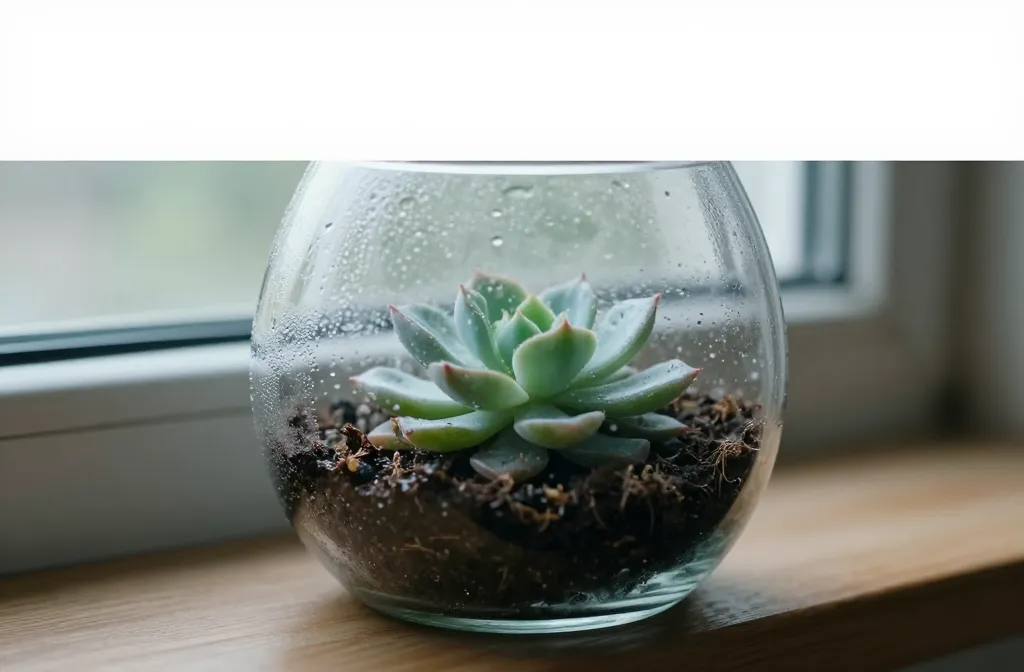
When I built my first succulent terrarium, I followed the pretty photos instead of the plant needs. Within a month, the roots turned to brown mush and the glass fogged like a shower door. If your terrarium smells earthy-sour or your leaves feel soft, you’re on the same road. Here you’ll learn the five mistakes that drown succulents in glass, the exact signs to catch early, and the simple fixes using only what you can buy at a garden centre.
1. Overwatering: The Fast Track To Mushy Roots In Glass
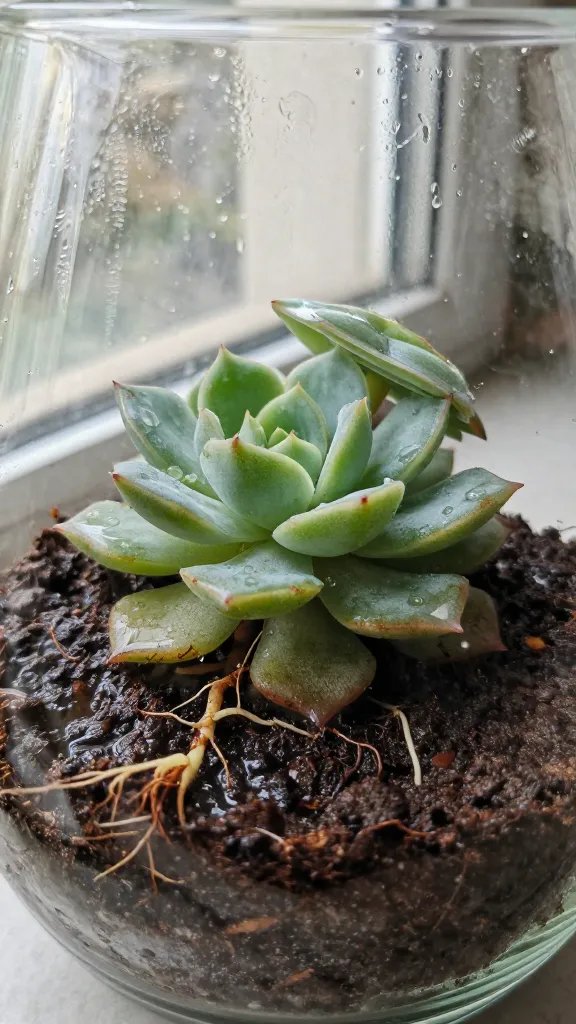
Excess water suffocates roots inside a terrarium because the moisture has nowhere to go. Succulent roots need air pockets; water fills them, fungi move in, and rot spreads from the root tip upward.
Signs To Watch For
- Persistent condensation on more than half the glass after midday
- Leaves turning translucent or squishy, especially at the base
- Soil that stays dark and cold to the touch for more than a week
- Earthy-sour smell when you lift the lid
How To Fix It
- Stop watering immediately and ventilate: leave the lid off 4–6 hours daily for 3–4 days.
- Wick out excess moisture: press a folded paper towel against the soil edge to draw water up; replace towels until they come away just damp.
- Prune rot: if a plant base is mushy, lift it with a spoon, trim to firm tissue, dust the cut with powdered cinnamon, and let it dry on a plate 24 hours before replanting.
- Switch to a spray-bottle routine: 6–10 sprays total for a medium bowl (20–25 cm wide) every 3–4 weeks, only when the top 2–3 cm are bone dry.
What To Use Instead Of Heavy Watering
- Mister or fine spray bottle instead of a watering can
- Moisture check by feel: soil should feel dusty-dry and crumbly before watering
Action today: At midday, check your glass. If more than half is fogged, pop the lid off for 2 hours and skip any watering for at least one week.
2. Wrong Container: Closed Lids And Deep Bowls Trap Humidity
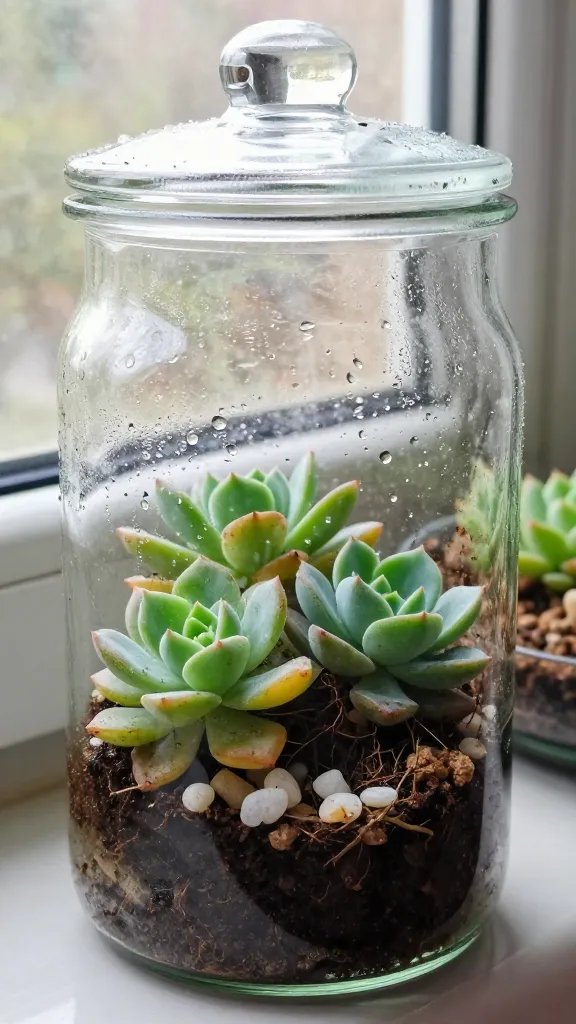
Succulents in sealed or narrow-neck containers sit in stale, humid air. Moisture builds, gas exchange stalls, and the lowest roots stay damp long after the top looks dry.
Signs To Watch For
- Beads of water running down the inside glass in the morning and still present by afternoon
- Algae or green film on the glass and rocks
- Leaves stretching and softening despite little watering
How To Fix It
- Use an open-top container at least as wide as it is tall. A wide glass bowl, low vase, or shallow dish allows air movement.
- Elevate the terrarium on bottle caps or felt pads so air can circulate under the base.
- Add a breathable cover (mesh or cheesecloth secured with a rubber band) if you have pets—this blocks debris but lets humidity escape.
- Avoid lids for succulents. If your container has one, keep it off permanently.
What To Use Instead
- Fishbowl or salad-style glass from a home store, 20–30 cm wide, 10–15 cm deep
- Unglazed shallow clay dish for maximum breathability
Takeaway: Choose an open, shallow vessel so moisture escapes and roots breathe—no lids for succulent terrariums.
3. Poor Drainage Layers: Decorative Pebbles That Hold A Swamp
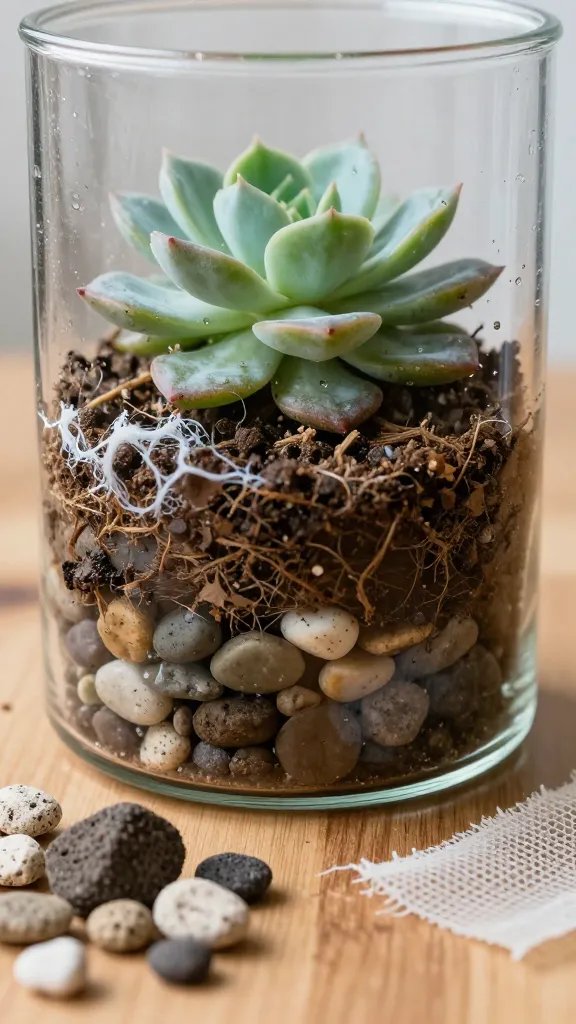
Heavy, fine pebbles and no separator create a soggy basin under the soil. Water wicks back up into the mix and keeps roots wet for days.
Signs To Watch For
- Water line visible at the bottom pebble layer after watering
- Soil settling and compacting quickly, forming a hard crust
- Mold threads on the soil surface within a week of watering
How To Build A Drainage Stack That Works
- Bottom layer (1.5–2 cm): light, irregular stones like pumice or coarse lava rock from the garden centre. Avoid smooth aquarium gravel as the only layer.
- Barrier: cut a circle of mesh, window screen, or even a coffee filter to stop soil filtering down without blocking air.
- Soil (see next section): airy and gritty, 4–6 cm for shallow bowls, up to 8 cm for larger ones.
- Top dressing (0.5–1 cm): decorative gravel to keep the surface dry and prevent fungus gnats.
Quick Rescue If You Already Used Smooth Pebbles
- Tilt and drain: gently tip the terrarium and let excess water run to the lowest corner; wick it out with paper towel.
- Aerate: poke 6–10 holes down through the soil with a chopstick to increase airflow until you can rebuild.
Action today: Look for a standing water line at the bottom. If you see it, wick moisture out and plan a 20-minute rebuild with a pumice base and mesh barrier.
4. Wrong Soil: Rich Potting Mix That Stays Wet For Days
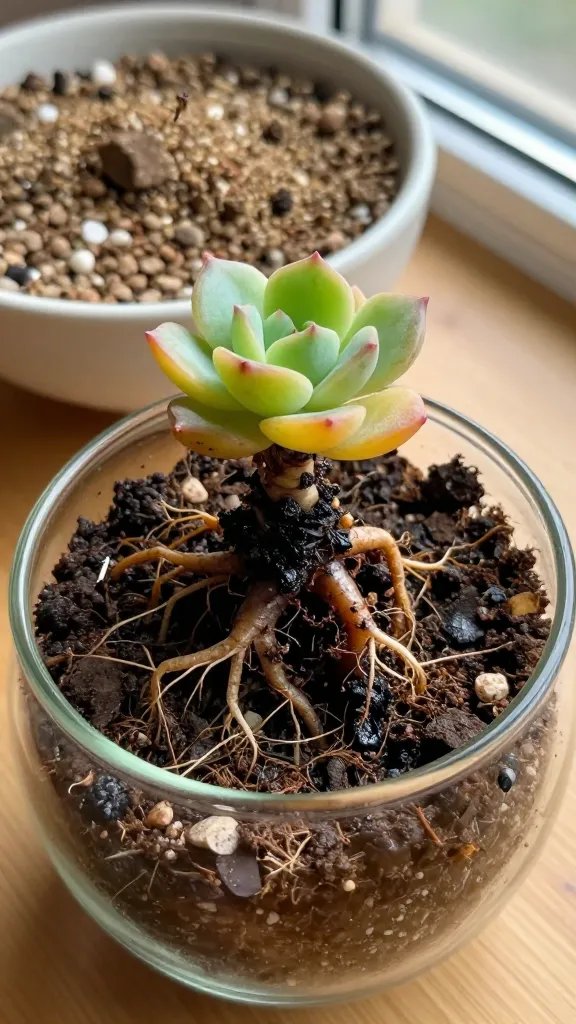
Standard indoor potting mix holds moisture and collapses around roots. Succulents suffocate in that density, and rot spreads from the crown.
Signs To Watch For
- Soil that forms a ball when squeezed and doesn’t crumble
- Leaves yellowing from the base while the soil still looks damp
- Fungus gnats hovering—your mix is too wet and rich
What To Use Instead
- Commercial cactus and succulent mix from the garden centre as your base
- Grit boosters: add 1 part pumice or coarse perlite and 1 part coarse horticultural sand to 2 parts cactus mix (roughly a 2:1:1 ratio)
- Optional: a handful of small orchid bark to keep air pockets open
How To Fix A Wet, Heavy Mix
- Lift and amend: scoop plants with a spoon, knock off wet soil, let roots dry 12–24 hours, then replant in the gritty blend.
- Top dress with 0.5–1 cm of small gravel to keep the surface dry and discourage gnats.
- Water by volume: for a 25 cm bowl, start with 2–3 tablespoons of water total and reassess in 24 hours.
Takeaway: Use a fast-draining cactus mix boosted with pumice or perlite and coarse sand so the soil dries in 3–5 days, not weeks.
5. Dim Placement: Low Light Forces Overwatering And Slow Drying
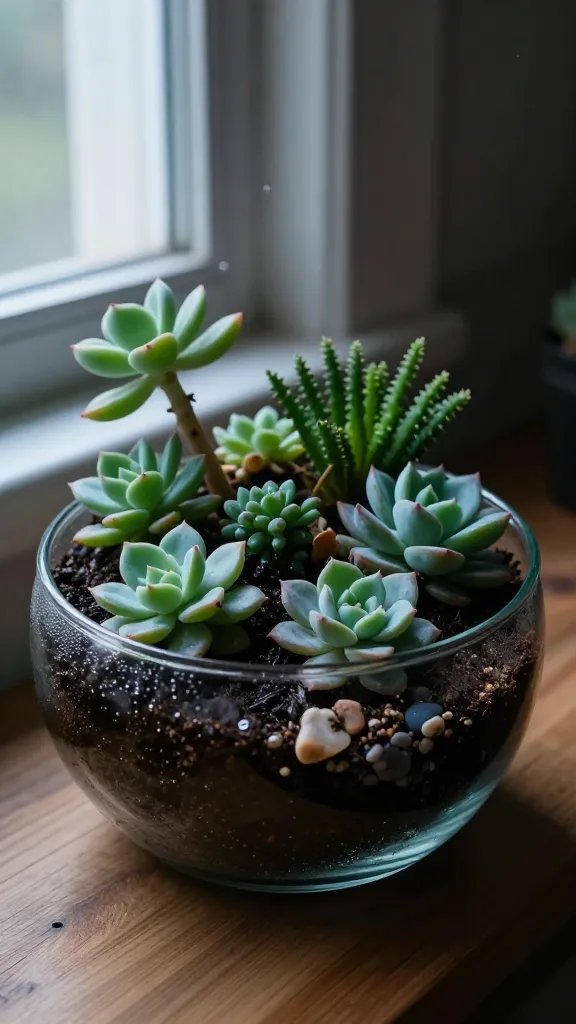
In low light, succulents grow slowly and drink less. The soil stays wet longer, and you water again because the leaves look tired—classic setup for root rot.
Signs To Watch For
- Stretching (etiolation): tall, thin growth leaning toward the window
- Cool, damp soil more than a week after watering
- Pale new leaves that feel soft instead of firm
How To Place It Right
- Bright indirect light near a window: within 1–2 metres of a south or west-facing window with sheer curtain if needed.
- Turn the bowl a quarter turn each week for even light.
- Supplement in winter: a simple clamp light from the hardware store with a daylight LED bulb (15–20 W equivalent) positioned 20–30 cm above, on for 10–12 hours daily.
Watering Schedule In Better Light
- Test the soil: only water when the top 2–3 cm feel chalky-dry.
- Frequency: every 3–4 weeks in bright light; every 4–6 weeks in winter.
Action today: Move the terrarium to the brightest spot you have—right beside a sunny window out of harsh midday beams—and set a weekly reminder to rotate it a quarter turn.
Frequently Asked Questions
Can I grow succulents in a closed terrarium with a lid?
No. Closed terrariums trap humidity that succulents cannot handle. Use an open-top container so moisture escapes and air circulates. If your container came with a lid, store it away and never use it for succulents. Save lidded terrariums for mosses and ferns.
How often should I water a succulent terrarium?
Water every 3–4 weeks in bright conditions, and every 4–6 weeks in winter. Always check the top 2–3 cm of soil first—it should feel dry and crumbly. Start with 2–3 tablespoons of water for a 25 cm bowl and watch for midday condensation. If the glass fogs, hold off next time or reduce by half.
Do I need activated charcoal in the drainage layer?
It helps with odour and keeps water fresher in partially enclosed containers, but it does not fix overwatering. If you use it, add a thin sprinkle (a few tablespoons) above the rock layer under the mesh. The real protection comes from an open container, airy soil, and light watering.
Which succulents are most forgiving in terrariums?
Haworthia, Gasteria, and small Aloe hybrids handle indoor light and dry soil better than delicate rosette types. Avoid Echeveria and fuzzy Kalanchoe in humid rooms. Choose compact plants under 10 cm tall so air reaches the soil surface and the bowl doesn’t crowd quickly.
My leaves are turning translucent—can I save the plant?
Often yes, if the rot hasn’t reached the crown. Lift the plant, trim back to firm tissue, dust the cut with cinnamon, and let it dry 24–48 hours. Replant in gritty, dry mix and wait 5–7 days before a light mist. Keep the terrarium open and bright to speed recovery.
What if I already used regular potting soil and smooth pebbles?
You can salvage it. Let the setup dry for a week, then lift plants, rebuild with a pumice or lava-rock base and mesh, and replant into a cactus mix boosted with perlite and sand. Water sparingly after 5–7 days. Expect the soil to dry within 3–5 days in a bright spot—if not, add more grit.
Conclusion
You don’t need special gear to stop root rot—just an open bowl, gritty soil, bright light, and a stingy hand with water. Start by ventilating today, then rebuild your layers the next free evening, and set a reminder to water monthly. Once you see firm leaves and clear glass at midday, you’ll know you’ve got the balance right.