
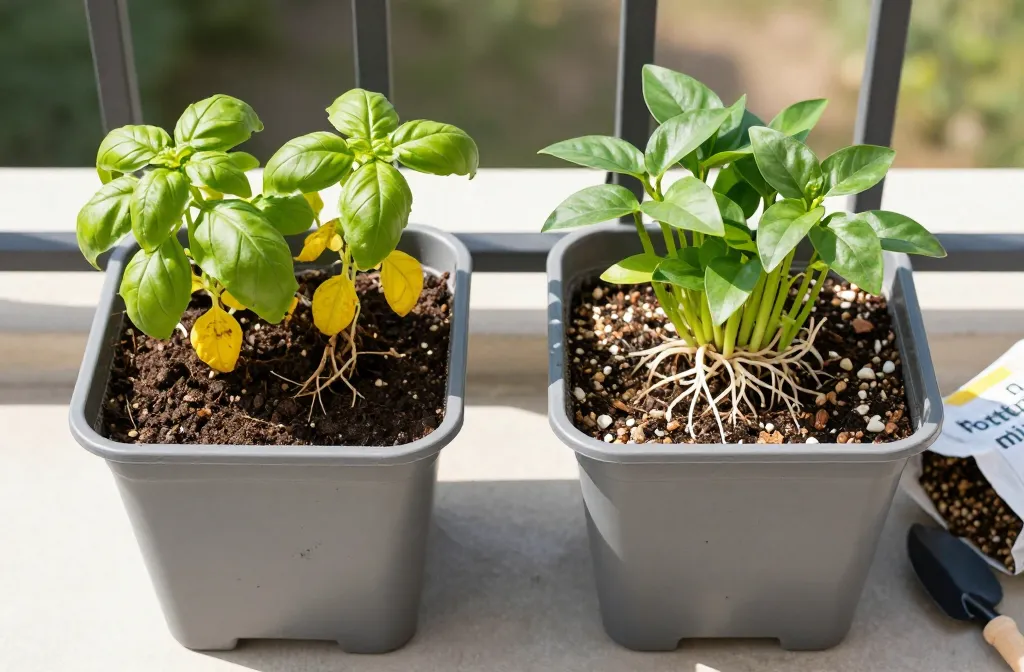
I’ve lost more balcony basil and pothos than I care to admit because I trusted the bag and ignored the roots. If your pots stay wet for days, smell earthy-sour, and growth has stalled, you’re standing where I stood. In this guide, I’ll show you the five potting mix mistakes that invite rot — and the simple fixes you can do with what’s at any garden centre. You’ll learn how to choose, tweak, and maintain mixes so your containers drain fast, breathe well, and grow strong roots.
1. Using Heavy “Garden Soil” In Pots: Water Sits, Roots Suffocate
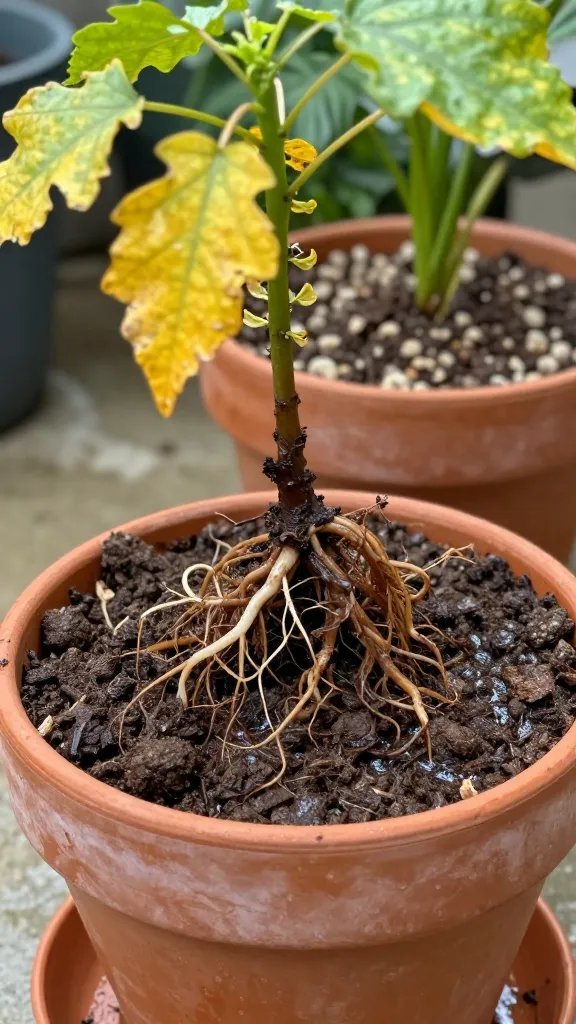
When you fill containers with yard soil or “topsoil,” water lingers and air disappears. Roots stay cold and wet, pathogens wake up, and leaves yellow from the bottom up before collapsing. I’ve dug into pots like this and found brown, threadbare roots that slide off the stem like cooked noodles.
Signs To Watch For
- Soil feels dense and stays wet 3+ days after a normal watering
- Yellowing lower leaves and slow or no new growth
- Pot feels brick-heavy compared to a similar-sized plant in proper potting mix
- Sour, swampy smell when you press the surface
How To Fix It
- Repot into a bagged potting mix labeled for containers, not “garden soil” or “topsoil.”
- For extra drainage, blend in 1 part perlite or orchid bark chips to 3 parts potting mix.
- Break up clumps with your hands. Fill the pot loosely; don’t compact the mix.
- Water thoroughly once, then let the top 2-3 cm dry before watering again.
What To Use Instead
- General houseplants and herbs: 3 parts quality potting mix + 1 part perlite
- Succulents and cacti: 2 parts cactus/succulent mix + 1 part extra pumice or perlite
- Moisture-loving plants (peace lily, ferns): Straight high-quality potting mix, no topsoil
Action today: Lift a pot you suspect is heavy. If it feels like a bowling ball and the soil is still wet past your first knuckle after 3 days, plan a repot into true potting mix this weekend.
2. No Drainage Layer Or Holes: Water Has Nowhere To Go
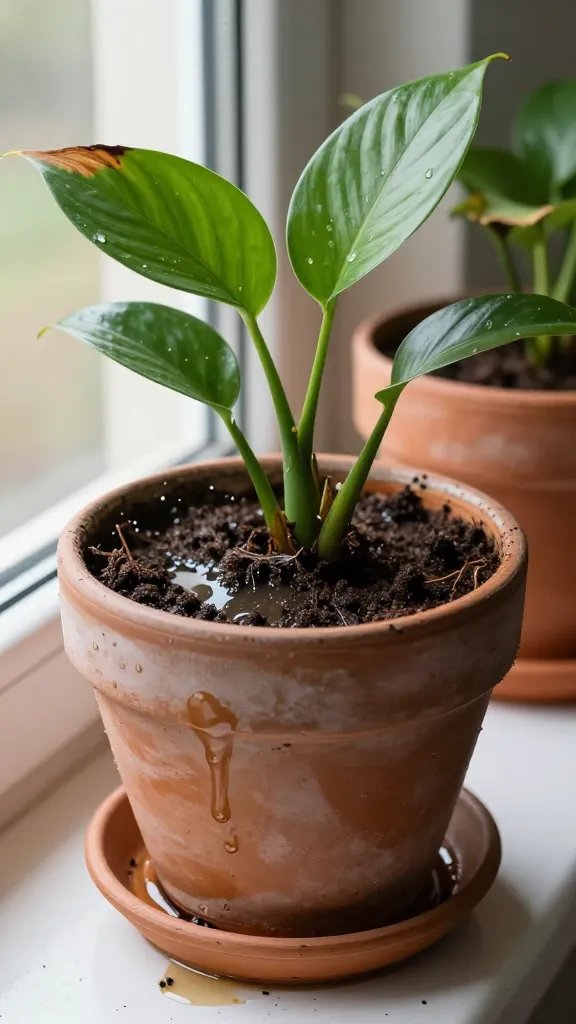
Sealed pots and decorative cachepots trap every drop you pour. The mix at the bottom turns into a stinky bog, and roots drown long before the top looks dry. I’ve seen people water even more because the surface looks dusty while the bottom is a lake.
Signs To Watch For
- Water pools on the surface before slowly disappearing
- Pot feels sloshy or drips water hours after watering
- Brown leaf tips and edges on otherwise green leaves
- Gnats hovering when you disturb the soil
How To Fix It
- Choose pots with at least one hole. If your favorite pot has none, use it as a cover pot and place a plastic nursery pot with holes inside.
- Drop a matching saucer under the pot and empty it 15 minutes after watering.
- Skip rock layers. They don’t help drainage; they raise the water table. Drainage comes from aerated mix + exit holes.
- If a pot has no hole and you can drill it, use a ceramic/tile bit and go slow with water as lubricant.
Watering Technique That Respects Drainage
- Water until 10-20% runs out the bottom.
- Wait 15 minutes, then dump the saucer.
- Don’t “sip water” daily; soak, then let it breathe.
Takeaway: If your pot doesn’t have a drain hole, treat it as decor only or nest a holed nursery pot inside — never plant straight into a sealed container.
3. Overly Moisture-Retentive Mix For The Wrong Plant: A Constant Wet Blanket
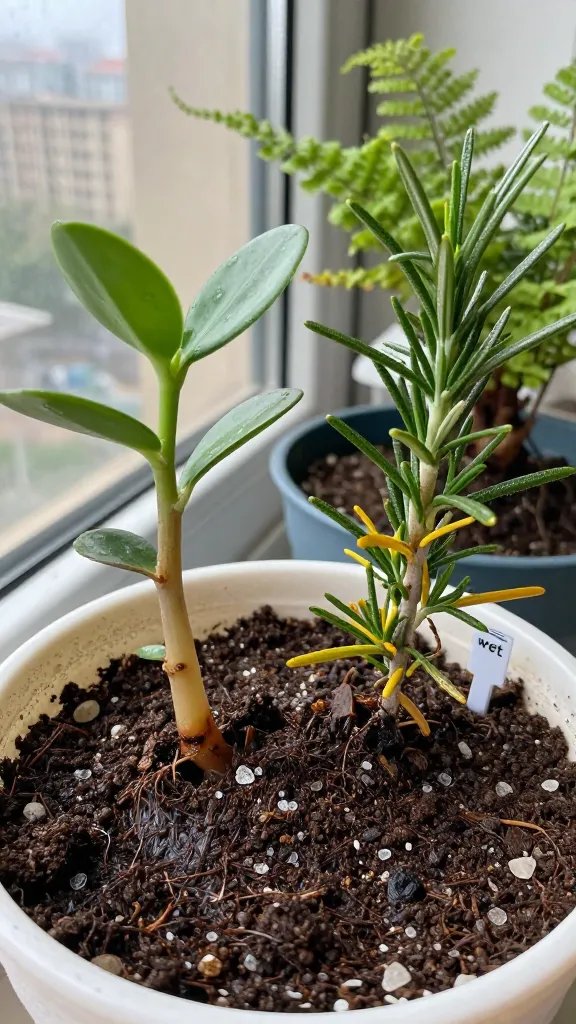
Many bagged mixes come loaded with water-holding crystals or too much fine peat. That helps ferns, but it drowns jade plants, rosemary, and snake plants. The result is classic root rot: soft stems at the soil line and leaves that detach with a gentle tug.
Plants That Hate Wet Feet
- Succulents and cacti (aloe, jade, echeveria)
- Mediterranean herbs (rosemary, lavender, thyme)
- Sansevieria (snake plant), ZZ plant
Signs Your Mix Holds Too Much Water
- Soil surface stays dark and cold long after watering
- Leaves turn yellow and feel squishy rather than crisp
- Mushroom-like growths or a persistent musty smell
What To Use Instead
- Succulents/cacti: 2 parts cactus mix + 1 part extra perlite or pumice
- Herbs like rosemary/lavender: 2 parts potting mix + 1 part coarse sand (construction sand from a hardware store, rinsed) + 1 part perlite
- Houseplants like pothos/monstera: 3 parts potting mix + 1 part bark chips for air
How To Transition Plants Safely
- Unpot and trim away brown, mushy roots with clean scissors.
- Dust the cut roots with cinnamon from your kitchen as a mild antifungal.
- Repot into the right blend, then wait 3-4 days before the first watering.
Action today: Pick one plant that routinely wilts after watering and repot it into a drier, chunkier mix that suits its species.
4. Reusing Old, Depleted, Or Hydrophobic Mix: Water Runs Off, Roots Starve
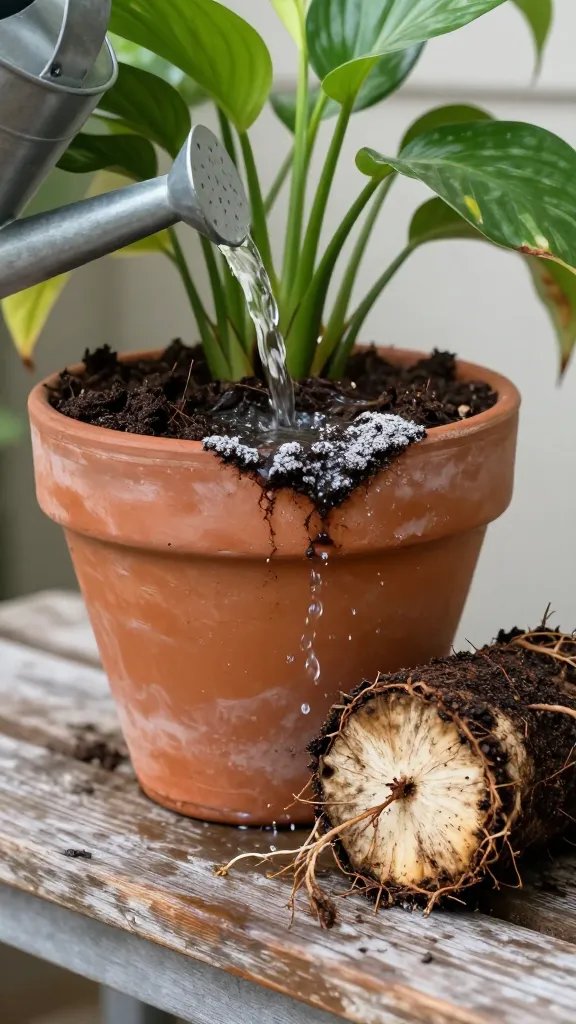
Old peat-heavy mixes can become hydrophobic — water beads and slides down the sides, leaving the rootball dry in the center. Plants look thirsty even right after you watered, then crash because the core never got wet. I’ve pulled rootballs that were dust-dry inside while the outer inch was soggy.
Signs To Watch For
- Water races straight through and out the hole within seconds
- Soil pulls away from the pot’s sides
- Leaves droop soon after watering but perk up only briefly
- Crusty white mineral deposits on the surface from repeated top-watering
How To Fix Hydrophobic Mix
- Bottom-water: Place the pot in a bowl or sink with 2-3 cm of water for 15-20 minutes. Remove and drain.
- Blend in fresh mix: rough up the rootball and pack new moist (not dripping) potting mix around it.
- Improve structure: add 20-30% perlite or bark so it rewets evenly next time.
- If the mix is exhausted or salty, fully replace it and rinse the pot.
When To Replace Mix Entirely
- After 18-24 months for most houseplants
- After each season for heavy feeders like tomatoes or peppers in containers
- Any time you smell rot or see fungus gnat explosions
Takeaway: If water beads on top or shoots straight through, bottom-water today to rehydrate the core, then plan a partial refresh with fresh mix and perlite this week.
5. Ignoring Particle Size And Air Pockets: Fine Dust Packs Tight, Rot Follows
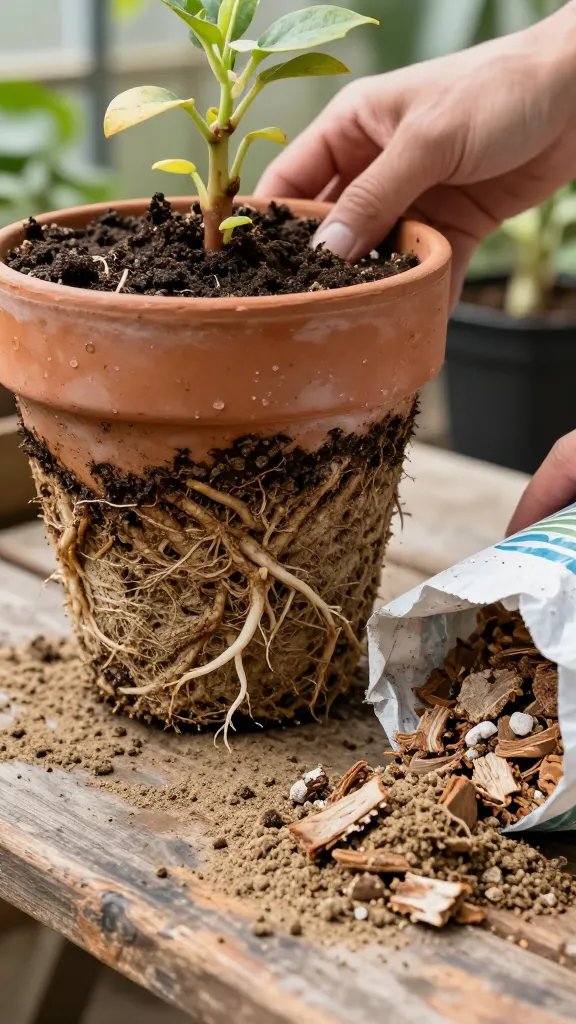
Even good mixes settle into a dense mat if they’re packed hard or loaded with fines. Roots need oxygen as much as water; without air pockets, they rot from the inside out. I learned to treat potting mix like a sponge, not cement — fluffy in, fluffy out.
Signs Your Mix Lacks Air
- Pot feels heavy and the surface dries into a hard crust
- New growth is small, pale, and weak despite regular feeding
- Water puddles before soaking in, then disappears slowly
How To Add Air Without Fancy Gear
- Fluff the bag: Knead the bag of mix before opening to break compaction.
- Pre-moisten: In a bucket or sink, add water until the mix feels like a wrung-out sponge. This prevents overpacking.
- Blend in structure: For most plants, mix in 10-30% perlite or orchid bark to create lasting air spaces.
- Don’t tamp hard: Fill the pot, tap the sides lightly to settle, and stop. Firm only enough to support the plant.
Simple Plant-Specific Tweaks
- Monsteras and philodendrons: 60% potting mix, 20% bark, 20% perlite
- Ferns and peace lilies: 80% potting mix, 20% perlite
- Herbs like basil: 70% potting mix, 30% perlite for quick drainage
Action today: Next time you repot, pre-moisten your mix and add 20% perlite — your roots will get both air and moisture from day one.
Frequently Asked Questions
How do I know if my potting mix is “good quality” at the store?
Pick a bag labeled for containers with a short ingredient list you recognize: peat or coco coir, composted bark, perlite or pumice. Avoid mixes that feel like heavy mud when squeezed or that are loaded with slow-release fertilizer pearls for “6 months” if you grow sensitive houseplants. The bag should feel springy and not rock-hard. If possible, choose a brand with bark or coir listed high on the label for better air flow.
Can I reuse last year’s potting mix from my tomato containers?
Yes, but refresh it. Dump it into a tub, remove old roots, and blend in 30-50% fresh potting mix plus a small handful of a balanced granular fertilizer per 10 liters. If you had disease or heavy gnat issues, replace the mix entirely and scrub the pot with soapy water. For edibles, I replace at least one-third every season to maintain nutrients and structure.
What’s the simplest mix I can buy that won’t rot my succulents?
Start with a bag labeled cactus/succulent mix and lighten it further with 25-30% perlite or pumice. If your store has only all-purpose mix, combine 1 part all-purpose with 1 part perlite and 1 part coarse sand. Plant shallowly and use a pot with a large drainage hole. Water only when the mix is dry all the way through — usually every 2-4 weeks indoors.
My pot has no hole. Is a rock layer at the bottom enough?
No. A rock layer raises the water table and makes the bottom stay wetter, which speeds rot. Either drill a hole with the right bit, or use a plastic nursery pot with holes nested inside the decorative pot and take it to the sink to water. Always pour off any water that collects at the bottom within 15 minutes.
Why does my mix get hard and crusty on top, and how do I stop it?
Fine particles settle and compact, especially if you water fast from above. Break the crust gently with a fork, remove the top 1-2 cm, and replace it with fresh mix blended with 20% perlite or bark. Water more slowly or bottom-water so the surface doesn’t erode. A thin layer of decorative bark chips can also reduce crusting and fungus gnats.
How wet should the mix feel after watering?
Think wrung-out sponge — evenly moist, not dripping. After a thorough soak with drainage, the top 2-3 cm should dry within 2-4 days for most houseplants in bright indirect light. If it stays wet a week, your mix is too dense or the pot is oversized. Adjust by adding perlite or moving the plant to brighter light so it uses water faster.
Conclusion
Healthy roots need air, fast drainage, and the right texture for the plant you’re growing. Fix one weak link — holes, mix choice, or structure — and root rot stops before it starts. Start with one pot this week: refresh the mix, add perlite, and commit to soak-then-drain watering. Your plants will tell you it worked with firm roots and steady new growth.