
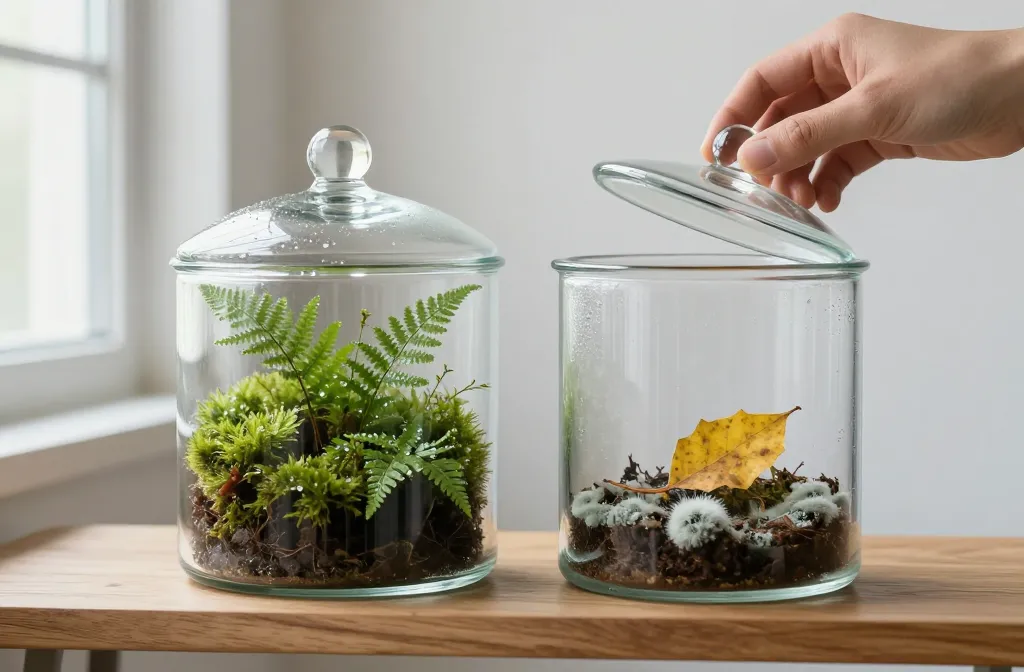
I remember proudly snapping the lid onto my first closed terrarium and waking up a week later to a foggy jar with white fuzz creeping over the moss. I see the same thing on friends’ shelves: great plants, beautiful glass, and a slow slide into mush. Mold is predictable in closed terrariums when a few basics go wrong. I’ll show you the seven mistakes that cause it and the exact fixes you can do with standard tools at home so your glass stays clear and your plants thrive.
1. Overwatering: The Silent Mold Factory
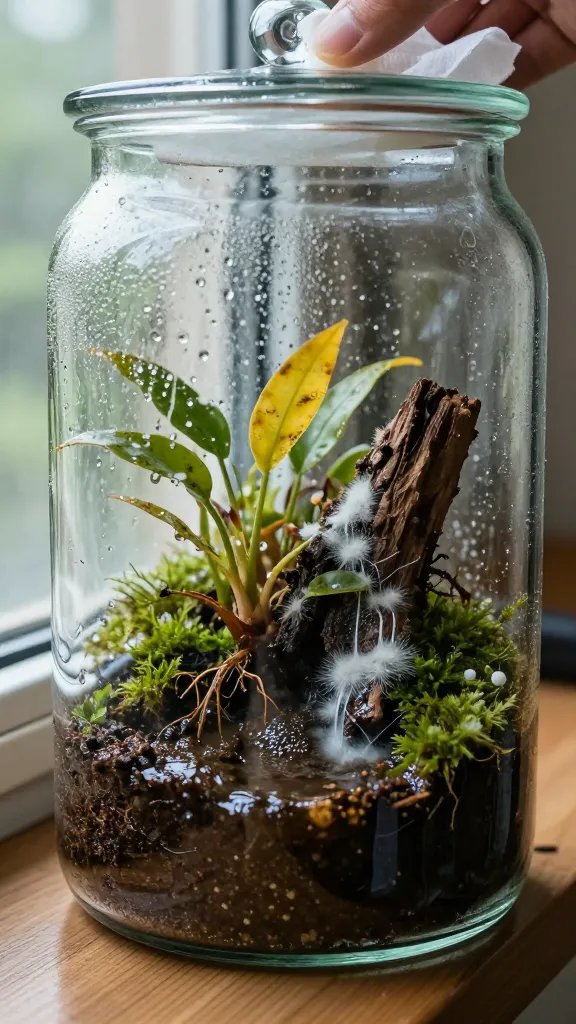
Excess water traps stale humidity and starves roots of oxygen, and mold takes over fast. Leaves turn soft, the glass stays fogged all day, and white fuzz marches across soil and wood.
Signs to Watch For
- Condensation covers more than half the glass at midday
- Soil looks glossy or puddled instead of damp
- Yellowing, mushy leaves and a sour, swampy smell
How to Fix It
- Vent daily until balance returns: open the lid for 1–3 hours at midday for two to three days.
- Wick out excess water: press the soil gently with a folded paper towel or use a turkey baster to remove pooled water.
- Reset moisture: after venting, water only with a fine mist — 1–2 tablespoons at a time. Wait 24 hours and recheck condensation.
What to Use Instead
- A small spray bottle for controlled misting
- Paper towels or cotton pads for wicking
- A basic hygrometer isn’t needed — use the glass as your gauge
Action today: Check your terrarium at midday; if the glass is more than half fogged, open the lid for two hours and wick any visible pooling with a paper towel.
2. No Drainage Layer: Waterlogged Roots Invite Spores
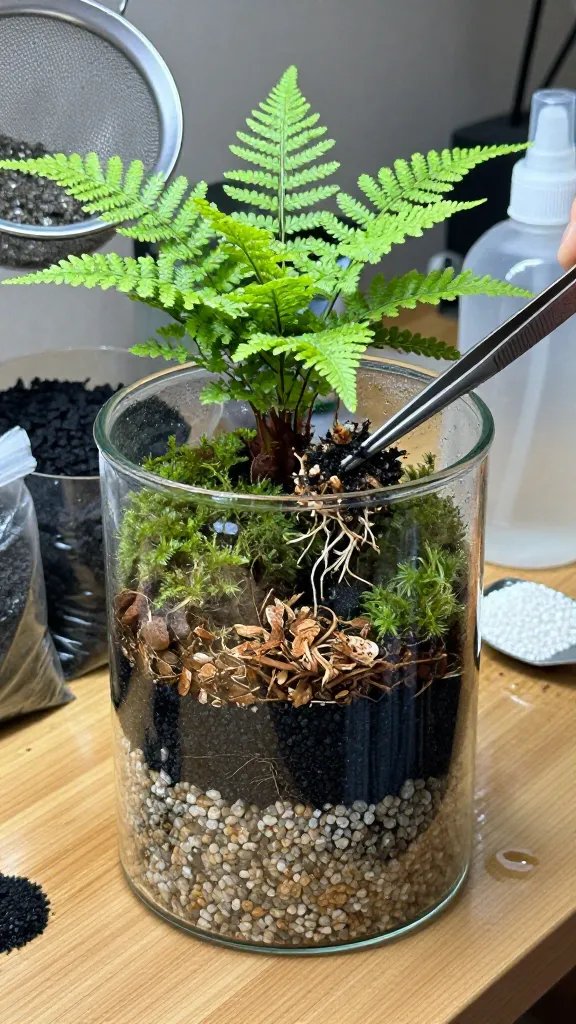
When soil sits directly on glass, water has nowhere to settle and roots drown. Stagnant pockets turn anaerobic, and mold blooms along with that rotten-egg smell.
How to Fix It
- Create a 1–2 cm base layer of rinsed aquarium gravel or small pebbles from the garden centre.
- Add a thin layer of horticultural charcoal (about 0.5 cm) to help bind odors and impurities.
- Top with 5–8 cm of good quality potting mix blended 1:1 with fine orchid bark or perlite for airiness.
Signs You Need This
- Soil stays wet for more than a week after a tiny watering
- Persistent cloudy glass and a musty smell
- Mold rings where soil touches glass
Takeaway: If your terrarium lacks a drainage base, rebuild with a gravel layer and a charcoal dusting before replanting — it’s the most effective long-term mold prevention step.
3. Wrong Plants: High-Need Species Rot in Closed Air
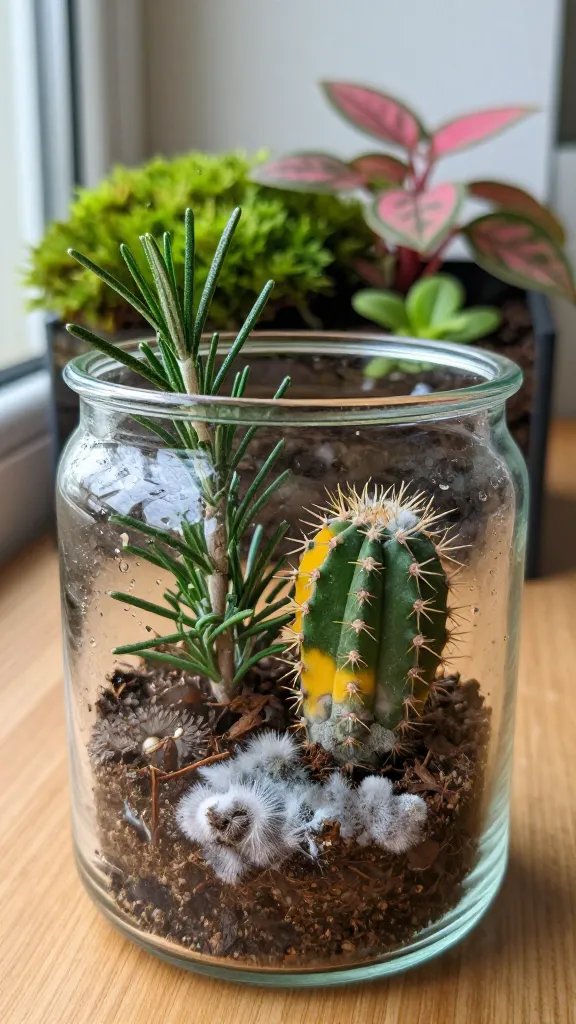
Plants that crave dry airflow or strong sun collapse in sealed humidity, shed leaves, and feed mold. A single stressed plant can foul the whole ecosystem.
Common Culprits
- Succulents and cacti — they need drier air and strong light
- Herbs like rosemary or thyme — dislike stagnant humidity
- Large-leaf tropicals that outgrow the container and shade everything
What to Use Instead
- Mosses (sheet moss, cushion moss)
- Fittonia (nerve plant), Pilea (dwarf varieties), Pepperomia (small types)
- Ferns that stay compact (button fern), and Selaginella
How to Fix It
- Remove unsuitable plants and rehome them in open pots near a window.
- Replace with humidity-loving, small species from the list above.
- Keep foliage off glass by trimming or repositioning to prevent constant wet contact.
Action today: If you see a succulent or herb inside a sealed jar, take it out now and swap in a small moss patch or a Fittonia cutting.
4. Stale Air: Never Venting After Setup
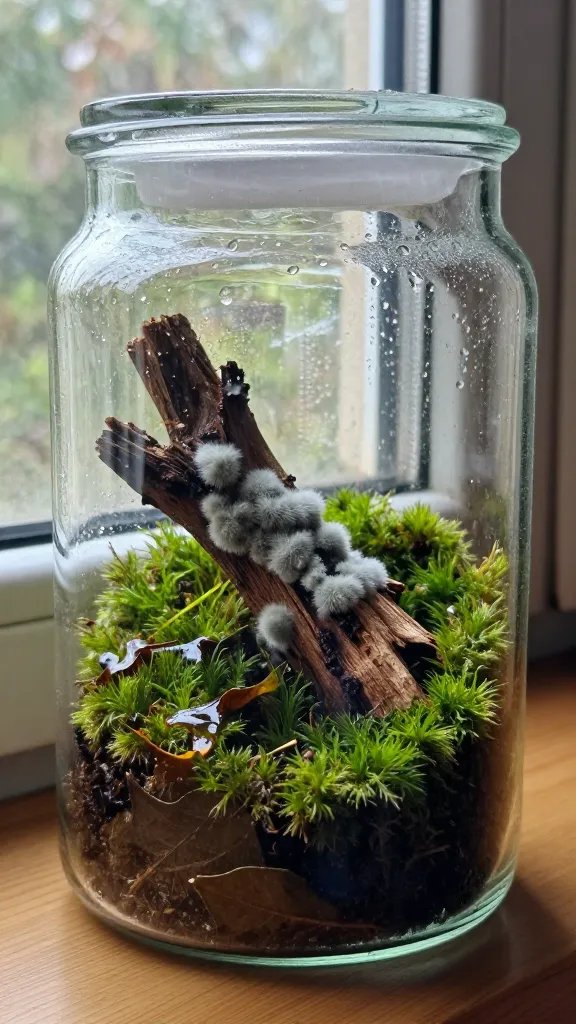
Even in closed terrariums, trapped gases from fresh soil and decaying bits build up at first. Without brief early venting, you get constant condensation, sour smells, and explosive mold on wood and leaf litter.
Signs to Watch For
- Glass fogged morning and night with no clear periods
- White or gray fuzz on wood within the first week
- Smell like wet cardboard or vinegar
How to Fix It
- Establish a “curing week”: open the lid 30–60 minutes daily for the first 7 days after planting.
- After that, vent only when midday condensation exceeds half the glass or after any pruning or watering.
- Position near bright indirect light to encourage a steady day–night temperature cycle, which regulates condensation.
Takeaway: Add a 1-hour daily vent for the first week after any rebuild or major watering to prevent the initial mold surge.
5. Dirty Inputs: Unsterilized Soil, Wood, Or Moss Carry Spores
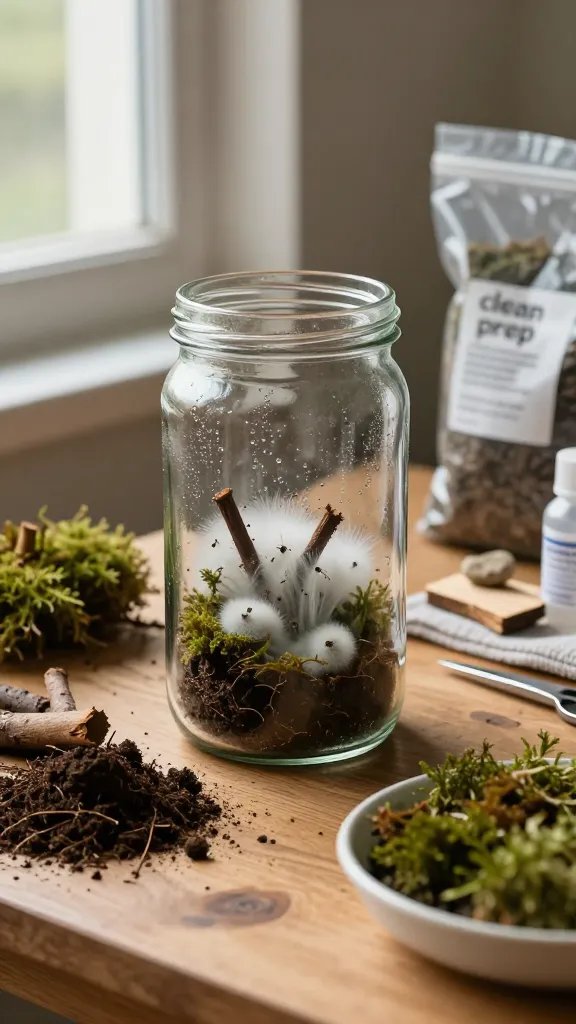
Unwashed sticks, garden soil, or moss clumps often import fungus, gnats, and mold. In a sealed jar, those stowaways multiply fast.
What to Prep Before Planting
- Soil: Use a sealed bag of good quality potting mix from the garden centre, not backyard dirt.
- Wood/stone: Rinse under hot tap water and scrub with a stiff brush; let dry fully.
- Moss: Rinse in cool water to remove debris, then gently squeeze out excess before use.
- Tools: Wipe scissors and tweezers with rubbing alcohol.
If Mold Already Arrived
- Remove and bake small stones/wood at 90–100°C (200–215°F) for 30 minutes, then cool fully.
- Pinch off any moldy leaves and discard outside the terrarium — never compost inside.
- Lightly dust problem spots with a sprinkle of horticultural charcoal.
Action today: Pull any decorative stick showing fuzz, scrub it under hot water, and let it dry overnight before returning it.
6. Constant Shade Or Hot Sun: Light Extremes Skew Humidity
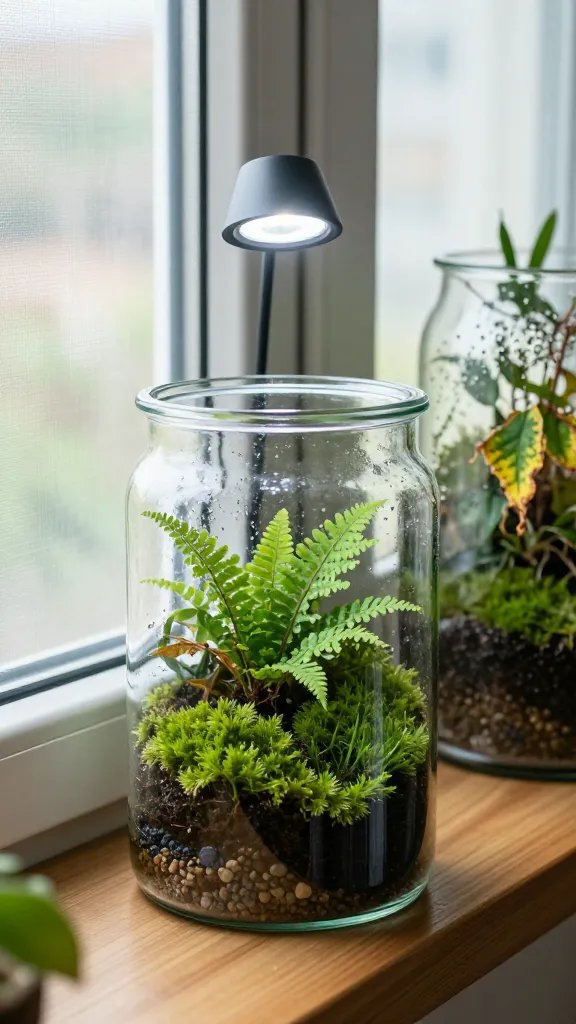
Too little light keeps the terrarium chilly and wet all day, feeding mold. Direct sun overheats the jar, cooks roots, and then collapses plants into a fermenting mess.
Best Light Placement
- Set the terrarium in bright indirect light near a window — a spot where you can read a book comfortably without squinting.
- A north or east-facing windowsill works well; for south/west windows, place it 1–2 meters back or behind a sheer curtain.
- A small LED desk lamp 20–30 cm above the lid for 8–10 hours can supplement on dark weeks.
Warning Signs
- Shade problem: glass foggy all day, slow plant growth, pale leaves
- Sun problem: sudden heavy midday condensation, wilted plants, hot glass to the touch
How to Fix It
- Move out of direct sun immediately if the glass feels warm.
- Increase brightness without heat: shift closer to a bright window but out of the sunbeam, or add a small lamp on a timer.
- Vent for 30–60 minutes after any hot spell to restore balance.
Takeaway: Move your terrarium today to a bright spot out of direct sun — near a window with filtered light.
7. Dead Leaf Build-Up: Rotting Litter Feeds Fungal Blooms
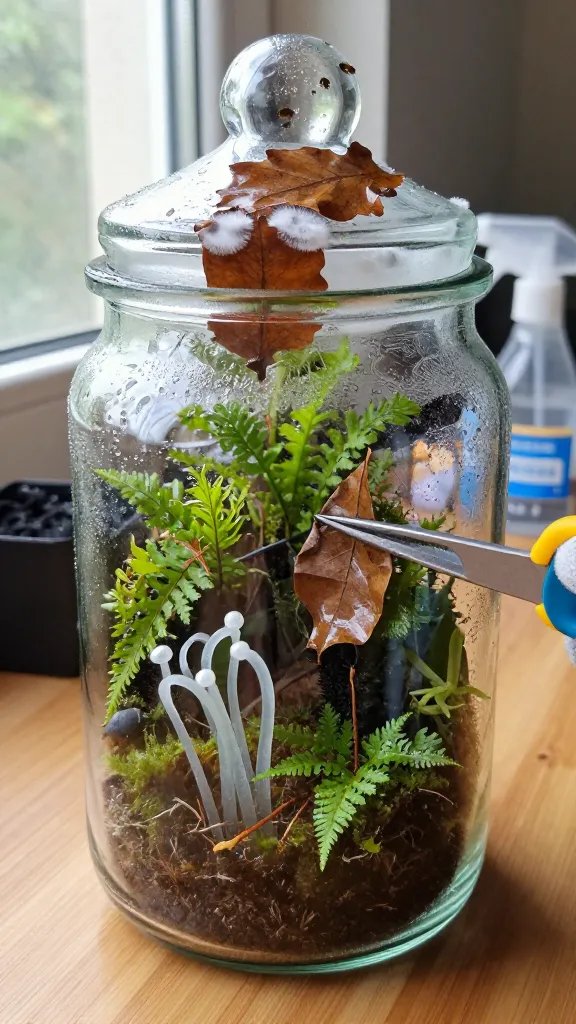
Fallen leaves wedged against the glass stay wet and decompose, which fuels mold expansion. One neglected pruning can turn a tidy scene into a fuzzy compost bin.
Signs to Watch For
- Brown leaves pressed to the glass with white fuzz halos
- Soft, translucent stems at the base of plants
- Tiny gnats hovering when you open the lid
How to Fix It
- Prune with small scissors anytime foliage touches glass for more than a day.
- Lift and remove all fallen leaves weekly during the first month, then monthly.
- Top-dress thinly with horticultural charcoal where leaves sat to suppress spores.
- Add a tiny clean-up crew if available at your garden centre: a pinch of springtails introduced once can help manage micro-mold (optional but helpful).
Action today: Open the lid and remove every leaf touching the glass; wipe the glass inside with a dry paper towel and reclose.
Frequently Asked Questions
How often should I water a closed terrarium?
Water far less than a houseplant. Add only 1–2 tablespoons with a spray bottle when midday condensation drops below one-third of the glass or the soil looks dry and the moss feels slightly crisp. For most setups, that’s every 3–4 weeks. Always recheck the glass the next day before adding more.
Is white fuzz on wood always harmful?
Early white fuzz on wood is often a harmless saprophytic fungus feeding on sugars in fresh wood. In small amounts it fades once the microclimate stabilizes. If it spreads onto plants or smells sour, remove the wood, scrub it under hot water, dry it, and reintroduce after a day. Dusting the area with a pinch of horticultural charcoal helps keep it in check.
Can I use cinnamon to treat mold?
Ground cinnamon can slow surface mold, but it also clumps and can smother moss. If you use it, apply the thinnest dusting with a dry fingertip to the soil only, never on leaves. I prefer horticultural charcoal because it’s cleaner and longer-lasting. Always pair any treatment with venting to address the cause.
Why does my glass stay foggy all day?
All-day fog means excess moisture or insufficient light/heat cycle. Start by venting 1–3 hours at midday for two days and wicking any pooled water. Move the terrarium to bright indirect light near a window so it warms slightly by day and clears by afternoon. You want light morning fog that clears by midday.
Do I need activated charcoal in every terrarium?
I include a thin layer because it binds odors and slows the spread of impurities, which reduces mold flare-ups. You don’t need a thick layer; 0.5 cm over the drainage gravel is plenty. If you skip it, monitor smell and clarity closely and vent more during the first two weeks. It’s inexpensive at garden centres and worth adding.
What should I do if I see gnats inside?
Gnats suggest consistently wet soil. Vent daily for 30–60 minutes for several days, let the top 0.5 cm of soil dry slightly, and remove decaying leaves. You can place a small yellow sticky trap near the jar (outside) to catch adults. Long term, reduce watering volume to tablespoons, not pours.
Conclusion
Mold in a closed terrarium isn’t bad luck — it’s a handful of fixable habits. Start with one change today: set your terrarium in bright indirect light and vent at midday if the glass is more than half fogged. From there, rebuild layers and plant choices as needed, and you’ll keep the glass clear and the greenery thriving.