
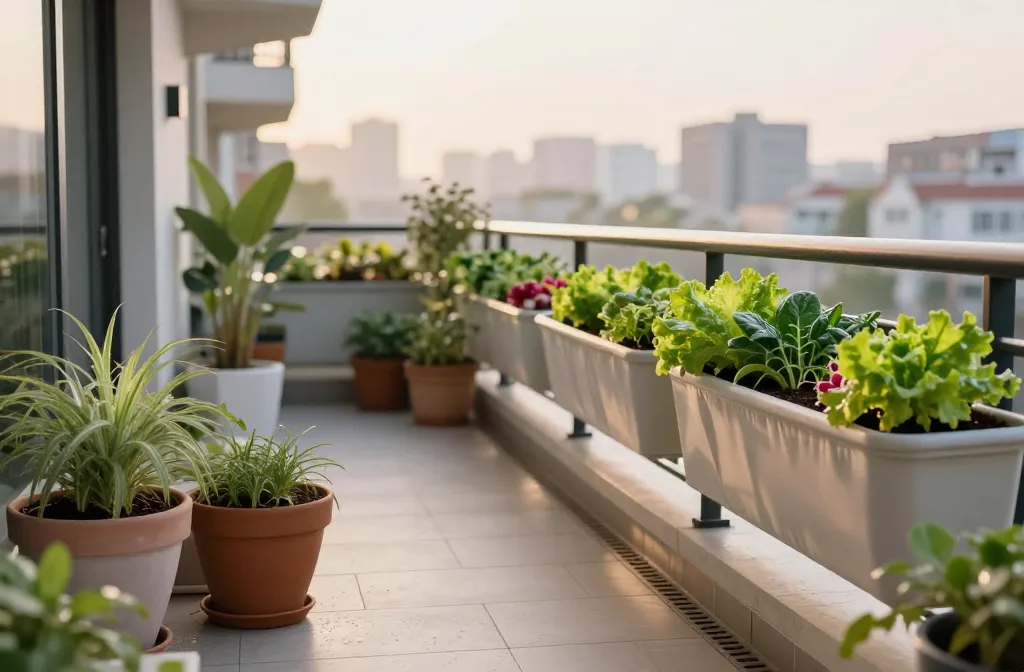
When I moved into a flat with a rail-sized balcony, I crammed in pots and harvested almost nothing. I thought I lacked space; in reality, I wasted the space I had with avoidable setup mistakes. In this guide, I’ll show you the five errors that rob yield and elbow room on small balconies, plus the exact fixes you can do with standard garden-centre gear. You’ll reclaim usable centimetres and get more harvest from the same footprint.
1. Using Deep, Wide Pots for Shallow-Rooted Crops
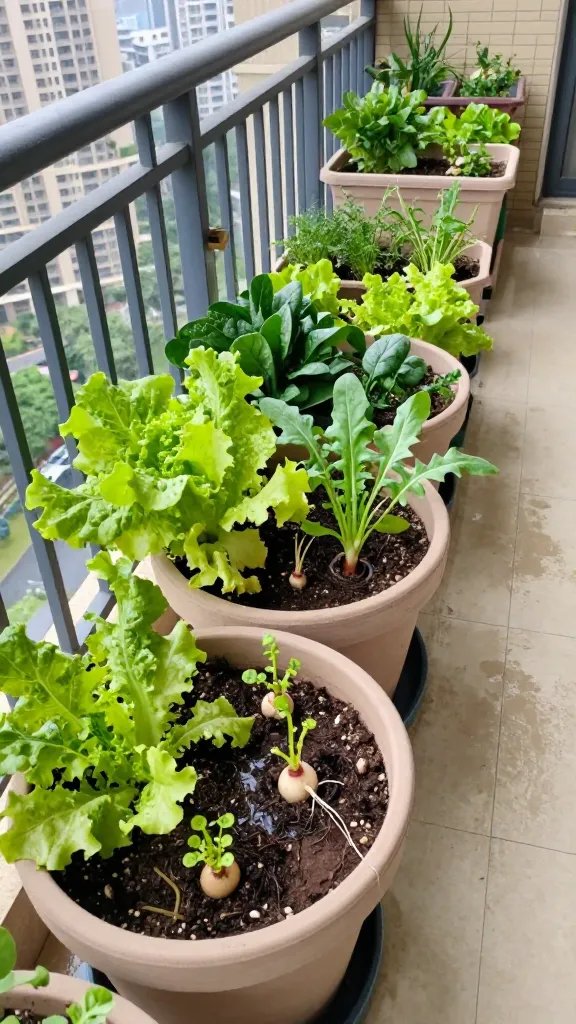
Oversized containers eat floor space without improving yield for crops that only root 15–25 cm deep. You end up with heavy pots that hog your walkway and dry out unevenly, while half the compost never sees a root.
What’s Going Wrong
- Leafy greens like lettuce, spinach, rocket, and radishes have shallow root systems and thrive in 15–20 cm of quality potting mix.
- Big round pots waste corner and rail space that rectangular planters fill neatly.
- Extra depth encourages soggy lower zones that turn anaerobic and stunt growth.
What to Use Instead
- Low, rectangular balcony planters 15–20 cm deep for greens and herbs.
- Window boxes with bottom drainage holes and saucers to protect flooring.
- Fabric troughs (15–20 cm high) that flex into tight corners and weigh less.
How to Set It Up
- Fill with a good quality potting mix from the garden centre, not garden soil.
- Top with 1–2 cm of fine bark or straw to reduce splash and evaporation.
- Plant at 10–15 cm spacing for lettuces; sow radishes in two 2-cm-deep rows near the edges to keep centres free.
Takeaway: Rehome shallow crops into 15–20 cm deep rectangular planters today and free up at least 20–30% of your floor space without losing yield.
2. Scattering Solo Pots Instead of Building Vertical Layers
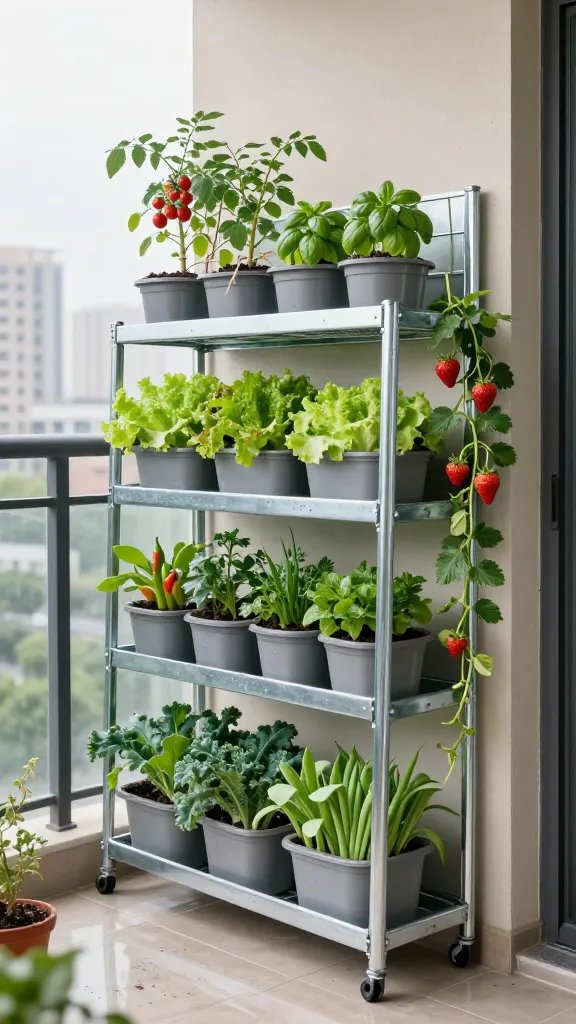
One-height layouts leave a lot of air above your pots empty. That unused column is your most valuable real estate on a balcony, and ignoring it halves your productive area.
Signs You’re Wasting Vertical Space
- Pots sit at the same height with 60–100 cm of unused air above.
- You have to shuffle containers just to step outside.
- Trailing plants spill into walkways instead of up or down a structure.
How to Fix It
- Add a 3–4 tier shelving unit rated for outdoor use; aim for 30–35 cm between shelves to fit herbs and greens.
- Hang sturdy rail planters on the balcony balustrade for sun-lovers like strawberries and thyme.
- Install two wall-mounted brackets with hanging baskets for trailing cherry tomatoes or oregano.
- Use a compact obelisk or tomato cage in one floor pot to grow up, not out.
What to Plant Where
- Top shelves/railings: Sun-demanding, drought-tolerant herbs (rosemary, thyme) and strawberries.
- Middle shelves: Leafy greens needing bright indirect light near a window-facing edge.
- Floor level: Tall or heavy feeders like tomatoes, peppers, dwarf beans with a support.
Action today: Add a single 3–4 tier shelf and move three existing pots onto it—instant tripling of usable surface without expanding the balcony footprint.
3. Planting Sprawlers Without Trellises or Pruning
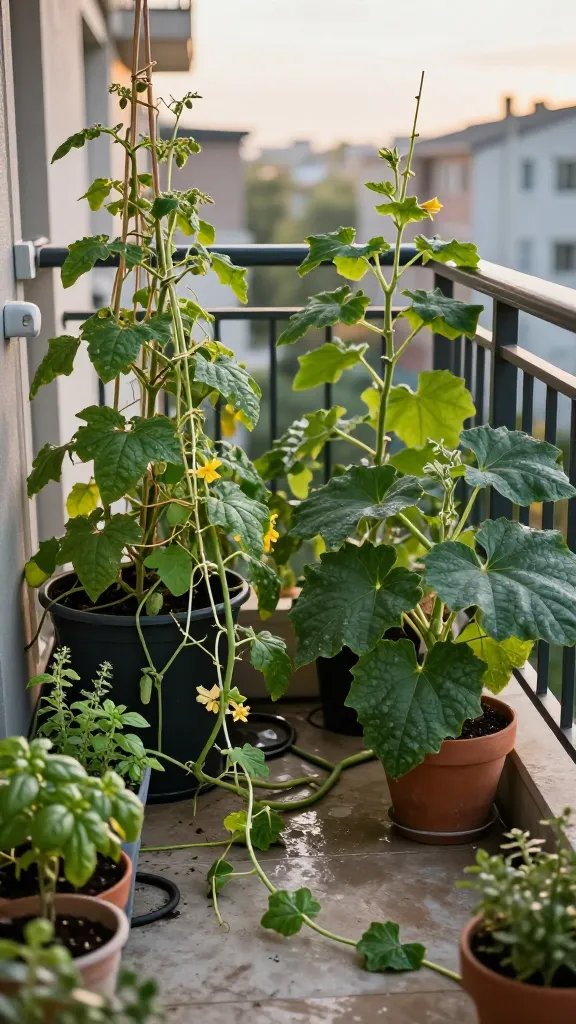
Unmanaged tomatoes, cucumbers, and squash will swallow metres of floor and railing. They shade everything else and tangle every time you water, converting valuable centimetres into leaf thickets instead of fruit.
Common Space-Hogging Offenders
- Tomatoes: Indeterminate types keep growing; side shoots (suckers) turn one plant into a hedge.
- Cucumbers: Vines creep across the floor unless you give them a climbable path.
- Courgettes/squash: Large leaves sprawl 80–100 cm if left unchecked.
Space-Smart Alternatives and Supports
- Choose compact or bush varieties labeled “patio,” “bush,” or “dwarf” (e.g., patio tomato, bush cucumber).
- Install a slim trellis or vertical string tied to a wall hook and the pot’s base for cucumbers and indeterminate tomatoes.
- Use a tomato cage immediately at planting; the first two weeks decide structure.
Weekly Maintenance That Saves Space
- Tomatoes: Pinch off suckers at the joint once a week; stop at two main stems.
- Cucumbers: Train the leader up the string; clip laterals to 2–3 leaves past a fruit.
- Courgettes: Remove the oldest, lowest leaf every week to keep a 50–60 cm footprint.
Takeaway: Put a cage or trellis on any vining plant today and set a weekly five-minute pruning check—your walkway reappears, and light reaches fruiting sites.
4. Laying Out Pots Against the Wall Instead of the Light
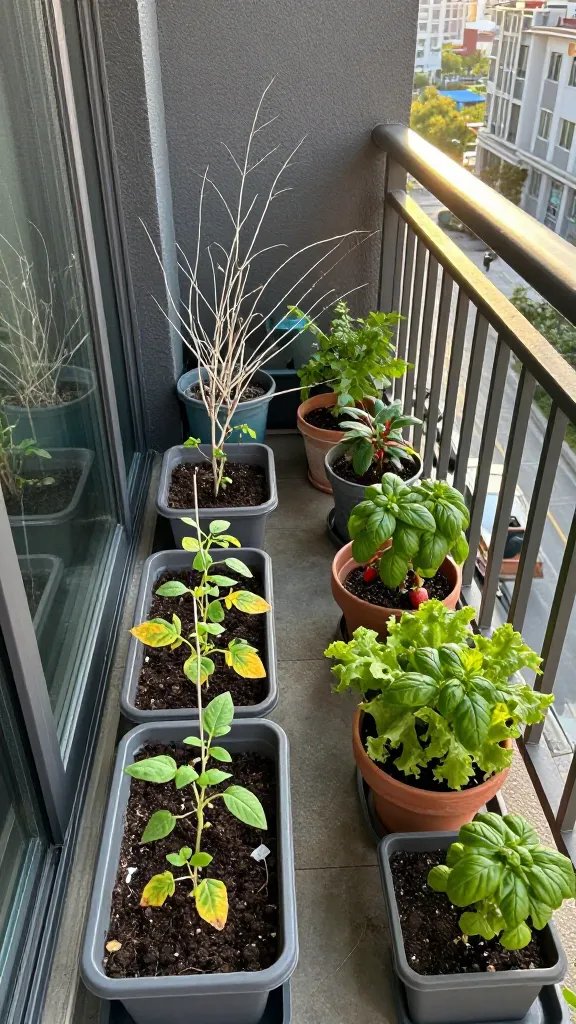
Shaded layouts stunt growth and force leggy, weak plants that waste pot volume and time. If your brightest edge is the railing and your pots huddle by the door, you’ve parked your crops in the dark.
Know Your Balcony Light
- South- or west-facing: 6–8 hours of direct sun—great for tomatoes, peppers, strawberries.
- East-facing: 3–5 hours of morning sun—ideal for greens and herbs.
- North-facing: Bright indirect light near a window to the outside—stick to leafy greens, mint, parsley, chives.
Layout That Uses Every Ray
- Place sun-lovers on the outer edge/rail or top shelves exposed to sky.
- Keep shade-tolerant greens on the lower tiers or closest to the wall.
- Stagger heights so tall plants don’t cast midday shade on shorter ones; tallest at the back/side opposite the sun’s path.
- Rotate pots a quarter turn once a week for even growth.
Simple Light Test Without Gadgets
- At midday, stand where each pot sits. If your head casts a sharp shadow, that spot is sunny. A blurry shadow is bright but indirect. No shadow means dim—reserve for hardy greens or skip.
Action today: Move your fruiting crops to the brightest railing or top shelf and shift greens to lower tiers—you’ll see sturdier growth within two weeks.
5. Skipping Consistent Watering and Feeding in Small Volumes
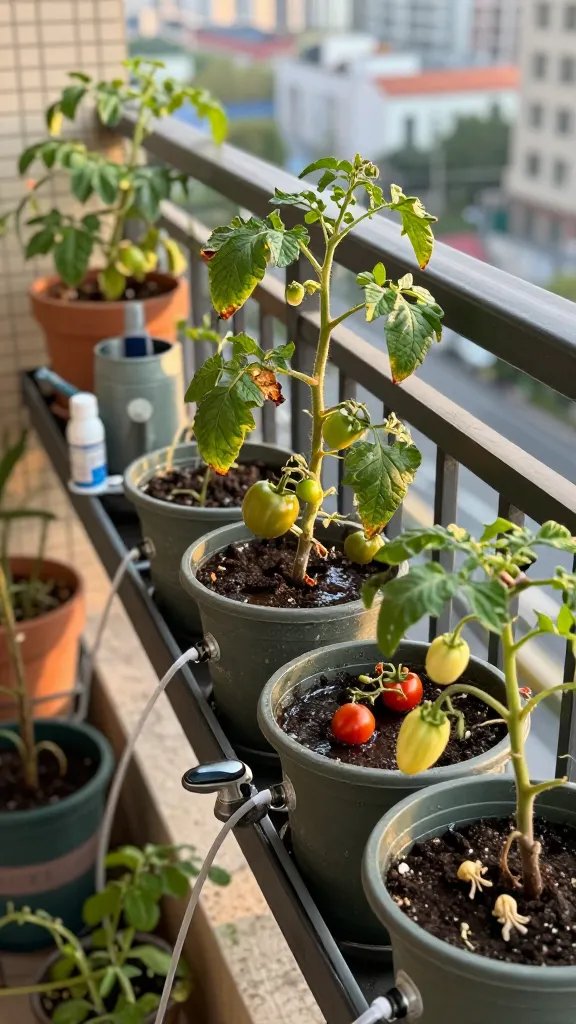
Small containers dry fast and run out of nutrients quickly. That inconsistency shrinks plants, delays fruiting, and turns precious pot space into underperforming foliage.
Warning Signs
- Leaf edges crisping by late afternoon even when mornings feel cool.
- Flowers dropping from tomatoes or peppers before fruit sets.
- Pale, slow growth after 4–6 weeks in fresh compost.
Make Watering Predictable
- Use a basic drip kit from your garden centre on a simple mechanical timer, or set phone alarms.
- For 15–25 cm planters in summer, water every 1–2 days until water drips from the base; for 30–40 cm pots, every 2–3 days.
- On hot, windy days, check by finger: top 2–3 cm dry = water now.
- Add a 1–2 cm layer of mulch (fine bark, straw) to slow evaporation.
Feed Lightly, Regularly
- Start feeding fruiting crops at first flowers with a tomato fertiliser diluted as the label says, every 7–10 days.
- Greens get a general-purpose liquid feed every 2 weeks.
- If your tap water tastes clean, not salty, it’s fine. Once a month, water heavily until runoff to prevent fertiliser build-up.
Takeaway: Set a repeat reminder to water on a schedule and feed weekly during flowering—small pots stay productive and every centimetre pays you back.
Frequently Asked Questions
How many plants can I fit in a standard 60 cm balcony planter?
For lettuces, plant 4–5 heads spaced 12–15 cm apart in a single row. For mixed herbs, place 3 small starters (basil, parsley, chives) with 15–20 cm between centres. Keep at least 2 cm from the edges for airflow. If it looks crowded on day one, it’s overplanted.
What’s the smallest pot size for a productive tomato on a balcony?
Use at least a 25–30 litre container that’s 30–35 cm wide and deep for compact or patio tomatoes. Install a cage at planting so you don’t disturb roots later. Water every 1–2 days in summer and feed weekly once flowers appear. Place it at the brightest outer edge.
Can I grow cucumbers without a trellis if I don’t have a wall to fix to?
Yes—use a free-standing A-frame or a tomato cage and tie vines loosely with soft ties. Choose a bush cucumber labelled for containers. Train the main stem upward and clip side shoots after 2–3 leaves. Keep the pot at the balcony edge to avoid shading other plants.
How do I stop rail planters from drying out so fast?
Use deep rail planters (18–20 cm) with saucers, add a 1–2 cm mulch, and water in the evening on hot days. Mix in a handful of water-retentive material sold at garden centres when potting up. Group planters together so they shade each other’s sides. Check moisture daily during heatwaves.
What should I grow on a north-facing balcony with no direct sun?
Focus on leafy crops and shade-tolerant herbs: lettuce, spinach, rocket, chives, parsley, mint, and coriander in the cooler months. Use 15–20 cm deep rectangular planters and place them where the sky is most open for bright indirect light. Skip fruiting crops like tomatoes and peppers; they won’t justify the space without direct sun. Rotate planters weekly for even growth.
How do I keep my balcony usable while growing more?
Concentrate plants on vertical shelves and railings, leaving a 60 cm walking strip. Use one large floor pot for a showpiece fruiting plant and keep the rest on tiers. Prune weekly and choose compact varieties. Store tools in a single caddy hung on a hook to keep the floor clear.
Conclusion
You don’t need more balcony—you need smarter containers, structure, and routine. Fix one mistake this week—swap one oversized pot for a 20 cm-deep trough, add a shelf, or tie in a trellis—and you’ll feel the space open up as yields climb. Next, map your light and rearrange by crop needs to lock in long-term success.