
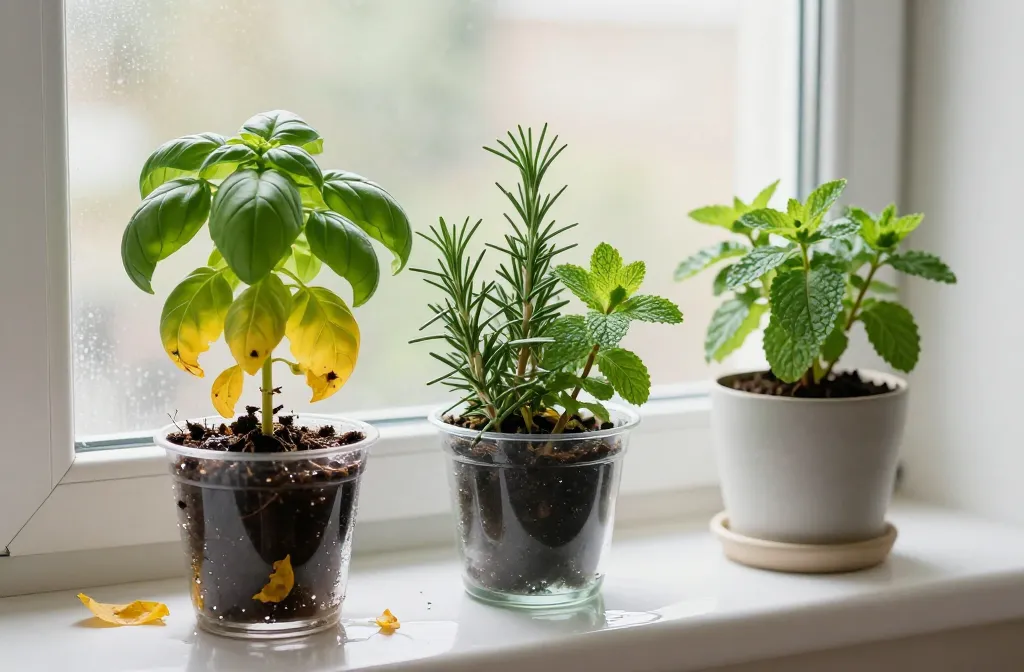
Your basil looks sad, your mint smells swampy, and your rosemary is judging you. Odds are, you’re drowning your herbs with love—aka water. Let’s fix that fast so your windowsill jungle gets back to lush and tasty. Here are the biggest red flags your potted herbs are overwatered—and what to do instead.
1. Leaves Turning Yellow Like a Highlighter
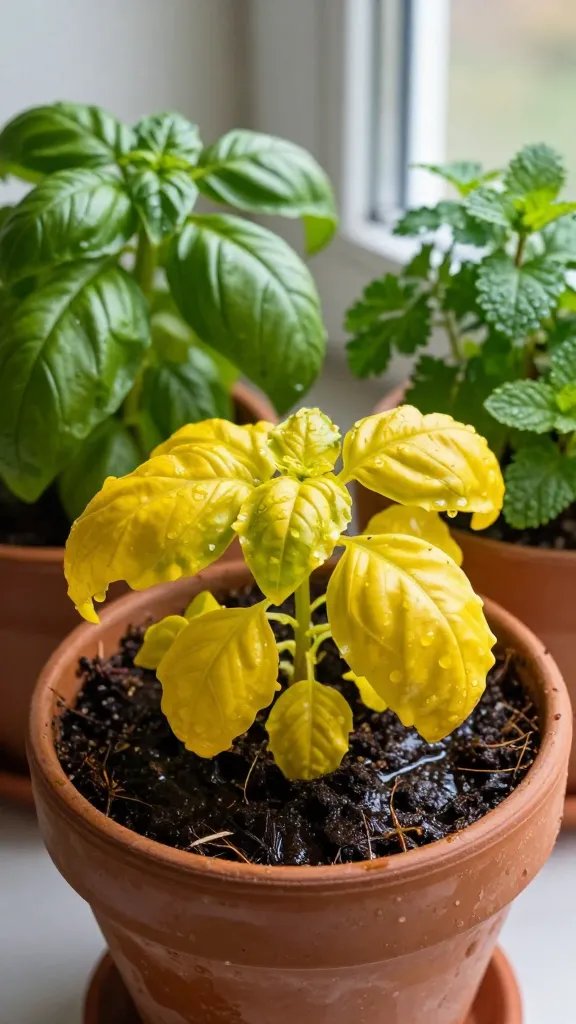
Bright yellow leaves on herbs scream, “Help, my roots can’t breathe!” Overwatering flushes oxygen out of the soil and messes with nutrient uptake, so leaves yellow even when you fertilize. If the plant looks both lush and limp, that’s the overwatering combo.
What To Look For:
- Uniform yellowing starting on lower leaves
- Soft, floppy stems that can’t hold their shape
- Wet, heavy potting mix long after watering
Yellow leaves don’t always mean more nutrients. Sometimes they mean less water. Counterintuitive? Yep. But easing up on water restores oxygen, and your herb rebounds quicker than you think.
Quick Fix:
- Check the top 1-2 inches of soil. If it feels damp, pause watering.
- Move the plant somewhere bright and breezy to speed drying.
- Prune the worst yellow leaves so the plant can focus on new growth.
Benefit: Greener, firmer leaves and fewer mystery nutrient issues. Your pesto will thank you.
2. Soil That Smells Like a Swamp
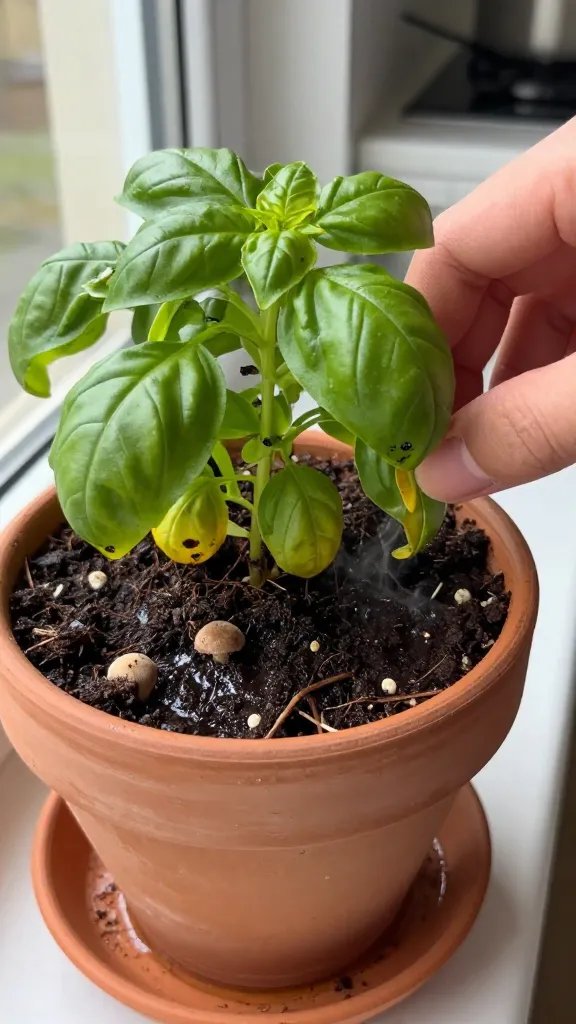
Stick your nose in the pot. If you catch funky, sour, or rotten vibes, you’ve got anaerobic conditions and probably root rot brewing. Healthy soil smells earthy, not like a forgotten gym bag.
Sniff Test Essentials:
- Earthy scent = good microbial activity
- Sour or rotten aroma = too wet for too long
- Mushroomy or mildewy whiffs = poor airflow and drainage
Overwatered herb soil becomes a party zone for the wrong microbes. That smell is your early warning siren—catch it now and you might save the plant.
Rescue Move:
- Slide the plant out of the pot and check roots. White and crisp is good; brown and mushy means rot.
- Trim mushy roots with sanitized scissors and repot in fresh, airy mix.
- Water lightly, then wait until the top dries before watering again.
Benefit: A clean, fresh potting mix helps roots breathe and stops rot in its tracks.
3. Fungus Gnats Doing Laps Around Your Pot
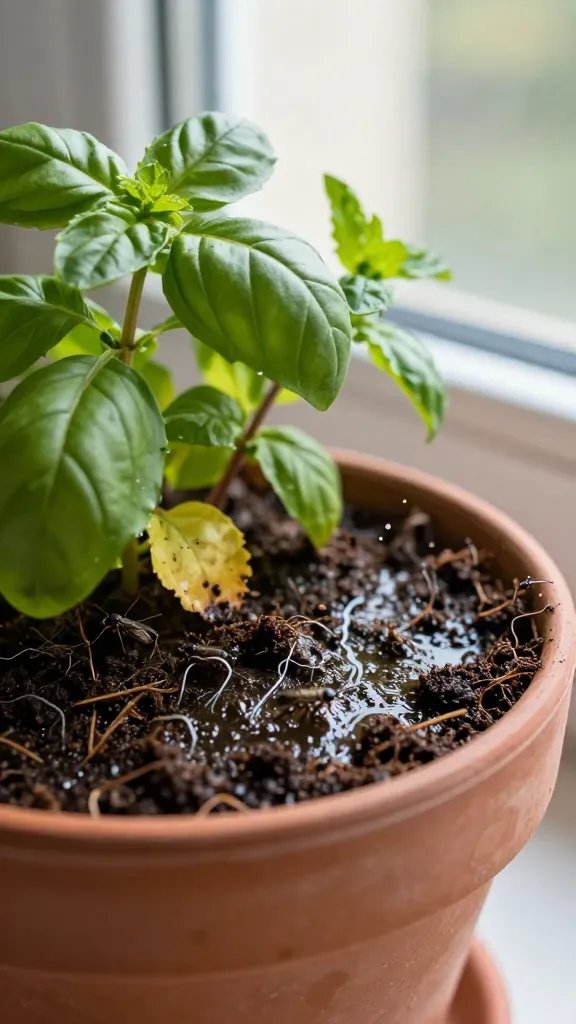
Tiny black flies hovering over your herbs? Classic sign of consistently wet soil. Fungus gnats thrive where the top layer stays damp, and they lay eggs that hatch into root-nibbling larvae. Cute? Not even a little.
Why It Happens:
- Constant moisture creates a perfect nursery for gnats
- Organic-rich soil feeds larvae
- Poor drainage keeps the gnat buffet open 24/7
Good news: you can break the cycle fast by drying the top layer and adding a few barriers. No need to douse your herbs in chemicals.
How To Evict Them:
- Let the top inch dry fully between waterings.
- Top-dress with a thin layer of horticultural sand or diatomaceous earth.
- Use yellow sticky traps to catch adults.
- For heavy infestations, water once with BTI bits tea (a biological control).
Benefit: Fewer gnats, happier roots, and no more awkward “sorry about the flies” when guests visit.
4. Mushy Stems and Wilting Even After Watering
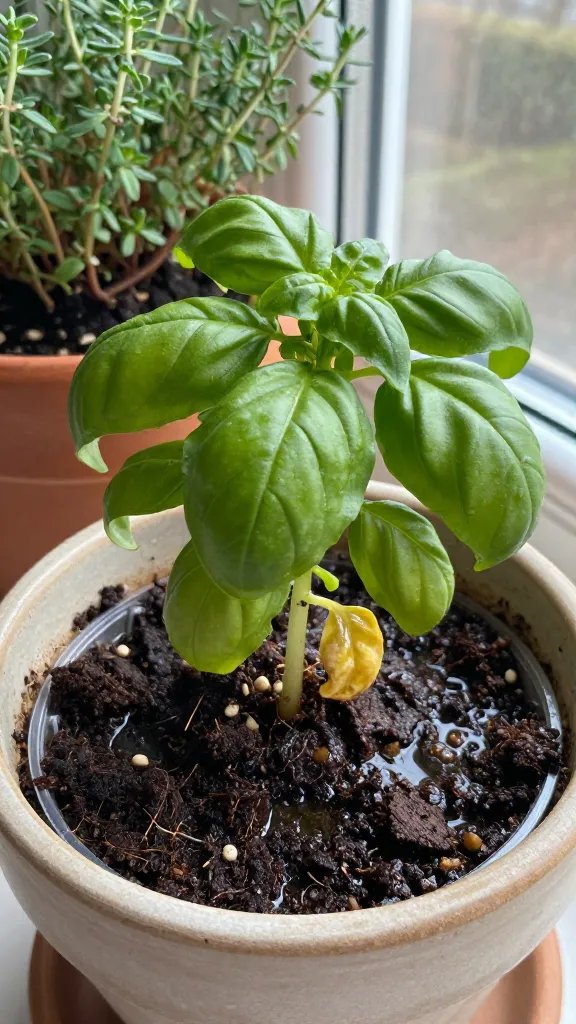
Wilting usually makes you want to water. But if your herb flops while the soil stays wet, you’ve got the dreaded overwater-wilt. Roots can’t move water when they sit in mush, so the top droops even though the bottom is soaked. Irony at its finest.
Distinguish the Wilts:
- Underwatered wilt: dry soil, plant perks up after watering
- Overwatered wilt: wet soil, plant stays droopy or gets worse
Don’t panic-water. That just piles on the problem. Focus on airflow and drainage instead.
Fix-It Plan:
- Check drainage holes. If blocked, unclog them immediately.
- Remove saucers that collect runoff. No swampy feet.
- Repot into a container with multiple drainage holes and a gritty, well-draining mix.
Benefit: Sturdy stems, perkier leaves, and way fewer heartbreaking flops.
5. White, Powdery, or Slimy Coatings on Soil
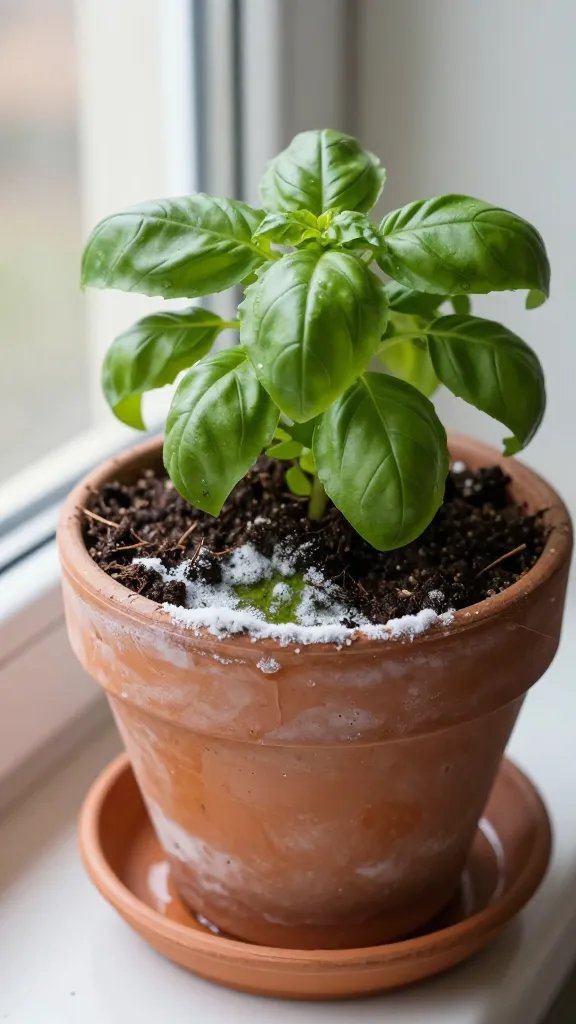
White fluff or a slimy sheen on the surface means two things: overwatering and low airflow. That combo encourages algae and harmless-but-ugly saprophytic fungi. Your herbs won’t love living under a damp blanket.
Common Culprits:
- Algae bloom: green film on soil from constant moisture and light
- Salt crust: white crust from fertilizer buildup plus overwatering cycles
- Surface mold: white fuzz from poor ventilation
Most of these look worse than they are, but they scream “too wet.” Tidy the surface and reset your routine.
Cleanup Steps:
- Scrape off the top 0.5–1 inch of gunky soil and toss it.
- Top with fresh mix and improve airflow around the plant.
- Water less often, and water deeply but only when needed.
- If you see salt crust, flush the pot with clean water once, then adjust fertilizer.
Benefit: Cleaner soil surface, fewer pests, and a healthier moisture cycle.
6. Stunted Growth and Flavor That Tastes… Meh
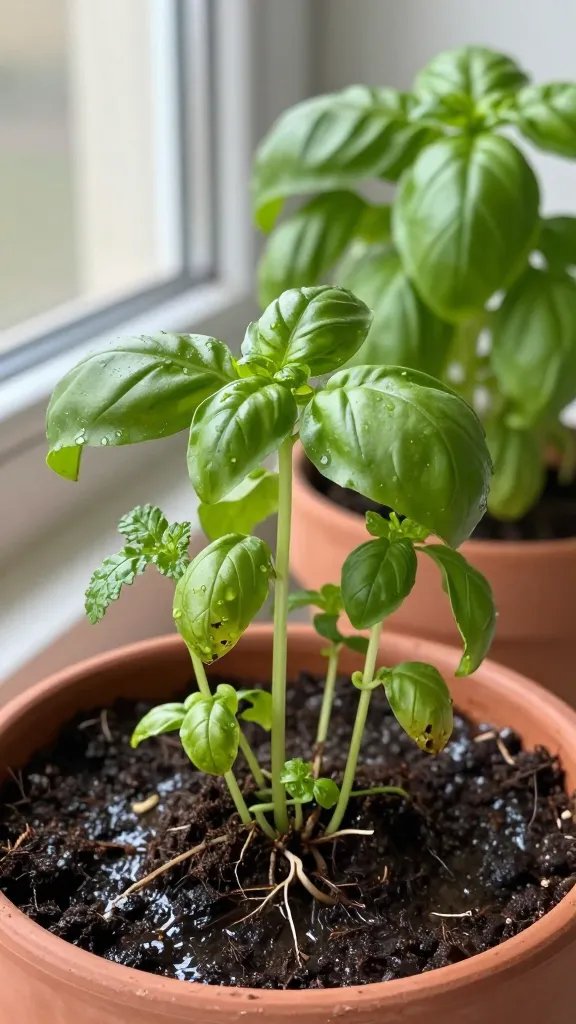
Overwatered herbs often stall out. They push soft, weak growth that breaks easily and tastes bland. No one wants lifeless basil that can’t carry a caprese.
How Overwatering Hurts Flavor:
- Low oxygen at the roots slows metabolism and essential oil production.
- Nutrients wash out, so plants grow weak and watery.
- Cool, soggy soil discourages strong, fragrant foliage.
Want punchy, aromatic herbs? Give them bright light, warmth, and a rhythm of moist-then-dry. They’ll build oils instead of mush.
Grow Stronger, Tastier Herbs:
- Use a well-draining herb mix with perlite or pumice (20–30%).
- Water when the top inch dries, not on a schedule. Seriously, trust me.
- Give them 6+ hours of bright light or a grow light if your window underperforms.
- Feed lightly with a diluted balanced fertilizer during active growth.
Benefit: Compact, flavorful leaves that actually taste like something in your cooking.
7. Saucers Full Of Water And Pots Without Drainage
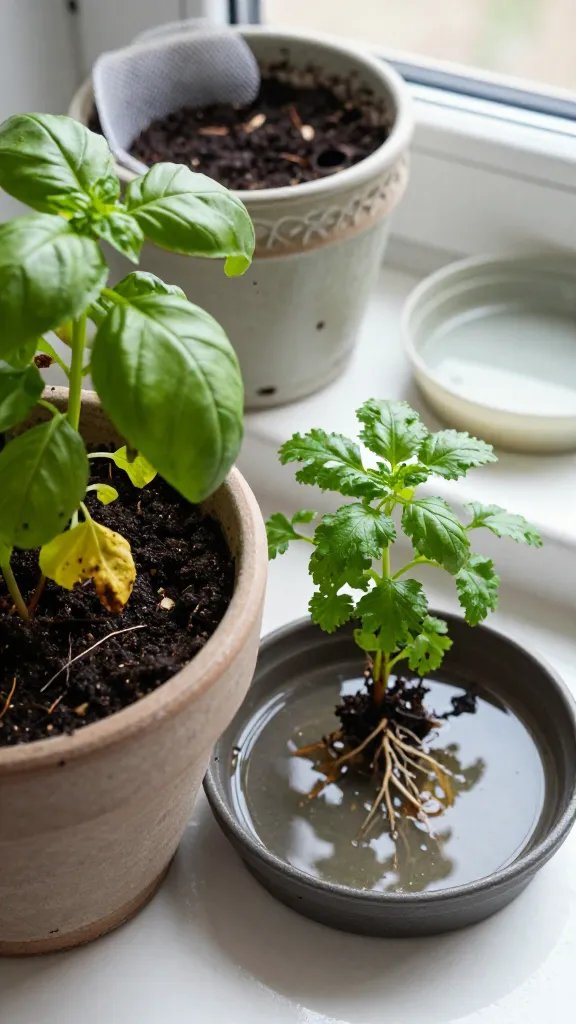
If your herb sits in a puddle, the roots bathe instead of breathe. Saucers that stay full or pots without holes guarantee chronic overwatering. IMO, the no-drainage pot is the final boss of plant problems.
Design For Drainage:
- Always choose pots with drainage holes. Nonnegotiable.
- Use a mesh or coffee filter over holes to keep soil from escaping.
- Empty saucers 10–15 minutes after watering.
- Double-pot: a pretty cachepot outside, a draining nursery pot inside.
Got a pot you love that lacks holes? You can still use it, but treat it like a decorative sleeve, not the plant’s actual home. Your herbs want freedom, not a bathtub.
Watering Rhythm That Works:
- Check moisture with your finger or a moisture meter before you water.
- Water thoroughly until it drains, then wait until the soil dries again.
- Adjust frequency with the seasons—less in winter, more in summer.
Benefit: Consistent moisture without swampy roots equals sturdy growth and fewer plant emergencies.
You’ve got this. Pay attention to these seven signs, tweak your watering rhythm, and your potted herbs will bounce back fast. A little restraint now means bigger harvests later—and yes, your cilantro will finally stop being dramatic.