
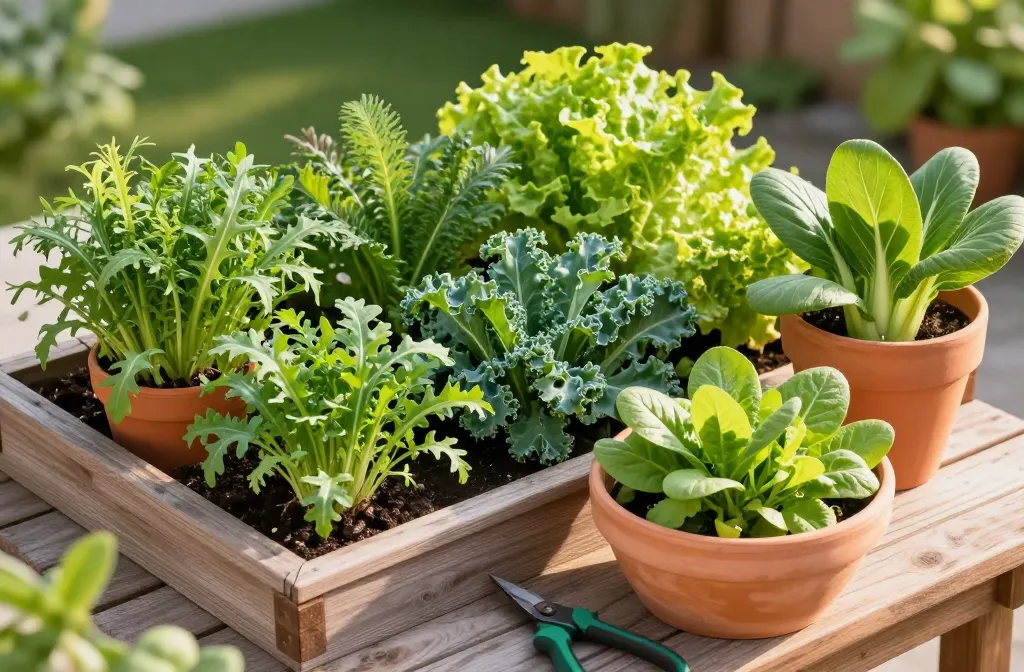
Want homegrown veggies before your enthusiasm wilts? You can plant today and eat in under two months—no farm, no fuss. These crops thrive in small spaces, shrug off beginner mistakes, and deliver flavor fast. Ready to turn “someday” into stir-fry?
1. Salad Bowl Sprint: Greens You Can Cut in Weeks
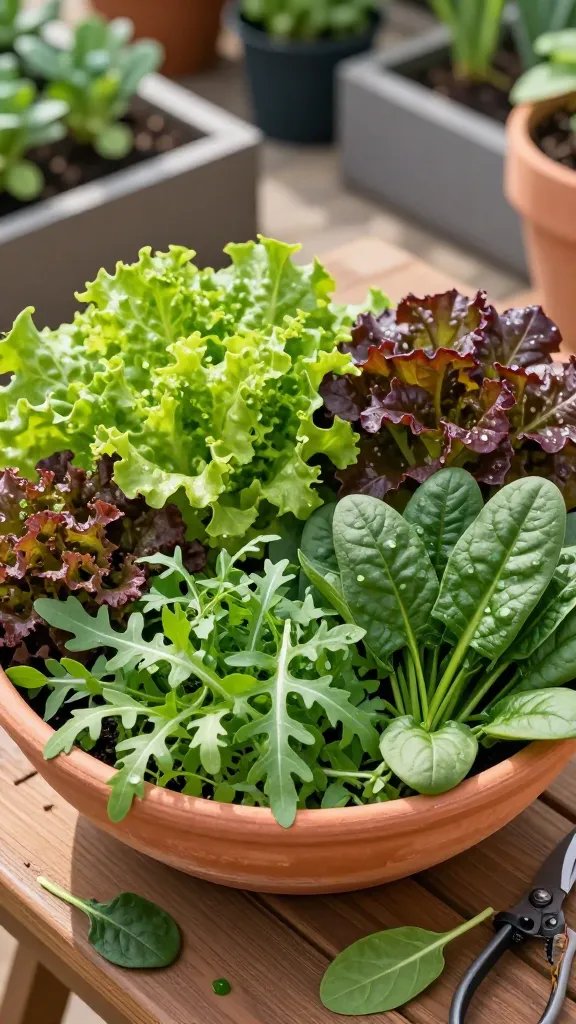
You want instant gratification? Start with leafy greens. They germinate fast, forgive imperfect soil, and give multiple harvests if you snip instead of yank.
Grow them in containers, raised beds, or any sunny patio spot. Mix varieties so every bowl tastes different—and looks like a farmer’s market explode in your kitchen.
20-Day To 45-Day Stars
- Arugula (20–30 days baby leaves) – Peppery bite that elevates everything.
- Leaf Lettuce (30–45 days) – Cut-and-come-again for weeks.
- Spinach (30–40 days) – Tender if grown in cool temps.
- Baby Kale (25–30 days) – Harvest young leaves for sweet crunch.
- Mizuna & Mustard Greens (25–35 days) – Spicy, frilly, extremely photogenic.
- Bok Choy (40–50 days; baby size ~30) – Baby heads cook in minutes.
- Tatsoi (25–35 days) – Savory rosette leaves for soups and ramen.
Tips
- Sow thick, harvest thin: Sprinkle seeds, snip baby greens in 2–3 weeks, let the rest mature.
- Shade = sweeter: Use afternoon shade or a light row cover to reduce bitterness.
- Moist soil, even watering: Stress makes greens bolt and taste meh.
When to use: You need fast, continuous harvests for sandwiches, tacos, and “I forgot a side dish” emergencies.
2. Root Rush: Crunchy Crops That Bulk Up Fast
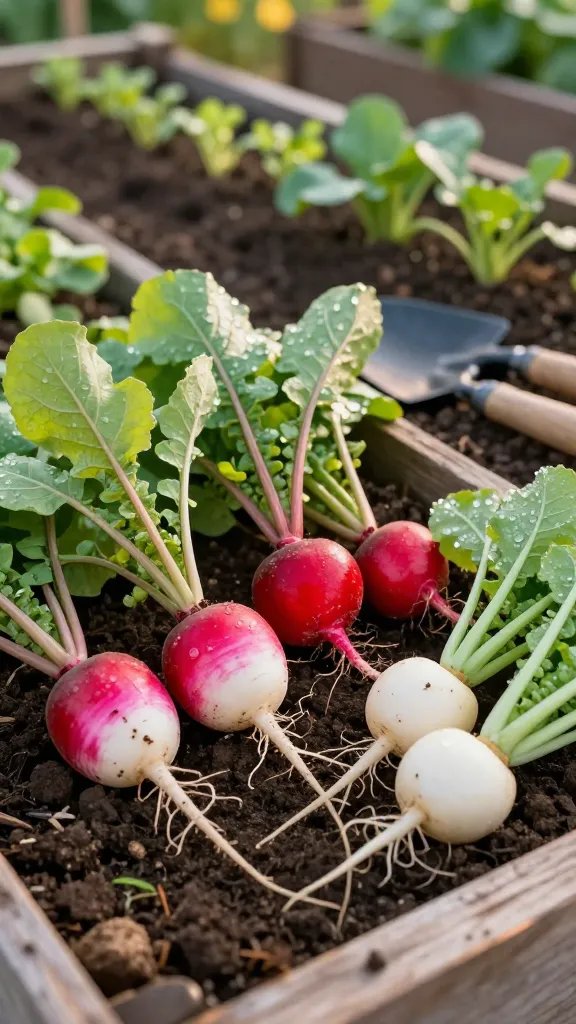
Roots can move surprisingly quickly if you pick the right varieties. They add texture, color, and that fresh-from-the-dirt sweetness you’ll never get at the store.
Loose soil equals happy roots. Pull a few early as “thinnings” and snack while you garden. Multitasking, but make it delicious.
30–60 Day Root MVPs
- Radishes (25–35 days) – Cherry Belle, French Breakfast; re-sow every 2 weeks for a steady stream.
- Turnips (35–55 days) – Hakurei and Tokyo Cross give buttery, sweet roots and edible greens.
- Beets (45–60 days roots; 20–30 days greens) – Detroit Dark Red, Chioggia; eat the tops while roots grow.
- Baby Carrots (50–60 days) – Little Finger, Adelaide; harvest while still petite.
- Kohlrabi (45–60 days) – A crisp, alien bulb that tastes like broccoli-stem candy.
Soil & Spacing Musts
- Fine, fluffy soil: Remove rocks, break clumps. Roots hate obstacles.
- Thin seedlings: Crowding = stunted roots. Be ruthless.
- Consistent moisture: Prevent splits and bitterness.
When to use: You crave crunch and color fast, and you want both roots and greens from the same patch. FYI: roasted baby beets will make you insufferably smug.
3. Speedy Pods & Peas: Snap, Stir-Fry, Repeat
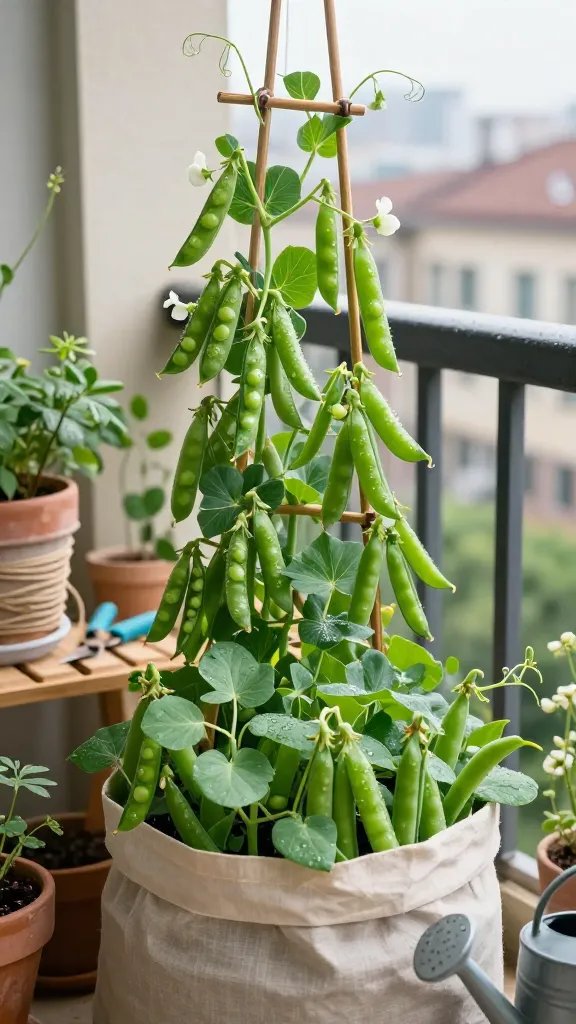
If you love the snap of a fresh pod, this is your lane. Some peas and beans deliver in 50–60 days, especially dwarf types bred for speed.
They climb, so go vertical if your space is tiny. Plus, they look adorable on a trellis—and yes, your neighbors will ask.
Quick Climbers And Bush Types
- Sugar Snap Peas (55–60 days) – Cascadia, Sugar Ann; sweet pods that rarely make it back to the kitchen.
- Snow Peas (50–60 days) – Oregon Sugar Pod; flat, tender pods that cook fast.
- Bush Beans/Green Beans (50–60 days) – Provider, Contender; reliable even in cool soil.
- Yardlong Beans (60–70 days) – Slightly over the limit sometimes, but heat lovers with insane yields. IMO worth a try if it’s hot.
Trellis & Care Tips
- Give support: Peas love netting or a simple string trellis; beans vary by type.
- Plant early (peas) or warm (beans): Peas like cool spring; beans prefer warm soil.
- Harvest small, harvest often: Keeps plants productive and pods sweet.
When to use: You want snacks straight off the vine and you like the aesthetic of a living green wall. Also, stir-fry Tuesday just got locked in.
4. Brassica Blitz: Tiny Heads, Big Flavor
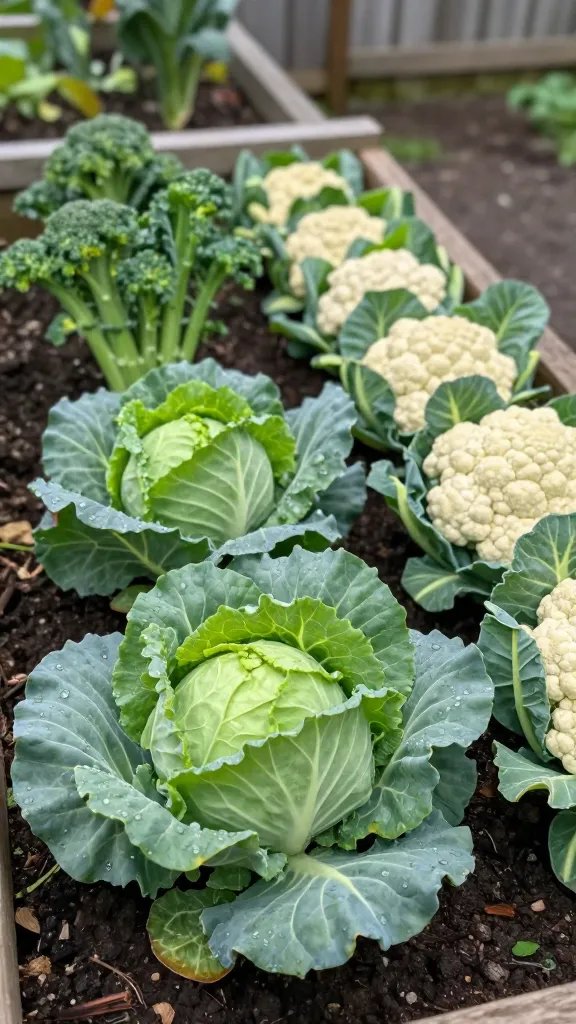
Short-season brassicas give you big bang for your garden buck. Many offer baby versions that mature in 30–50 days and taste milder than their big siblings.
They thrive in cool weather and tolerate partial sun. If cabbage intimidates you, these mini powerhouses will change your mind.
Fast Brassica All-Stars
- Baby Napa Cabbage (45–55 days) – Compact, juicy heads that slice like butter.
- Mini Cauliflower (50–60 days) – Choose quick cultivars; harvest when curds are tight.
- Broccolini/Broccoli Raab (40–55 days) – Rapid side shoots for constant picking.
- Komatsuna (30–40 days) – Tender greens for sautéing and soups.
- Pak Choi (again, 30–50 days) – Yes, it deserves two shoutouts; it’s that versatile.
Keep Them Sweet, Not Bitter
- Row cover = fewer pests: Flea beetles and cabbage moths despise barriers.
- Even moisture, steady feeding: A light compost top-dress keeps growth consistent.
- Harvest young: The flavor stays mild and texture stays tender.
When to use: You cook a lot and love crisp-tender greens that go with everything—no food waste, all flavor.
5. Flavor Bombs: Herbs And Quick-Fruiting Zingers
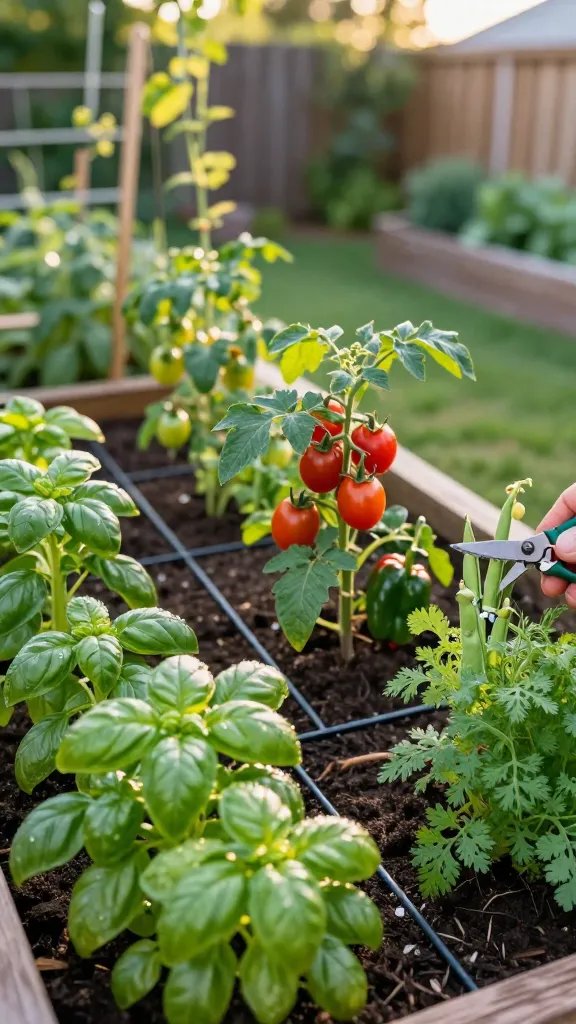
You don’t need giant tomatoes to feel like a gardening legend. Pair fast herbs with a few speed demons and your meals level up instantly.
Herbs deliver flavor in weeks, and a handful of compact fruiting plants squeak under 60 days with the right conditions. It’s the garden equivalent of hack mode, seriously.
Under-60-Day Heroes
- Basil (25–35 days for bunches) – Pinch often; it grows bushier and sweeter.
- Cilantro (25–35 days leaves) – Sow every 2 weeks; bolts fast in heat but tastes amazing.
- Dill (30–45 days leaves) – Feathery, fragrant, and a pollinator magnet.
- Chives (30–45 days for clumps) – Cut and regrow. Purple flowers are edible.
- Green Onions/Scallions (30–50 days) – Plant thick, snip often; regrow from store-bought roots in a pinch.
- Summer Squash, Extra-Early Varieties (45–60 days) – Look for “early” zucchini or patty pan; harvest small for best flavor.
- Pickling Cucumbers, Early Types (50–60 days) – Bush Pickle, Eureka; compact, balcony-friendly.
Planting Hacks
- Succession sowing: Replant herbs and greens every 2–3 weeks for a constant pipeline.
- Containers with purpose: 3–5 gallon pots for cukes and squash; 6–8 inches deep for herbs/greens.
- Morning sun, afternoon chill: Keeps herbs lush and less bitter.
When to use: You want instant flavor upgrades and a few quick fruits without turning your yard into a farm. Your pasta, tacos, and salads will never be the same.
Quick Reference: 20 Fast Crops (Most Harvestable ≤60 Days)
- Arugula
- Leaf Lettuce
- Spinach
- Baby Kale
- Mizuna
- Mustard Greens
- Bok Choy
- Tatsoi
- Radishes
- Turnips (Hakurei)
- Beets (plus greens)
- Baby Carrots
- Kohlrabi
- Sugar Snap Peas
- Snow Peas
- Bush Beans
- Broccoli Raab/Broccolini
- Baby Napa Cabbage
- Basil
- Cilantro (bonus: Green Onions, Dill, Chives, Early Cucumbers, Early Summer Squash)
Soil, Sun, And Water: The Fast-Growth Formula
- Soil: Mix compost into the top 6–8 inches. Fast crops love rich, friable soil.
- Sun: 6+ hours for roots and fruiting crops; 4–6 works for many greens.
- Water: Keep it even. Drip or a gentle daily soak beats drought-flood drama.
- Fertilizer: A balanced organic feed every 2–3 weeks keeps growth steady.
- Pests: Use row cover, hand-pick, and harvest fast. The best defense? Speed.
Small Space And Timing Hacks
- Interplanting: Tuck radishes and greens between slower crops. Harvest before space gets tight.
- Cut-and-come-again: Snip outer leaves; let plants regrow.
- Staggered sowing: Plant small amounts weekly to avoid feast-or-famine.
- Choose “early” cultivars: Look for phrases like “extra early,” “baby,” or days-to-maturity ≤60.
Ready to feast faster than your friends can say “heirloom”? Plant a mix of these quick growers and you’ll start harvesting in weeks, not months. Keep sowing small batches, stay curious, and enjoy the smug joy of a salad you grew yourself—no patience required.