
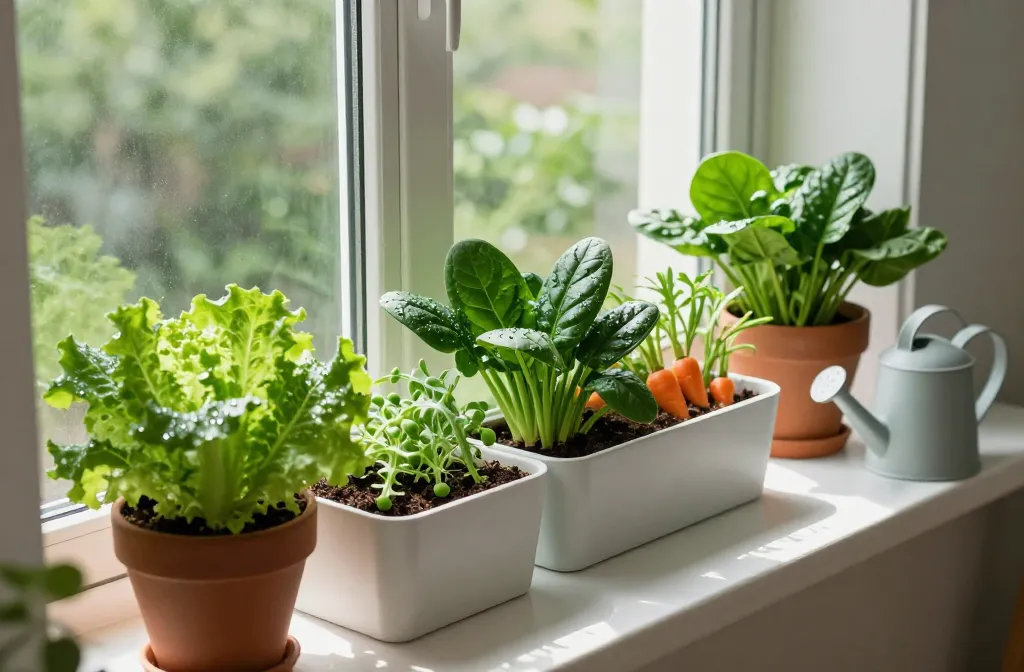
Craving fresh veggies but your apartment only gets moody, indirect light? Perfect. Plenty of resilient vegetables thrive without full sun, and they actually taste better grown cool and shady. We’re talking greens, pods, and roots that don’t throw a tantrum when the sun plays hard to get. Ready to turn that dim corner into a snack factory?
1. Leafy Legends: Lettuce, Spinach, And Arugula
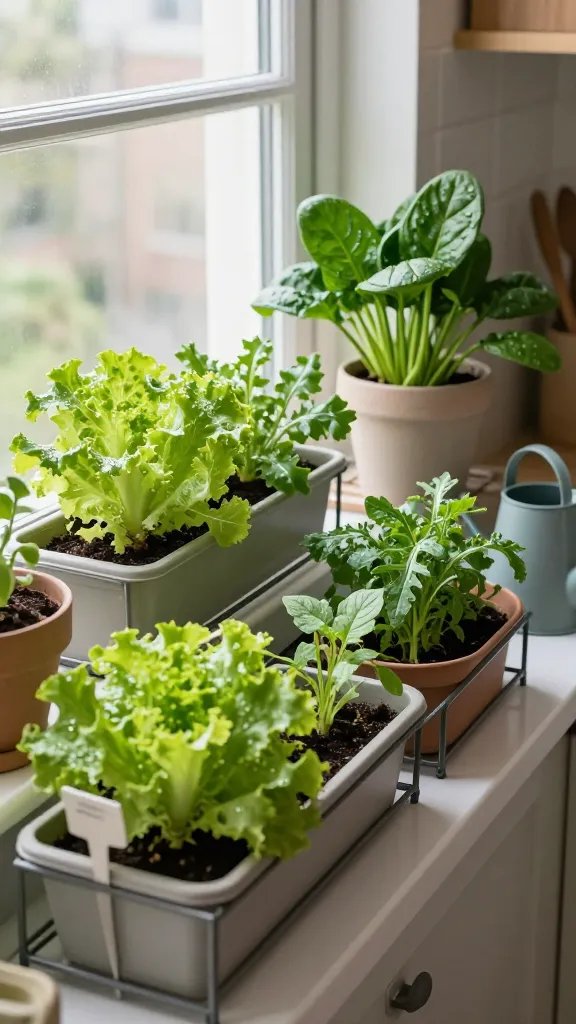
Shady windows are basically a salad bar waiting to happen. These leafy champs grow fast, taste sweeter in lower light, and don’t need a sunbath to thrive. Plus, you can harvest a few leaves at a time and keep them coming for weeks.
Why They Shine Indoors
- Lettuce: Butterhead and looseleaf types stay tender and forgiving in low light.
- Spinach: Loves cool temps and partial shade—perfect for that north-facing sill.
- Arugula: Peppery, vigorous, and happy with 3–4 hours of bright, indirect light.
Use shallow containers (6–8 inches deep) with a light potting mix. Keep soil evenly moist—think damp sponge, not swamp. Snip outer leaves first to encourage new growth.
Quick Tips
- Sow every 2–3 weeks for a constant crop.
- Avoid hot windows; heat turns leaves bitter fast.
- Fertilize lightly every 2–3 weeks with a balanced liquid feed.
Best for salads, wraps, and last-minute dinner flexes. FYI, a mixed planter of these greens looks gorgeous on a sill.
2. Root For It: Radishes, Baby Carrots, And Spring Onions
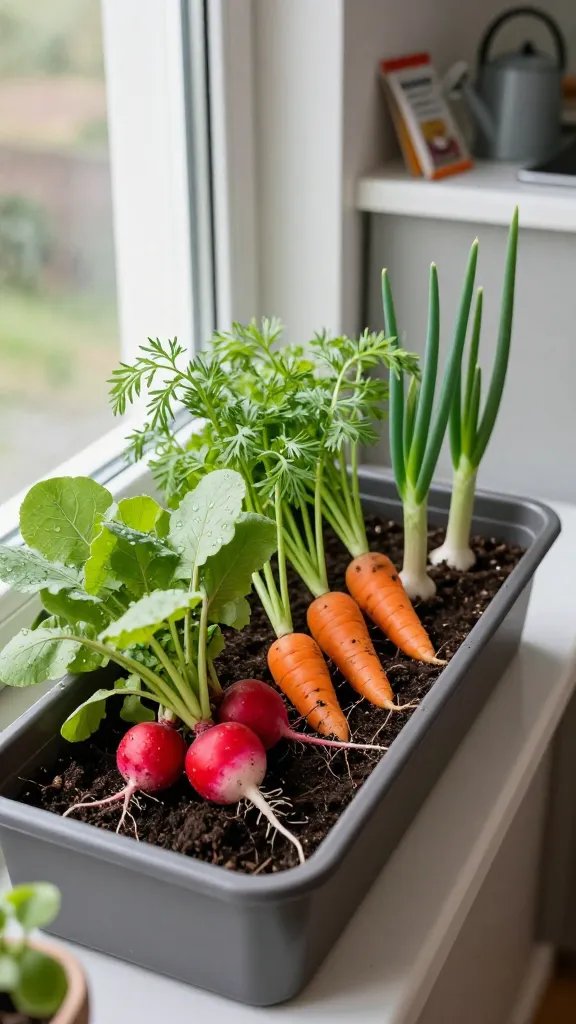
You don’t need a backyard to pull your own crunchy roots. These small-space heroes mature fast and tolerate partial shade, especially the mini varieties. Bonus: they’re fun to harvest and wildly satisfying.
What To Grow
- Radishes: Round types like ‘Cherry Belle’ mature in 25–30 days—even with only morning light.
- Baby Carrots: Choose short varieties (‘Thumbelina’, ‘Paris Market’) for 8–10 inch-deep pots.
- Spring Onions/Scallions: Slim bulbs, minimal light needs, steady harvests.
Use deep containers for carrots and wider, shallow trays for radishes and scallions. Keep soil loose and airy so roots develop cleanly. Water consistently—uneven moisture leads to spicy radishes and split carrots.
Pro Moves
- Thin seedlings early—crowding stunts roots.
- Rotate containers weekly for even growth.
- Harvest small and often; flavor and texture peak when young.
Ideal for crunchy snacks, quick stir-fries, and topping basically everything. Trust me, fresh-pulled radishes with butter and salt feel fancy for almost zero effort.
3. Herb-Adjacent Veggies: Kale, Swiss Chard, And Asian Greens
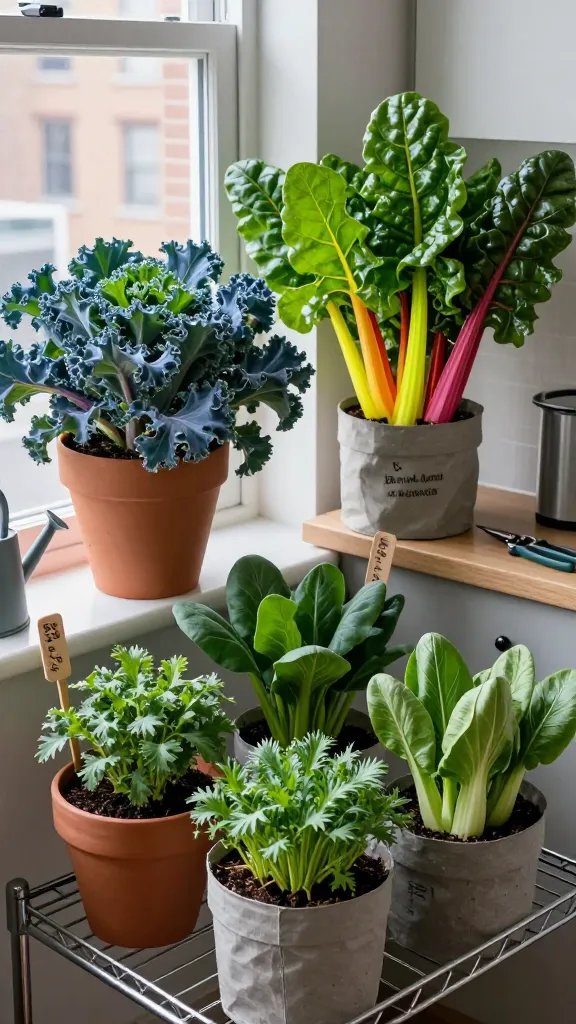
Think of these as the dependable roommates of your indoor garden—tidy, low-drama, and always there when you need them. They handle lower light far better than fruiting plants and reward you with nonstop harvests.
Standout Varieties
- Kale: ‘Dwarf Blue Curled’ or ‘Red Russian’ stay compact and productive.
- Swiss Chard: ‘Bright Lights’ adds neon stems that look like edible art.
- Asian Greens: Pak choi, tatsoi, and mizuna thrive in partial shade and cooler rooms.
Plant in 8–10 inch-deep pots with rich, well-draining soil. Snip outer leaves regularly and leave the center to regrow. Avoid blasting them with heat; they prefer cool, steady conditions.
Care Cheatsheet
- 4–5 hours of indirect light is enough; add a small LED grow light if leaves pale.
- Water when the top inch of soil dries; don’t drown the roots.
- Feed every 3–4 weeks with a gentle organic fertilizer.
Use for soups, sautés, and egg dishes when your fridge looks tragic. These greens keep meals interesting without asking for a sun-soaked balcony.
4. The Pod Squad: Peas And Bush Beans (Yes, Indoors!)
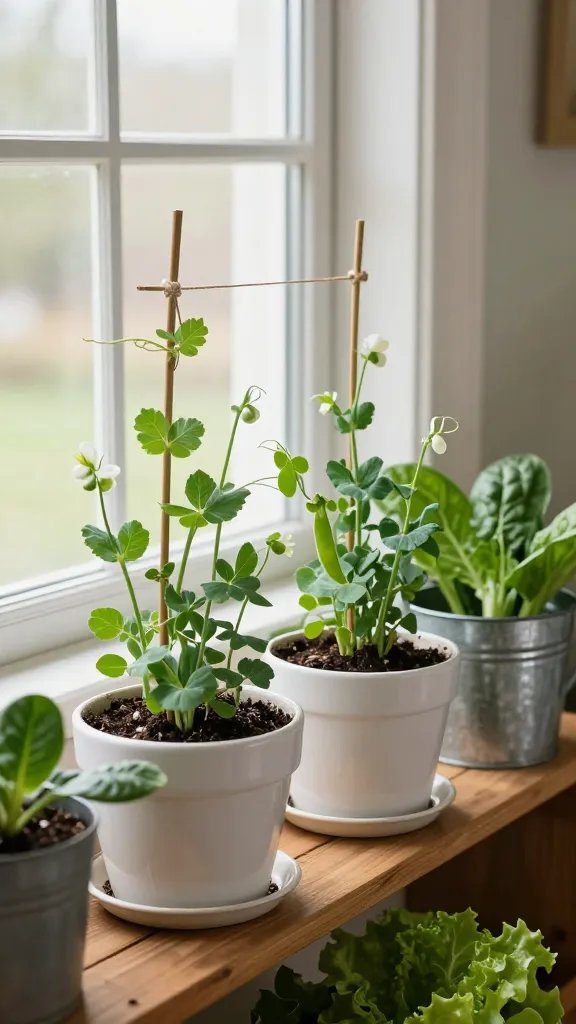
Fruiting veggies usually crave sun, but peas and compact bush beans bend the rules. With bright indirect light and a little support, you’ll get crunchy pods even in a light-challenged apartment. They also fix nitrogen in soil, which your leafy neighbors appreciate.
Best Picks
- Peas: ‘Sugar Ann’ or dwarf snow peas stay short and productive in partial sun.
- Bush Beans: Look for compact varieties bred for containers.
Give them a trellis or string for gentle support. Keep the soil consistently moist—drought equals tough pods. Flowers may need a gentle shake to help pollination indoors.
Grower Notes
- Cooler rooms favor peas; beans like it a bit warmer.
- Harvest young and frequently to keep pods coming.
- If light is borderline, supplement with a small grow light for 6–8 hours.
Perfect for snacking straight off the vine or tossing into quick stir-fries. IMO, nothing beats the sweetness of a pea pod you just picked.
5. Aromatic MVPs: Garlic Greens, Microgreens, And Celery Regrowth
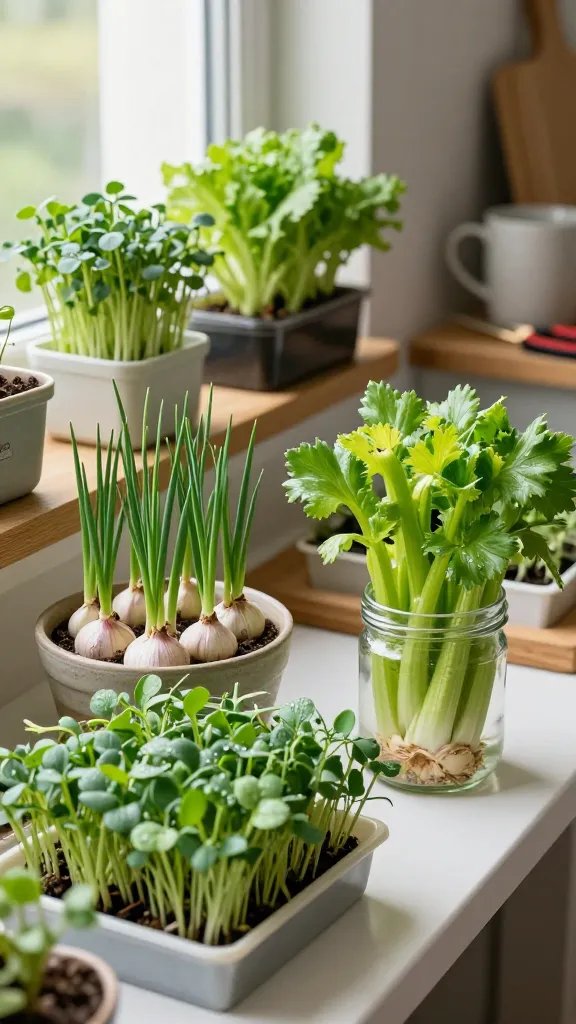
Low-light apartment gardeners swear by these because they’re fast, flavorful, and borderline foolproof. You won’t grow full garlic bulbs or celery heads, but you’ll harvest fresh tops that make every meal taste brighter. And microgreens? They’re the high-return stock pick of indoor gardening.
What To Try
- Garlic Greens: Plant spare garlic cloves point-up in a shallow pot; harvest the shoots like chives.
- Microgreens: Sunflower, radish, pea shoots, or mustard—ready in 10–14 days with minimal light.
- Celery Regrowth: Stick the base of a store-bought celery in water, then pot once roots appear for steady leaf harvests.
Use shallow trays for microgreens with seed-starting mix. Keep them evenly moist and harvest when the first true leaves appear. For garlic greens and celery, give a bright windowsill and avoid soggy soil.
Quick Wins
- Stagger microgreen trays weekly for constant supply.
- Snip garlic greens repeatedly; they regrow several times.
- Add a clip-on grow light if stems look leggy or pale.
Great for garnishes, omelets, noodles, and flavor boosts when your pantry is meh. Seriously, a handful of microgreens can make instant noodles taste like a weeknight miracle.
You don’t need a sun-drenched loft to grow good food—just the right lineup and a bit of consistency. Start with a couple of containers, harvest small and often, and scale up once you catch the bug. Your dim apartment is about to be delicious—go plant something today.