
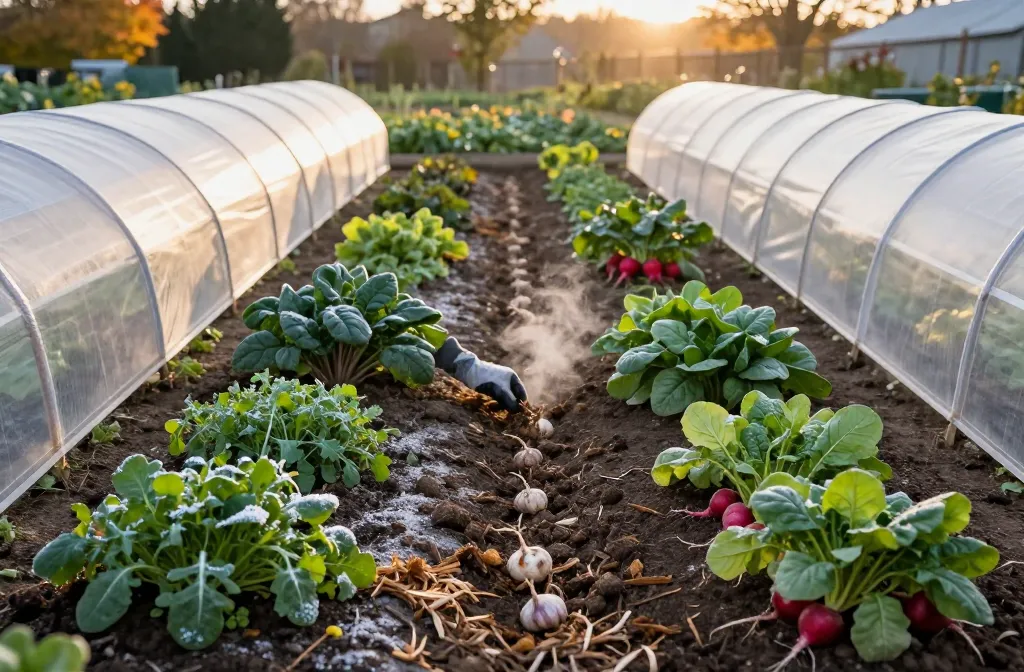
You still have time to plant, even in October. The trick? Choose the right crops for your climate zone so you harvest before deep winter shuts things down. This guide walks you through five smart, last-chance strategies that turn chilly days into fresh greens, sweet roots, and smug “told-you-so” salads. Let’s get those beds working overtime.
1. Zones 3–5: Beat The Frost With Fast Roots And Covered Greens
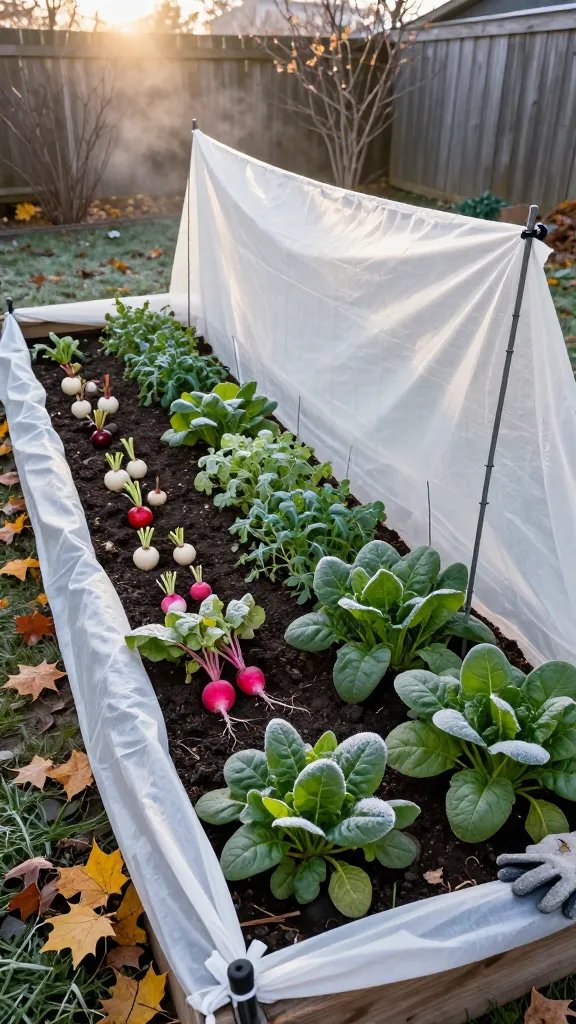
Short season? No problem. You can still sneak in quick-maturing crops and keep them alive with simple covers. Think speed, frost tolerance, and a little protection when the first hard freeze shows up.
What To Plant Now
- Radishes (18–30 days): Cherry Belle, French Breakfast, Easter Egg.
- Baby turnips (30–40 days): Hakurei, Tokyo Cross.
- Spinach (35–45 days for baby leaves): Bloomsdale, Space; great for overwintering.
- Arugula (25–35 days): Any quick salad mix.
- Mâche (corn salad) (40–50 days): Thrives in cold, sweetens after frost.
- Garlic (for next summer): Hardneck types like Music, German Red.
Tips
- Use row cover (0.5–1.0 oz) over hoops to gain 4–6°F and block wind.
- Plant densely and harvest young. Baby greens beat the clock.
- Mulch garlic 3–4 inches after a light freeze to lock in moisture and prevent heave.
- Water in mid-day so foliage dries before night. Less freeze damage, fewer headaches.
Focus on quick harvests and frost-sweetened flavor. You’ll pull crisp roots and tender greens while your neighbors surrender to store lettuce.
When To Use This
When your first hard freeze hits early and daylight shrinks fast. You want reliable, quick wins that shrug off cold and taste better for it.
2. Zones 6–7: Lean Into Cool-Season Workhorses And Succession Sowing
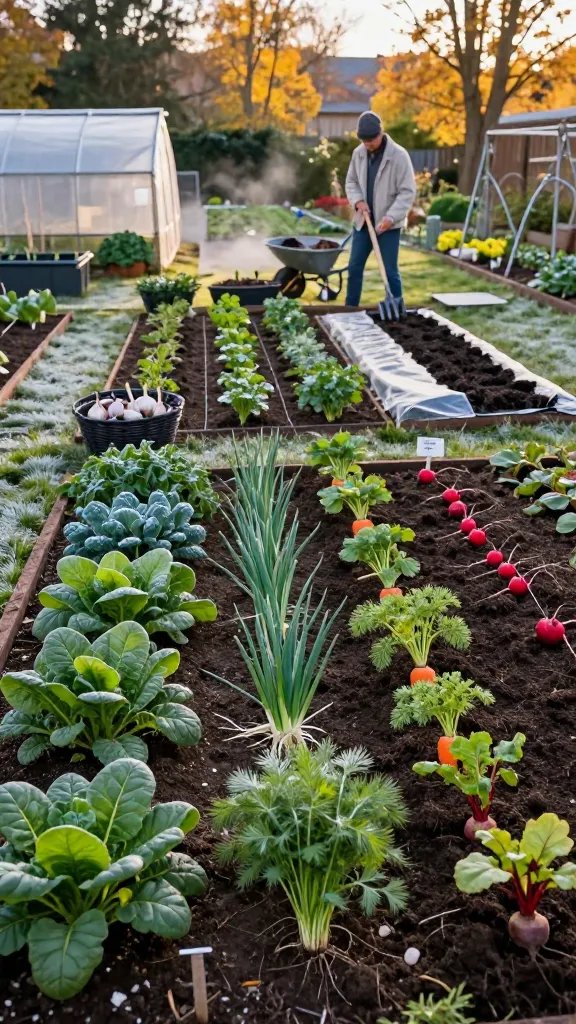
You’ve got a little more runway, so use it. Plant crops that mature in 30–60 days and plan two quick successions, then cover for winter grazing.
What To Plant Now
- Leafy greens: Spinach, arugula, mizuna, tatsoi, mustard greens, kale (baby).
- Roots: Radish, baby beets (Bull’s Blood, Early Wonder), baby carrots (Adelaide, Mokum).
- Alliums: Green onions (evergreen bunching), garlic (both hardneck and softneck in 7).
- Herbs: Cilantro (loves cold), parsley (slow but hardy), dill for baby fronds.
Protection = More Harvest
- Low tunnels with row cover or clear plastic buy 2–4 extra weeks.
- Cold frames turn October sowings into salad bars. Vent on sunny days.
- Mulch pathways to reduce mud and slugs. Yes, slugs still party in fall.
Succession Plan (IMO, the secret sauce)
- Week 1–2: Sow arugula, spinach, radish.
- Week 3–4: Sow a second round in a different bed or strip.
- Transplant kale or chard starts if you can find them; harvest baby leaves through winter under cover.
This approach gives you steady cut-and-come-again harvests through Thanksgiving and beyond, especially with a little protection.
When To Use This
When frost nips but doesn’t end the party. You want layered plantings, quick salads, and herbs that taste ridiculously good in cold weather.
3. Zones 8–9: Fall Is Your New Spring—Go Big On Brassicas And Overwinter Staples
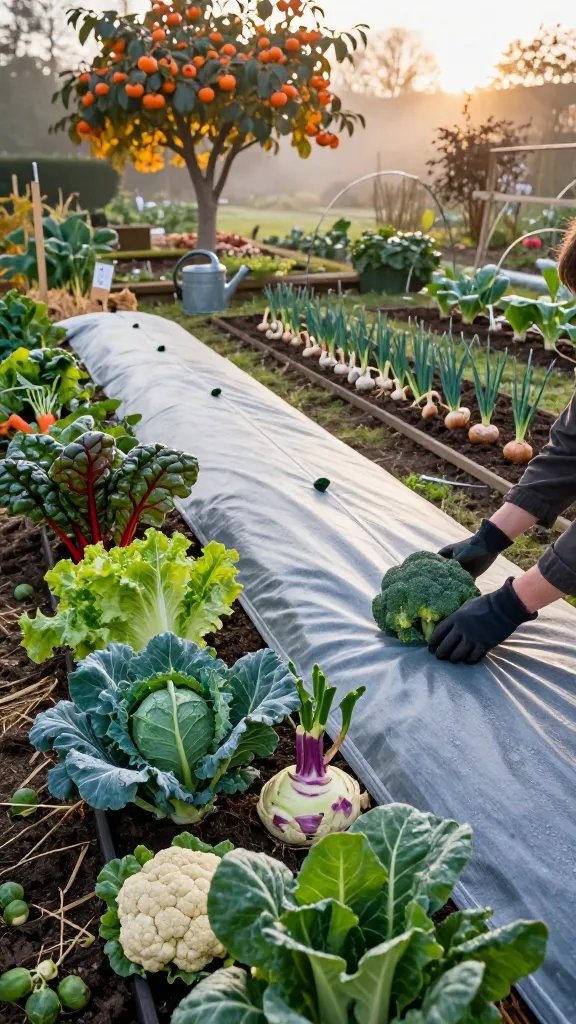
Your October window is prime time. Skip heat lovers; plant cool-season rock stars that love shorter days and mild chill. You’ll harvest through winter and hit early spring with momentum.
What To Plant Now
- Brassicas: Broccoli, cauliflower, cabbage, kohlrabi, and Brussels sprouts (transplants are best).
- Greens: Lettuce mixes, spinach, chard, kale, collards, mustards, bok choy, tatsoi.
- Roots: Carrots, beets, turnips, daikon radish.
- Alliums: Garlic (softneck shines), multiplying onions, leeks (transplants), bunching onions.
- Peas: Sugar snaps and shelling peas for a late winter harvest.
- Herbs: Cilantro, dill, fennel (bulbing in 9), chervil. Parsley thrives.
Soil And Pest Moves
- Feed the soil with compost and a balanced organic fertilizer. Fall crops want steady nutrients.
- Net brassicas against cabbage loopers and aphids. Cooler weather helps, but pests don’t RSVP.
- Mulch 2–3 inches to buffer temps and hold moisture.
Timing And Spacing
- Transplant brassicas now to finish before any hard freeze.
- Direct sow carrots and beets in well-watered furrows; keep seedbed consistently moist for 5–10 days.
- Succession sow lettuce every 2 weeks for a never-ending bowl.
Expect sweet, crisp harvests with less bittering and bolting. Honestly, fall gardening in these zones feels like cheating—in a good way.
When To Use This
When your nights cool but days stay pleasant. You want high yield, low drama, and restaurant-quality greens without the attitude.
4. Zones 10–11: Cool-Season Feast And Heat-Weary Garden Recovery
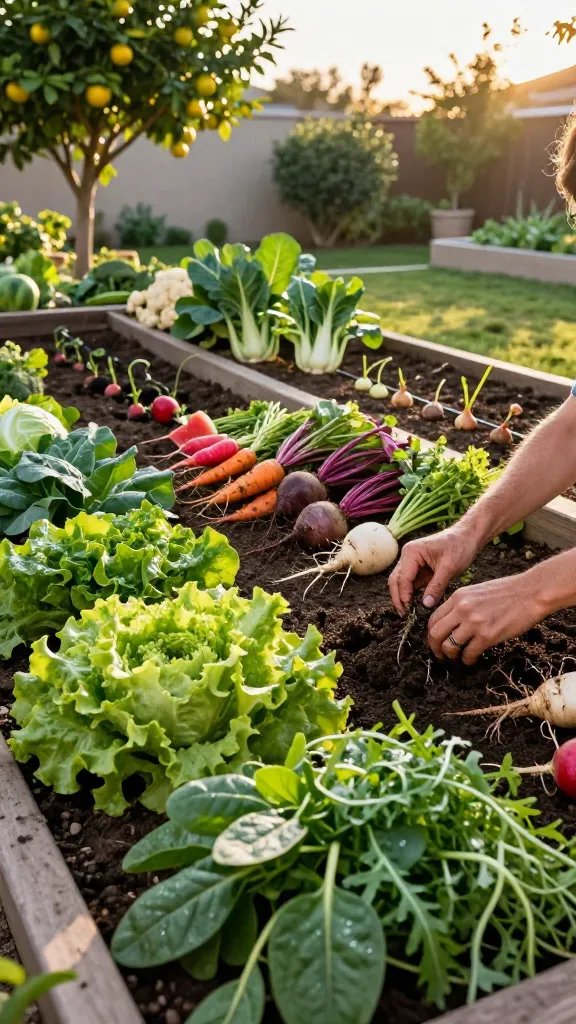
Your long, hot summer finally tapped out. October opens the door to crops that hated July but thrive now. Prep beds, plant generously, and enjoy the easiest season you’ll get all year.
What To Plant Now
- Greens and salads: Lettuce blends, spinach (choose heat-tolerant varieties for warm nights), arugula, mizuna.
- Brassicas: Broccoli, cauliflower, cabbage, kohlrabi, pak choi, Chinese cabbage.
- Roots: Carrots, beets, turnips, radishes (try watermelon and daikon).
- Alliums: Onions from sets or seedlings, leeks, garlic (softneck), scallions.
- Legumes: Snap peas and snow peas climb happily; fava beans in 10 for late winter harvests, absolutely in 11.
- Herbs: Cilantro, dill, parsley, chives; also plant thyme, oregano, and sage starts.
Irrigation And Shade Tweaks
- Water deeply 2–3 times weekly; shallow sips encourage weak roots.
- Use shade cloth (30%) for tender greens if daytime highs still spike.
- Mulch with composted bark or straw to keep soil cool and moist.
Pest And Disease Watch
- Leaf miners love chard and beets; use lightweight row cover.
- Aphids explode in mild weather; blast with water, encourage ladybugs, use insecticidal soap if needed.
- Snails/slugs wake up with irrigation; beer traps, copper tape, or hand-picking before dawn. Glamorous? No. Effective? Yes.
Fall and winter gardens here are absurdly productive. You’ll harvest for months with minimal fuss—FYI, this is when your garden becomes your favorite grocery aisle.
When To Use This
When summer finally stops roasting everything. You want variety, steady harvests, and the joy of cilantro that doesn’t bolt in two minutes.
5. Universal October Moves: Covers, Calendars, And Quick Wins For Every Zone
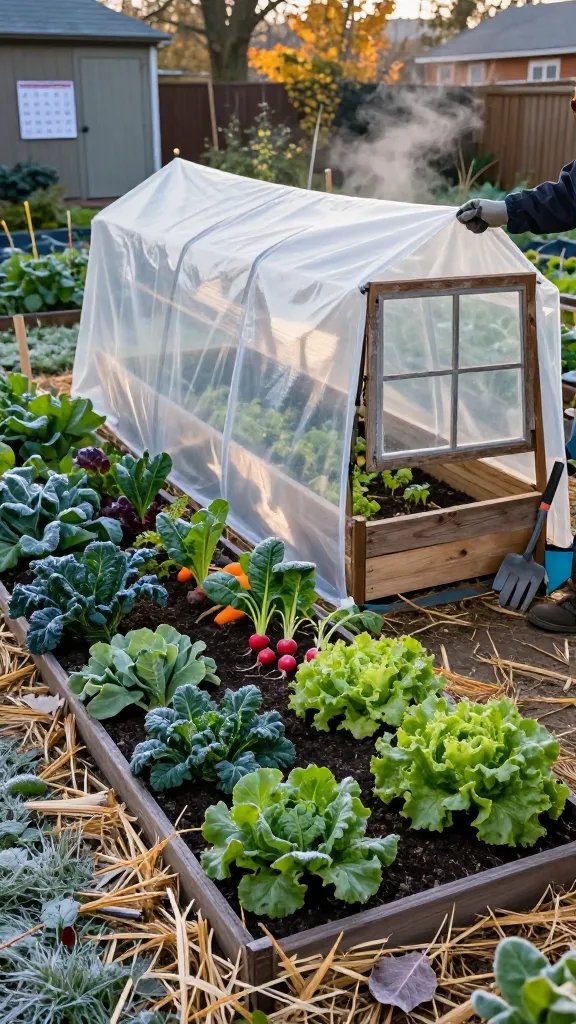
No matter where you live, a few October habits turn “last chance” into “nice haul.” Consider this your cross-zone power toolkit. Combine these with your zone plan for maximum smugness (the good kind).
Season Extenders That Actually Work
- Row cover: Light (0.5–0.6 oz) for frost and insects; medium/heavy for deeper cold. Float it or use hoops.
- Cold frames: Old windows + boxes = gourmet greens all winter. Vent on sunny days to prevent wilt.
- Mulch: Straw, shredded leaves, or pine needles around roots and garlic. Insulates and feeds soil.
- Cloches: Individual plant protection for precious transplants or late sowings.
Planting Shortcuts
- Pick fast varieties: Look for 20–50 day maturity; favor baby-leaf harvests.
- Transplant when possible: Brassicas, lettuce, and onions jump ahead of frost clocks.
- Soak seeds of peas and large seeds 4–8 hours to speed germination in cool soil.
- Pre-sprout carrots on damp paper towels for a head start, then direct sow.
Soil And Fertility
- Top-dress compost before planting; aim for 0.5–1 inch.
- Mild, slow-release fertilizers keep growth steady in cool weather (fish/seaweed or balanced organic blends).
- pH check: Brassicas like slightly alkaline soils; add a light lime dusting if needed.
Frost Timing And Microclimates
- Know your first frost date and count back from days-to-maturity. Harvest at baby size if frost races you.
- Use warm spots: South-facing walls, patios, and raised beds hold heat longer.
- Cover at dusk and uncover late morning. Keep covers off foliage during freezes.
Harvest Strategy
- Cut-and-come-again for salad mixes and spinach; harvest outer leaves first.
- Leave roots in the ground under mulch; they store better than in your fridge.
- Sweeten with frost: Kale, carrots, and Brussels sprouts taste better after a chill—seriously.
These fundamentals stretch your season, protect your investment, and make October gardening feel delightfully doable.
Ready to get dirt under your nails? October might be your garden’s secret weapon. Plant smart for your zone, throw on some covers, and prepare for brag-worthy harvests when everyone else thinks the season’s over. Trust me, your future soups and salads will thank you.